How to Craft a Baby's Necklace Succulent Resin Pendant
Learn how to preserve and craft a baby's necklace succulent into a stunning resin pendant. Step-by-step guide covering drying, casting, and assembly.

Introduction to Botanical Jewelry and the Baby's Necklace Plant
As botanical jewelry trends continue to evolve in 2026, preserving delicate flora in crystal-clear epoxy has become a hallmark of artisanal necklace design. Among the most sought-after specimens is the Crassula rupestris, commonly known as the baby's necklace succulent. With its tightly stacked, bead-like leaves that mimic the appearance of a delicate chain, this plant is a natural candidate for encapsulation. However, succulents present unique challenges in resin jewelry making due to their high water content. If not properly desiccated, the trapped moisture will cause the plant to rot, turn brown, and create unsightly micro-bubbles within the cured resin.
This comprehensive, step-by-step guide will walk you through the exact methodology required to harvest, dry, and cast a baby's necklace succulent into a professional-grade resin pendant. Whether you are an experienced jeweler expanding your botanical line or a dedicated hobbyist, mastering these techniques will ensure your finished necklace remains vibrant and structurally sound for decades.
Materials and Tools Checklist
Success in botanical resin casting relies heavily on material quality. Avoid hardware-store resins, which often contain high levels of VOCs and lack UV stabilizers, leading to rapid yellowing. Below is the precise checklist for this project:
- Botanical Specimen: Fresh cuttings of Crassula rupestris (baby's necklace succulent), ideally 1 to 1.5 inches in length.
- Desiccant: Fine-grain silica gel (120-220 mesh). Coarse grains will leave indentations on the delicate leaves.
- Epoxy Resin: A high-gloss, 1:1 ratio jewelry-grade epoxy (such as ArtResin or Let's Resin) formulated with UV and HALS (Hindered Amine Light Stabilizers).
- Mold: 15mm x 20mm oval silicone pendant mold with a pre-cast bail hole.
- Sealing Agent: UV resin and a 36W UV lamp for flash-curing the botanical seal.
- Hardware: 20-gauge, 5mm OD (outer diameter) gold-filled or sterling silver jump rings, and an 18-inch 1.2mm cable chain.
- Tools: Silicone mixing cups, wooden stir sticks, a butane torch or heat gun, and flat-nose jewelry pliers.
Step 1: Desiccating the Crassula Rupestris
The most critical point of failure in succulent jewelry is inadequate drying. Unlike thin petals, the baby's necklace succulent stores water in its thick, cylindrical leaves. Air drying or using a traditional flower press will result in cellular collapse, turning the plant into a shriveled, brown husk. You must use the silica gel submersion method.
The Silica Gel Submersion Method
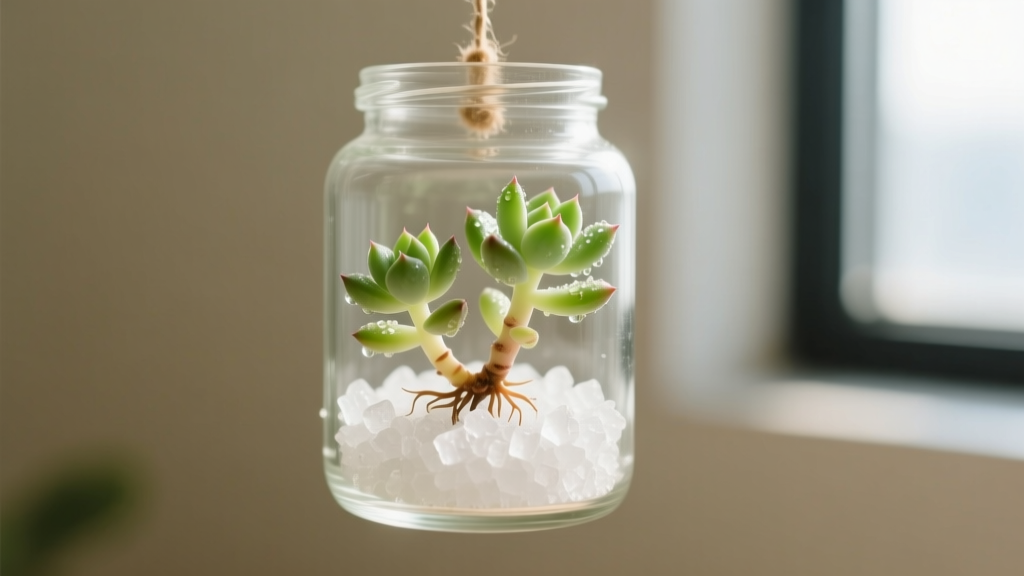
Begin by snipping a 1.5-inch section of the succulent. Allow it to sit on a paper towel for two hours so the cut end can callous over; this prevents the silica gel from drawing out too much sap too quickly, which can cause the stem to warp. Fill an airtight glass jar with an inch of 120-220 mesh silica gel. Gently place the succulent cutting upright or on its side, and carefully sift more silica gel over and around the leaves until the specimen is completely buried. Seal the jar and leave it undisturbed in a cool, dark place for 7 to 10 days. After a week, use a soft makeup brush to gently excavate the cutting. It should feel rigid and papery, yet retain its original green and red-edged coloration.
Step 2: Mixing and Pouring the Base Epoxy Layer
Once your baby's necklace succulent is fully desiccated, prepare your workspace. Ensure the ambient room temperature is between 72°F and 75°F (22°C - 24°C); epoxy resin will not cure properly in cold environments and will cure too rapidly in hot ones, trapping bubbles.
Measure your jewelry-grade epoxy in a strict 1:1 ratio by volume. Pour the hardener into the resin and stir slowly and methodically for a full 3 to 5 minutes, scraping the sides and bottom of the silicone cup to ensure a homogenous mixture. Incomplete mixing will result in a tacky, uncured patch in your final pendant.
Pour a thin base layer—approximately 2mm thick—into the bottom of your 15mm x 20mm oval silicone mold. Use a toothpick to guide the resin into the corners and pop any surface bubbles with a quick pass of a butane torch. Allow this base layer to cure for about 3 to 4 hours until it reaches a 'tacky' state. It should feel like the sticky side of masking tape; this tackiness is essential for anchoring the succulent in the next step.
Step 3: Sealing and Encapsulating the Succulent
Dried botanicals are porous. If you place the baby's necklace succulent directly into a deep pool of wet epoxy, the air trapped inside the plant's cellular structure will slowly escape, creating a cloud of micro-bubbles that will ruin the clarity of your pendant. To prevent this 'outgassing,' you must seal the plant first.
Using a fine detail brush, apply a very thin coat of UV resin over the entire surface of the dried succulent. Flash-cure it under a 36W UV lamp for 60 seconds. This creates an impermeable barrier over the leaves. Next, apply a tiny drop of mixed epoxy to the tacky base layer in your mold, and gently press the sealed succulent into it. The tacky base will hold the plant flat, preventing it from floating to the surface during the final pour.
Step 4: The Dome Pour and Hardware Assembly
With the succulent anchored, mix a fresh batch of epoxy. Pour the resin slowly over the plant, building it up to create a slight dome above the rim of the silicone mold. The surface tension of the epoxy will hold the dome shape. Pass your heat gun lightly over the surface to release any final bubbles, then cover the mold with a dust-proof dome and let it cure undisturbed for 24 hours.
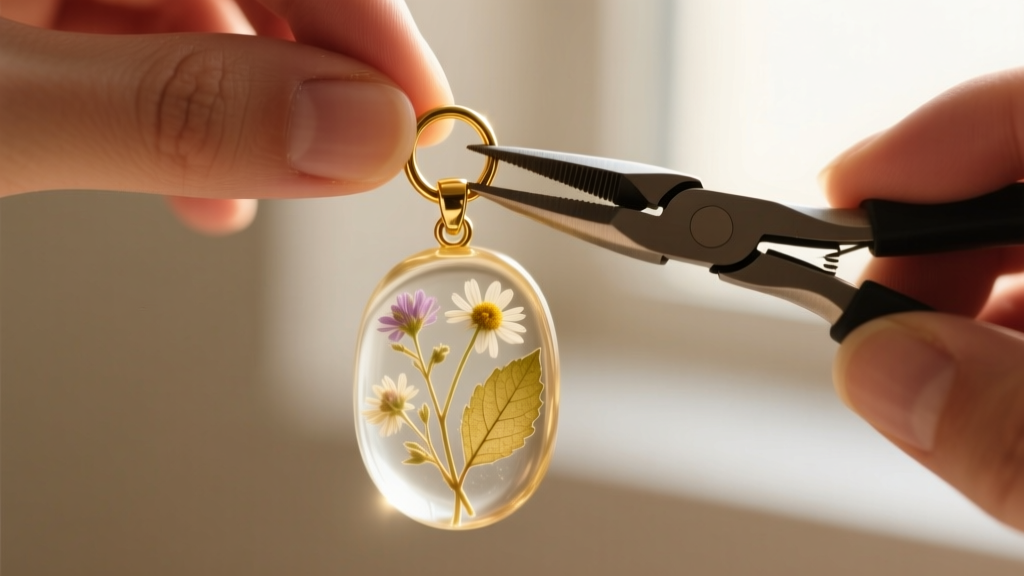
Once fully hardened, gently flex the silicone mold to release the pendant. If the edges are sharp, lightly sand them with 800-grit wet sandpaper, followed by a polish with a microfiber cloth and plastic polish. To assemble the necklace, take your 20-gauge, 5mm jump ring and use two pairs of flat-nose pliers to twist it open laterally (never pull the ends apart, as this weakens the metal). Slide the jump ring through the pre-cast bail hole of the resin pendant, attach your 18-inch 1.2mm cable chain, and twist the jump ring closed.
Troubleshooting Common Resin and Botanical Issues
Even experienced jewelers encounter issues when working with complex botanicals. Below is a diagnostic table to help you troubleshoot common problems specific to encapsulating a baby's necklace succulent.
| Issue | Probable Cause | Solution |
|---|---|---|
| Plant turns brown/mushy | Incomplete desiccation; moisture trapped in thick leaves. | Extend silica gel drying time to 10-14 days; ensure fine mesh gel is used. |
| Cloudy micro-bubbles | Outgassing from unsealed plant pores. | Always apply a UV resin seal coat and flash-cure before the final epoxy pour. |
| Tacky, sticky surface | Improper 1:1 mixing ratio or cold room temperature. | Measure strictly by volume, stir for 5 minutes, and maintain 72°F-75°F room temp. |
| Resin yellowing over time | Using non-UV stabilized resin or prolonged direct sun exposure. | Use epoxy with HALS and UV inhibitors; advise wearers to store away from direct sunlight. |
Styling and Caring for Your Botanical Necklace
The finished baby's necklace succulent pendant is a striking conversation piece that bridges the gap between natural organic forms and modern jewelry design. Because the Crassula rupestris features a mix of sage green and vibrant crimson edges, it pairs beautifully with warm metals like 14k gold-filled chains or rose gold vermeil. For a more contemporary, minimalist look, mount the pendant on a black rhodium-plated sterling silver snake chain.
To ensure the longevity of your botanical jewelry, always remove the necklace before swimming, showering, or applying cosmetics. While high-quality epoxy is water-resistant, prolonged exposure to harsh chemicals and chlorine can degrade the resin's high-gloss finish over time. When not in use, store the pendant in a soft velvet pouch away from direct sunlight to preserve the vivid, natural pigments of the succulent. For more insights on working with botanicals, refer to the extensive guides on The Spruce Crafts and the safety data sheets provided by ArtResin.


