Ball and Chain Necklace Materials: Durability & Style Guide
Compare metals for your ball and chain necklace. We analyze titanium, steel, silver, and gold for durability, weight, and skin safety.

The Anatomy and Physics of the Design
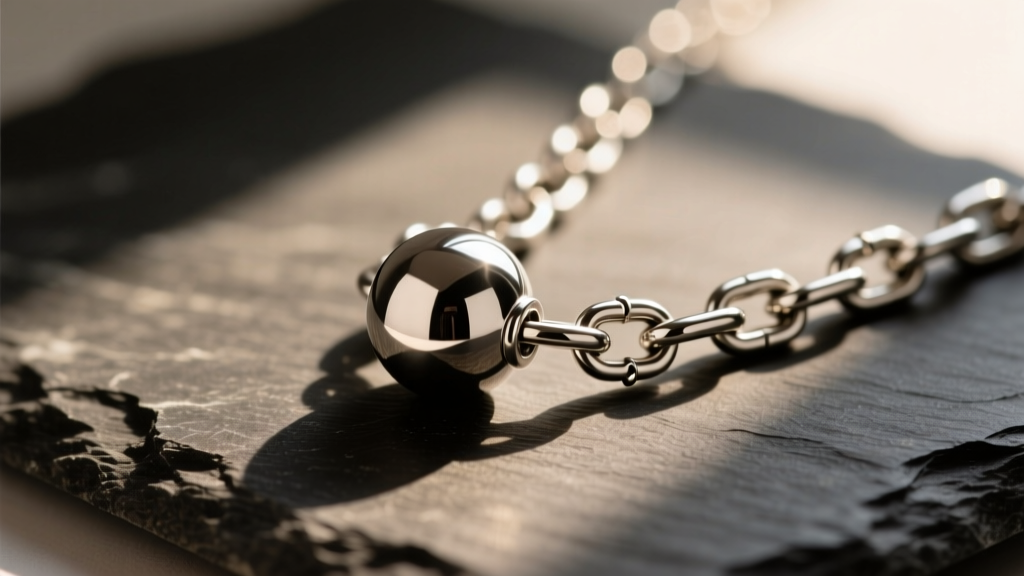
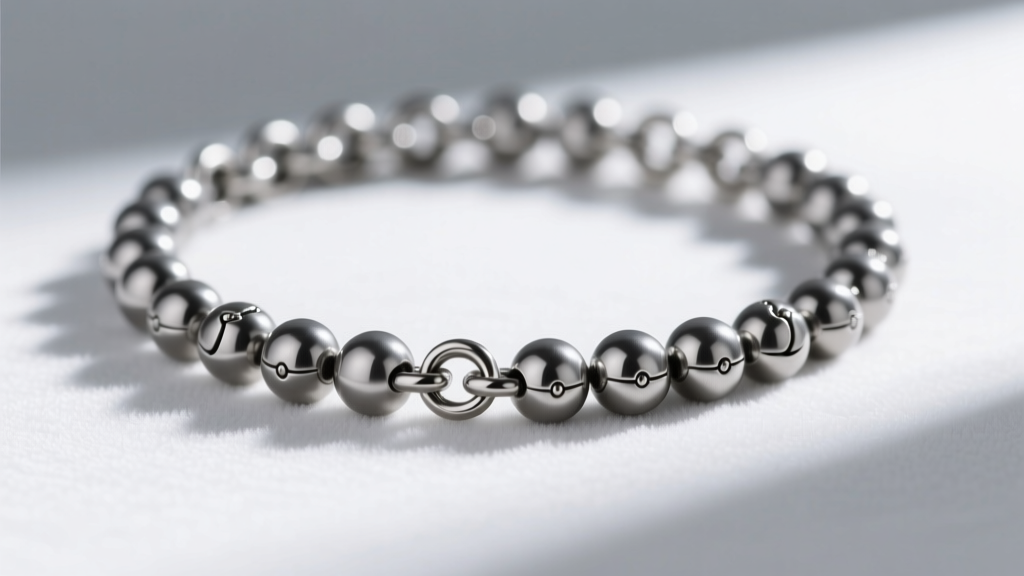
When discussing a ball and chain necklace, jewelers and collectors generally refer to one of two distinct designs. The first is the literal streetwear or gothic motif: a heavy spherical pendant (the "ball") suspended from a thick, industrial-style chain. The second is the vintage "bead and link" chain style, where spherical metal beads are interspersed between standard oval or rolo links. Both designs present unique metallurgical challenges. The pendulum effect of a heavy spherical pendant creates cyclical tensile stress on the bail and the top three chain links, while the bead-and-link style introduces multiple solder joints that can become structural weak points under tension.
Choosing the right metal for this specific jewelry style is not merely an aesthetic decision; it is a matter of structural integrity and skin safety. A heavy ball pendant weighing over 25 grams will rapidly distort soft metals, leading to catastrophic clasp failure or link stretching. Below, we break down the exact material properties you need to consider before investing in this bold necklace style.
Material Showdown: Core Metals Analyzed
The performance of a ball and chain necklace relies heavily on the yield strength and density of the base metal. Here is how the four most common jewelry metals perform under the specific stresses of this design.
316L Surgical Stainless Steel
For heavy, oversized ball pendants, 316L stainless steel is the undisputed workhorse. With a yield strength of approximately 215 MPa, it resists the bending and stretching that plagues softer metals. It is highly resistant to oxidation and requires virtually no maintenance. However, 316L contains trace amounts of nickel (up to 10%), which can trigger contact dermatitis in highly sensitive individuals. If you have a known nickel allergy, steel is a poor choice for a necklace that rests directly against the pulse points of the neck.
Grade 5 Titanium (Ti-6Al-4V)
Grade 5 titanium is an aerospace-grade alloy that offers an extraordinary strength-to-weight ratio. It is roughly 45% lighter than steel but boasts a yield strength exceeding 800 MPa. For a ball and chain necklace, this means you can achieve a massive, imposing aesthetic without the necklace feeling like a literal restraint. Furthermore, titanium is completely biocompatible and hypoallergenic (compliant with ASTM F136 implant standards). The primary drawback is manufacturability: titanium cannot be easily soldered using traditional jewelers' torches, meaning links are usually laser-welded or mechanically joined, which limits repairability.
Sterling Silver (925) vs. Argentium 935
Traditional 925 sterling silver is a soft metal with a low yield strength, making it highly susceptible to "link creep" (permanent stretching) when supporting a heavy ball pendant. If you prefer the look of silver, you must opt for a thicker gauge (minimum 4mm) and ensure the pendant itself is hollowed or lightweight. A superior alternative is Argentium 935 silver. By replacing some of the copper alloy with germanium, Argentium offers significantly higher tarnish resistance and a slightly harder crystalline structure, making it more resilient against the mechanical stress of heavy pendants.
Solid Gold (14K vs. 18K)
Pure gold is far too soft for any chain jewelry. When alloying gold, the karat weight dictates both the color and the structural durability. According to the Gemological Institute of America (GIA), 18K gold (75% pure gold) remains relatively soft and is prone to scratching and link deformation under heavy loads. For a ball and chain necklace, 14K gold is the optimal choice. The higher percentage of alloy metals (copper, silver, and zinc) increases the Vickers hardness, ensuring the chain links maintain their shape and the clasp mechanism retains its spring tension over decades of wear.
Surface Treatments: PVD vs. Electroplating
If you are purchasing a black, rose gold, or 18K yellow gold-finished ball and chain necklace, the coating method is critical. The friction between the spherical beads and the connecting links will quickly wear away cheap coatings.
- Electroplating: A thin layer of metal applied via electrical current. It is prone to flaking and wearing off within 6 to 12 months of daily wear, especially at the high-friction link joints.
- PVD (Physical Vapor Deposition):strong> A vacuum-based process that bonds titanium nitride or zirconium to the base metal at a molecular level. PVD coatings are up to 10 times more wear-resistant than electroplating and are the industry standard for high-quality black stainless steel or gold-toned titanium necklaces.
Weight, Gauge, and Tensile Strength Data
When shopping for a durable ball and chain necklace, gauge (thickness) and material density dictate the lifespan of the piece. The following table outlines the ideal specifications based on metallurgical data sourced from Rio Grande Jewelry Supply.
| Material | Density (g/cm³) | Yield Strength (MPa) | Ideal Chain Gauge | Skin Reactivity |
|---|---|---|---|---|
| 316L Stainless Steel | 8.00 | 215 - 250 | 3.0mm - 6.0mm | Moderate (Contains Nickel) |
| Grade 5 Titanium | 4.43 | 830 - 900 | 2.5mm - 5.0mm | None (Hypoallergenic) |
| 925 Sterling Silver | 10.36 | 110 - 150 | 4.0mm+ (Heavy Duty) | Low (Copper Allergy Risk) |
| 14K Yellow Gold | 13.00 | 350 - 400 | 2.5mm - 4.5mm | Low (Depends on Alloy) |
Common Failure Modes and Troubleshooting
Even the finest metals will fail if the engineering of the necklace is flawed. Understanding how ball and chain necklaces break will help you inspect vintage or artisan pieces before purchasing.
1. The Pendulum Shear Effect
A heavy ball pendant acts as a pendulum. With every step you take, the pendant swings, transferring kinetic energy directly into the bail (the loop connecting the pendant to the chain) and the clasp. Over time, this cyclical lateral stress can cause the wire inside a spring-ring clasp to snap. The Fix: Always opt for a heavy-duty lobster clasp or a custom machined toggle clasp, which lacks internal springs and relies on gravity and tension to stay closed.
2. Bead Shearing on Link Chains
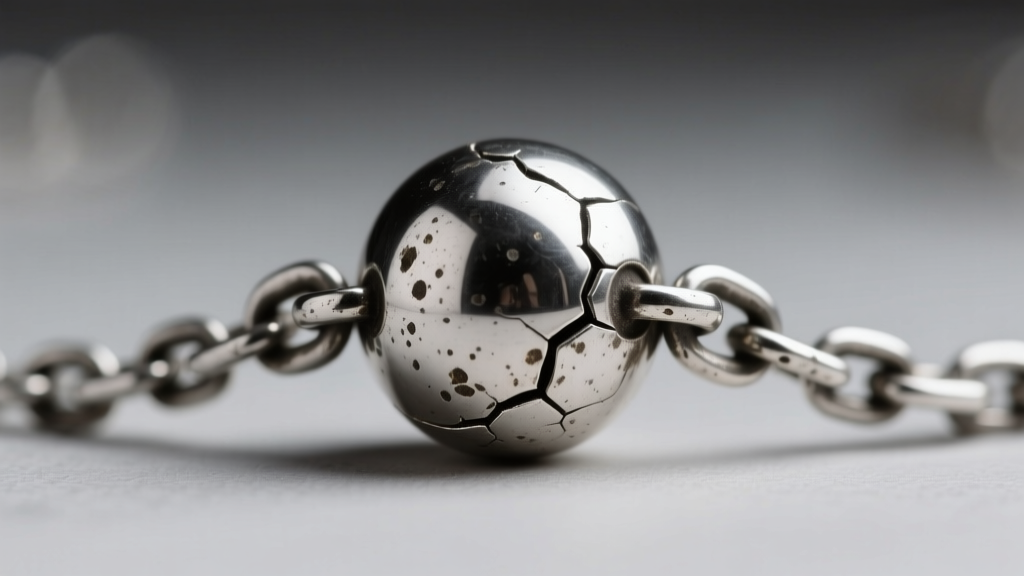
In the "bead and link" chain variation, the spherical beads are often soldered onto the connecting wire. If the jeweler used too much heat or a low-grade solder, the bead can act as a stress concentrator. When the chain is pulled taut, the wire snaps exactly at the edge of the solder joint. Inspect the beads closely; they should ideally be mechanically crimped or laser-welded rather than traditionally torch-soldered.
3. Link Creep in Soft Metals
If you choose a silver or 18K gold necklace, the bottom three links resting near the clavicle bear the brunt of the pendant's static weight. Over years of wear, these oval links will slowly pull into elongated "U" shapes. To prevent this, ensure the chain features flattened or reinforced links at the center-front of the necklace.
Pricing Tiers and Market Benchmarks
The cost of a high-quality ball and chain necklace varies wildly based on the raw material and the complexity of the link machining. Here is what you should expect to pay in the current market for a standard 20-inch, 4mm gauge chain with a proportional ball pendant:
Pro Tip: If a brand is selling a "solid gold" heavy ball and chain necklace for under $400, it is almost certainly gold-plated brass or hollow-core electroformed gold, which will crush under minimal pressure.
- Surgical Steel (PVD Coated): $45 – $120. Excellent for streetwear and daily abuse.
- Grade 5 Titanium (Matte/Machined): $110 – $280. The premium choice for sensitive skin and lightweight comfort.
- Solid 925/Argentium Silver: $180 – $450. Best for occasional wear or lighter, hollowed-out pendant designs.
- Solid 14K Gold: $1,200 – $3,500+. A luxury heirloom piece that requires careful maintenance to avoid link stretching.
Ultimately, the best material for your ball and chain necklace depends on your lifestyle. If you want a rugged, maintenance-free piece for daily wear, 316L steel or PVD-coated titanium are unmatched. If you are seeking a luxury investment piece, stick to 14K gold with a reinforced lobster clasp to ensure the chain survives the weight of its own bold design.


