The Ball Pendant Necklace Value Guide: 2026 Pricing
Discover true market value for a ball pendant necklace in 2026. We break down pricing by material, size, and chain type to help you budget wisely.

The Anatomy of Minimalist Value
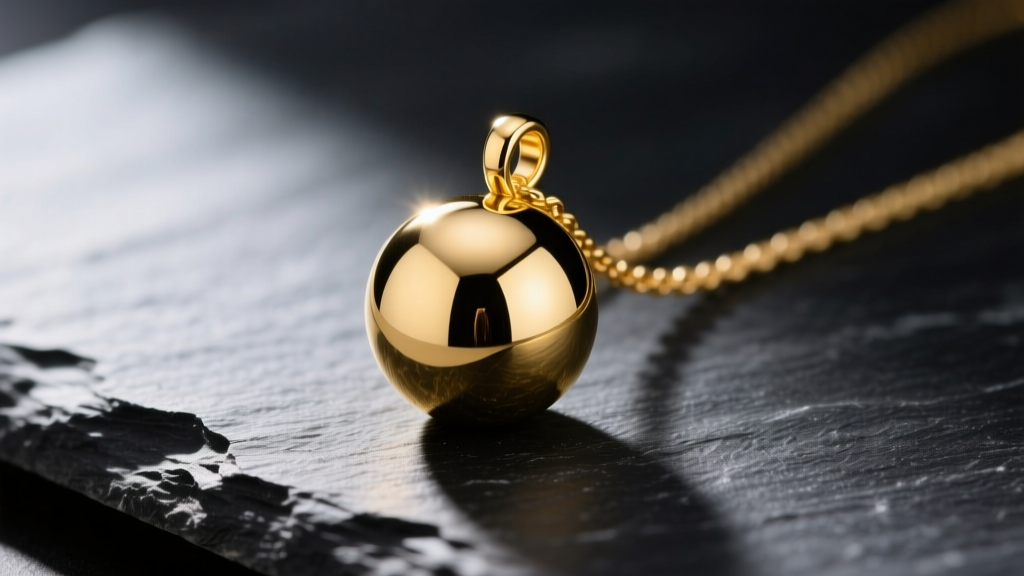
The ball pendant necklace is a masterclass in geometric minimalism. Stripped of intricate engravings or complex gemstone settings, its value is entirely dependent on material integrity, manufacturing precision, and proportional weight. Because the design is so unforgivingly simple, there is nowhere for poor craftsmanship to hide. In 2026, the market is saturated with options ranging from $15 fast-fashion replicas to $2,000+ solid gold investment pieces. Assessing the true budget and value of a spherical pendant requires looking past the brand name and directly into the metallurgy and structural engineering of the piece.
When evaluating this specific silhouette, you are essentially paying for three things: the precious metal gram weight, the quality of the sphere's polish, and the durability of the bail (the loop connecting the sphere to the chain). Understanding how these elements interact is the key to avoiding overpriced markup and under-durable disappointments.
Material Grades and Their True Market Cost
The base material dictates the floor of your budget. A common trap in the jewelry market is confusing gold-plated brass with gold vermeil, or assuming all sterling silver holds the same resale value. According to the Federal Trade Commission Jewelry Guides, strict definitions govern these terms, yet marketing often blurs the lines. Here is what you should realistically expect to pay for a standard 8mm ball pendant necklace across different material tiers in the current market.
| Material Grade | Base Composition | Expected Price Range (8mm) | Longevity & Value Rating |
|---|---|---|---|
| Solid 14k Gold | 58.5% Pure Gold Alloy | $160 - $280 | Excellent (Lifetime, high scrap value) |
| Solid 18k Gold | 75% Pure Gold Alloy | $240 - $450 | Superior (Rich color, softer, high value) |
| Gold Vermeil | 925 Silver + 2.5μm Gold | $65 - $120 | Good (Years of wear, eventual replating needed) |
| Sterling Silver 925 | 92.5% Pure Silver Alloy | $35 - $75 | Very Good (Lifetime, requires polishing) |
| Gold Plated | Brass/Copper + Flash Plating | $15 - $40 | Poor (Months of wear, zero intrinsic value) |
If a retailer is charging over $100 for a gold vermeil sphere, they are leveraging brand markup rather than material value. True value lies in the solid gold or solid silver categories, where the intrinsic metal weight justifies the price tag.
Manufacturing Methods: Solid Cast vs. Die-Struck Hollow
This is the most critical, yet least discussed, factor in pricing a ball pendant necklace. Spheres are manufactured in two primary ways, and the difference drastically impacts both the price and the physical durability of the jewelry.
Die-Struck (Hollow) Spheres
Many mid-tier jewelers use die-striking to create hollow gold spheres. Two thin sheets of gold are stamped into hemispheres and soldered together. This reduces the gram weight significantly, allowing brands to sell a large 12mm pendant for the price of a 6mm solid one. However, the failure mode here is severe: hollow spheres dent easily if dropped on a hard surface and are nearly impossible to repair without visible soldering marks.
Cast (Solid) Spheres
Solid spheres are created through lost-wax casting. They are heavy, durable, and possess a satisfying gravitational drape on the neckline. While the upfront cost is higher due to the pure gram weight of the gold or silver, a solid sphere will survive decades of daily wear and retains intrinsic scrap value. When budgeting, always ask the jeweler if the sphere is solid or hollow. If the product description highlights "lightweight comfort," it is almost certainly hollow.
Spherical Sizing and Gram Weight Calculations
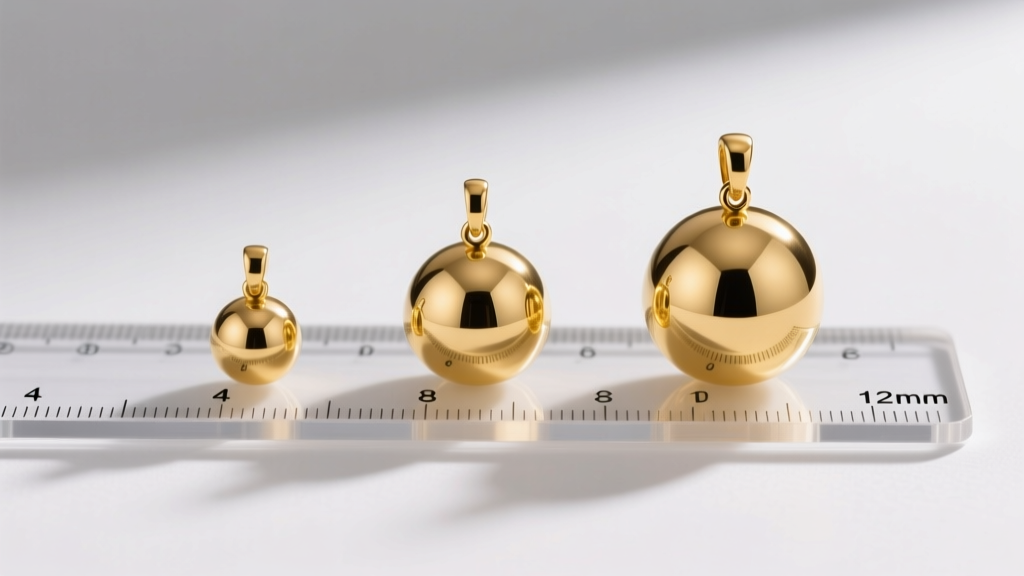
The diameter of the ball directly correlates to its volume and, consequently, its metal weight. For buyers focusing on budget and value, understanding these metrics prevents you from overpaying for undersized pieces. According to metal density calculations referenced by the Gemological Institute of America (GIA), gold's high density means even small millimeter increases result in exponential weight gains.
- 4mm - 5mm (The Subtle Dot): Weighs roughly 0.5 to 1 gram in solid 14k gold. Ideal for layering or ultra-minimalist aesthetics. Expect to pay $40 - $70.
- 6mm - 8mm (The Standard Solitaire): Weighs between 2.5 and 5 grams. This is the sweet spot for everyday wear, offering presence without overwhelming the collarbone. Expect to pay $120 - $250.
- 10mm - 14mm (The Statement Sphere): Weighs 8 to 15+ grams. A heavy, luxurious piece that requires a robust chain. Expect to pay $350 - $800+.
The Hidden Cost of Chain Pairings and Bail Durability
A ball pendant necklace is only as strong as the chain and bail supporting it. A common budget mistake is purchasing a heavy 10mm solid gold sphere and threading it onto a delicate, low-cost 1.0mm cable chain to save money. This creates a structural mismatch. The concentrated weight of the sphere will cause excessive friction against the bail, eventually wearing through the jump ring or snapping the chain entirely.
Expert Rule of Thumb: The tensile strength of your chain must scale with the sphere. For pendants over 5 grams, upgrade to a 1.5mm to 2.0mm box chain or a woven rope chain. The bail should be seamlessly soldered or cast directly into the sphere, rather than glued or attached via a weak jump ring.
Red Flags: Spotting Overpriced and Under-Durability Pieces
When conducting your value assessment, actively screen for these manufacturing and marketing red flags that indicate a poor return on investment:
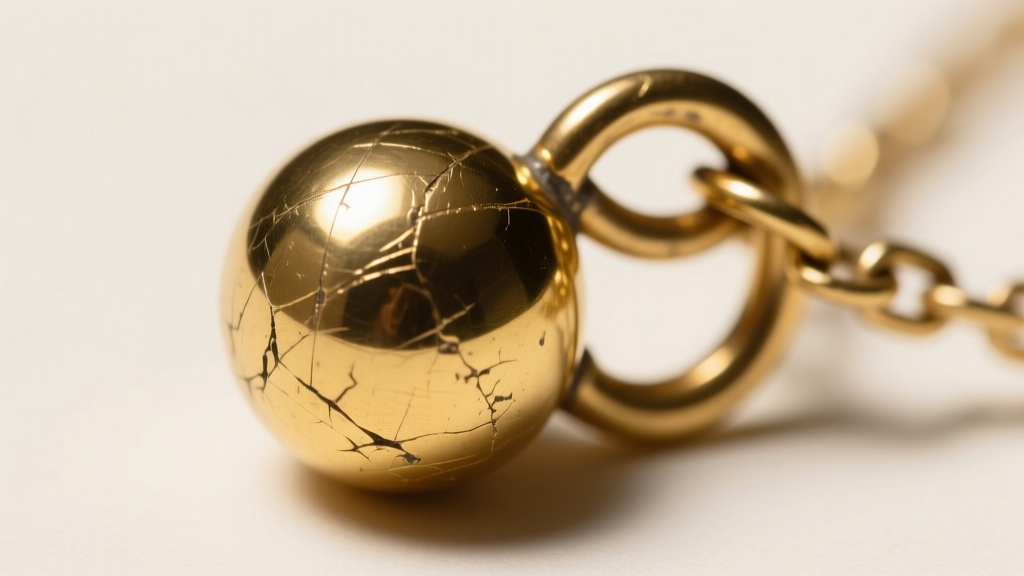
- The "Gold-Filled" Sphere Illusion: While gold-filled chains are common and durable, creating a perfectly seamless gold-filled sphere is metallurgically difficult. Many cheap "gold-filled" pendants are actually just heavily plated brass with a microscopic seam that will eventually split and turn your skin green.
- Unmarked Bails: By law, precious metals must be stamped (e.g., 14k, 925). If the stamp is only on the chain's clasp but missing from the pendant's bail, the sphere is likely base metal.
- Mirror Polish on Soft Metals: Pure 24k gold is too soft to hold a lasting mirror polish on a spherical surface. If a brand claims a 24k gold ball pendant with a flawless, scratch-resistant mirror finish, they are misrepresenting the alloy.
Final Verdict: Where to Allocate Your Budget
To maximize value when purchasing a ball pendant necklace, allocate 75% of your budget toward the intrinsic metal weight (opting for solid 14k gold or solid sterling silver) and 25% toward a high-quality, appropriately gauged chain. Avoid the middle ground of gold vermeil if you intend to wear the piece daily, as the friction from the chain rubbing against the bail will wear away the gold plating on the top loop within months, requiring costly replating. By prioritizing solid metals and verifying whether the sphere is cast or die-struck, you secure a timeless piece that retains both its structural integrity and its financial value.


