2026 Gift Guide: How to Choose a Dainty Opal Necklace
Discover the ultimate 2026 gift guide for dainty opal necklaces. Learn how to match opal types, chain gauges, and settings to specific occasions.

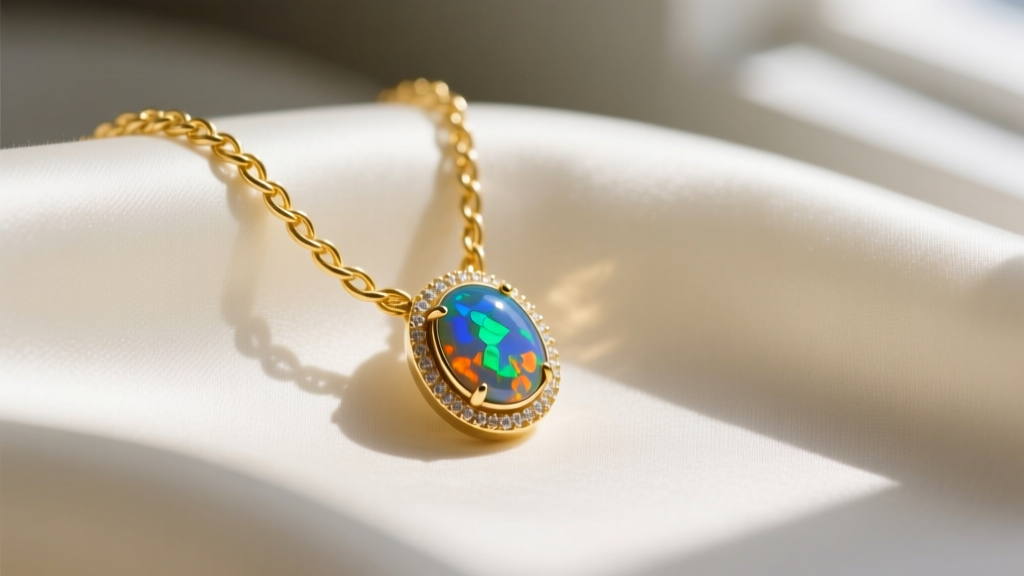
The Allure of the Dainty Opal: Why It’s the Ultimate 2026 Gift
As we navigate the fine jewelry landscape of 2026, the industry has seen a definitive shift away from heavy, ostentatious statement pieces toward minimalist, deeply personal adornments. At the forefront of this movement is the dainty opal necklace. Combining the ethereal, light-bending properties of precious opal with the understated elegance of micro-jewelry, these pieces offer a sophisticated way to wear color close to the heart. Gifting a dainty opal necklace is not merely about presenting a beautiful object; it is about offering a wearable prism that symbolizes hope, creativity, and emotional depth.
However, because opals are among the most delicate gemstones used in fine jewelry (ranking between 5.5 and 6.5 on the Mohs hardness scale), selecting the right piece requires a nuanced understanding of gemology, metallurgy, and the recipient's lifestyle. This comprehensive guide will walk you through the exact specifications, material grades, and occasion-matching strategies needed to choose a flawless dainty opal necklace in 2026.
Decoding Opal Varieties for Delicate Jewelry
Not all opals are created equal, especially when scaled down to dainty proportions (typically 4mm to 7mm in diameter). The structural integrity and visual behavior of the stone dictate how it should be worn and cared for.
Australian White vs. Ethiopian Welo
Ethiopian Welo opals are currently dominating the dainty jewelry market due to their intense, neon-like play-of-color and relative affordability. However, they are hydrophane, meaning they are highly porous and can absorb up to 9% of their weight in water. When exposed to moisture, lotions, or even high humidity, a Welo opal will temporarily lose its fiery flashes, turning cloudy or transparent until it fully dries over several days.
Australian white opals, primarily mined in Coober Pedy, are non-porous and contain a highly stable water content of around 3-5%. While they may exhibit a softer, more pastel play-of-color compared to Welo, they will not cloud upon contact with water or cosmetics. According to the Gemological Institute of America (GIA), Australian opals are vastly superior for recipients who prefer low-maintenance, everyday jewelry that can withstand the elements without altering in appearance.
Lab-Created Opals: The Ethical and Structural Alternative
For a guilt-free and structurally sound gift, lab-created opals (such as those produced via the Gilson process) are an exceptional choice in 2026. These stones share the exact chemical composition of natural opals (SiO2·nH2O) but are grown in controlled environments. Crucially, lab-grown opals lack the internal tension found in some natural stones, making them virtually immune to "crazing" (internal cracking) and significantly more durable for delicate, thin-set jewelry.
Occasion Matching: Which Dainty Opal Necklace Fits Best?
Matching the specific type of opal and chain style to the gifting occasion ensures the necklace aligns with the recipient's expectations and lifestyle. Use the framework below to guide your purchase.
| Occasion | Recommended Opal Type | Ideal Chain Style & Gauge | Estimated Price Range (2026) |
|---|---|---|---|
| Everyday Milestone | Lab-Created or Australian White | 1.0mm 14k Gold Cable Chain | $250 - $450 |
| Romantic Anniversary | Ethiopian Welo (High Fire) | 0.9mm 18k Gold Box Chain | $400 - $800 |
| Graduation / New Job | Australian White (Stable) | 1.2mm 14k Gold Rope Chain | $350 - $600 |
| Mother’s Day / Push Gift | Lab-Created (Durable) | 1.1mm 14k Gold Paperclip Chain | $300 - $550 |
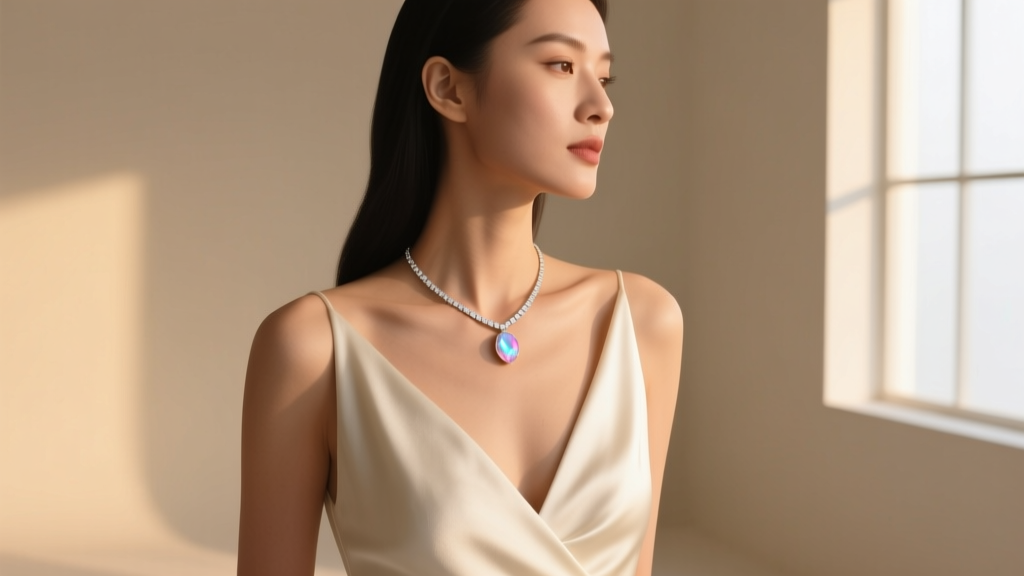
For everyday wear, durability is paramount. An Australian or lab-created opal set in a sturdy 14k cable chain will survive the rigors of daily life, including accidental tugs and exposure to hand sanitizers. For romantic anniversaries or evening events, the visual impact takes priority. An Ethiopian Welo opal set in a delicate 18k box chain offers a breathtaking, high-contrast sparkle that pairs beautifully with deep V-necklines and evening wear, provided the wearer understands the stone's hydrophane nature.
Technical Specs: Chain Gauges, Settings, and Durability
The difference between a dainty necklace that lasts a lifetime and one that breaks in a month lies entirely in the micro-engineering of the chain and the setting.
The Right Chain Gauge for Dainty Pendants
When selecting a chain for a dainty opal pendant, the gauge (thickness) is critical. A true dainty chain ranges from 0.9mm to 1.2mm. However, not all chain styles offer the same tensile strength at these micro-gauges. A 1.0mm cable chain is highly durable due to its simple, interlocking oval links that distribute stress evenly. Conversely, a 1.0mm box chain, while beautiful and excellent for preventing hair-snagging, is more prone to kinking and structural failure if pulled.
Furthermore, consider the karat of the gold. While 18k yellow gold offers a richer, warmer hue that complements the fiery flashes of an opal, it is a softer alloy. For a daily-wear dainty necklace, 14k gold is vastly superior; its higher copper and silver content provides the necessary tensile strength to support a pendant without stretching or snapping over time. Always ensure the clasp is a 5mm lobster claw rather than a spring-ring, as lobster claws offer a much more secure closure for fine chains.
Bezel vs. Prong: Protecting Fragile Opals
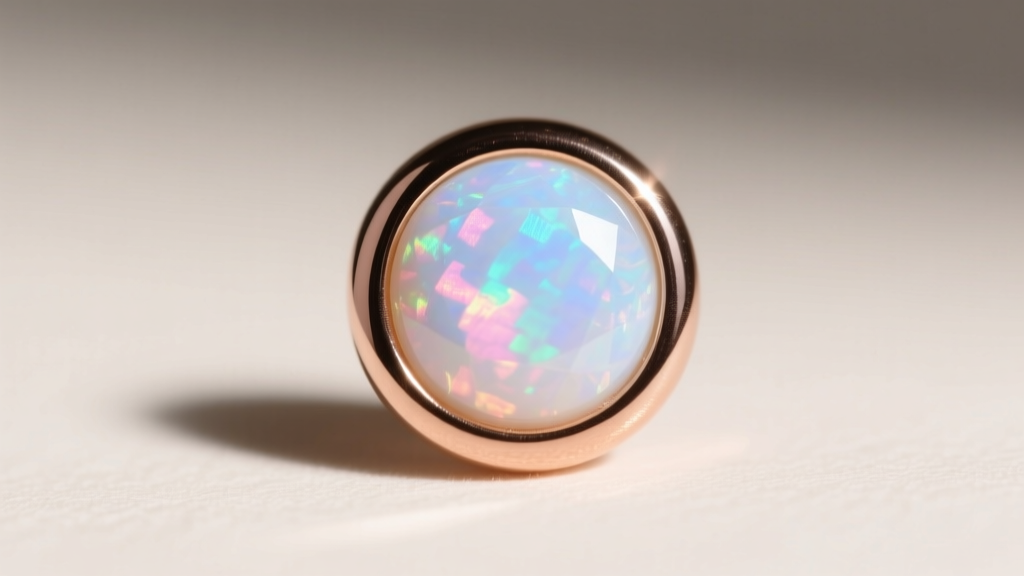
Opals are notoriously fragile at the girdle (the outer edge of the stone). While prong settings allow more light to enter the stone, they leave the girdle exposed to impacts that can easily chip the silica structure. For a dainty opal necklace intended for frequent wear, a bezel setting is non-negotiable. A bezel wraps a continuous rim of metal tightly around the stone's perimeter, protecting it from lateral blows and preventing the stone from slipping out if the necklace is snagged.
Care & Maintenance: Preventing "Crazing" and Clouding
Gifting an opal also means gifting the knowledge of how to care for it. The most catastrophic failure mode for natural opals is "crazing"—a network of internal fractures caused by rapid moisture loss or extreme temperature fluctuations.
Expert Warning: Never gift a dainty natural opal necklace to someone who frequents saunas, lives in extremely arid climates, or works with harsh chemicals without advising them on proper storage and wear protocols.
According to GIA's gemstone care guidelines, opals should never be cleaned in ultrasonic machines or steam cleaners. The high-frequency vibrations and sudden heat can shatter the stone's delicate internal structure. Instead, advise the recipient to clean the necklace using only a soft, damp microfiber cloth and mild, chemical-free soap. When not being worn, the necklace should be stored in a sealed plastic bag with a slightly damp cotton ball to maintain ambient humidity and prevent the stone from drying out and cracking.
Final Gifting Checklist
Before finalizing your purchase, run through this quick diagnostic checklist to ensure the dainty opal necklace meets the highest standards of quality and wearability:
- Stone Verification: Is the opal natural or lab-created? If natural, is it hydrophane (Welo) or stable (Australian)?
- Setting Security: Is the stone secured in a full or half-bezel setting to protect the fragile girdle?
- Chain Integrity: Is the chain gauge between 0.9mm and 1.2mm, and is it crafted from 14k gold for optimal tensile strength?
- Clasp Quality: Does the necklace feature a secure lobster claw clasp rather than a flimsy spring ring?
- Provenance & Ethics: Does the jeweler provide transparent sourcing information or offer certified lab-grown alternatives?
By prioritizing structural integrity and matching the gemstone's specific properties to the recipient's lifestyle, you elevate the dainty opal necklace from a simple accessory to a deeply considered, enduring heirloom.


