How to Tie an Adjustable Knot for Necklace Cords That Won't Slip
Learn how to tie an adjustable knot for necklace cords that stays secure. Step-by-step troubleshooting for sliding macrame and lark's head knots.

The Anatomy of a Failing Adjustable Necklace Knot
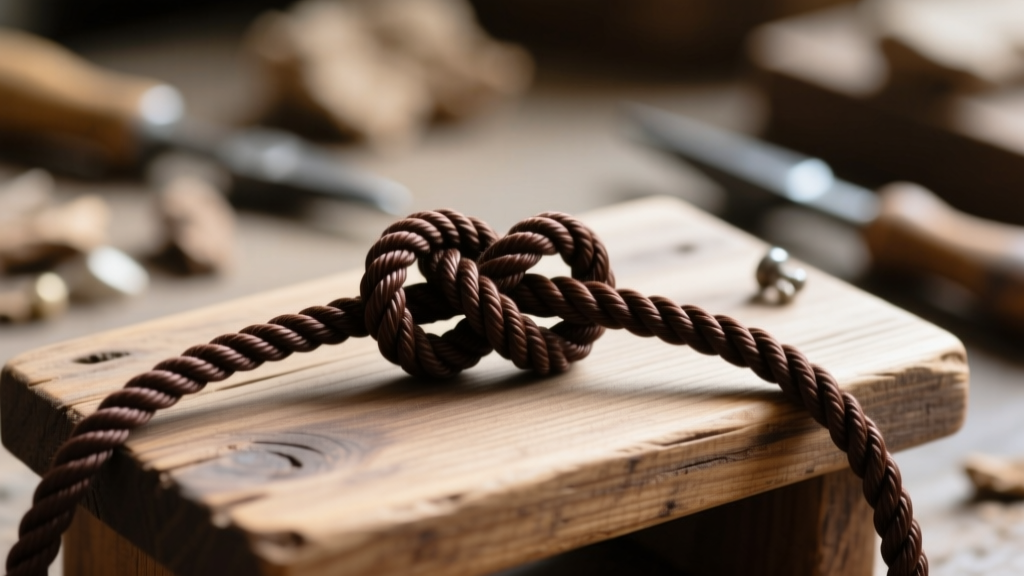
There is nothing more frustrating than crafting or buying a beautiful pendant, stringing it on a cord, and realizing the closure mechanism is fundamentally flawed. When you need to know how to tie an adjustable knot for necklace cords, the internet is flooded with basic overhand loops that fail under the dynamic weight of a pendant. A true adjustable necklace relies on friction-based sliding knots—specifically the double sliding square knot (often used in macrame). When these knots fail, it is rarely due to the user's lack of skill; rather, it is almost always a mismatch between the cord's material properties, the knot's geometry, and the pendant's weight. According to jewelry fabrication experts at Ganoskin, understanding the tensile strength and surface friction of your chosen cord is the first step in troubleshooting a slipping closure.
Cord Material & Thickness: The Hidden Culprits
Before you tie a single loop, you must evaluate your cord. The sliding square knot requires a specific balance of surface texture and flexibility. If the cord is too slick, the knot will slip open when the necklace is pulled. If it is too rigid, the knot will jam and refuse to slide along the main track.
| Cord Material | Ideal Thickness | Friction Level | Best Use Case & Failure Mode |
|---|---|---|---|
| Waxed Cotton | 0.8mm - 1.0mm | High | Heavy pendants. Fails if wax melts from body heat over time. |
| Chinese Knotting Nylon | 0.8mm - 1.2mm | Medium | Versatile, melt-able ends. Fails if tied too loosely (slips). |
| Silk (e.g., Griffin) | 0.5mm - 1.0mm | Low | Pearl stringing. Terrible for sliding knots; degrades and slips. |
| Suede / Leather | 1.5mm - 2.0mm | Very High | Rustic styles. Fails by jamming completely; too stiff to slide. |
For the most reliable adjustable knot, 1.0mm waxed cotton or Chinese knotting nylon provides the optimal balance of grip and glide. Suppliers like Fire Mountain Gems offer these in bulk, ensuring you have enough material to practice your tension before committing to the final piece.
Step-by-Step: How to Tie an Adjustable Knot for Necklace Cords
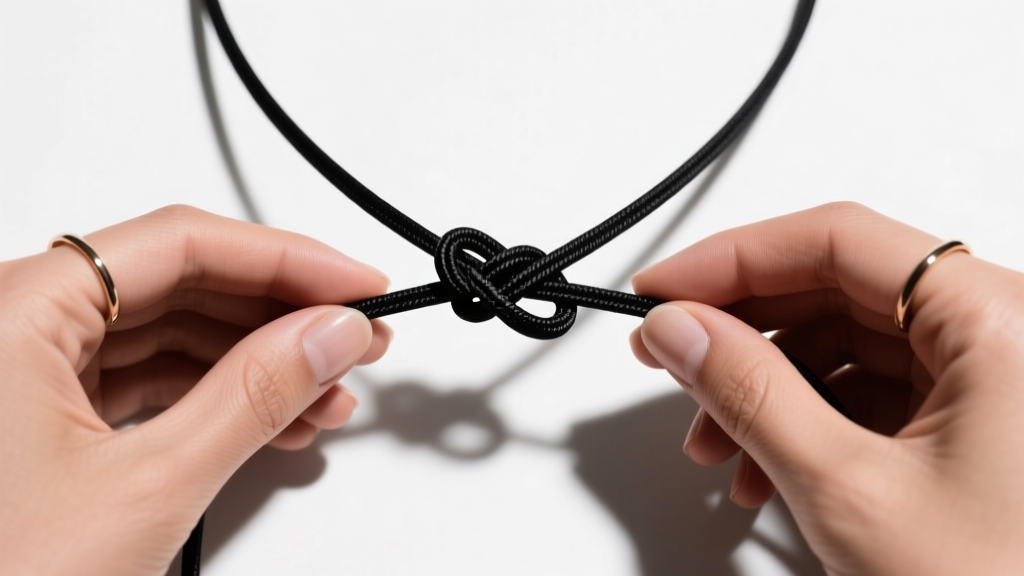
The secret to a knot that slides smoothly but locks under tension is the alternating square knot. If you tie two half-knots in the same direction, you create a spiral (granny knot) that will twist, bind, and eventually lock up or snap the cord.
- Prep the Track: Lay your main necklace cord flat. Overlap the two ends by about 4 inches to create the sliding track.
- The Anchor Cord: Take a separate, 12-inch piece of the same cord material to act as your tying cord.
- First Half-Knot: Place the anchor cord under the track. Bring the left end over the track and under the right end. Bring the right end over the track and up through the left loop. Pull tight.
- Second Half-Knot (The Reversal): Now, bring the right end over the track and under the left. Bring the left end over the track and up through the right loop. Pull tight.
- Repeat: Alternate left-over-right, then right-over-left, until you have tied 3 to 4 complete square knots. This creates a barrel-shaped slider that is long enough to grip the track securely without jamming.
Integrating the Pendant: Bail Sizes and Threading Order
A common troubleshooting nightmare occurs when a jeweler ties the adjustable knot perfectly, only to realize the pendant's bail is too small to fit over the knot and the doubled cord. Always thread your pendant before tying the sliding knots. If your pendant has a standard wire loop bail, ensure the inner diameter is at least 3.5mm to comfortably accommodate two strands of 1.0mm cord plus the natural curve of the material. For heavy stone pendants, consider using a pinch bail or a glue-on bail with a reinforced jump ring to prevent the cord from fraying against sharp metal edges.
Troubleshooting: Why Your Knot Keeps Jamming or Slipping
- Problem: The knot twists into a spiral and locks.
Diagnosis: You tied a half-hitch spiral instead of a square knot. You failed to reverse the starting side on the second half of the knot.
Solution: Unravel and strictly alternate your starting cord (Left over Right, then Right over Left). - Problem: The knot slides too easily and the necklace opens.
Diagnosis: The cord is too thin, too slick (like silk), or you only tied one or two square knots.
Solution: Add two more square knots to increase the surface friction area, or switch to a waxed cotton cord. - Problem: The main track cord snaps inside the knot.
Diagnosis: You pulled the square knots too tight during the tying process, crushing the core fibers of the main track.
Solution: Snug the knots firmly, but do not yank them. The knot should be tight enough to hold its shape, but loose enough that you can manually push it along the track.
The Finishing Touch: Securing the Tail Ends
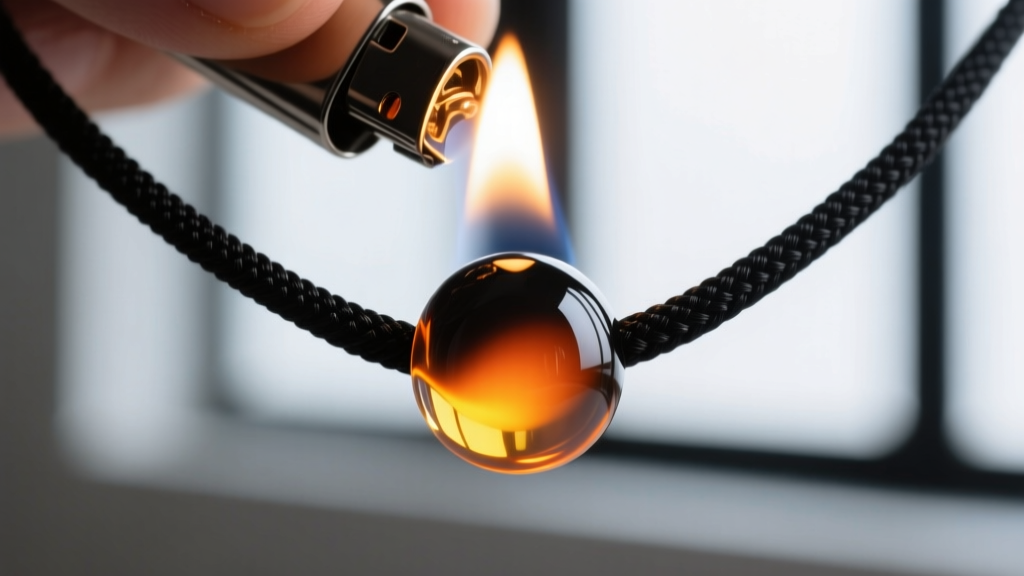
Once your sliding knot is complete, you must trim and secure the tails of the main track cord so they don't slip back through the knot when the necklace is pulled to its maximum width. Leave at least 10mm of tail on each side. If you are using nylon Chinese knotting cord, use a precision butane lighter to melt the tips into smooth, rounded beads. If you are using waxed cotton, melting will create a brittle, sharp lump that can scratch the wearer. Instead, apply a micro-drop of G-S Hypo Cement to the cut ends to seal the fibers without adding bulk.
Expert Maintenance Tips for Longevity
Adjustable cord necklaces require minor maintenance to ensure the sliding mechanism lasts for years. Avoid wearing waxed cotton adjustable necklaces in the shower; hot water and soap will strip the wax coating, drastically reducing the friction required for the knot to hold. For nylon cords, periodically check the melted end-beads. If they become cracked or sharp from catching on clothing, simply snip them off and re-melt the tip. By mastering the geometry of the square knot and respecting the material science of your cords, you will create adjustable necklaces that are as durable as they are versatile.


