The True Cost of Pearl Necklace Gifts: 2026 Guide
Discover the true cost of pearl necklace gifts for every occasion. Our 2026 guide breaks down pricing by pearl type, grade, and hidden value factors.

Why the Cost of Pearl Necklace Gifts Varies So Wildly
Walking into a jeweler or browsing online boutiques in 2026 reveals a staggering price disparity. You can find a pearl strand for $45 or $45,000. For gift-givers, this massive gap creates confusion. What separates a budget-friendly strand from an heirloom-quality investment? The cost of pearl necklace gifts is dictated by a complex matrix of gemological factors, origin, and craftsmanship. Whether you are shopping for a high school graduation, a bridal trousseau, or a 30th wedding anniversary, understanding these variables ensures you never overpay for inferior quality or underwhelm with a mismatched gift.
According to the Gemological Institute of America (GIA), pearl valuation relies on seven distinct quality factors: size, shape, color, luster, surface quality, nacre quality, and matching. Let us break down exactly what your budget buys you across different gifting occasions.
The Four Pillars of Pearl Valuation
Before matching a necklace to an occasion, you must understand the gemological metrics that drive the price tag. Reputable jewelers and the American Gem Society (AGS) evaluate saltwater and freshwater pearls using rigorous standards.
- Luster (The Most Critical Factor): High-quality pearls exhibit sharp, mirror-like reflections. A pearl with excellent luster will reflect a clear image of the light source, whereas poor luster appears chalky or dull. Luster alone can double or triple the price of a strand.
- Nacre Thickness: Nacre is the crystalline substance the oyster secretes. In bead-nucleated saltwater pearls (like Akoya), nacre should be at least 0.4mm thick. If the nacre is too thin, the bead nucleus becomes visible, creating a dull, striped appearance that severely devalues the necklace.
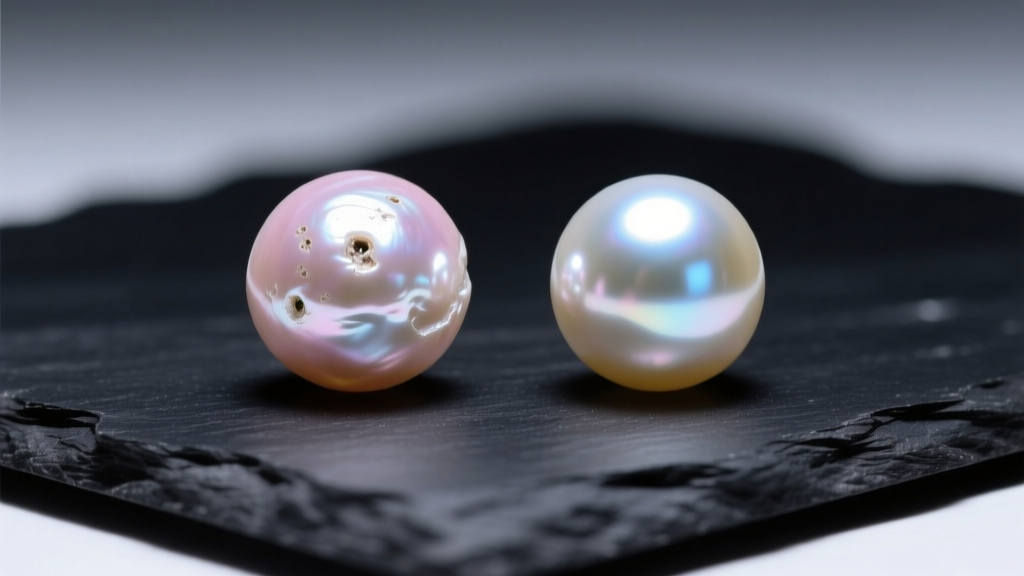
- Surface Quality: Flawless pearls are exceptionally rare. Gemologists grade surfaces from 'Clean' to 'Heavily Blemished'. Minor microscopic blemishes are acceptable and prove the pearl is natural, but deep cracks or chalky spots compromise structural integrity and lower the cost significantly.
- Size and Matching: Pearl sizes are measured in millimeters. A 1mm increase in diameter can result in a 40% to 60% price jump. Furthermore, matching dozens of pearls for uniform color, overtone, and luster requires sorting through thousands of harvested gems, adding immense labor costs to premium strands.
Occasion-Matched Gifting Guide & Price Brackets
Different milestones call for different tiers of pearl jewelry. Below is a structured framework to help you align your budget with the recipient's milestone.
| Occasion | Ideal Pearl Type | Recommended Size | Estimated Cost Range |
|---|---|---|---|
| Sweet 16 / Graduation | AAA Freshwater | 6.0mm - 7.5mm | $120 - $350 |
| Bridal / Wedding Day | AA+ or AAA Akoya | 7.0mm - 8.5mm | $800 - $2,200 |
| Birth of a Child (Push Present) | Edison Freshwater | 10.0mm - 13.0mm | $300 - $700 |
| 30th Pearl Anniversary | Tahitian or South Sea | 9.0mm - 12.0mm | $2,500 - $8,000+ |
Sweet 16 & High School Graduation
For younger recipients, a classic 16-inch or 18-inch princess-length strand is ideal. Modern AAA-grade freshwater pearls offer incredible value. Thanks to advanced tissue-nucleating techniques developed in China, freshwater pearls now rival the luster of saltwater gems at a fraction of the price. Expect to pay between $120 and $350 for a beautifully matched, near-round strand with bright luster and minimal surface blemishes.
The Bridal Trousseau & Weddings
Brides traditionally favor the sharp, mirror-like luster and perfectly round shape of Japanese Akoya pearls. The classic bridal size is 7.0mm to 8.0mm. When shopping, look for 'Hanadama' certification from the Pearl Science Laboratory of Japan, which guarantees the absolute highest tier of luster, nacre thickness, and surface quality. A genuine Hanadama Akoya necklace will typically cost between $1,200 and $2,200, serving as a lifelong keepsake that can be passed down to future generations.
Milestone Anniversaries (The 30th Pearl Jubilee)
The 30th anniversary is the official pearl jubilee. This milestone demands luxury. Tahitian pearls (known for their natural dark body colors and peacock overtones) or White South Sea pearls (prized for their massive size and satiny luster) are the standard. Because these oysters produce only one pearl at a time and require years of cultivation in pristine ocean environments, the cost reflects their scarcity. Budget at least $2,500 for a high-quality, well-matched Tahitian strand, and upwards of $5,000 for premium South Sea varieties.
Hidden Costs: Stringing, Clasps, and Treatments
When evaluating the cost of pearl necklace gifts, amateur buyers focus solely on the gems. Experts look at the stringing and hardware. A $3,000 strand of South Sea pearls strung on cheap nylon with a base-metal clasp is a structural disaster waiting to happen.
- The Stringing Material: Premium necklaces are strung on 100% pure silk cord (often Griffin brand). Silk drapes beautifully and stretches slightly, allowing the pearls to move fluidly. Synthetic threads are cheaper but lack the luxurious drape and can degrade unpredictably.
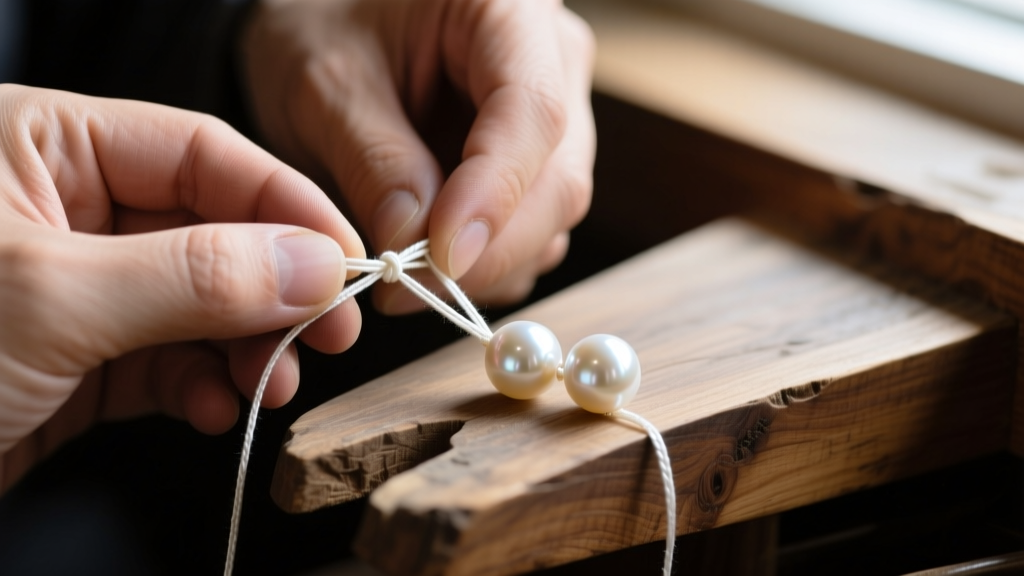
- Hand-Knotting: Every single pearl must be separated by a hand-tied silk knot. This prevents the pearls from rubbing against each other (which damages the nacre) and ensures that if the strand breaks, you only lose one pearl. Machine-strung or unknotted necklaces are a major red flag.
- French Wire (Gimp): High-end strands use a tiny coil of precious metal wire called French wire at the ends where the silk meets the clasp. This prevents the metal clasp from sawing through the silk thread over time.
- Clasp Quality: The clasp should be solid 14k or 18k gold, or platinum. Ball clasps with diamond accents add $150 to $400 to the final price but elevate the piece from standard jewelry to fine estate-quality heirloom.
Expert Checklist for Verifying Value
Before finalizing your purchase, run the necklace through this rapid gemological checklist to ensure the asking price is justified:
- The Roll Test: Lay the strand on a flat surface. If the pearls wobble or the strand twists, the drill holes are off-center or the pearls are poorly matched.
- The Luster Check: Look at your reflection in the pearl's surface. If you can clearly see the outline of your eye or a window frame, the luster is excellent. If the reflection is blurry, walk away.
- The Tooth Test (With Caution): Gently rub the pearl against the edge of your front tooth. Natural and cultured pearls feel slightly gritty or sandy due to their crystalline nacre structure. Imitation glass or plastic pearls will feel perfectly smooth.
- Request the Origin: A reputable jeweler will tell you exactly where the pearls were cultivated (e.g., Uwajima, Japan for Akoya; French Polynesia for Tahitian). Vague answers like 'imported saltwater' indicate a lack of supply chain transparency.
"A pearl necklace is not merely an accessory; it is a record of time, cultivated layer by microscopic layer over several years. When you gift pearls, you are gifting patience, nature, and enduring elegance."
Ultimately, the cost of pearl necklace gifts should be viewed through the lens of longevity. By prioritizing luster, nacre integrity, and premium stringing techniques over sheer size, you can find breathtaking, occasion-appropriate gifts that will be cherished for decades to come.