The Anatomy of a Ballerina Slipper Necklace: A Technical Guide
Explore the technical anatomy, material grades, and casting methods behind the perfect ballerina slipper necklace for dancers and collectors.

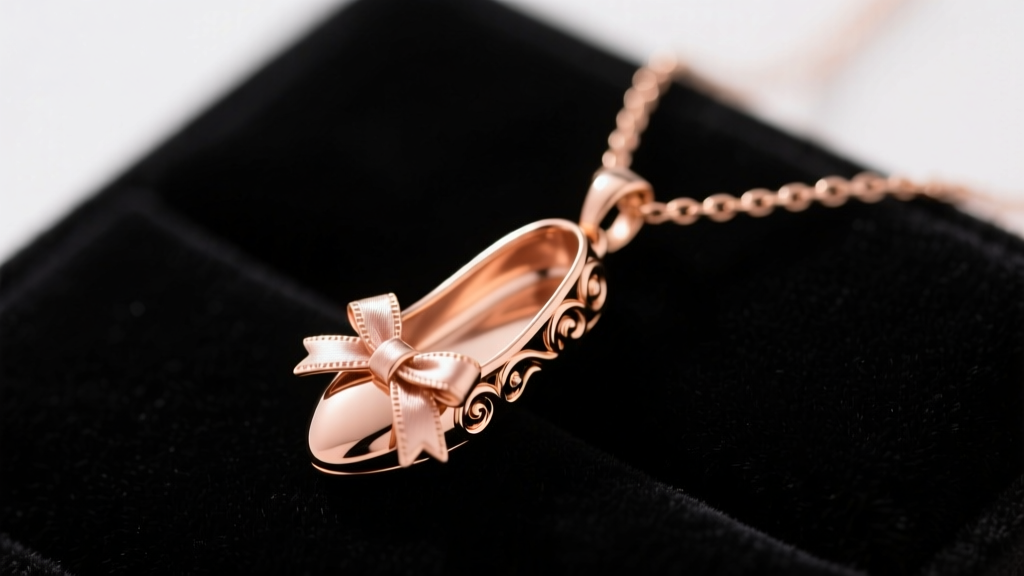
The Architecture of the Pointe Shoe Pendant
When evaluating a ballerina slipper necklace, the untrained eye simply sees a charming miniature shoe. However, from a metallurgical and design perspective, a high-quality pointe shoe pendant is a complex exercise in micro-sculpture and weight distribution. Translating the organic, asymmetrical drape of satin ribbons and the rigid, structured geometry of a hardened pointe box into cast metal requires master-level CAD (Computer-Aided Design) modeling or meticulous hand-carved wax prototyping.
Translating Canvas and Satin to Metal
A technically accurate ballerina slipper pendant must capture five distinct anatomical features of the actual dance shoe:
- The Box: The hardened, flat tip of the shoe. In jewelry, this is often cast with a slightly flattened profile to mimic the dancer's platform, sometimes textured with micro-bead blasting to simulate the canvas and glue composite.
- The Vamp: The U-shaped front section. High-end pendants feature a deep, polished U-curve, occasionally accented with a drawstring bow cast in high relief.
- The Shank and Sole: The rigid bottom. Jewelers often use the shank as the primary flat plane for laser engraving or as the mounting point for the bail.
- The Wings: The side panels of the shoe, which should taper gracefully toward the heel.
- The Ribbons: The most challenging element. Poorly designed pendants feature stiff, uniform ribbons. Expert castings utilize undercutting techniques in the wax model to create the illusion of overlapping, flowing satin, capturing the dynamic tension of a tied knot.
The Center of Gravity: Bail Mechanics and the 'Flip' Issue
One of the most common failure modes in novelty pendants—including the ballerina slipper necklace—is the 'flip.' Because a pointe shoe is inherently asymmetrical (heavy at the box, tapered at the heel), the center of gravity rarely aligns with the geometric center of the piece. If the bail (the loop that connects the pendant to the chain) is placed dead-center on the shank, the shoe will hang at an awkward, tilted angle, or constantly flip upside down against the wearer's chest.
To counteract this, expert jewelers employ counterweighting and offset bail placement. By shifting the bail 1.5 to 2 millimeters toward the heavier box of the shoe, or by adding a hidden, dense tungsten or sterling silver counterweight inside the hollow heel cavity during the casting process, the pendant achieves a perfect horizontal or elegantly angled drape. When sourcing a ballerina slipper necklace, always examine the bail placement; an offset bail is a hallmark of superior engineering.
Material Grades and Casting Techniques
The material choice dictates not only the price but the longevity of the intricate details. The deep crevices of the ribbon knots are highly susceptible to polishing compound buildup and tarnish, making the choice of alloy critical.
| Material | Finish Type | Durability & Tarnish Resistance | Price Range (USD) | Best For |
|---|---|---|---|---|
| 925 Sterling Silver | High Polish / Oxidized | Moderate. Requires regular cleaning in crevices. Oxidized finishes hide tarnish well. | $45 - $120 | Everyday wear, students, budget-conscious collectors. |
| 14k Gold Vermeil | High Polish | High, if plated correctly. Must meet FTC standards of 2.5 microns minimum thickness over silver. | $90 - $250 | Gift giving, semi-formal wear, those with silver allergies. |
| Solid 14k/18k Gold | Satin / Matte / Polish | Exceptional. Will not tarnish. Captures micro-details sharply due to gold's casting properties. | $350 - $800+ | Heirloom pieces, professional dancers, lifelong keepsakes. |
| Enamel Accents | Cold Enamel / Vitreous | Vitreous (fired) is highly durable; Cold (resin) can chip if dropped on hard surfaces. | +$30 - $150 | Adding the traditional 'pink satin' color to the vamp. |
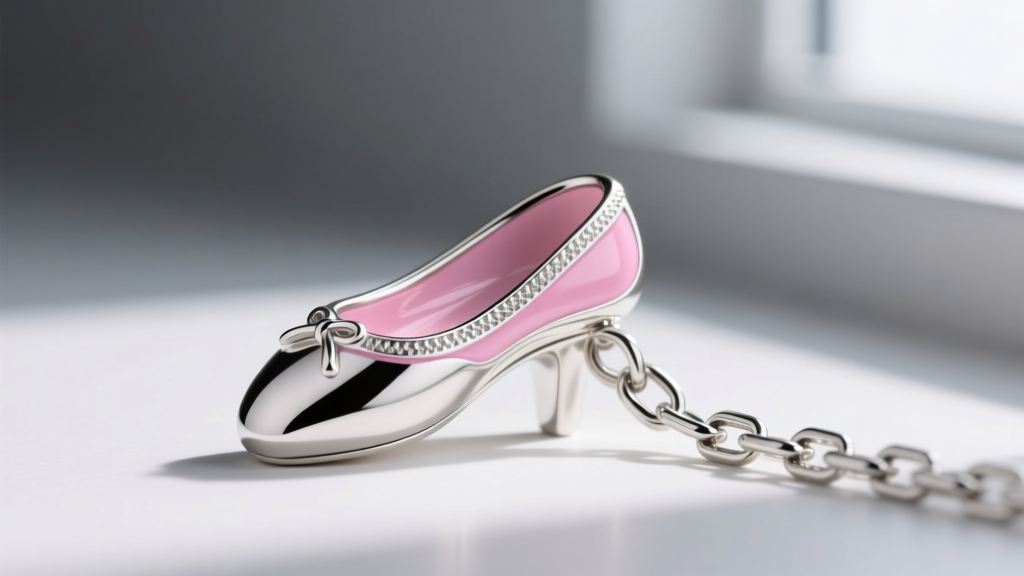
According to the Federal Trade Commission's Jewelry Guides, the term 'vermeil' is strictly regulated. A ballerina slipper necklace marketed as vermeil must consist of a sterling silver base coated with gold of at least 10-karat fineness, with a minimum thickness of 2.5 microns. Many mass-market dance jewelry brands use standard flash plating (under 0.5 microns), which will wear off the high-friction ribbon edges within months. Always verify the micron thickness with the manufacturer.
Chain Pairing and Bail Mechanics
The delicate nature of a pointe shoe pendant requires a chain that provides structural support without visually overwhelming the micro-sculpture. The bail aperture on most slipper pendants ranges from 3mm to 5mm.
Optimal Chain Gauges and Lengths
- 1.0mm - 1.2mm Box Chain: The superior choice. The square, interlocking links provide excellent tensile strength and a smooth surface that won't catch on the delicate metal loops of the pendant's ribbons.
- 0.9mm Cable Chain: A classic, lightweight option, but prone to kinking if the pendant is heavy (e.g., solid 18k gold). Best reserved for hollow-cast or silver pendants under 4 grams.
- Length: A 16-inch choker length positions the shoe at the collarbone, mimicking a tight choker or ribbon tie. An 18-inch princess length allows the shoe to rest on the upper sternum, which is generally preferred for larger pendants (20mm+) to prevent it from looking like a brooch.
Pricing Tiers and Craftsmanship Markers
When shopping for a ballerina slipper necklace, pricing is a direct reflection of the production method. Here is a technical breakdown of what you are paying for at each tier:
The Mass-Production Tier ($30 - $70): These pieces are typically spun-cast from low-grade pewter or thin silver, often featuring blurred details on the ribbon knots and a visible 'sprue mark' (a small bump where the metal was injected into the mold) on the side of the shank. The ribbons look like flat, extruded tubes rather than draped fabric.
The Artisan/Boutique Tier ($120 - $350): Cast using the lost-wax method from hand-carved or high-resolution 3D-printed resin waxes. The ribbons feature deep undercuts, and the box of the shoe may feature a subtle brushed finish to mimic canvas. Bails are integrated and soldered securely, rather than glued.
The Fine Jewelry Tier ($500 - $1,500+): Solid 14k or 18k gold, often featuring pavé diamonds along the vamp or the drawstring bow. The finishing is done entirely by hand under a microscope, ensuring no polishing compound is left in the crevices of the ribbon ties.
Customization: Engraving the Shank
For dance students and professionals, personalizing the shank (the sole of the shoe) is a popular request. The technical challenge here is the surface area. A standard pendant shank offers a flat canvas of roughly 8mm x 3mm.
Laser engraving is the only viable method for this scale. Fiber lasers can etch initials, graduation years, or the name of a specific ballet (e.g., 'Swan Lake') into the metal with a line width of 0.05mm. Hand engraving is generally discouraged for pendants of this scale, as the pressure required to push a graver tool can warp or bend the thin metal shank, ruining the structural integrity of the piece.
Maintenance: Preserving Enamel and Crevices
Cleaning a ballerina slipper necklace requires a departure from standard jewelry care. The intricate, overlapping ribbons create micro-crevices that trap skin oils, lotions, and environmental dust. Furthermore, if your pendant features cold enamel (a resin-based pigment used to create the pink 'satin' look on the vamp), ultrasonic cleaners will shatter or cloud the enamel.
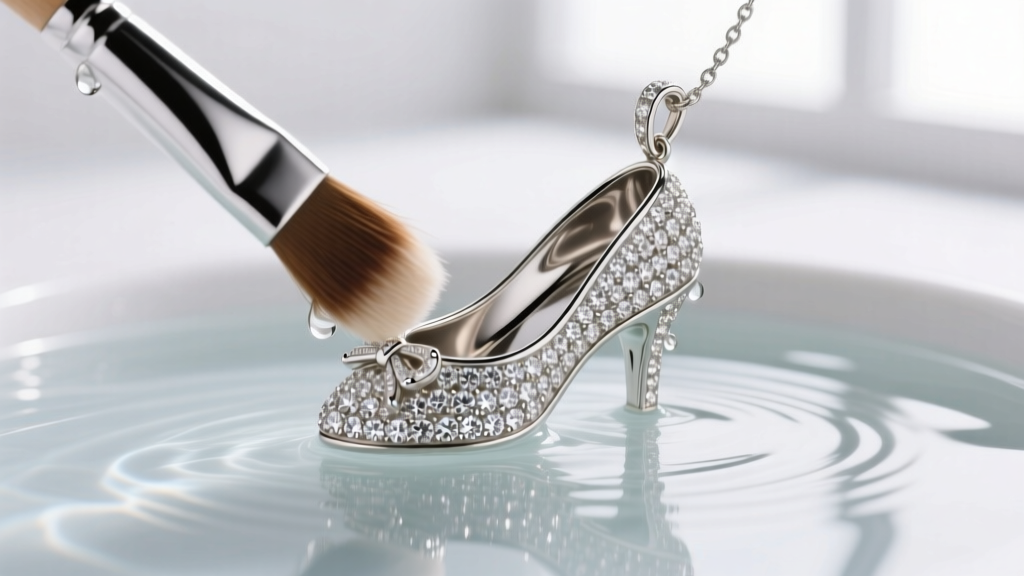
The Victoria and Albert Museum's conservation guidelines recommend gentle, non-abrasive cleaning for intricate metalwork. Follow this protocol:
- The Soak: Submerge the pendant in a bowl of lukewarm water mixed with a few drops of phosphate-free dish soap for 10 minutes. This softens sebum trapped in the ribbon knots.
- The Agitation: Use a baby toothbrush (which has ultra-soft bristles) to gently sweep the crevices. Never use a standard adult toothbrush, as the stiff nylon bristles can scratch high-polish silver and gold.
- The Rinse and Dry: Rinse under distilled water to prevent hard water spots. Use a can of compressed air or a hairdryer on the 'cool' setting to blow water out of the deep undercuts. Drying with a cloth will leave lint caught in the metal ribbons.
Final Sourcing Recommendations
When investing in a ballerina slipper necklace, prioritize the engineering of the bail and the depth of the ribbon undercuts over sheer carat weight or gemstone accents. A technically sound, well-balanced sterling silver pendant will outwear and outshine a poorly proportioned solid gold piece every time. Look for jewelers who specialize in dance motifs and can provide CAD renderings or detailed macro-photography of the wax models before casting, ensuring the anatomy of the pointe shoe is respected in metal.


