Troubleshooting Your Bamboo Necklace: Cracks, Mold & Care
Learn how to troubleshoot common bamboo necklace issues like cracking, mold, and discoloration with expert repair and sealing techniques.

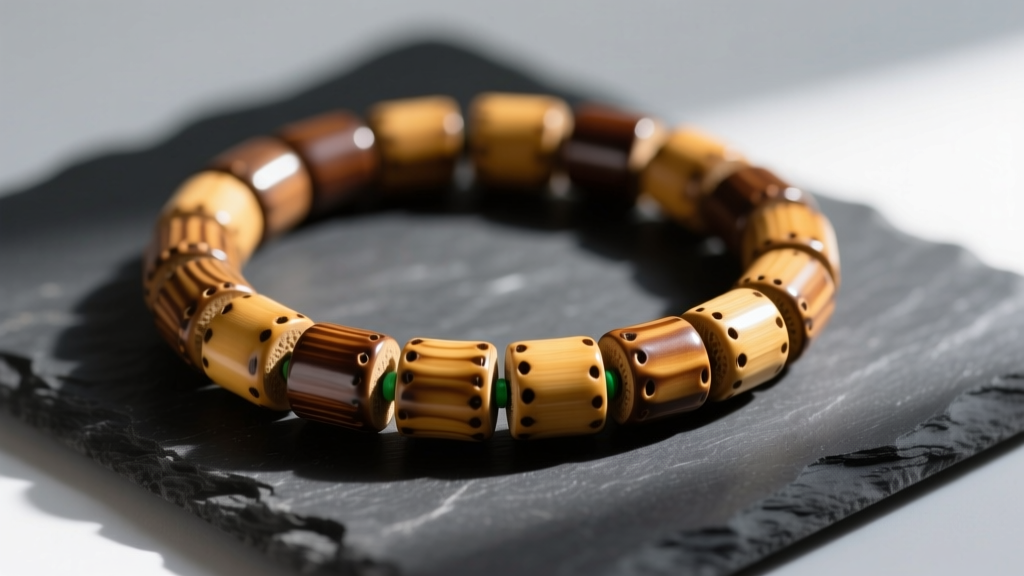
The Anatomy of Bamboo Jewelry: Why It Fails
Bamboo is technically a fast-growing grass, not a hardwood. This biological distinction gives bamboo necklaces their signature lightweight feel and striking vertical grain, but it also introduces unique structural vulnerabilities. Unlike dense hardwoods, bamboo is composed of vascular bundles embedded in a parenchyma tissue matrix. This structure makes it highly hygroscopic—meaning it rapidly absorbs and releases moisture from the surrounding environment. When crafted into jewelry, these natural properties can lead to catastrophic failures if the necklace is not properly stabilized, sealed, and maintained. Whether you are dealing with a vintage bamboo pendant or a modern eco-conscious bead strand, understanding the material science behind the breakage is the first step toward a permanent repair.
Troubleshooting Matrix: Diagnosing Your Bamboo Necklace
Before attempting any repairs, accurately diagnose the failure point. Use the matrix below to identify the root cause of your bamboo necklace's deterioration and apply the corresponding immediate fix.
| Symptom | Root Cause | Immediate Actionable Fix |
|---|---|---|
| Radial micro-cracking along the grain | Rapid moisture loss due to low ambient humidity (below 30% RH) | Stabilize with thin cyanoacrylate (CA) glue and sand with 2000-grit micro-mesh. |
| White or green fuzzy spots in bead crevices | Fungal bloom (mold) feeding on residual bamboo starches and skin oils | Wipe with 70% isopropyl alcohol and expose to UV-C light for 15 minutes. |
| Skin discoloration (green/black marks) | Degradation of cheap nitrocellulose lacquer or reaction with copper/brass findings | Strip the finish with a citrus solvent and reseal with polymerized tung oil. |
| Fraying or snapping of the stringing cord | Abrasive silica edges inside hastily drilled bamboo bead holes cutting through silk | Restring using 49-strand nylon-coated stainless steel micro-wire with rubber O-ring buffers. |
Problem 1: Micro-Cracking and Splitting
The Humidity Factor and Equilibrium Moisture Content
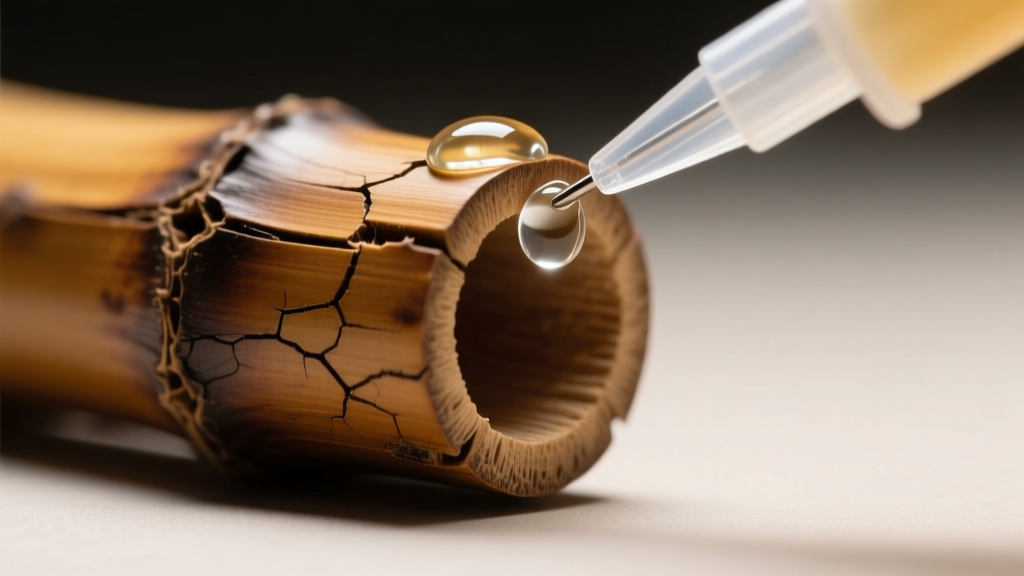
Bamboo naturally seeks an Equilibrium Moisture Content (EMC) with its environment. According to data from the USDA Forest Products Laboratory, bamboo maintains optimal structural integrity at a moisture content of 8% to 12%. During winter months, indoor heating can plunge relative humidity (RH) below 20%. When this happens, the outer layers of the bamboo beads dry and shrink faster than the inner core, creating immense tensile stress that results in radial checks (cracks) running parallel to the grain.
How to Stabilize Cracked Bamboo Beads
Do not attempt to fill structural cracks with standard wood filler or epoxy putty; these will not flex with the bamboo and will eventually pop out. Instead, use a penetrating adhesive.
- Step 1: Clean the crack with a soft brush to remove skin oils and dust.
- Step 2: Apply water-thin cyanoacrylate (CA) glue directly into the fissure. The low viscosity allows the glue to wick deep into the vascular bundles via capillary action.
- Step 3: Allow it to cure for 24 hours. Do not use a CA accelerator spray, as it can cause the glue to turn opaque white, ruining the natural amber hue of the bamboo.
- Step 4: Once fully cured, gently polish the bead using a 3000-grit micro-mesh pad to restore the glass-like finish without removing the natural patina.
Problem 2: Mold, Mildew, and Dark Spots
Because bamboo is a grass, its parenchyma cells store high levels of starches and reducing sugars. If a bamboo necklace is worn frequently against the skin during hot weather, the combination of sweat, dead skin cells, and ambient moisture creates an ideal breeding ground for Aspergillus and Penicillium mold spores. This typically manifests as dark, stubborn spots or a white fuzz deep within the carved nodes of the beads.
Safe Cleaning Protocols for Fungal Eradication
Never submerge a bamboo necklace in water or use harsh bleach solutions, which will destroy the lignin structure and cause severe warping. Instead, employ a targeted, low-moisture eradication method:
- Dampen a microfiber cloth with 70% isopropyl alcohol (higher concentrations evaporate too quickly to penetrate the fungal cell walls).
- Wipe down each bead individually, paying special attention to the end-grain nodes where moisture enters most easily.
- Use a wooden toothpick wrapped in a thin layer of cotton to gently swab the inside of the drill holes.
- Place the necklace in a dry, well-ventilated area and expose it to indirect sunlight or a UV-C sanitizing lamp for 15 to 20 minutes to destroy any remaining spores.
Problem 3: Finish Degradation and Skin Discoloration
A common complaint among wearers of organic jewelry is that a bamboo necklace turns their skin green or black. While many assume the bamboo itself is leaching toxins, the culprit is almost always the factory-applied finish or the metal hardware. Mass-produced bamboo jewelry is often coated in cheap nitrocellulose lacquer or polyurethane. When exposed to the slightly acidic pH of human sweat (typically between 4.5 and 6.2), these surface finishes break down into a sticky residue that traps oxidized metals from adjacent copper or brass clasps, transferring the dark patina directly to your skin.
Stripping and Resealing with Penetrating Oils
To permanently solve this issue, you must remove the failing surface film and replace it with a breathable, skin-safe penetrating finish. The International Bamboo and Rattan Organization (INBAR) frequently recommends natural oil treatments for bamboo preservation. Polymerized tung oil is the gold standard for jewelry applications because it undergoes a chemical cross-linking process as it cures, hardening inside the bamboo's pores rather than sitting on top of the surface where it can peel.
- Apply a citrus-based solvent to a rag and vigorously rub the beads until the sticky, degraded lacquer is completely removed.
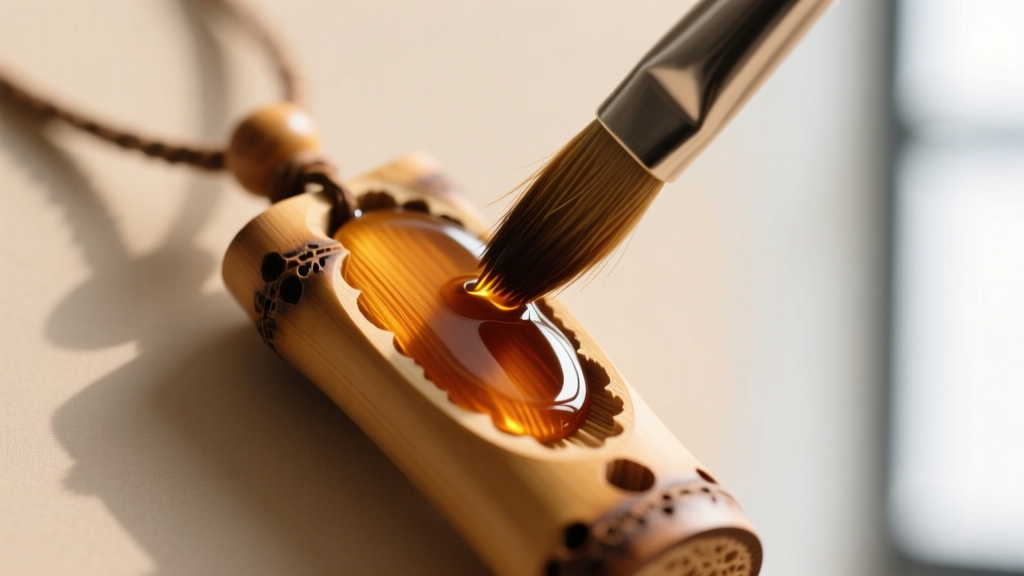
- Once the raw bamboo is exposed and dry, flood the beads with 100% pure, polymerized tung oil.
- Let the oil soak for 45 minutes, then wipe off all excess with a lint-free cloth. Leaving excess oil on the surface will result in a gummy, tacky finish.
- Allow 72 hours for full polymerization before wearing.
Restringing: Upgrading the Core Wire
Bamboo contains high levels of silica (up to 4% in some species), which acts as a natural defense mechanism against pests but acts like sandpaper against jewelry cords. If your bamboo necklace is strung on silk, cotton, or basic nylon thread, the sharp, unpolished edges of the drill holes will eventually saw through the fibers, leading to sudden catastrophic breakage. According to the Gemological Institute of America (GIA), organic and porous beads require specialized stringing materials that resist abrasion.
The Expert Restringing Solution:
Discard traditional beading thread. Instead, restring your bamboo necklace using a 0.018-inch 49-strand nylon-coated stainless steel micro-wire (such as Soft Flex). The 49-strand construction provides the drape and flexibility of silk, while the steel core is entirely impervious to the abrasive silica inside the bamboo beads. To prevent the metal wire from clicking against the bamboo and causing micro-chipping at the bead holes, thread a 1mm clear rubber O-ring or a tiny silicone bead buffer between each bamboo bead during the restringing process.
Preventative Care Checklist
To ensure your bamboo necklace survives decades of wear without requiring major troubleshooting, adhere to this strict maintenance protocol:
- Climate Control: Store the necklace in a cedar box with a small, two-way humidity control packet (maintaining 45-50% RH) during dry winter months.
- Chemical Avoidance: Never apply perfume, hairspray, or sunscreen while wearing the necklace. The alcohol and emulsifiers in these products will instantly strip penetrating oils and cloud natural lacquers.
- Post-Wear Wipe: After taking the necklace off, gently wipe the beads with a dry, untreated microfiber cloth to remove acidic skin oils and salt deposits before putting it away.
- Annual Oiling: Reapply a micro-thin coat of polymerized tung oil or carnauba wax paste once a year to replenish the lipid barrier and maintain the bamboo's natural water resistance.


