Baroque Necklace Guide: Freshwater vs. Saltwater Pearl Properties
Compare freshwater and saltwater baroque necklace materials. Discover nacre thickness, luster grades, and durability traits to choose your perfect piece.

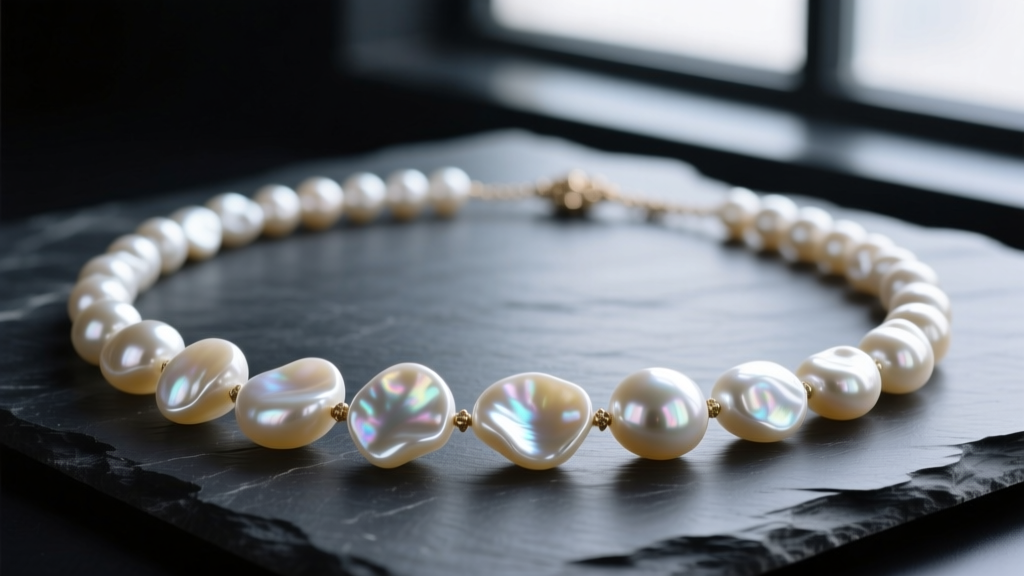
The Anatomy of a Baroque Pearl: What Defines the Shape?
When jewelry enthusiasts search for a baroque necklace, they are typically drawn to the organic, non-spherical silhouettes that define this unique pearl category. But from a gemological perspective, the baroque shape is not merely an aesthetic choice; it is the direct result of specific biological anomalies within the mollusk's mantle tissue. Unlike perfectly round pearls, which form when a spherical nucleus is evenly coated with nacre, baroque pearls develop when the nacre-secreting cells (the pearl sac) encounter irregularities, tissue displacement, or multiple nucleation points.
Understanding the material properties of these organic gemstones is critical for collectors and everyday wearers alike. The structural integrity, luster profile, and long-term durability of a baroque pearl necklace depend entirely on whether the pearls were cultivated in freshwater or saltwater environments. According to the Gemological Institute of America (GIA), the value and physical properties of any pearl are dictated by its nacre thickness, luster, and surface quality—all of which vary drastically between freshwater and saltwater cultivation methods.
Freshwater vs. Saltwater Baroque Pearls: A Material Showdown
The fundamental difference between a freshwater and saltwater baroque necklace lies in the nucleation process and the host mollusk species. Freshwater baroque pearls, predominantly cultivated in China using the Hyriopsis cumingii mussel, are typically tissue-nucleated. This means a tiny piece of donor mantle tissue is inserted without a hard bead. Saltwater baroque pearls, such as Tahitian or South Sea variants, are bead-nucleated using a spherical mother-of-pearl bead alongside a tissue graft in the Pinctada margaritifera or Pinctada maxima oysters.
| Material Property | Freshwater Baroque (Tissue-Nucleated) | Saltwater Baroque (Bead-Nucleated) |
|---|---|---|
| Nacre Thickness | 100% Solid Nacre (2mm - 8mm+) | 0.8mm - 2.5mm over a bead nucleus |
| Structural Core | Homogenous calcium carbonate | Mississippi river shell bead |
| Luster Profile | Satiny, soft, deep glow | Mirror-like, sharp, high-contrast |
| Mohs Hardness | 2.5 - 4.5 (Uniform) | 2.5 - 4.5 (Nacre) / 3.5 (Bead) |
| Durability Risk | Chipping at drill holes | Nacre peeling or flaking if too thin |
Nacre Thickness and Structural Integrity
Because tissue-nucleated freshwater baroque pearls are composed entirely of nacre, they are exceptionally durable against cracking and crushing. However, this solid nacre structure results in a softer, more satiny luster because light scatters through the dense, overlapping aragonite platelets. Conversely, saltwater baroque pearls boast a sharper, mirror-like luster due to the tighter, more uniform nacre deposition over a rigid bead nucleus. Yet, this creates a critical failure mode: if a saltwater baroque pearl is harvested too early, resulting in nacre thinner than 0.5mm, the nacre can peel or flake off the bead core over time. When purchasing a high-end saltwater baroque necklace, always request an X-ray or optical coherence tomography (OCT) scan from the jeweler to verify the nacre exceeds the 0.8mm minimum export standard mandated by French Polynesia for Tahitian pearls.
Metal Hardware: Best Alloys for Baroque Pearl Necklaces
The organic nature of pearls demands careful selection of metal hardware. Pearls are primarily composed of calcium carbonate and conchiolin (an organic protein). This makes them highly porous and susceptible to chemical reactions. The clasps, bails, and spacer beads on a baroque necklace must be chosen not just for aesthetics, but for chemical stability.
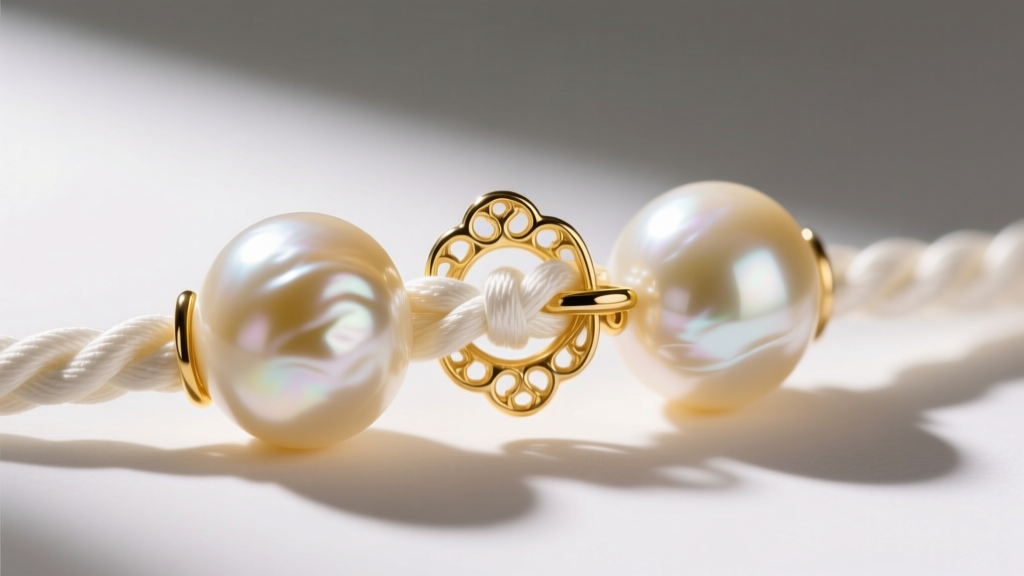
- 14k and 18k Gold: The optimal choice for pearl hardware. Gold is highly unreactive and will not tarnish or transfer corrosive compounds to the pearl's nacre. 14k gold (58.5% pure gold) offers superior tensile strength for clasps compared to softer 22k or 24k gold.
- Platinum: Exceptionally durable and hypoallergenic, platinum is ideal for heavy, multi-strand baroque pearl necklaces that require a high-strength clasp mechanism.
- Sterling Silver (925): While popular for affordable baroque necklaces, sterling silver contains 7.5% copper. In high-humidity environments, the copper oxidizes, creating silver sulfide tarnish. This tarnish can transfer to the porous nacre of adjacent pearls, causing localized gray staining that is nearly impossible to remove without professional polishing.
Stringing Materials: Silk vs. Synthetic Cords
The stringing material dictates the drape, security, and lifespan of your baroque necklace. Traditionalists favor 100% natural silk (such as Griffin No. 6 for 7-9mm pearls). Silk provides an unparalleled fluid drape, allowing the asymmetrical baroque shapes to settle naturally against the collarbone. However, silk is a protein fiber that degrades with exposure to sweat, oils, and UV light. A silk-strung necklace worn weekly must be professionally restrung every 12 to 18 months to prevent catastrophic strand failure.
Modern synthetic alternatives, like Beadalon WildFire or PowerPro braided line, offer immense tensile strength and waterproof durability. However, synthetics lack the traditional drape and can act like a microscopic saw against the soft nacre inside the pearl's drill hole if the necklace is worn tightly and subjected to friction. If opting for synthetic cord, ensure the jeweler uses microscopic nacre-safe grommets or meticulous hand-knotting between every single baroque pearl to prevent bead-on-bead abrasion.
Care and Degradation: Protecting Organic Gemstones
Because a baroque necklace is an investment in organic material, understanding its chemical vulnerabilities is paramount. Human sweat has a pH ranging from 4.5 to 7.0. Calcium carbonate begins to dissolve in acidic environments. Over time, continuous exposure to acidic perspiration will etch the nacre, destroying the pearl's luster and leaving a dull, chalky surface.
"Never use ultrasonic cleaners, steam cleaners, or ammonia-based jewelry solutions on pearls. The high-frequency vibrations can shatter the nacre, and ammonia will instantly strip the pearl's natural orient and iridescent overtones."
— GIA Pearl Care and Cleaning Guidelines
To maintain the structural and optical properties of your baroque necklace, adopt the "last on, first off" rule. Apply perfumes, hairsprays, and lotions at least 15 minutes before putting on your pearls to allow the alcohol and chemical solvents to evaporate. After wearing, gently wipe the pearls with a damp, lint-free microfiber cloth to remove acidic skin oils, and store the necklace flat in a breathable cotton pouch. Avoid airtight plastic bags, as pearls require trace amounts of ambient moisture to prevent the conchiolin from drying out and cracking.
Conclusion: Selecting Your Baroque Necklace Material
Choosing the right baroque necklace requires looking beyond the unique, undulating shapes and evaluating the underlying material science. If you prioritize absolute structural durability, a rich satiny luster, and a more accessible price point, a solid-nacre freshwater baroque necklace is your ideal match. If you seek the razor-sharp, mirror-like luster and exotic dark overtones of a Tahitian saltwater baroque, ensure you verify the nacre thickness and pair it with 18k gold hardware to guarantee its longevity. By respecting the organic properties of these remarkable gemstones, you ensure your baroque necklace remains a resilient and luminous heirloom for decades.


