Decoding Metals: The Story the Necklace Tells About Quality
Discover how metal alloys, karats, and hardness dictate jewelry longevity. Learn to read the story the necklace tells through its materials.

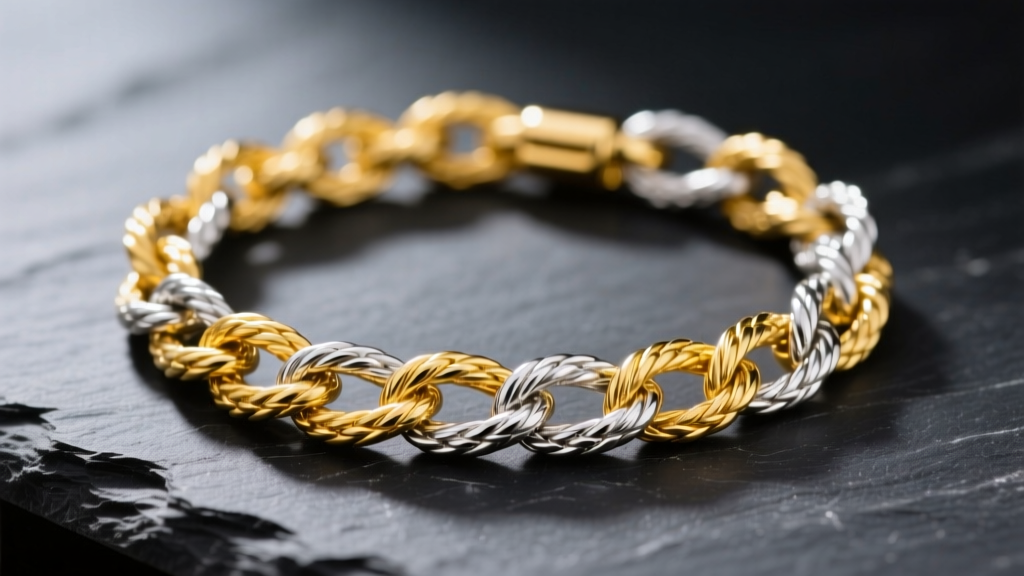
The Metallurgical DNA: Why Materials Matter
When you invest in fine jewelry, you are not merely purchasing a decorative accessory; you are acquiring a complex metallurgical artifact. As of 2026, with the resurgence of archival jewelry and hyper-transparent sourcing, consumers are demanding more than just a beautiful facade. They want to understand the structural integrity, skin reactivity, and long-term wearability of their pieces. When you learn to decode metal alloys, karat weights, and Vickers hardness ratings, you can accurately read the story the necklace tells about its craftsmanship and intended lifespan.
A chain is only as strong as its weakest solder joint, and a pendant bail is only as durable as the alloy from which it is cast. In this comprehensive guide, we dissect the material properties that dictate whether a necklace will become a multi-generational heirloom or a fragile disappointment.
Gold Alloys: Karats, Hardness, and Chain Integrity
Pure gold (24k) is notoriously malleable, possessing a Vickers hardness (HV) of roughly 25. This makes it entirely unsuitable for structural jewelry components like chain links or pendant prongs. To create wearable gold, it must be alloyed with other metals, fundamentally altering its mechanical properties and color. According to the Gemological Institute of America (GIA), the specific alloy mix determines not just the hue, but the tensile strength of the necklace.
Vickers Hardness and Chain Stretching
When selecting a gold chain to bear a heavy pendant, understanding the HV rating is critical. Chain stretching and eventual snapping are the most common failure modes in gold necklaces.
- 10k Gold (41.7% Pure): HV ~160. Highly durable, resistant to scratching and bending, but lacks the rich luster of higher karats. Excellent for heavy Cuban link chains.
- 14k Gold (58.5% Pure): HV ~150. The industry standard for everyday chains. It offers the perfect equilibrium between gold's natural luster and structural resilience.
- 18k Gold (75.0% Pure): HV ~125. Softer and richer in color. Prone to micro-scratches and chain stretching if paired with disproportionately heavy pendants.
- 22k Gold (91.6% Pure): HV ~70. Extremely soft. Best reserved for solid, rigid collars or lightweight, unclasped rope chains.
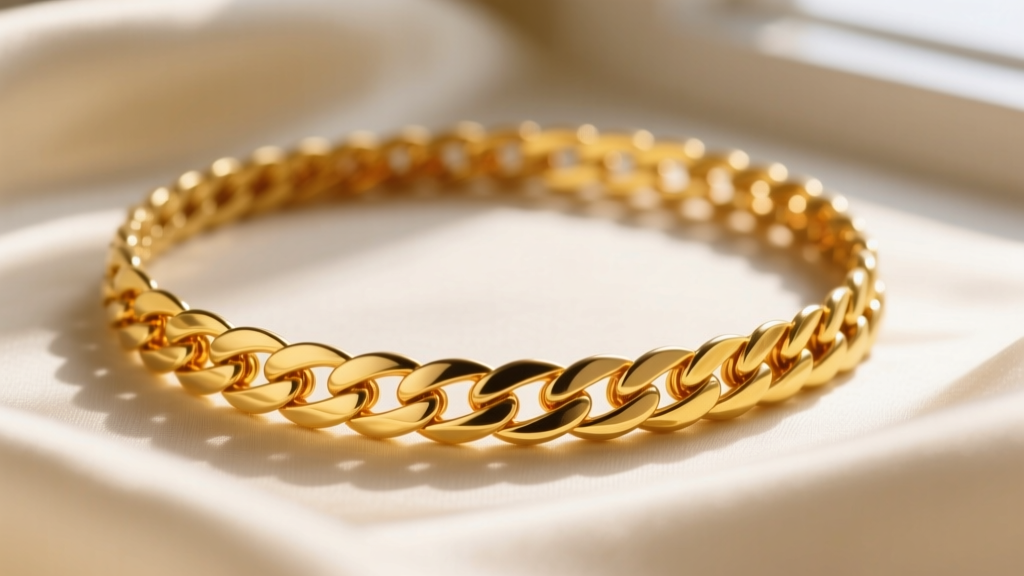
Alloy Metals and Color Shifts
The 'other' metals in the alloy dictate the color and tarnish resistance. Rose gold utilizes a high copper content (up to 20% in 18k), which increases hardness but introduces a risk of copper oxidation (verdigris) if exposed to harsh chemicals over decades. White gold relies on nickel or palladium. Nickel-white gold is harder and cheaper but is a primary culprit for contact dermatitis. Palladium-white gold is hypoallergenic and possesses a naturally grayer, more authentic white tone, though it is significantly more expensive to cast.
The White Metal Showdown: Platinum vs. White Gold
The debate between platinum and white gold is a cornerstone of necklace material selection. While they may look similar in a brightly lit showroom, their aging processes tell vastly different stories over a ten-year period.
Rhodium Plating vs. Natural Patina
White gold is rarely truly white; it is usually a pale yellow or gray alloy that is electroplated with rhodium (a platinum group metal) to achieve a mirror-like, bright white finish. This plating is typically only 0.75 to 1.5 microns thick. On a necklace chain, friction against the skin and clothing will wear this plating away within 12 to 24 months, revealing the yellowish alloy beneath and requiring costly re-plating.
Platinum, specifically Pt950 (95% pure platinum, usually alloyed with 5% ruthenium or iridium), is naturally white. It does not require plating. However, platinum has a lower Vickers hardness (~130 HV for Pt950/Ru) compared to 14k white gold. Instead of losing metal when scratched, platinum displaces it, developing a soft, frosted 'patina' over time. As noted by Platinum Guild International, many collectors prefer this patina as it enhances the brilliance of the diamonds set within the pendant.
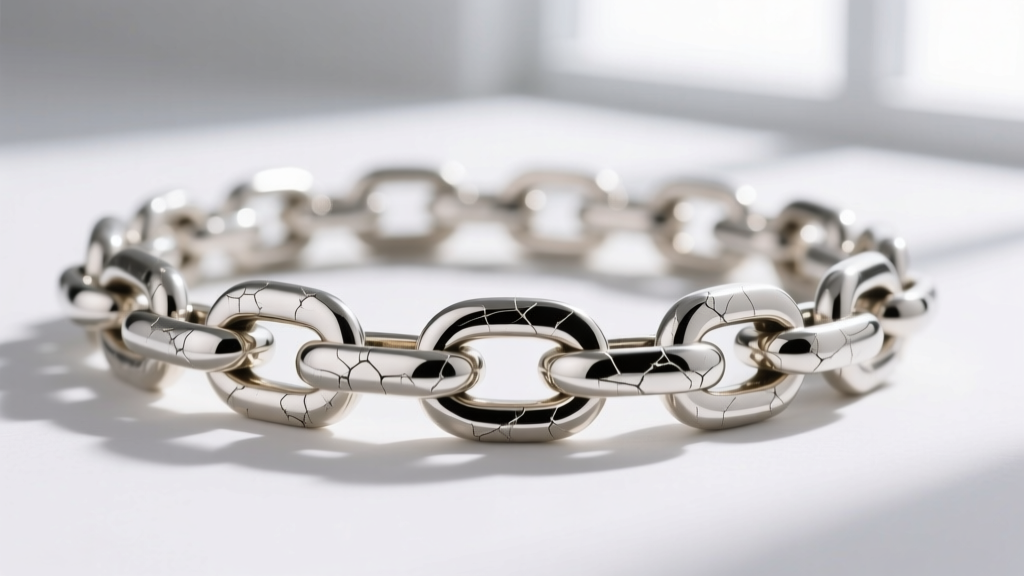
Modern Workhorses: Titanium and Surgical Steel
For those prioritizing absolute durability, hypoallergenic properties, and modern aesthetics, alternative metals have surged in popularity. By 2026, advancements in CNC machining and laser-welding have allowed these notoriously difficult metals to be crafted into intricate chain weaves.
Grade 23 Titanium (Ti-6Al-4V ELI)
Not all titanium is created equal. Commercially pure (Grade 2) titanium is too soft for fine chain links. High-end jewelry utilizes Grade 23 (Extra Low Interstitial) titanium alloy, which contains aluminum and vanadium. It boasts an incredible strength-to-weight ratio and is entirely biocompatible, making it the ultimate choice for individuals with severe metal allergies. Its primary drawback is that it cannot be resized or easily soldered using traditional jewelers' torches; laser welding is mandatory.
316L vs. 904L Stainless Steel
Marine-grade 316L stainless steel is the benchmark for durable, affordable necklaces. The 'L' denotes low carbon, which prevents carbide precipitation during welding, ensuring the solder joints on chain links do not become brittle. Luxury brands, however, have begun adopting 904L steel (often branded as Oystersteel), which contains higher levels of chromium, nickel, and molybdenum, offering superior resistance to pitting corrosion from saltwater and sweat.
Comprehensive Material Comparison Matrix
Use the table below to match your lifestyle and pendant weight to the appropriate chain material.
| Metal / Alloy | Vickers Hardness (HV) | Density (g/cm³) | Tarnish / Corrosion Resistance | Best Chain Application |
|---|---|---|---|---|
| 14k Yellow Gold | ~150 | 13.5 | Moderate (requires polishing) | Everyday pendant chains (Cable, Box) |
| 18k White Gold (Pd) | ~135 | 15.2 | High (no rhodium needed) | Delicate, high-end lariat chains |
| Pt950 / Ruthenium | ~130 | 21.4 | Exceptional (develops patina) | Heavy luxury pendants, bezel settings |
| Grade 23 Titanium | ~330 | 4.4 | Absolute (biocompatible) | Chunky statement chains, tactical wear |
| 316L Steel | ~160 | 8.0 | Excellent (marine grade) | Heavy Cuban links, Figaro chains |
Galvanic Corrosion and Skin Reactivity
Layering necklaces is a dominant styling trend, but mixing disparate metals can trigger galvanic corrosion. When two dissimilar metals (like a sterling silver chain and a copper-heavy rose gold pendant) are in constant physical contact in the presence of an electrolyte (human sweat), an electrochemical reaction occurs. The less 'noble' metal (copper/silver) will corrode at an accelerated rate, leading to pitting, structural weakening, and severe skin discoloration.
Expert Insight: 'To prevent galvanic degradation when layering, ensure there is a physical barrier between vastly different alloys, or stick to layering metals within the same noble family, such as mixing various karats of yellow gold or pairing platinum with palladium-white gold.' - Master Bench Jeweler
Furthermore, skin reactivity is heavily tied to alloy composition. According to the World Gold Council, nickel is present in approximately 15% of white gold alloys on the market. If a necklace leaves a green or red rash on your sternum, it is rarely an allergy to the gold itself, but rather a reaction to the nickel or copper alloying agents reacting with your skin's natural pH and perspiration.
Decoding Hallmarks and Stamps
The final chapter of the story the necklace tells is found in its hallmarks. Legitimate fine jewelry will bear microscopic stamps, usually located on the clasp tongue or the jump ring.
- 750 / 18k: Guarantees 750 parts per thousand of pure gold.
- 585 / 14k: Guarantees 585 parts per thousand of pure gold.
- Pt950: Guarantees 95% pure platinum. Look for secondary marks indicating the alloy, such as 'Ir' (Iridium) or 'Ru' (Ruthenium).
- 925: Sterling silver (92.5% silver, 7.5% copper). Beware of pieces stamped 'Tibetan Silver' or 'Alpaca', which contain zero actual silver and are primarily copper-nickel-zinc alloys that will rapidly oxidize and cause skin reactions.
By mastering these material properties, you transition from a passive consumer to an informed collector. You will no longer be swayed merely by the initial shine of a piece, but by the enduring metallurgical truth that ensures your necklace will withstand the test of time.


