Sweater and Necklace Pairing: A Technical Layering Guide
Master the sweater and necklace pairing with our technical guide. Learn how fabric GSM, chain gauge, and bezel settings prevent snagging.

The Physics of Fabric Weight and Chain Gauge
When evaluating a sweater and necklace combination, most style guides rely on subjective color theory or vague aesthetic rules. However, as we navigate the 2026 winter season and the industry's shift towards heavy-weight, sustainable recycled wools, the physics of textile-to-metal interaction has become the true determinant of a successful pairing. The primary metric you must understand is GSM (Grams per Square Meter). The GSM of your knitwear dictates the necessary structural gauge of your chain to prevent the metal from getting swallowed by the fabric or, conversely, looking comically oversized against a delicate weave.
According to data cross-referenced from the Craft Yarn Council and standard jewelry manufacturing tolerances, a chain must possess enough linear mass to lay flat against the drape of the sweater without catching in the textile's interstitial gaps. Below is a technical matrix for pairing fabric weights with chain gauges.
| Sweater Fabric Weight (GSM) | Textile Type | Ideal Chain Gauge (mm) | Recommended Chain Styles |
|---|---|---|---|
| 150 - 250 GSM | Fine Cashmere, Lightweight Merino | 1.2mm - 2.5mm | Box, Wheat, Snake |
| 300 - 450 GSM | Standard Wool, Cotton Blends | 2.5mm - 4.0mm | Rope, Curb, Mariner |
| 500+ GSM | Chunky Cable Knit, Alpaca | 4.0mm - 7.0mm | Figaro, Thick Cuban, Byzantine |
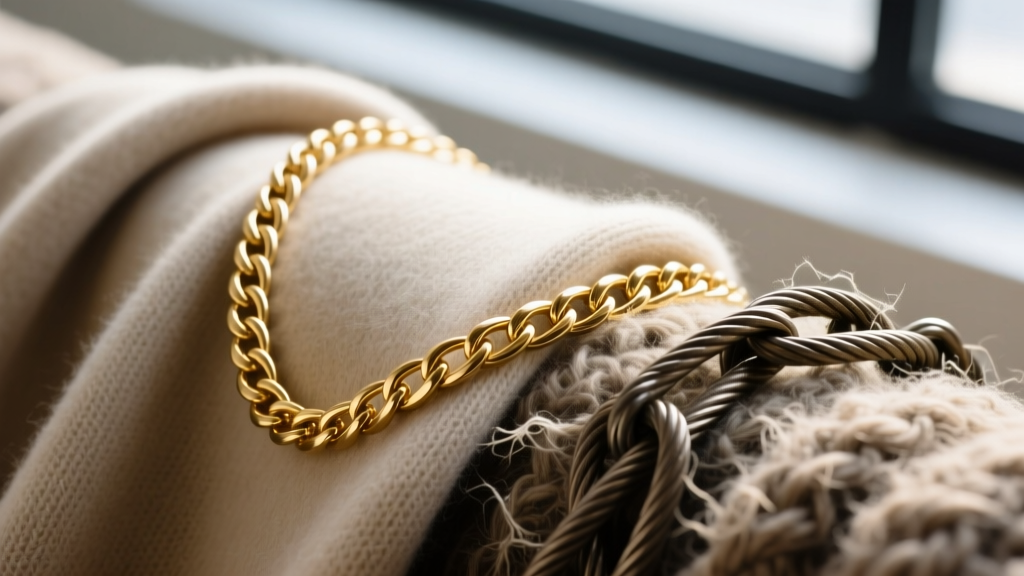
Wearing a 1.0mm cable chain over a 500 GSM chunky knit is a structural failure; the chain will sink into the valleys of the cable knit, creating friction that stretches the metal links over time. Conversely, a 6mm Cuban link on a 150 GSM cashmere turtleneck will cause the delicate neckline to sag and warp due to the uneven weight distribution.
Neckline Geometry and Circumference Adjustments
The second critical failure point in a sweater and necklace pairing is ignoring the altered geometry of the neck when insulated by winter layers. A standard female neck circumference ranges from 13 to 15 inches, while a male neck ranges from 15 to 18 inches. When you introduce a thick turtleneck or mock neck, you are effectively adding 1.5 to 3.5 inches of bulk to the functional circumference.
The Turtleneck Calculation
If you attempt to wear a standard 16-inch choker over a chunky turtleneck, the chain will sit at the very base of the rolled collar, creating a constricted, unflattering line. For over-the-collar layering on heavy knits, you must scale up to a 22-inch or 24-inch chain. This allows the pendant to rest on the sternum, acting as a vertical placket that elongates the torso. If you prefer the choker look, the technical solution is to wear a 14-inch or 15-inch chain underneath the folded turtleneck roll, allowing the metal to peek out just above the fabric line without bearing the weight of the wool.
Crew Necks and V-Necks
For standard crew necks (which typically add 0.5 to 1 inch of bulk), a 18-inch princess-length chain is mathematically ideal. It will rest exactly one inch below the ribbed collar. For V-necks, the angle of the neckline mimics a geometric drop; utilize a Y-necklace or a 20-inch chain with a sliding bail pendant to mirror the acute angle of the sweater's cut.
Setting Types and Snag Mitigation
Snagging is the enemy of both fine jewelry and luxury knitwear. The Gemological Institute of America (GIA) notes that traditional prong settings (such as the classic 4-prong or 6-prong Tiffany mount) elevate the gemstone's girdle and leave microscopic gaps between the metal prongs. On loose-knit fabrics like mohair, angora, or hand-spun boucle, these prongs act as grappling hooks. A single snag can pull a thread, ruin a garment, and bend a prong, compromising the stone's security.
The Bezel and Flush Solutions
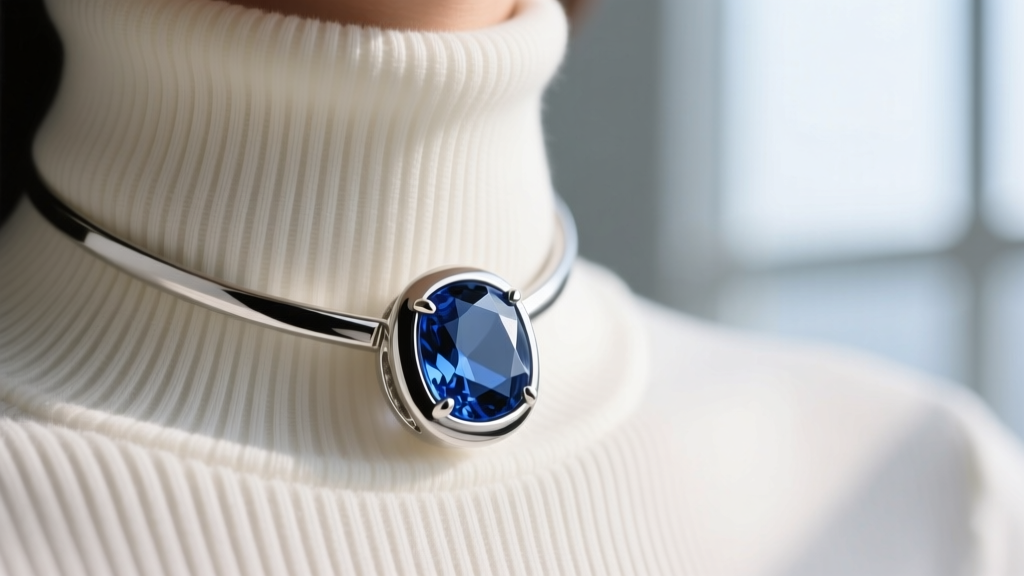
When pairing pendants with high-pile or looped sweaters, always opt for bezel settings or flush (gypsy) settings. A bezel setting encircles the gemstone with a continuous rim of metal, eliminating any protruding edges. A flush setting embeds the stone directly into the metal body of the pendant, creating a completely smooth, aerodynamic surface that glides over wool fibers without resistance. If you must wear a prong-set heirloom piece, layer it over a tightly woven, high-twist merino sweater rather than a loosely spun alpaca blend to minimize the risk of fiber catch.
Link Tolerances and Surface Finishes
Not all chains are created equal when subjected to the friction of winter textiles. Machine-made, unsoldered chains (where the links are simply bent into shape without the joint being fused) present a severe snag hazard. The microscopic slit where the link closes can catch individual wool fibers. Over time, the tension of the sweater pulling against the chain will cause these unsoldered links to stretch open and eventually snap.
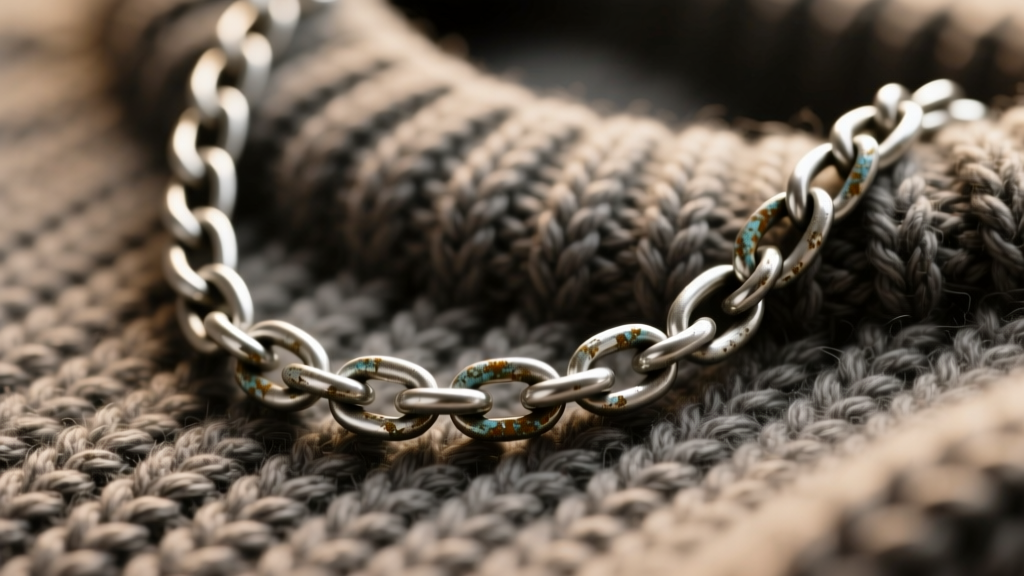
For winter layering, demand soldered chains. As detailed by Rio Grande jewelry supply standards, soldered links are fused shut with a metal alloy, creating a continuous, closed loop that fibers cannot penetrate. Furthermore, consider the surface finish. High-polish rhodium-plated sterling silver or polished 18k gold offers a low-friction surface that repels textile drag. Matte, brushed, or heavily oxidized finishes, while visually striking, possess microscopic surface abrasions that will grab onto cashmere and pill the fabric over the course of a day's wear.
Clasp Mechanics for Winter Layering
The final point of failure is the clasp. Standard spring-ring clasps rely on a tiny internal coil spring and a minuscule lever. When navigating the bulk of a thick scarf or sweater collar, the lever can easily be depressed by a stray fold of wool, causing the necklace to unfasten and drop into the folds of your coat.
Upgrade your winter jewelry with cast lobster clasps (minimum 12mm in length). Lobster clasps utilize a heavier, more robust internal spring mechanism and require deliberate, pinching force to open, rendering them immune to accidental textile depression. For those wearing heavy, restrictive layers where reaching behind the neck is physically cumbersome, neodymium-core magnetic clasps are the superior technical choice. Ensure the magnetic housing is fully enclosed in stainless steel or gold to prevent the magnet from attracting metallic dust and debris from the environment, which can degrade the connection over time.
Summary Checklist for 2026
- Match GSM to Gauge: Heavy knits (500+ GSM) require 4.0mm+ soldered chains.
- Adjust for Bulk: Add 2 to 4 inches to your standard chain length when wearing turtlenecks.
- Eliminate Prongs: Use bezel or flush settings to prevent catastrophic snagging on mohair and boucle.
- Upgrade the Clasp: Replace spring rings with 12mm lobster clasps or shielded magnetic locks.


