Ferrari Necklace Repair: Fixing Tarnish, Clasps & Fakes
Troubleshoot common Ferrari necklace issues. Learn how to fix tarnished metals, repair broken clasps, restore chipped enamel, and spot counterfeit pieces.

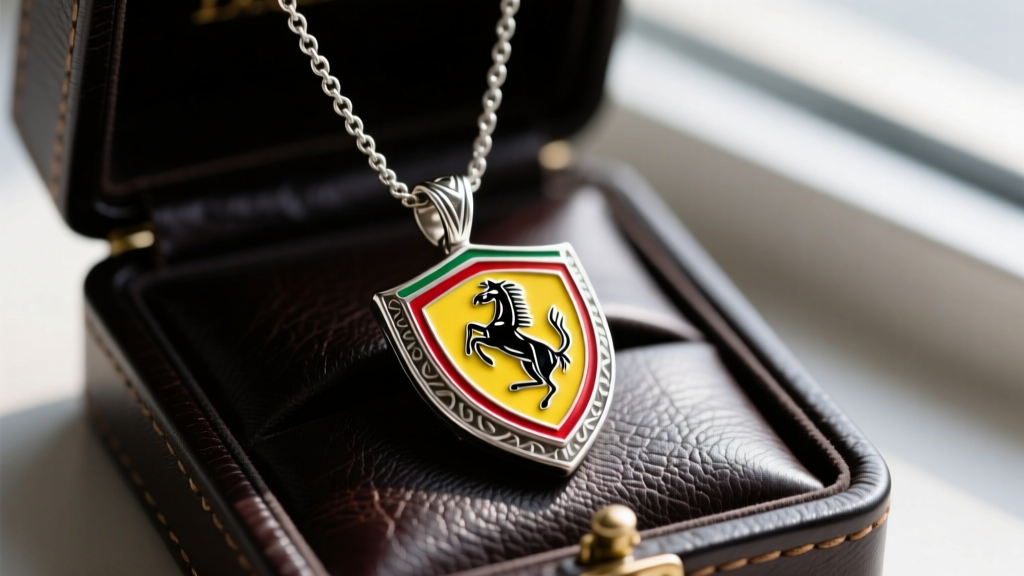
The Anatomy of a Ferrari Necklace: Materials & Vulnerabilities
As the secondary market for vintage 1990s and early 2000s racing memorabilia surges in 2026, authentic Ferrari jewelry has become highly sought after by collectors and motorsport fans alike. However, whether you own a modern piece from the official Ferrari merchandise store or a vintage 18k gold and enamel pendant from the Schumacher era, these necklaces are prone to specific structural and cosmetic failures. Understanding the material composition is the first step in troubleshooting.
Official Ferrari necklaces typically fall into three material categories:
- 925 Sterling Silver with Enamel: Often used for the iconic Scudetto (shield) pendants. Vulnerable to sulfur-induced tarnish and enamel chipping.
- Rhodium-Plated Brass: Common in mid-tier merchandise. The base metal is a copper-zinc alloy, flashed with a thin layer of rhodium for a white-gold appearance. Vulnerable to plating wear and green skin discoloration.
- 316L Surgical Stainless Steel: Used in modern, sporty collections. Highly durable but prone to surface scratching and clasp failure due to the weight of the pendants.
Troubleshooting Tarnish and Plating Wear
One of the most frequent complaints from owners of rhodium-plated brass Ferrari necklaces is the sudden appearance of black tarnish or a green residue on the skin. This is not a sign of a fake; it is a chemical reaction. When the micro-thin rhodium plating wears off from friction, the underlying copper in the brass reacts with lactic acid and sulfur in your sweat.
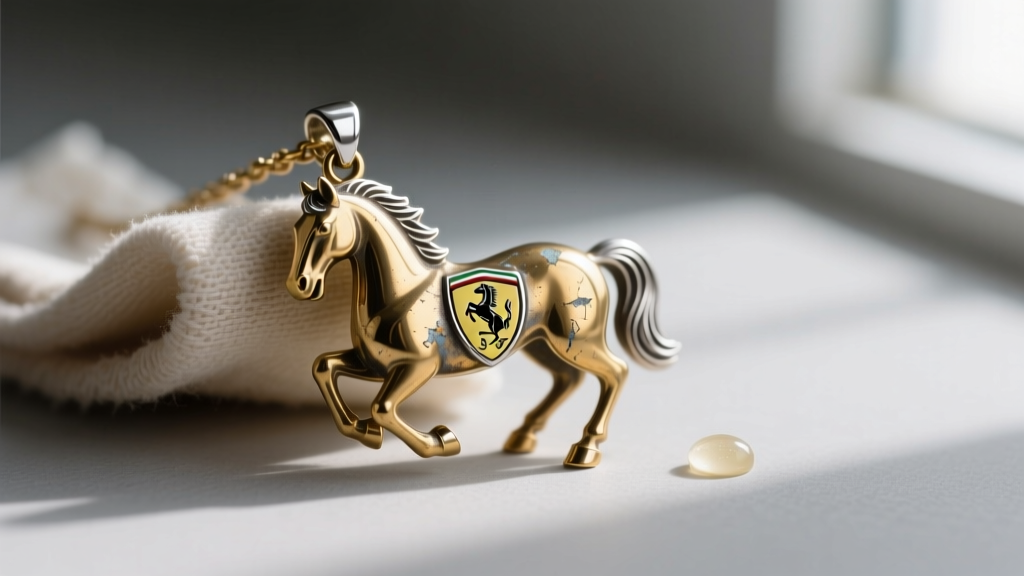
How to Clean Without Stripping the Finish
According to the Jewelers of America, harsh chemical silver dips should never be used on plated jewelry. Silver dips contain thiourea and hydrochloric acid, which will instantly strip the remaining rhodium flash plating, leaving you with a dull, rapidly oxidizing brass pendant.
The Safe Cleaning Protocol:
- Mix a few drops of pH-neutral dish soap (like Dawn) into a bowl of lukewarm distilled water.
- Soak the necklace for exactly 3 to 5 minutes to loosen body oils and environmental grime.
- Use a baby toothbrush with ultra-soft bristles to gently agitate the crevices around the Prancing Horse logo.
- Rinse with distilled water and pat dry with a lint-free microfiber cloth. Do not rub aggressively.
If your sterling silver (925) piece has tarnished, you can use a specialized silver polishing cloth impregnated with micro-abrasives, but strictly avoid the enameled sections, as the abrasives will scratch the glossy finish.
Fixing Enamel Damage on the Prancing Horse
The Cavallino Rampante (Prancing Horse) and the Giallo Modena yellow background are the soul of a Ferrari necklace. Historically, high-end pieces used vitreous (glass) enamel fired at high temperatures. However, most commercial merchandise uses cold enamel—an epoxy-based resin that is prone to chipping upon impact.
If your enamel has chipped, you can perform a microscopic repair at home using jeweler-grade materials. According to jewelry supply experts at Rio Grande, standard superglue will yellow over time and ruin the piece. Instead, use a two-part jeweler's epoxy like Epoxy 330.
Enamel Repair Steps:
- Clean the chipped crater with 99% isopropyl alcohol to remove all oils.
- Mix a tiny drop of Epoxy 330 on a glass palette.
- If the chip is on the red or yellow section, mix in a microscopic amount of cosmetic-grade mica powder (matched to Rosso Corsa or Giallo Modena) to tint the clear epoxy.
- Apply the tinted epoxy into the chip using a fine needle or toothpick. Overfill slightly, as the resin shrinks by about 2% during the 12-hour curing process.
- Once fully cured, gently wet-sand the excess with 2000-grit automotive sandpaper until flush with the surrounding metal.
Upgrading Weak Clasps on Heavy Pendants
A major design flaw in many official Ferrari necklaces is the use of a standard 4mm or 5mm spring-ring clasp on a chain meant to support a 15-gram to 25-gram solid metal pendant. The tension spring inside these small clasps fatigues quickly, leading to the necklace snapping open and the pendant being lost.
Upgrading the clasp is a mandatory preventative maintenance step. Below is a troubleshooting guide for selecting the correct replacement hardware based on your pendant's weight.
| Pendant Weight | Original Clasp Type | Recommended Upgrade | Material Requirement | Estimated Cost |
|---|---|---|---|---|
| Under 10g | 4mm Spring Ring | 7mm Lobster Clasp | 925 Silver or 316L Steel | $12 - $18 |
| 10g - 20g | 5mm Spring Ring | 12mm Lobster Clasp | 316L Surgical Steel | $15 - $25 |
| Over 20g | Any Spring Ring | Neodymium Magnetic Clasp | Stainless Steel Housing | $30 - $45 |
Pro Tip: If you upgrade to a heavy stainless steel lobster clasp on a delicate silver chain, the weight imbalance will cause the chain to constantly pull around your neck, bringing the clasp to the front. Ensure your chain gauge is at least 2.0mm to support heavy hardware.
Authentication: Spotting Counterfeit Ferrari Jewelry
With the rise of e-commerce, the market is flooded with counterfeit Ferrari necklaces. Spotting a fake requires looking past the logo and examining the metallurgical and manufacturing hallmarks. The Federal Trade Commission frequently warns consumers about deceptive metal stamping in imported jewelry.
Expert Authentication Rule: A genuine Ferrari pendant will never feature the Prancing Horse without the proper trademark attributions. Look for the microscopic '©F' or '© Ferrari' stamp on the bail or the lower back edge of the pendant.
The 'Cavallino' Muscle Test
Counterfeit manufacturers often use low-resolution molds. On a genuine pendant, the musculature of the horse's hind legs and the precise curve of the tail are sharply defined. On fakes, the horse often looks 'melted' or overly thick, and the iconic 'S F' (Scuderia Ferrari) lettering beneath the horse's hooves is frequently blurred or missing entirely.
Magnet and Acid Testing
If a piece is stamped '925' but exhibits slight magnetic pull, it is a fake. Sterling silver is diamagnetic and will not stick to a neodymium magnet. Furthermore, if you suspect a piece is gold-plated brass rather than solid gold, a jeweler can perform a non-destructive XRF (X-ray Fluorescence) scan to determine the exact elemental composition beneath the surface.
Summary Checklist for Long-Term Maintenance
To keep your Ferrari necklace in concours-condition, follow this seasonal checklist:
- Storage: Store in an anti-tarnish Pacific Silvercloth pouch. Never store it loose in a drawer where the chain can kink.
- Wear Order: Always put your necklace on after applying cologne, sunscreen, or hairspray. The alcohol and chemicals in these products will degrade cold enamel and accelerate rhodium wear.
- Inspection: Every six months, use a jeweler's loupe to inspect the jump ring connecting the pendant to the chain. If the gap in the jump ring has widened by even a millimeter, have it soldered shut immediately to prevent loss.
By understanding the specific vulnerabilities of your Ferrari necklace and applying these targeted troubleshooting techniques, you can preserve both the financial and sentimental value of your motorsport jewelry for decades to come.


