Baroque Pearl Chain Necklace: The Ultimate Buying Guide
Discover how to choose the perfect baroque pearl chain necklace. Learn about nacre thickness, chain gauges, drilling, and pricing tiers.

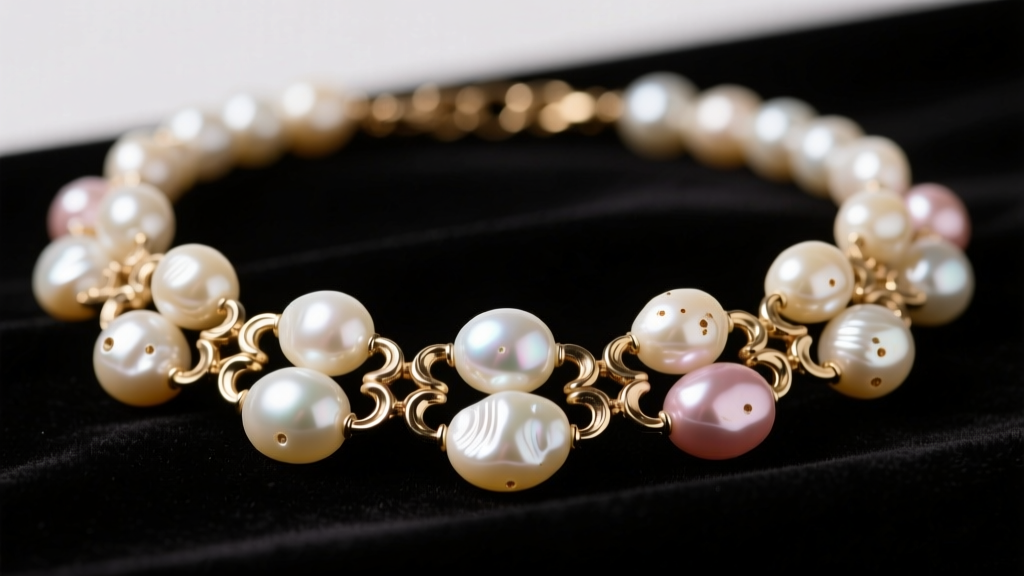
The Appeal of the Baroque Pearl Chain Necklace
The baroque pearl chain necklace has transcended its vintage roots to become a definitive staple of modern, asymmetrical styling in the 2026 jewelry market. Unlike perfectly spherical pearls that demand traditional strand settings, baroque pearls—with their organic, sculptural, and entirely unique shapes—thrive when suspended from a minimalist metal chain. This setting allows the pearl’s natural ridges, undulations, and high-luster surfaces to catch the light from every angle. However, buying a high-quality baroque pearl pendant requires navigating a complex matrix of gemological grading, chain mechanics, and structural durability. This comprehensive guide will equip you with the exact specifications needed to make an informed purchase.
Evaluating Pearl Quality: Beyond the Symmetry Myth
When shopping for baroque pearls, traditional grading systems that penalize asymmetry are irrelevant. Instead, your focus must shift entirely to nacre quality, luster, and surface integrity. According to the Gemological Institute of America (GIA), luster is the most critical value factor for any pearl.
Nacre Thickness and Luster Grades
For saltwater baroques (such as Akoya or Tahitian), the pearl is bead-nucleated. This means a mother-of-pearl bead is inserted into the oyster, and the oyster secretes nacre over it. You must look for a nacre thickness of at least 0.8mm. Anything thinner risks peeling or flaking over time. Freshwater baroques, conversely, are typically tissue-nucleated, meaning they are solid nacre all the way through. However, low-grade freshwater pearls harvested too early can appear "chalky" or dull. Demand an AAA luster grade, which indicates sharp, distinct reflections on the pearl's surface, akin to a mirror.
Acceptable Blemishes vs. Structural Flaws
By definition, baroque pearls possess surface irregularities. Ridges, grooves, and asymmetrical bumps are desirable traits that give the pearl its character. However, you must strictly avoid pearls with chalky dead spots (areas lacking nacre) or micro-fractures near the drill hole. A surface ridge is a stylistic feature; a crack is a structural failure waiting to happen.
Chain Mechanics: Gauges, Links, and Metals
The chain is not merely a delivery mechanism for the pendant; it is the structural backbone of the necklace. Baroque pearls, particularly Tahitian and South Sea varieties, can be surprisingly heavy and dense. A 14mm Tahitian baroque can weigh upwards of 2.5 grams, and its asymmetrical center of gravity creates a pendulum effect that places uneven stress on the chain links.
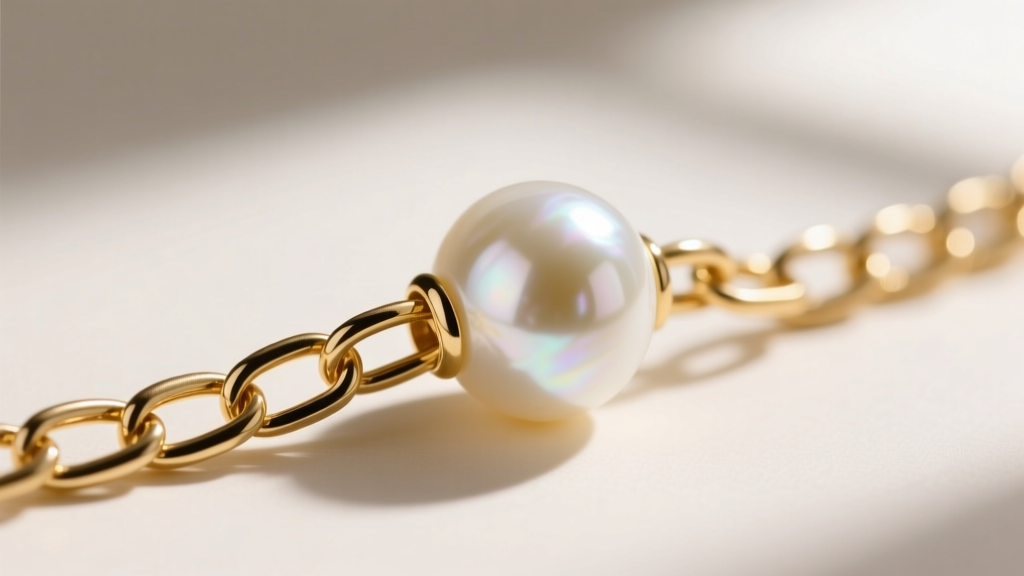
Wire Gauge and Link Selection
Avoid delicate chains under 1.0mm in wire gauge. For medium to large baroque pearls (10mm–15mm), opt for a wire gauge between 1.2mm and 1.8mm. The paperclip chain and rolo chain are superior choices because their wider, flat-surfaced links resist kinking and distribute weight more evenly than standard cable chains.
| Chain Link Style | Ideal Wire Gauge | Best For Pearl Type | Durability Rating |
|---|---|---|---|
| Paperclip | 1.2mm - 1.5mm | Medium Freshwater & Akoya (10-12mm) | High |
| Rolo | 1.5mm - 2.0mm | Heavy Tahitian & South Sea (13mm+) | Very High |
| Cable | 0.9mm - 1.1mm | Small Freshwater (8-9mm) | Medium |
| Box | 1.0mm - 1.3mm | Delicate Akoya Pendants | Medium-High |
Clasp Hardware: The Weakest Link
Never pair a heavy baroque pearl with a standard spring-ring clasp. The asymmetrical weight of the pearl will pull the chain taut, putting lateral stress on the spring mechanism and eventually causing it to snap or fail open. Always upgrade to a 10mm or 12mm lobster clasp, which features a stronger internal spring and a more secure locking jaw.
The Critical Role of Pearl Drilling
One of the most overlooked aspects of buying a baroque pearl chain necklace is the drill hole placement. Because baroque pearls lack a uniform geometric center, finding the true center of mass is difficult. If a jeweler top-drills the pearl slightly off-axis, you will experience the "pendulum effect." This occurs when the pearl constantly rotates on its bail or jump ring, always settling with its heaviest side facing down, which often hides the pearl's most beautiful, lustrous face against your chest.
When inspecting a necklace, hold the chain up and let the pearl hang. Spin it gently. If it immediately snaps back to a position where the best side faces away from you, the drilling is unbalanced. Look for pearls that are balanced-drilled or set in a fixed bail that prevents rotation entirely.
Pricing Tiers by Pearl Origin
Understanding the market value of baroque pearls prevents overpaying for lower-tier gems. The American Gem Society notes that origin and rarity heavily dictate price, even for non-spherical pearls.
- Freshwater Baroques ($45 – $180): Abundant and widely available. Look for " Edison " or " soufflé " freshwater baroques for unique metallic lusters and vibrant peacock overtones at accessible price points.
- Akoya Baroques ($250 – $800): Prized for their mirror-like, glassy luster. True baroque Akoyas are relatively rare since most are sorted for roundness, making high-quality specimens a premium collector's item.
- Tahitian Baroques ($700 – $2,500): Known for their large sizes (10mm–16mm) and dark body colors with iridescent overtones (peacock, pistachio, aubergine). The most valuable feature deep, undulating ridges.
- White South Sea Baroques ($1,500 – $5,000+): The pinnacle of luxury. These massive pearls (13mm–20mm+) possess a satin-like luster and thick nacre. Their organic shapes look incredibly striking on heavy 18k gold rolo chains.
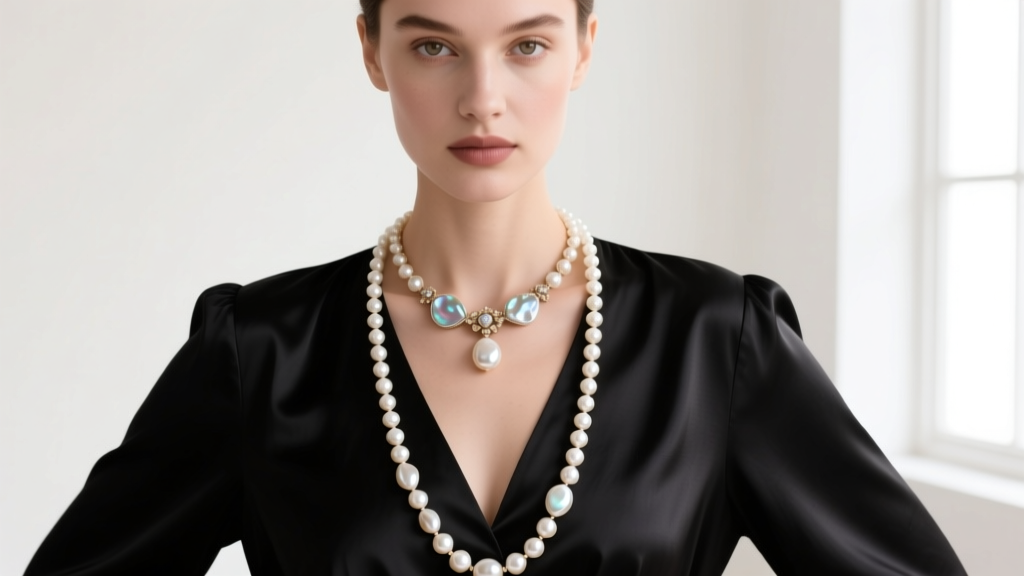
Styling and Maintenance Protocols
Styling a baroque pearl chain necklace is an exercise in juxtaposition. The organic, rugged nature of the baroque pearl pairs exceptionally well with structured, minimalist clothing. An 18-inch princess length chain allows a 12mm baroque pendant to rest perfectly on the sternum, acting as a focal point over a silk blouse or a structured blazer. For a more contemporary, layered look, pair your baroque pendant with a 16-inch choker made of flat-link silver or gold.
Essential Care Guidelines
Pearls rank at a mere 2.5 to 3.0 on the Mohs hardness scale, making them highly susceptible to scratching and chemical degradation. To preserve your necklace:
- The Golden Rule: Always put your pearls on "last" (after applying perfumes, hairsprays, and lotions) and take them off "first" when you return home.
- Cleaning: Never use ultrasonic cleaners or steamers. The cavitation bubbles in an ultrasonic bath will literally shatter the microscopic aragonite platelets that make up the pearl's nacre. Instead, wipe the pearl gently with a damp, untreated microfiber cloth after each wear.
- Storage: Never store your chain necklace in a sealed plastic bag. Pearls require ambient moisture; dehydration can cause the nacre to craze and crack over time. Store it flat in a soft linen pouch, separate from harder gemstones like diamonds or sapphires that could easily scratch the pearl's surface.
By prioritizing nacre thickness, selecting the appropriate chain gauge, and verifying the drill alignment, you can invest in a baroque pearl chain necklace that is not only a breathtaking piece of wearable art but a structurally sound heirloom built to last generations.


