Sun and Moon Necklace Materials: Gold, Silver & Enamel Compared
Discover the best metals, gemstones, and enamels for a sun and moon necklace. Compare durability, patina, and pricing for celestial jewelry.

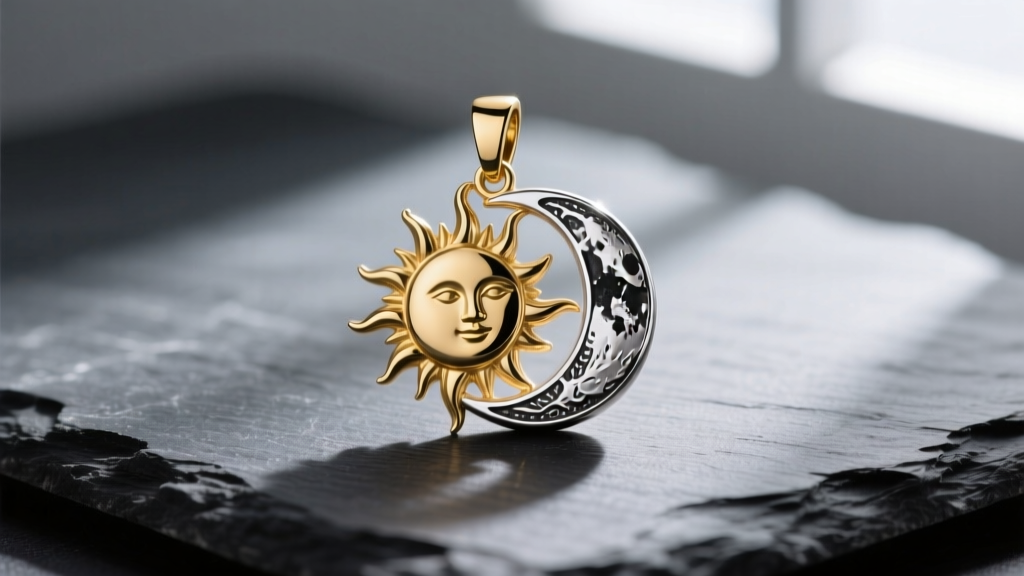
The celestial motif remains one of the most enduring concepts in fine jewelry, symbolizing duality, balance, and the eternal dance between light and dark. When selecting or designing a sun and moon necklace, the aesthetic success of the piece relies entirely on material contrast. The interplay between bright, reflective metals and deep, shadowed finishes is what brings the daytime and nighttime themes to life. However, beneath the surface-level beauty lies a complex matrix of metallurgy, gemstone porosity, and structural integrity.
In 2026, jewelry buyers are increasingly prioritizing material transparency and longevity over fast-fashion aesthetics. Understanding the specific properties of the metals, enamels, and stones used in celestial pendants is crucial for making an investment that withstands daily wear. This guide breaks down the exact material properties, pricing ranges, and care requirements for crafting the perfect sun and moon necklace.
The Foundation: Sterling Silver vs. Karat Gold
The most classic interpretation of the sun and moon motif utilizes a two-tone metal approach: yellow gold to represent the radiant sun, and silver (or white gold) to represent the cool, reflective moon. The choice of karat and alloy composition drastically affects the necklace's lifespan and skin reactivity.
925 Sterling Silver (The Moon)
Sterling silver is an alloy containing 92.5% pure silver and 7.5% copper. The copper is added to increase the Mohs hardness from a highly malleable 2.5 (pure silver) to a more durable 3.5. However, this copper content is exactly why silver tarnishes. When exposed to sulfur compounds in the air or the natural acids in human sweat, the copper reacts to form silver sulfide—a dark, blackish layer. For a sun and moon necklace, this property can actually be leveraged intentionally through oxidation, but for the 'bright moon' elements, it requires a protective rhodium flash plating (usually 0.05 to 0.1 microns thick) to maintain a brilliant white luster.
14k vs. 18k Yellow Gold (The Sun)
To capture the warmth of the sun, yellow gold is the industry standard.
- 14k Gold (58.5% pure gold): Alloyed with silver, copper, and zinc. It offers superior tensile strength and scratch resistance, making it ideal for intricate sunburst prongs or delicate halo settings. In the current 2026 market, 14k gold jewelry retails between $80 and $120 per gram.
- 18k Gold (75% pure gold): Features a richer, deeper yellow hue that more accurately mimics solar warmth. However, it is softer (Mohs ~2.5-3) and more prone to micro-scratching. It commands a premium, often retailing from $130 to $180 per gram.
Engineering the Night Sky: Oxidation and Enamel Techniques
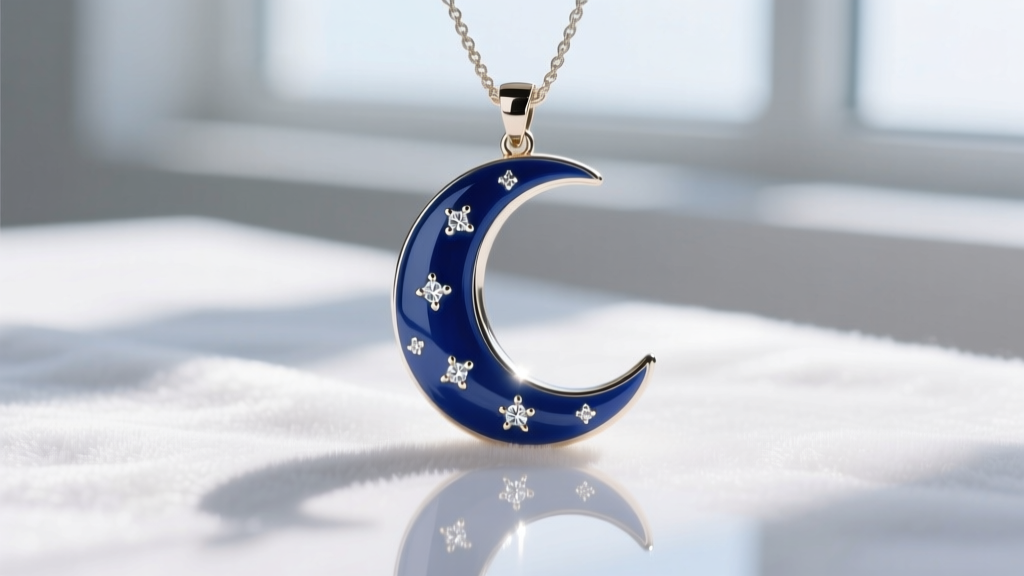
A sun and moon necklace requires deep shadows to make the celestial bodies pop. Jewelers achieve this 'night sky' effect through three primary methods, each with distinct durability profiles.
1. Liver of Sulfur Oxidation
For silver-dominant pieces, oxidization is the most authentic way to create contrast. By applying a heated solution of potassium sulfide (commonly known as liver of sulfur) to the sterling silver, the jeweler forces rapid tarnishing, turning the metal pitch black. The surface is then polished back, leaving the dark patina only in the recessed engraving of the moon's craters or the night sky background. This finish is permanent but can slowly wear away on high-friction areas over 5 to 10 years.
2. Black Rhodium Plating
Black rhodium is an electroplated finish applied over white gold or silver. It provides a striking, gunmetal-black backdrop for diamond-set stars or moon phases. While visually stunning, black rhodium is a surface treatment (typically 0.75 to 1.5 microns thick). It will eventually wear off on the high points of the pendant, requiring re-plating every 2 to 4 years depending on wear frequency.
3. Vitreous vs. Cold Enamel
To introduce deep blues or blacks into the night sky motif, enamel is frequently used.
- Vitreous (Kiln-Fired) Enamel: Made from crushed glass fired at 1400°F. It is incredibly durable, colorfast, and possesses a glass-like depth. However, it is brittle and can shatter if the gold or silver base is bent.
- Cold Enamel (Epoxy Resin): A modern, low-cost alternative. While it allows for vibrant, translucent blues, it is highly susceptible to UV yellowing, chemical degradation from perfumes, and scratching (Mohs ~2).
Gemstone Inlays: Capturing Celestial Light
Many high-end sun and moon necklaces bypass metals entirely for the celestial bodies, opting instead for cabochon gemstone inlays. The physical properties of these stones dictate how the pendant must be set and cared for.
Mother of Pearl (The Moon)
Composed of aragonite and conchiolin, Mother of Pearl offers an unmatched iridescent 'orient' that perfectly mimics moonlight. With a Mohs hardness of just 2.5 to 4.5, it is highly porous and vulnerable to acidic environments. It must be set in a bezel or flush setting rather than prongs, which can stress and crack the material. As noted by the GIA's Mother of Pearl guide, this material should never be cleaned in ultrasonic machines, as the high-frequency vibrations can delaminate the nacreous layers.
Sunstone and Lapis Lazuli (The Sun and Night Sky)
Oregon Sunstone (Mohs 6-6.5) is a feldspar mineral containing copper inclusions that create a glittering effect known as aventurescence. This makes it the ultimate literal representation of the sun. It is durable enough for prong settings but requires protective bezels if worn daily to prevent chipping along its cleavage planes. For the night sky, Lapis Lazuli (Mohs 5-6) is prized for its deep azure color and golden pyrite flecks that resemble stars. Lapis is highly sensitive to water and pressure, making it strictly a 'dry-wear' gemstone. For deeper insights on feldspar gems, refer to the Gemological Institute of America (GIA).
Material Durability & Care Matrix
Use the following matrix to evaluate which material combination aligns with your lifestyle, maintenance tolerance, and budget.
| Material Component | Mohs Hardness | Tarnish / Wear Risk | Avg. Retail Price (2026) | Maintenance Required |
|---|---|---|---|---|
| 925 Sterling Silver | 3.5 | High (Tarnishes) | $15 - $30 / gram | Monthly polishing, anti-tarnish storage |
| 14k Yellow Gold | 3.5 - 4.0 | Low (Does not tarnish) | $80 - $120 / gram | Annual professional ultrasonic cleaning |
| Black Rhodium Plating | N/A (Surface) | Medium (Wears off) | $60 - $100 per re-plate | Re-plating every 2-4 years |
| Vitreous Enamel | 5.5 - 6.5 | Low (Shatter risk) | Adds $150 - $400 to base | Avoid impacts; wipe with damp cloth |
| Mother of Pearl | 2.5 - 4.5 | High (Acid/Porous) | $20 - $60 / carat | Keep away from perfumes and cosmetics |
Chain Mechanics: Supporting the Pendant
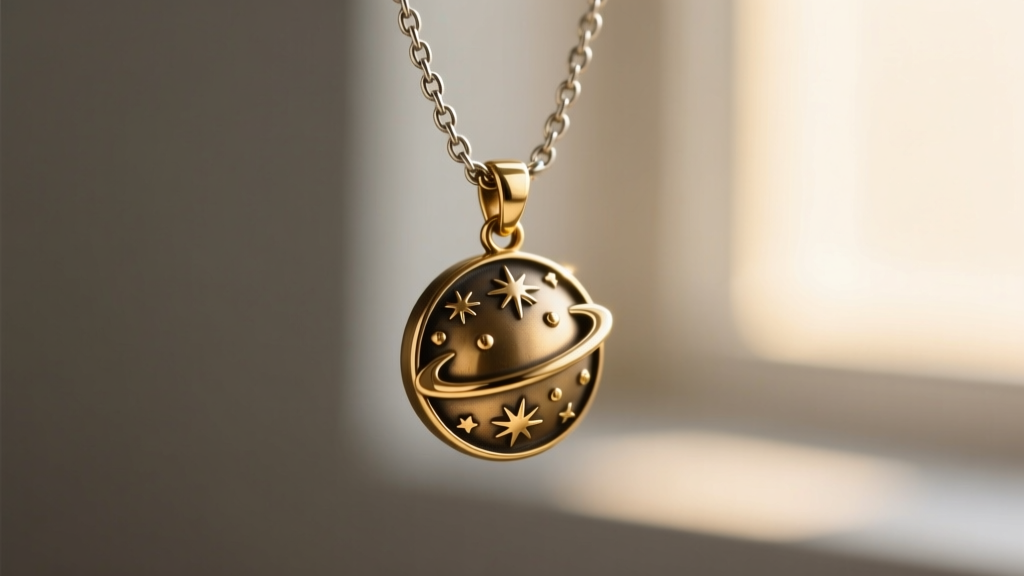
A common failure point in celestial jewelry is the chain. Sun and moon pendants, especially those cast in solid gold or featuring heavy gemstone inlays, carry significant mass. A delicate 1.0mm cable chain will inevitably succumb to metal fatigue at the jump ring or clasp under the weight of a 10-gram pendant.
Gauge and Link Structure Recommendations:
- Under 5 grams: A 1.2mm to 1.5mm cable or rolo chain is sufficient. The open links of a rolo chain provide excellent flexibility and resist kinking.
- 5 to 15 grams: Upgrade to a 1.5mm to 2.0mm box chain or wheat chain. Box chains feature interlocking square links that distribute weight evenly, offering superior tensile strength compared to standard cable chains.
- Over 15 grams: Opt for a 2.5mm+ rope chain or a heavy Cuban link. Ensure the clasp is a lobster claw or a barrel clasp rated for heavy loads; standard spring-ring clasps will fail under this weight.
Furthermore, consider the drop length. A standard 18-inch chain places the pendant at the collarbone, which is ideal for smaller, delicate sun and moon motifs. For larger, statement-sized medallions (30mm+ diameter), a 20-inch or 22-inch drop allows the piece to rest on the sternum, preventing it from flipping over and ensuring the celestial design remains properly oriented.
The 2026 Buyer's Framework: Making Your Choice
Selecting the right sun and moon necklace requires balancing your aesthetic desires with practical wearability. If you seek a low-maintenance, heirloom-quality piece meant for daily wear, a solid 14k yellow gold sun paired with a rhodium-plated white gold moon, set on a 1.5mm box chain, is the ultimate investment. The lack of copper in the white gold alloy prevents tarnishing, and the 14k gold resists scratching.
Conversely, if you prefer a moody, antique aesthetic and are willing to perform routine care, a 925 sterling silver pendant featuring liver-of-sulfur oxidation and vitreous midnight-blue enamel offers unparalleled artistic depth at a fraction of the gold price. Avoid cold enamel and spring-ring clasps, and always verify the Mohs hardness of any gemstone inlays to ensure your celestial jewelry remains as timeless as the sky it represents.


