Expert Care and Cleaning Guide for Beaded Lariat Necklaces
Learn expert cleaning and maintenance tips for your beaded lariat necklace. Protect gemstones, silk threads, and sliding clasps from daily wear damage.

The Unique Anatomy of Lariat Wear and Tear
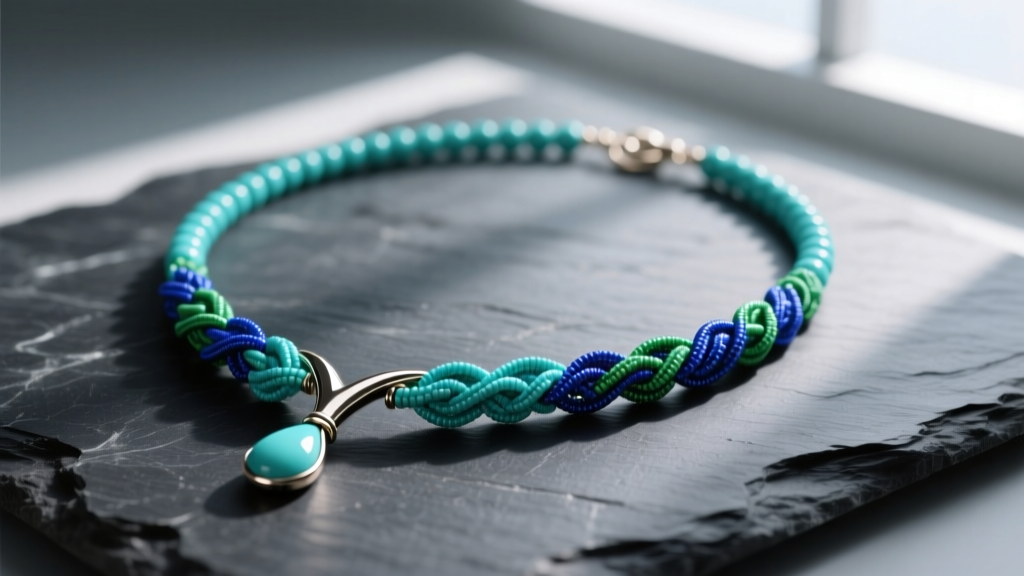
A beaded lariat necklace is a masterpiece of fluid design, eschewing traditional clasps in favor of a dynamic, adjustable Y-drop silhouette. However, this very lack of a fixed clasp introduces distinct mechanical stress points that standard necklaces do not face. The continuous friction of the sliding mechanism—whether a metal O-ring, a leather loop, or a primary focal bead—against the stringing core creates a high-wear zone. Furthermore, the dangling 'tail' of the lariat is prone to swinging, whipping, and catching on garments, which can lead to micro-abrasions on delicate gemstones and catastrophic failure of the stringing material.
Proper maintenance of a beaded lariat necklace requires a bifurcated approach: treating the specific mineralogical or organic properties of the beads themselves, and preserving the structural integrity of the stringing core and sliding hardware. According to the Gemological Institute of America (GIA), improper cleaning is the leading cause of surface degradation in porous gemstones, a risk amplified in lariats where cleaning solutions can easily wick into the drill holes and rot the internal thread.
Identifying Your Bead Material and Stringing Core
Before applying any moisture or cleaning agent, you must accurately identify both the bead composition and the internal stringing core. The Mohs Hardness Scale and the material's porosity dictate the chemical and mechanical limits of your cleaning protocol. A solution that will brilliantly restore a glass bead will instantly dissolve the polish on a turquoise cabochon.
Bead Hardness, Porosity, and Chemical Sensitivity Chart
| Bead Material | Mohs Hardness | Porosity | Safe Cleaning Agent | Dangerous Agents to Avoid |
|---|---|---|---|---|
| Turquoise & Lapis Lazuli | 5.0 - 6.0 | High | Dry microfiber cloth | Water, ammonia, ultrasonics, steam |
| Freshwater Pearls & Coral | 2.5 - 4.0 | Very High | Damp cloth, mild olive oil | Acids, vinegar, baking soda, alcohol |
| Quartz, Agate & Onyx | 7.0 | Low | Mild dish soap, lukewarm water | Hydrofluoric acid, harsh abrasives |
| Lampwork Glass & Crystal | 5.5 - 7.0 | None | Isopropyl alcohol, glass cleaner | None (highly resilient) |
| Wood & Seed Beads | 2.0 - 4.0 | Extreme | Soft dry brush, natural wax | All liquids, liquid soaps, oils |
The stringing core is equally critical. Traditional silk thread is highly susceptible to water damage and sweat degradation, requiring dry-cleaning methods. Conversely, modern thermally bonded polyethylene threads (like Wildfire or Power Pro) are waterproof but can melt or deform if exposed to high heat or harsh solvents like acetone. Beading wire (such as 49-strand Soft Flex) is impervious to water but will permanently kink if the lariat tail is bent sharply during cleaning.
Step-by-Step Cleaning Protocols by Material
When cleaning your beaded lariat necklace, always work over a soft, lint-free towel placed inside a shallow tray. This prevents catastrophic loss if the necklace slips from your hands or if the slider mechanism suddenly gives way.
Protocol A: Porous Organics and Soft Stones (Pearl, Coral, Turquoise)
For porous materials, liquid is the enemy. Liquids can penetrate the microscopic fissures of the stone and become trapped against the stringing core, leading to internal rot and discoloration.
- Surface Dusting: Use a clean, soft-bristled makeup brush to gently sweep dust out of the crevices between beads and from the knotwork.
- Polishing: Wipe each bead individually with a dry, untreated microfiber cloth. For pearls, a barely damp cloth (wrung out until almost dry) can remove skin oils, followed by immediate drying.
- Knot Cleaning: If the silk knots between turquoise or pearl beads appear gray or black, do not scrub them with water. Instead, use a piece of unflavored dental floss to gently 'floss' the dirt out of the knot crevices, or use a specialized dry jewelry polishing cloth.
Protocol B: Hard Gemstones and Glass (Quartz, Onyx, Lampwork)
Hard, non-porous beads can withstand wet cleaning, but the stringing material must still be protected.
- The Dip Method (Wire/Nylon Core Only): Mix three drops of pH-neutral dish soap (like Dawn) into a bowl of lukewarm distilled water. Submerge only the beaded sections, avoiding the top loop and slider if they contain leather or silk.
- Agitation: Gently swish the necklace. Use a baby toothbrush to lightly scrub the surface of the glass or quartz beads.
- Rinsing and Drying: Rinse under a gentle stream of distilled water. Lay the lariat flat on a dry towel, ensuring the Y-drop tail is laid out straight to prevent the wire core from setting into a kinked position as it dries.
Expert Warning: Never place a beaded lariat necklace in an ultrasonic cleaner. The high-frequency vibrations will not only shatter fragile stones like opals or emeralds but will also cause the beads to violently strike one another, leading to severe edge chipping and the rapid fraying of the internal stringing core.
Maintaining the Sliding Mechanism and Thread Integrity
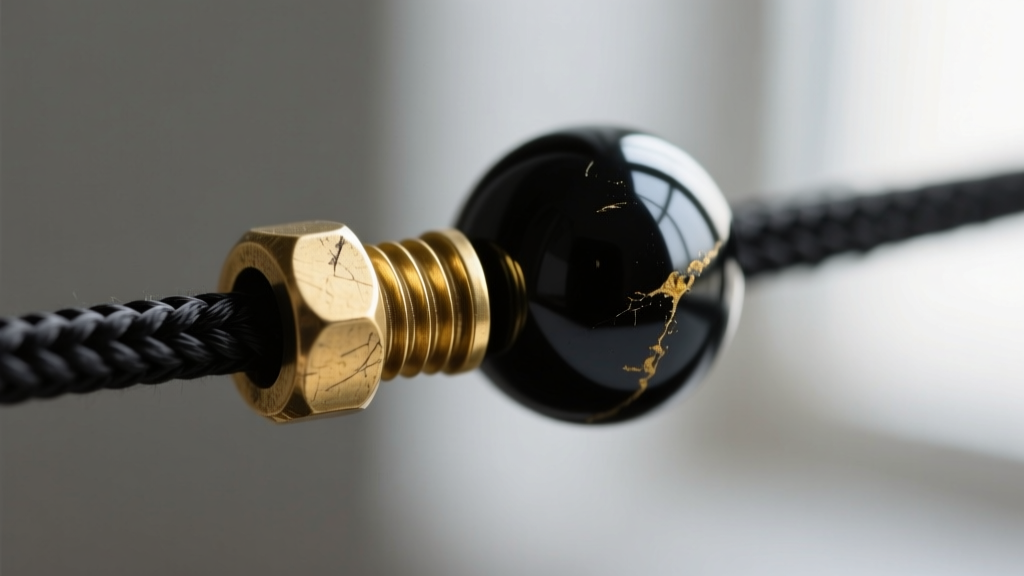
The sliding mechanism is the functional heart of a lariat necklace. Whether it is a metal ring sliding over a nylon cord or a large focal bead acting as a friction slide, this junction accumulates dead skin cells, lotion, and environmental dust. This buildup acts as an abrasive paste, slowly sawing through the stringing core every time you adjust the necklace.
Cleaning the Slider Junction
If your slider is a metal O-ring or a metal-lined bead on a synthetic cord (nylon, polyester, or wire), you can safely clean the junction using a cotton swab dipped in 91% isopropyl alcohol. Gently run the swab inside the ring and along the cord immediately adjacent to it to dissolve sebum and lotion. Allow it to flash-dry completely before wearing.
If your lariat utilizes a leather cord or a silk thread, alcohol and water will destroy the material. Instead, use a dry, stiff-bristled brush to dislodge debris from the slider hole. If the friction bead becomes too loose and slides down on its own, it is often due to the cord stretching or the bead's hole wearing smooth. In these cases, the cord must be replaced, or a tiny, invisible drop of jeweler's micro-wax can be applied to the cord to restore friction.
Proper Storage to Prevent Micro-Abrasions and Tangling
Storing a beaded lariat necklace requires mitigating the 'whip effect' of the dangling tail. When thrown into a jewelry box, the heavy Y-drop tail swings freely, acting like a flail that chips adjacent beads and tangles around other chains.
The 'Figure-8' and 'Drop-Through' Storage Method
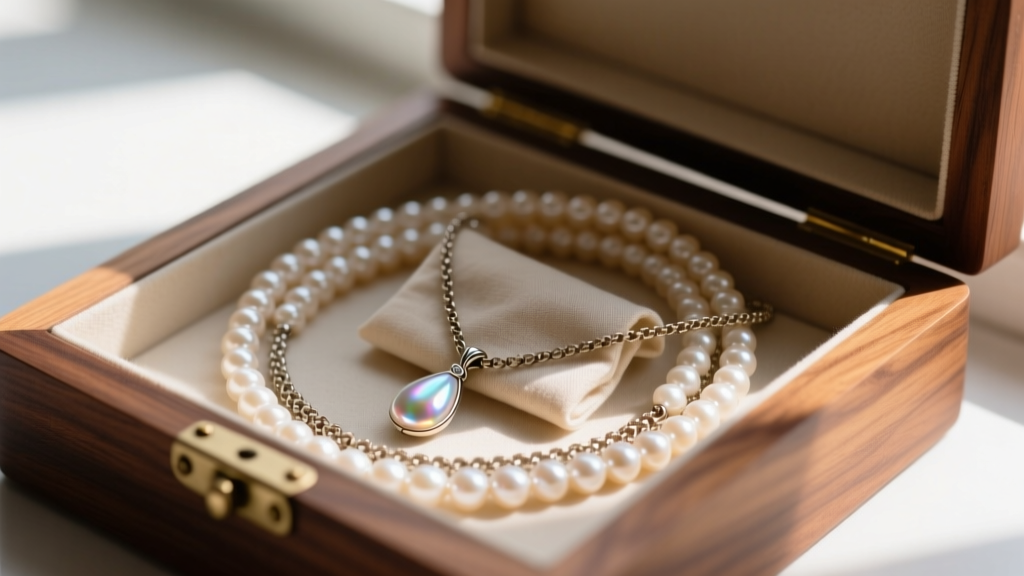
To safely store your lariat, employ the drop-through method. Coil the main loop of the necklace into a loose figure-8 shape. Then, take the dangling Y-drop tail and gently wrap it in a small square of anti-tarnish flannel or acid-free tissue paper. Tuck this wrapped tail through the center of the figure-8 coil. This immobilizes the heavy tail, prevents the beads from grinding against each other, and stops the stringing core from developing memory kinks.
For long-term storage, avoid hanging the lariat on a standard necklace bust. The constant downward pull of gravity on the heavy Y-drop tail will permanently stretch silk and nylon threads, altering the drape of the necklace and weakening the structural knots.
When to Seek Professional Re-stringing
Unlike chain necklaces, beaded lariats have a finite structural lifespan dictated by their stringing core. According to master stringers at Fire Mountain Gems, silk thread should be replaced every 18 to 24 months with regular wear, while nylon and wire cores can last 3 to 5 years.
Inspect the area immediately surrounding the slider bead every six months. If you notice 'fuzzing' on the cord, visible stretching between the beads, or if the beads no longer drape fluidly and instead look stiff and segmented, the structural integrity has been compromised. At this stage, cease wearing the necklace immediately and take it to a professional bench jeweler for re-stringing. Attempting to clean or pull a frayed cord through a tight slider bead will result in a catastrophic snap, scattering your gemstones and permanently ruining the piece.


