Elevated Beaded Necklace Designs: 2026 Trend & Layering Guide
Discover the top beaded necklace designs for 2026. Explore material trends, architectural layering techniques, and expert styling frameworks.


The landscape of beaded necklace designs has undergone a radical transformation as we move through 2026. No longer confined to the realm of festival bohemia or casual summer wear, beaded jewelry has been reclaimed by high fashion and architectural styling. Today’s collectors and style enthusiasts are treating beads not merely as decorative accents, but as structural elements that dictate the drape, weight, and visual gravity of an outfit. This shift toward what Vogue recently termed "tactile luxury" demands a deeper understanding of material integrity, threading mechanics, and precise layering mathematics.
The 2026 Shift: From Boho-Casual to Architectural Elegance
In previous years, beaded necklace designs were heavily dominated by mass-produced acrylics, elastic cord stringing, and uniform 6mm spherical shapes. The 2026 aesthetic rejects this uniformity. We are seeing a massive pivot toward asymmetrical gradations, mixed-media integration (such as oxidized silver tubes interspersed with organic stones), and heavyweight draping. Designers are utilizing the natural weight of semi-precious stones and artisanal glass to create necklaces that sit flush against the collarbone or plunge in precise, calculated V-formations. The focus is on the negative space between the beads and the hardware, elevating the stringing material from a hidden necessity to a visible design feature, such as using contrasting Size F silk thread or 49-strand micro-fused stainless steel wire.
Material Matrix: What is Dominating the Market
Choosing the right beaded necklace design requires understanding how different materials interact with light, skin chemistry, and physical stress. Below is a breakdown of the premier materials defining the 2026 market, including their structural requirements and investment value.
| Material | Standard Bead Size | Threading Requirement | Price Range (USD) | Durability & Care |
|---|---|---|---|---|
| Murano Glass (Artisanal) | 10mm - 16mm | 49-strand coated steel wire | $120 - $350 | High impact resistance; avoid thermal shock. |
| Recycled Bio-Resin | 12mm - 25mm | Heavy-duty braided nylon | $65 - $180 | Extremely durable; UV resistant; lightweight. |
| Lapis Lazuli (Natural) | 4mm - 8mm | Griffin silk (knotted) or wire | $300 - $850 | Moderate (Mohs 5.5); porous, keep away from oils. |
| Baroque Freshwater Pearl | 8mm - 14mm | 100% natural silk (knotted) | $200 - $600 | Delicate (Mohs 2.5); requires post-wear wiping. |

The Mathematics of Layering Beaded Necklace Designs
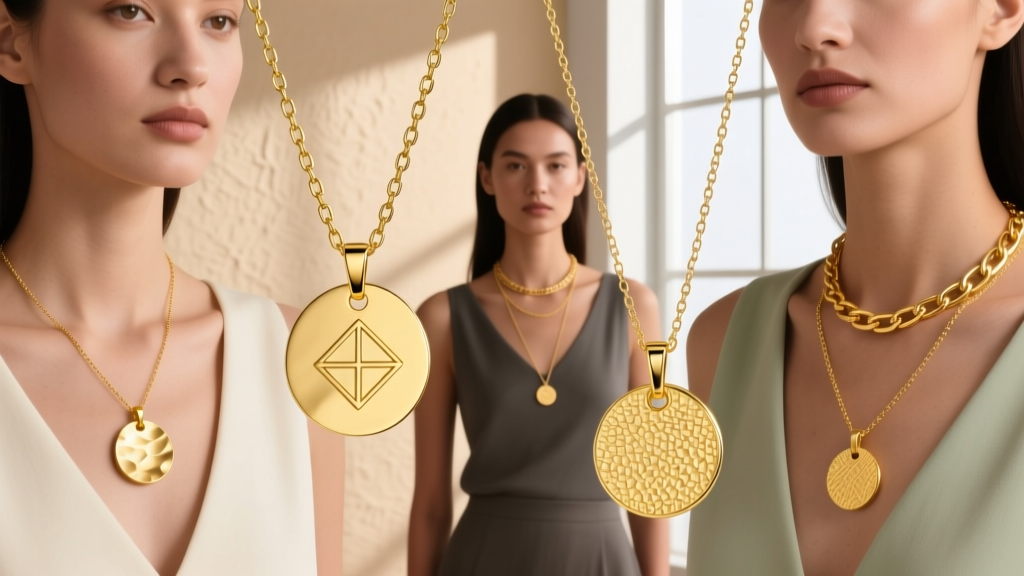
Layering beaded necklaces is not about simply throwing multiple strands together; it is an exercise in spatial geometry. The primary failure mode in layered beaded designs is abrasive wear—when beads of differing Mohs hardness rub against one another, the softer material degrades. To prevent this, 2026 styling frameworks rely on strict length staggering and protective hardware.
- The 2-Inch Rule: Never layer beaded necklaces with less than a 2-inch length differential. A 16-inch choker paired with an 18-inch princess length will cause the heavier beads to tangle and grind against each other. Opt for 16", 20", and 26" combinations.
- The Buffer Bead Technique: When mixing materials (e.g., turquoise and silver), use a 2mm silicone or soft leather buffer bead between them to absorb friction and preserve the stone's polish.
- Clasp Placement: For layered designs, offset the clasps. Place the shortest necklace's clasp at the nape of the neck, and use a decorative toggle or lobster clasp on the longest strand, shifted slightly to the side for an intentional, asymmetrical finish.
Neckline Pairing Framework
The visual weight of beaded necklace designs must complement, rather than compete with, the architecture of your clothing. Here is a definitive guide to pairing bead sizes and lengths with 2026's most prominent necklines:
The Deep V-Neck and Plunge
Pair with a 24-inch to 28-inch opera-length graduated design. The beads should start small (4mm) at the nape and gradually increase to a focal 12mm or 14mm bead at the center drop. This draws the eye vertically and mirrors the garment's lines without resting awkwardly on the fabric's hem.
The Boatneck and Bateau
Boatnecks require horizontal emphasis. A 16-inch choker featuring chunky, uniform 12mm to 16mm beads sits perfectly above the collar line, providing a bold, structural contrast to the wide, open neckline of the top.
The Classic Crew
Crew necks can easily look cluttered. The solution is an 18-inch princess-length necklace featuring a mix of opaque and translucent beads (like matte onyx and polished crystal). The translucency breaks up the visual density, preventing the necklace from looking like a heavy collar against the high fabric line.

Sourcing and Authenticity: Avoiding Fast-Fashion Fakes
As the demand for elevated beaded necklace designs surges, so does the market for treated and imitation stones. A prevalent issue in 2026 is dyed howlite being passed off as natural turquoise or lapis lazuli. According to the Gemological Institute of America (GIA), consumers must look for specific telltale signs of dye concentration. In genuine porous stones, color is evenly distributed or follows natural matrix veins. In dyed howlite, the dye pools aggressively in the micro-crevices and surface fractures, creating a spiderweb effect visible under a 10x jeweler's loupe.
Furthermore, scrutinize the stringing method. High-end beaded designs utilizing natural stones over 8mm should never be strung on simple elastic cord, which degrades, stretches, and inevitably snaps under the continuous weight and UV exposure. Authentic, investment-grade pieces will utilize French wire (bullion) finishing at the clasp connection points to prevent the metal from sawing through the thread, and will feature hand-tied knots between every individual bead to prevent total loss in the event of a strand break.
"The true luxury of a beaded necklace in 2026 isn't just the rarity of the stone, but the invisible engineering of its stringing. A masterfully knotted silk strand elevates a simple lapis bead into an heirloom." — Contemporary Jewelry Fabrication Journal
By prioritizing structural integrity, understanding material interactions, and applying precise layering mathematics, you can curate a collection of beaded necklace designs that transcends seasonal fads and establishes a permanent, sophisticated presence in your wardrobe.