Beaded Pearl Necklace Value Guide: 2026 Pricing & Budget Tips
Discover true beaded pearl necklace value in 2026. Compare Freshwater vs. Akoya pricing, nacre grades, stringing quality, and expert budget assessment tips.

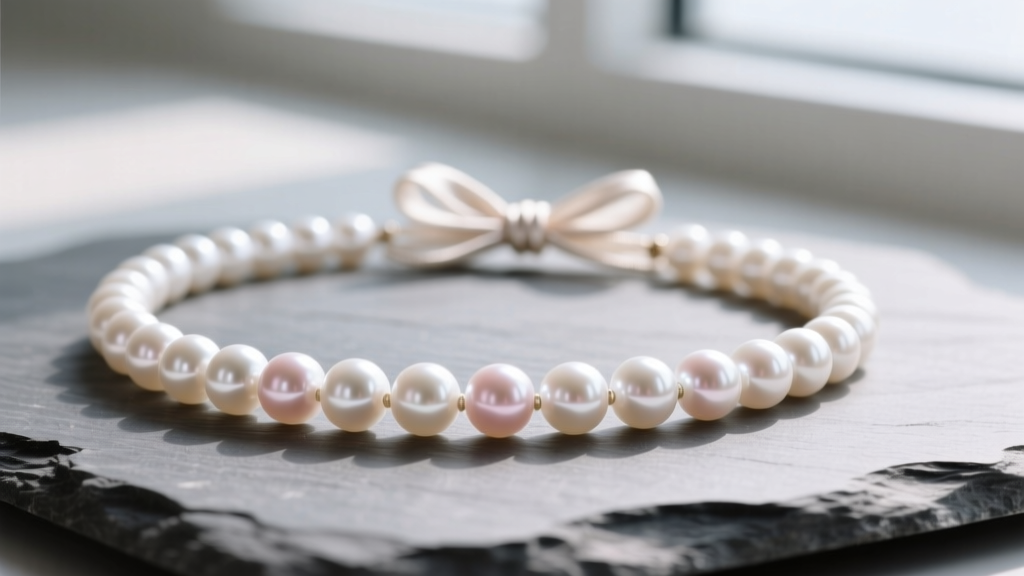
The Real Cost of a Beaded Pearl Necklace in 2026
The market for a classic beaded pearl necklace is wildly fractured. In 2026, you can find strands priced anywhere from $29 on fast-fashion marketplaces to over $25,000 at heritage jewelers. For the budget-conscious buyer or the value-focused collector, understanding this massive price gap is critical. The difference is rarely just brand markup; it is deeply rooted in nucleation methods, nacre thickness, surface grading, and the structural integrity of the stringing materials.
When assessing the value of a beaded pearl necklace, you must look past the clasp and evaluate the biological and mechanical engineering of the piece. According to the Gemological Institute of America (GIA), pearl quality factors include size, shape, color, luster, surface quality, and nacre thickness. Ignoring any of these metrics can turn what seems like a bargain into a rapid depreciation asset.
Decoding Pearl Types: Where Your Budget Goes Furthest
The origin and cultivation method of the pearl dictate its baseline value. Here is how the primary contenders stack up in the current market.
Freshwater vs. Akoya: The Budget Battleground
For decades, Japanese Akoya pearls have been the gold standard for the classic, perfectly round white beaded pearl necklace. However, their bead-nucleated cultivation process yields a relatively thin nacre layer—typically between 0.15mm and 0.6mm. If an Akoya pearl has a nacre thickness of less than 0.25mm, it is highly prone to peeling and chipping, rendering it a poor long-term investment.
Conversely, traditional tissue-nucleated Freshwater pearls are composed of solid nacre all the way through. This makes them exceptionally durable and resistant to chipping. In 2026, a high-quality (AAA grade) 7.0-8.0mm Freshwater strand offers 90% of the visual appeal of an Akoya strand at roughly 25% of the cost, typically ranging from $150 to $350.
The Disruption of Edison Pearls
If your budget is under $600 but you desire the massive 11mm-14mm sizes usually reserved for $10,000+ South Sea pearls, bead-nucleated Freshwater "Edison" pearls are the ultimate value hack. Cultivated primarily in China, these pearls offer intense, metallic lusters and massive sizes for a fraction of the marine pearl cost.
Simulated and Shell Pearls: The Value Trap
Buyers must be wary of "shell pearls" or "simulated pearls." The Federal Trade Commission (FTC) Jewelry Guides strictly mandate that simulated pearls must be clearly disclosed. These are typically glass or plastic beads coated in a synthetic guanine lacquer. While they offer flawless surfaces and uniform weights, they hold zero intrinsic gemological value and will inevitably scratch, yellow, and peel within a few years of regular wear.
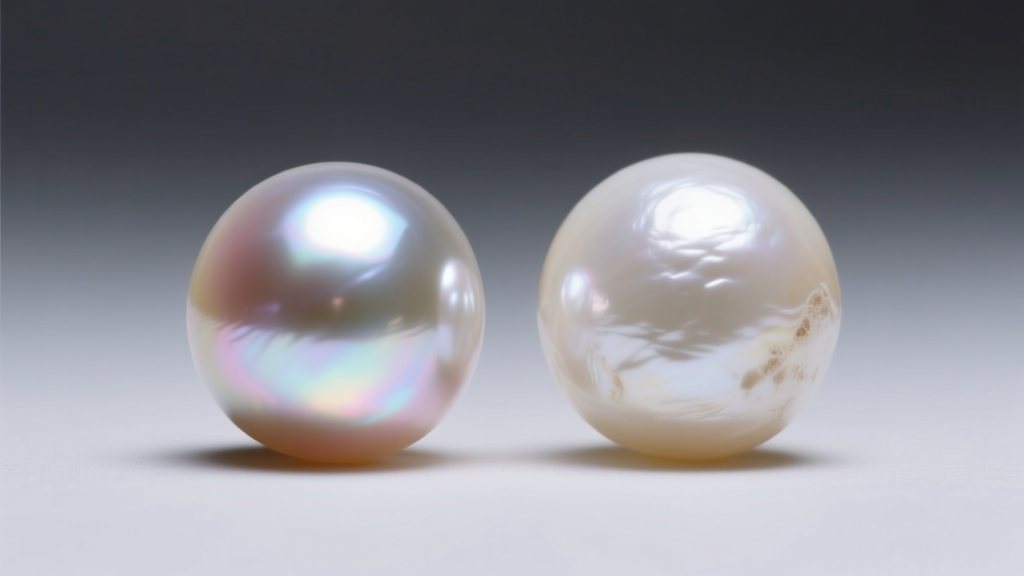
The Hidden Value Drivers: Nacre, Luster, and Stringing
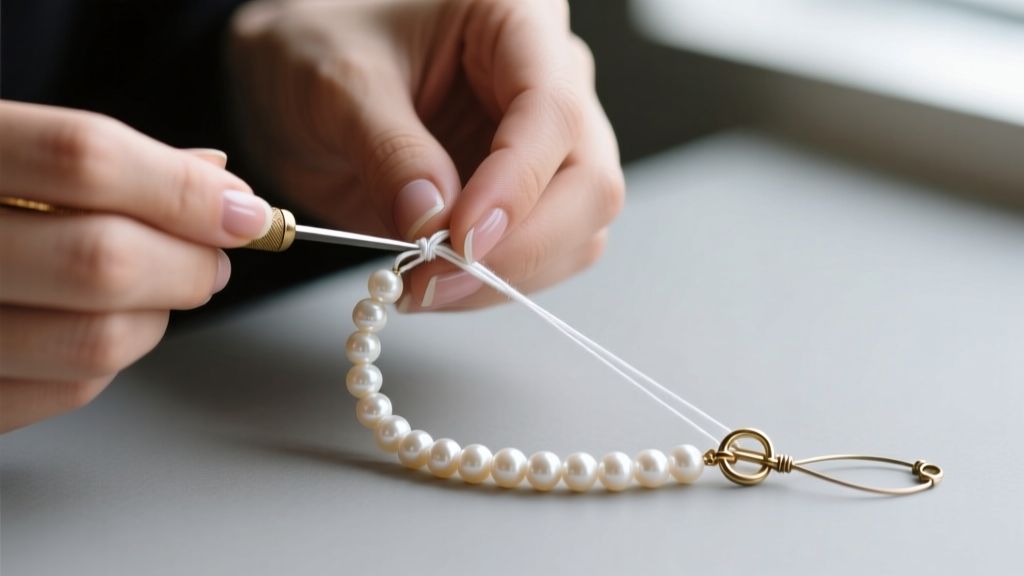
A beaded pearl necklace is only as valuable as the string holding it together. The mechanical assembly heavily influences both the appraisal value and the lifespan of the jewelry. Low-tier manufacturers often cut corners here, leading to catastrophic failure modes.
Stringing Materials and Knotting Integrity
Pearls are soft (2.5 to 4.5 on the Mohs scale). The friction between beads, and between the bead and the stringing material, is a constant threat to the nacre. Here is a breakdown of stringing methods and their impact on necklace value:
| Stringing Method | Material Used | Value Impact & Failure Mode |
|---|---|---|
| Hand-Knotted (Premium) | 100% Silk thread, French wire (gimp) at clasp | Highest Value. Knots prevent pearl-on-pearl abrasion. French wire prevents silk fraying at the metal clasp. If the strand breaks, only one pearl is lost. |
| Machine-Knotted (Mid-Tier) | Nylon (e.g., PowerPro) or synthetic silk | Moderate Value. Nylon is stronger than silk and resists stretching, but knots can be bulky and stiff, reducing the necklace's drape. |
| Wire-Strung (Low-Tier) | Stainless steel or tiger-tail wire with crimp beads | Severe Depreciation. Steel wire acts as a saw against the soft nacre at the drill hole. Over time, the wire will chew through the pearl and eventually snap, causing total loss. |
| Unknotted (Budget) | Cotton or cheap nylon, glued at ends | Lowest Value. Pearls grind against each other, destroying the nacre at the drill holes. A single break results in losing the entire strand. |
2026 Pricing Matrix: What to Expect at Every Tier
To accurately assess a beaded pearl necklace, use this pricing matrix based on an 18-inch "Princess" length strand featuring 7.0mm-8.0mm round pearls. Prices reflect the 2026 retail market for properly knotted strands with sterling silver or 14k gold clasps.
- Under $50: Simulated glass pearls, or heavily blemished, chalky low-grade freshwater pearls strung on unknotted nylon. (Avoid for long-term wear).
- $100 - $300: AAA-grade Freshwater pearls. Excellent luster, minor surface blemishes visible only under magnification, solid nacre, hand-knotted on silk.
- $400 - $900: AA+ to AAA-grade Akoya pearls. Good to very high luster, thin but acceptable nacre (0.3mm+), hand-knotted with French wire.
- $1,200 - $3,500: Hanadama-certified or Gem-grade Akoya pearls. Mirror-like luster, thick nacre (0.5mm+), flawless surface to the naked eye, premium 18k gold clasps.
- $5,000+: High-grade South Sea or Tahitian pearls (larger sizes, 10mm+), or exceptionally rare, perfectly matched vintage Akoya strands with provenance.
Practical Appraisal: 3 Tests Before You Buy
When evaluating a beaded pearl necklace in person or assessing a secondary-market find, rely on these three physical tests to verify value and authenticity.
1. The Tooth Test (Authenticity)
Gently rub the pearl against the biting edge of your front tooth. A real pearl (whether Freshwater, Akoya, or South Sea) is composed of microscopic aragonite platelets, which will feel distinctly gritty, like fine sandpaper. A simulated glass or plastic pearl will feel perfectly smooth and slick. Note: Do not perform this test on antique or museum-grade pieces to avoid damaging delicate historical nacre.
2. Drill Hole Inspection (Nacre Thickness)
Use a 10x jeweler's loupe to examine the drill hole. On a bead-nucleated pearl (like an Akoya), you should be able to see the demarcation line between the outer nacre and the inner mother-of-pearl shell bead. If the nacre layer looks paper-thin, or if you see flaking and "bald spots" revealing a stark white or glassy core, the pearl is structurally compromised and lacks value.
3. The Temperature Test (Material Verification)
Real pearls are dense and thermally conductive. When you first pick them up, they should feel noticeably cool to the touch and take several seconds to warm up to your body temperature. Glass beads and resin-coated shell pearls will feel room-temperature or warm up almost instantly.
Expert Insight: Always inspect the clasp and the first two inches of the necklace. High-value beaded pearl necklaces will feature a protective coil of "French wire" (a tiny, coiled metal spring) where the silk thread loops through the metal clasp. If the silk is rubbing directly against bare metal without this protection, the string will fray and snap within a few years, indicating poor craftsmanship and lower overall value.
Final Verdict on Budget Allocation
If your goal is maximum visual impact and longevity on a strict budget, a hand-knotted, AAA-grade Freshwater beaded pearl necklace remains the undisputed champion of value in 2026. You secure the durability of solid nacre and the elegance of classic knotting without paying the steep premium for the Akoya brand name. Always prioritize luster and stringing integrity over marginal gains in perfect roundness, as the drape and light reflection are what truly define the beauty of the strand.


