Beaded Turquoise Necklace Guide: Natural vs Stabilized Materials
Discover how to evaluate a beaded turquoise necklace. Compare natural, stabilized, and dyed stones, plus stringing materials and pricing tiers.

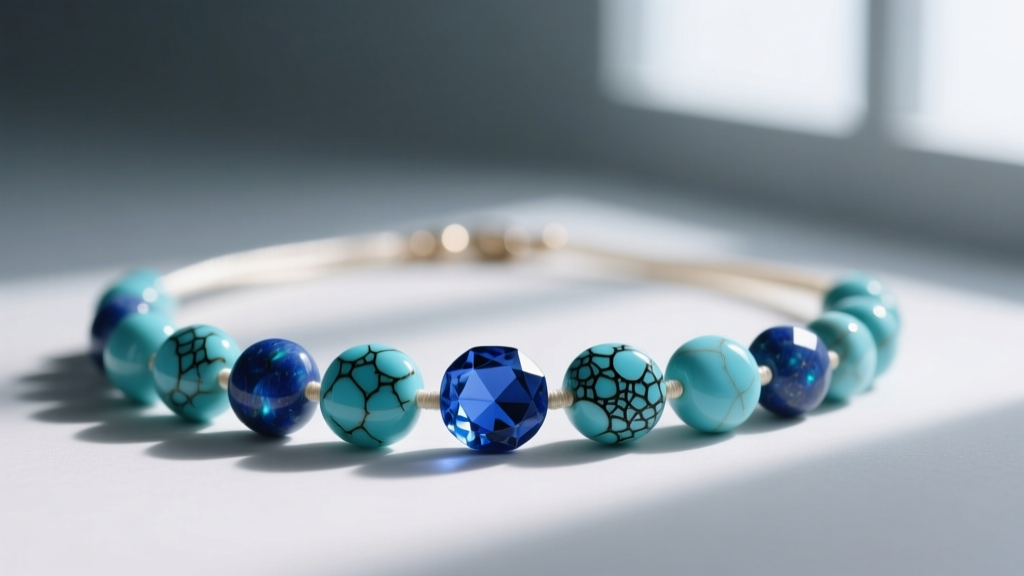
The Mineralogy of Turquoise: Why Treatment Matters
When evaluating a beaded turquoise necklace, understanding the underlying mineralogy is critical to assessing both its value and its longevity. Turquoise is a hydrous phosphate of copper and aluminum, with the chemical formula CuAl₆(PO₄)₄(OH)₈·4H₂O. According to the Mindat mineral database, its Mohs hardness ranges from 3 to 6, and its specific gravity sits between 2.6 and 2.9. This relatively low hardness and high porosity mean that raw, untreated turquoise is highly susceptible to environmental damage, absorbing oils, cosmetics, and moisture, which can alter its color and structural integrity over time.
Because gem-grade natural turquoise (hardness 5.5+) accounts for less than 10% of all mined material, the jewelry industry relies heavily on material treatments to make softer, chalk-grade turquoise viable for beaded jewelry. Understanding these treatments is the first step in making an informed purchase.
Natural vs. Stabilized vs. Dyed: A Material Comparison
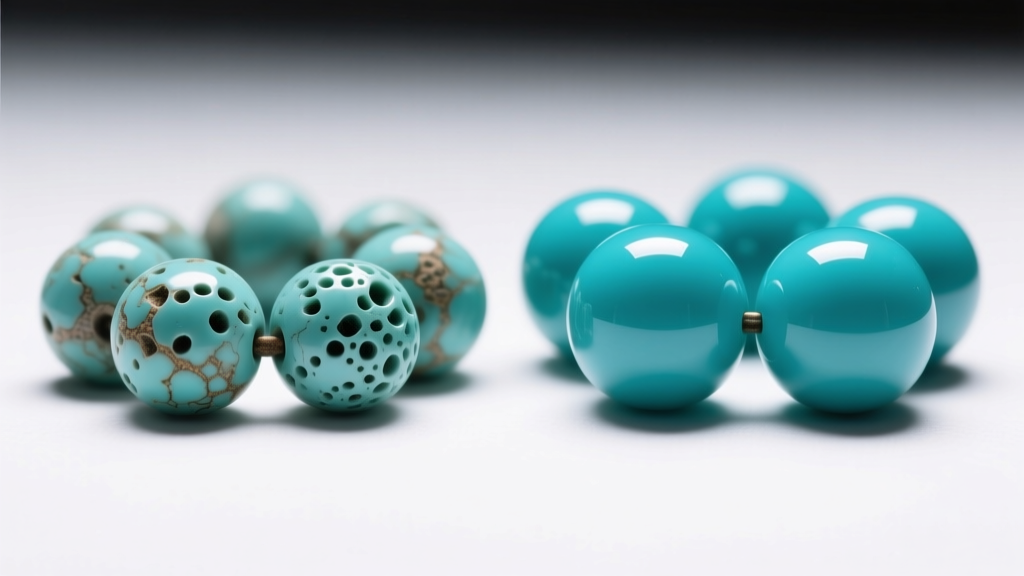
Not all turquoise beads are created equal. The market is segmented into distinct material categories, each with different physical properties, aesthetic profiles, and price points. The Gemological Institute of America (GIA) mandates that any treated turquoise must be disclosed, yet misrepresentation remains common in unregulated markets.
| Treatment Type | Process & Materials | Mohs Hardness | Color Fastness | Avg. Price per Carat |
|---|---|---|---|---|
| Natural (Untreated) | Mined, cut, and polished only. | 5.0 - 6.0 | Low (Porous, absorbs oils) | $15 - $60+ |
| Stabilized | Infused with clear epoxy/resin under vacuum pressure. | 6.0 - 7.0 | High (Sealed against moisture) | $2 - $10 |
| Dyed / Color-Enhanced | Stabilized with colored resin or zinc oxide dyes. | 5.5 - 6.5 | Medium (Can fade in UV light) | $0.50 - $3 |
| Reconstituted | Turquoise dust mixed with polymer binders and molded. | 4.0 - 5.0 | High (Uniform, but artificial) | < $0.50 |
For a high-quality beaded turquoise necklace, stabilized turquoise is often the most practical choice. The vacuum-stabilization process forces opticon or similar clear resins deep into the microscopic pores of the stone, permanently hardening it without altering its natural color. This prevents the beads from cracking during the drilling process and protects them from the acidic pH of human sweat.
Stringing Materials: Tensile Strength and Failure Modes
The beads are only half the equation; the stringing material dictates the structural lifespan of the necklace. A heavy, multi-strand beaded turquoise necklace can easily exceed 150 grams, placing significant tensile stress on the core wire.
1. Coated Stainless Steel Wire (Beadalon / Soft Flex)
The industry standard for heavy stone beads is 49-strand micro-woven stainless steel wire coated in nylon. For standard 6mm to 10mm turquoise beads, a 0.018-inch (0.46mm) diameter wire provides the ideal balance of drape and tensile strength (typically rated for 20-30 lbs of pull). Using a thicker 0.024-inch wire will cause the necklace to stiffen, preventing it from laying flat against the clavicle.
2. Silk Cord
Traditional and historically accurate, silk thread (size F or G for heavy beads) requires knotting between every single turquoise bead. While this prevents bead loss if the cord snaps, silk is highly vulnerable to moisture degradation and stretches over time, leading to unsightly gaps between the beads. It is best reserved for lightweight, high-grade natural turquoise pieces that will be worn infrequently.
3. Elastic Cord
Avoid elastic for genuine turquoise. The sharp inner edges of drilled stone beads will micro-abrade the elastic core, leading to catastrophic failure and a shattered necklace.
Clasp Metallurgy and Galvanic Corrosion
When designing or purchasing a beaded turquoise necklace, the clasp material must be carefully selected to avoid galvanic corrosion—a chemical reaction that occurs when two dissimilar metals are exposed to an electrolyte (like sweat).
- Sterling Silver (.925): The traditional pairing for turquoise. However, silver tarnishes when exposed to sulfur. Ensure the clasp is rhodium-plated or regularly polished to prevent black tarnish from transferring to the porous turquoise beads near the neck.
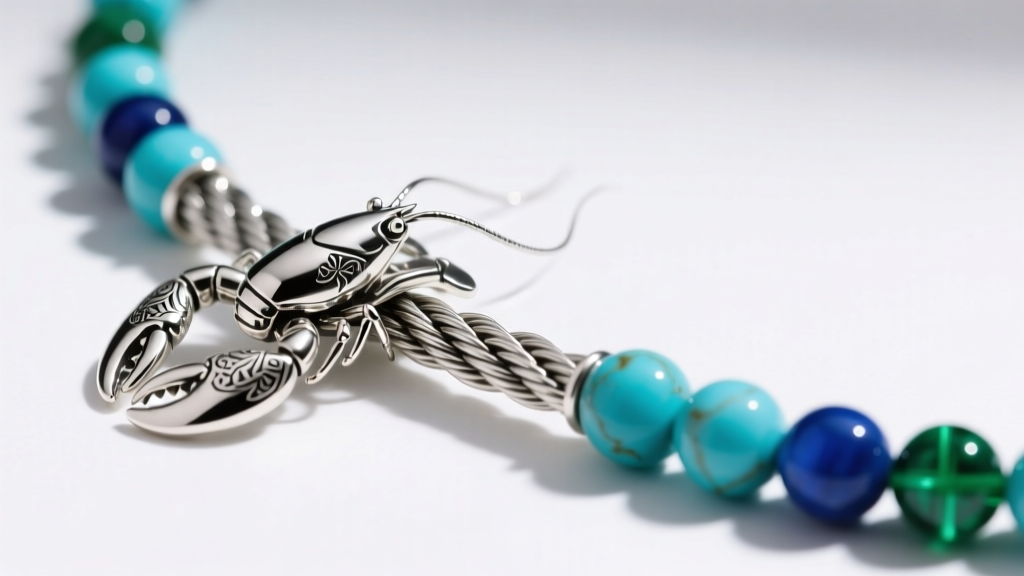
- Gold-Filled (14/20): Offers excellent corrosion resistance and durability. A 14k gold-filled lobster clasp contains 5% pure gold by weight, providing a lifetime of wear without the risk of base-metal skin reactions.
- Brass and Copper: Often used in rustic or Native American-style jewelry. While aesthetically pleasing, unsealed copper will oxidize rapidly and can leave green stains on the skin and adjacent beads.
Sourcing Origins and 2026 Pricing Tiers
The geographic origin of the turquoise heavily influences the bead's matrix pattern and market value. While many mines have closed, their material remains highly sought after in the secondary market.
Sleeping Beauty (Arizona, USA)
Known for its pure, robin’s-egg blue color with little to no matrix (host rock webbing). Because the mine closed in 2012, genuine Sleeping Beauty beads command a massive premium, often exceeding $25 per carat for stabilized strands.
Kingman (Arizona, USA)
Produces a deeper blue with striking black or brown pyrite matrix. Kingman is highly prized for its distinct webbing and remains one of the few active American mines, making it a reliable source for premium stabilized beads.
Hubei Province (China)
Currently the world's largest producer of commercial turquoise. Hubei material ranges from chalky white to deep green and is almost universally stabilized and sometimes dyed. It is affordable and durable, but lacks the collector prestige of American mines.
Identifying Imitations: Howlite and Magnesite
A critical part of material evaluation is spotting outright fakes. Howlite and magnesite are naturally white, highly porous minerals that are frequently dyed blue to mimic turquoise. To identify them, examine the surface under a 10x jeweler's loupe. Dyed howlite will show dark dye concentrations in its natural gray veining, and the color will often pool in surface micro-fissures. Furthermore, howlite has a lower Mohs hardness (3.5) than genuine turquoise and will scratch easily with a steel needle, whereas stabilized turquoise will resist the scratch.
Care and Maintenance Protocols
To preserve the material integrity of your necklace, follow these strict maintenance rules:
- The "Last On, First Off" Rule: Always put your necklace on after applying perfumes, hairsprays, and lotions, and remove it before bathing.
- Ultrasonic Cleaners are Forbidden: The high-frequency vibrations and heated chemical baths will shatter natural turquoise and strip the resin from stabilized beads.
- Proper Cleaning: Wipe the beads gently with a dry, untreated microfiber cloth. If heavy soil is present, use a barely damp cloth with mild, phosphate-free soap, drying immediately.
By understanding the complex interplay of mineralogy, polymer stabilization, and metallurgical hardware, you can confidently select a beaded turquoise necklace that is not only visually stunning but structurally engineered to last for generations.


