How to Choose a Beaded Wrap Necklace: A Complete Buying Guide
Discover what to look for in a beaded wrap necklace. Our expert buying guide covers stringing materials, clasp security, bead quality, and pricing.

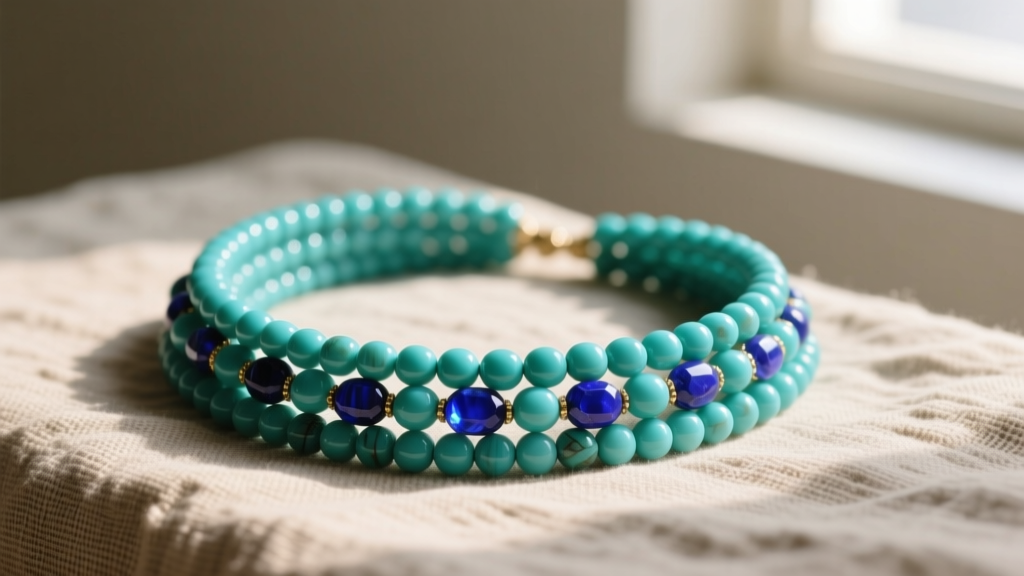
A beaded wrap necklace is one of the most versatile investments you can make for your jewelry wardrobe. Capable of functioning as a long, sweeping lariat, a doubled choker, or a triple-layered collar, this style relies heavily on structural integrity and material quality. Because wrap necklaces are subjected to repeated bending, coiling, and varying tension points, they fail much faster than standard single-strand necklaces if constructed poorly. This comprehensive buying guide will teach you exactly what to look for beneath the surface of the beads, ensuring your next purchase lasts for years.
The Anatomy of a High-Quality Beaded Wrap Necklace
When evaluating a beaded wrap necklace, the untrained eye focuses solely on the color and cut of the gemstones or glass beads. However, as any professional jeweler will tell you, the longevity of the piece is dictated by its internal skeleton and its termination points. A wrap necklace must endure a much smaller bend radius than a standard 18-inch princess necklace. Every time you wrap the strand around your neck, you are stressing the stringing material. If the internal wire lacks flexibility, or if the beads have abrasive, unpolished drill holes, the necklace will inevitably snap.
Stringing Materials: The Hidden Lifeline
The absolute gold standard for stringing high-end beaded wrap necklaces is 49-strand stainless steel wire with a nylon coating, such as those produced by the Soft Flex Company. The "49-strand" designation means the wire is composed of 49 microscopic braided steel cables, giving it a drape that mimics silk thread while retaining the tensile strength of steel. For a wrap necklace, you want a wire diameter between 0.018 inches and 0.024 inches.
Avoid necklaces strung on 7-strand or 19-strand wire. These cheaper alternatives possess a stiff "memory" and will permanently kink when wrapped tightly around the neck. Furthermore, never purchase a heavy gemstone wrap necklace strung on elastic or basic cotton thread; the cumulative weight of multiple wraps will stretch and snap these materials within weeks.
Bead Selection and Drilling Quality
According to the Gemological Institute of America (GIA), gemstones vary wildly in hardness on the Mohs scale. When buying a multi-stone beaded wrap necklace, pay attention to how different beads interact. If a hard stone like quartz (Mohs 7) is placed directly next to a softer stone like fluorite (Mohs 4) without tiny metal spacer beads in between, the quartz will act like sandpaper, eventually grinding through the softer stone and the internal wire.
Equally critical is the drill hole quality. Mass-produced beads often feature rough, jagged drill holes. When the necklace bends during wrapping, the nylon-coated wire is pressed against these sharp internal edges, creating a "sawing effect" that severs the wire from the inside out. High-quality artisan beads feature micro-polished drill holes that protect the stringing material.
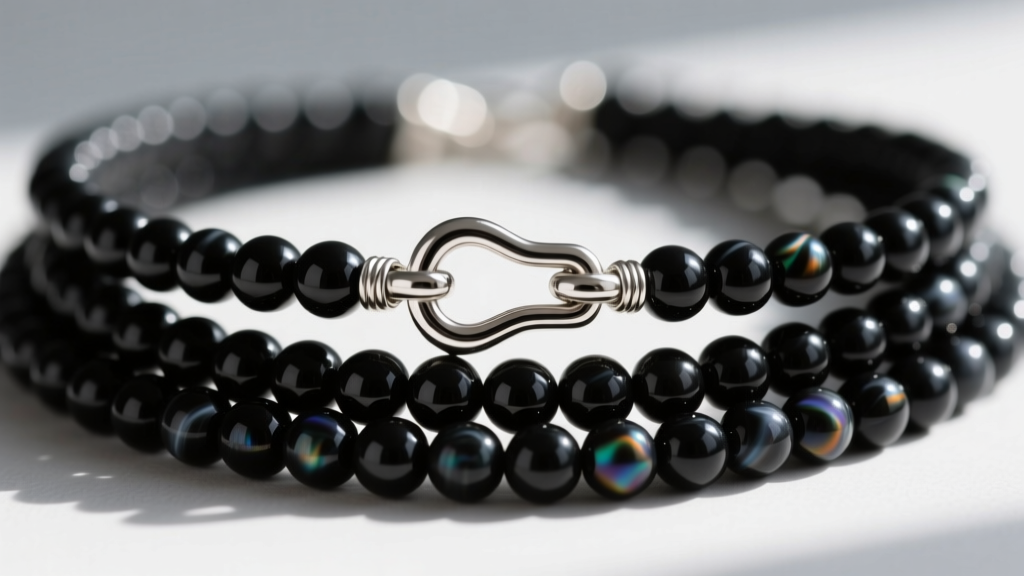
Clasp Mechanics: Securing Multi-Wrap Designs
The clasp on a wrap necklace must handle dynamic tension. When worn as a triple wrap, the friction between the strands helps distribute the weight, but the clasp still bears the initial load of the drape. Magnetic clasps are incredibly popular in fast-fashion wrap necklaces, but they are a structural liability. The shear force generated by the swinging weight of a long beaded strand can easily overcome the magnetic pull, causing the necklace to drop and shatter.
The toggle clasp is the undisputed king of wrap necklaces. However, not all toggles are created equal. For a heavy gemstone wrap, the toggle bar must be at least 3mm to 5mm wider than the inner diameter of the ring to prevent accidental slipping. Below is a comparison of common clasp types used in wrap designs.
| Clasp Type | Pros | Cons | Wrap Suitability |
|---|---|---|---|
| Toggle (Ring & Bar) | Secure under tension; easy to fasten blindly. | Can slip if the bar is too short for the ring. | Excellent (Best for heavy wraps) |
| Lobster Claw | Very secure; standard on most jewelry. | Difficult to fasten at the nape of the neck alone. | Good (Best for 2-wrap styles) |
| Magnetic | Effortless to put on and take off. | Fails under shear force; heavy strands pull apart. | Poor (Avoid for gemstone wraps) |
| Slide / Tube Clasp | Seamless, invisible look when fastened. | Relies on friction; can loosen with body oils. | Fair (Best for lightweight seed beads) |
Pricing Tiers: What You Actually Get
When shopping for a beaded wrap necklace, price is usually a direct reflection of the internal components and bead sourcing. Here is what you can expect across different market tiers:
- Fast Fashion ($15 - $40): Typically features glass, acrylic, or dyed howlite beads strung on stiff 7-strand wire with alloy magnetic clasps. Expect a lifespan of 6 to 12 months before kinking or clasp failure occurs.
- Mid-Tier Artisan ($60 - $120): Features genuine semi-precious stones, polished drill holes, 49-strand nylon-coated wire, and sterling silver or gold-filled toggle clasps. These are built to last for years with proper care.
- Fine Jewelry / Designer ($250+): Incorpors high-clarity gemstones, diamond-cut beads, solid 14k or 18k gold findings, and hand-knotting techniques (like silk knotting between pearls) to prevent bead-on-bead abrasion.

Common Failure Modes and How to Spot Them
Before purchasing a beaded wrap necklace in person, perform these three quick stress tests to identify potential failure modes:
- The Kink Test: Gently fold a small section of the necklace back on itself. If the wire resists and holds a sharp crease, it is strung on cheap memory wire. Walk away.
- The Drill Hole Check: Look closely at the holes of the beads near the clasp. If you see frayed nylon threads or jagged stone edges, the internal wire is actively being cut.
- The Toggle Ratio: Pass the toggle bar through the ring and hold the necklace up by the ring. Shake it gently. If the bar slips out without significant resistance, the ratio is unsafe for a heavy wrap.
Sizing Your Wrap: The Mathematics of Layering
Sizing a wrap necklace requires understanding the geometry of your neck and the bulk of the beads. A standard single-strand necklace sits at 18 inches. To achieve a comfortable double-wrap that doesn't choke you, you need a minimum total length of 34 to 38 inches. For a luxurious triple-wrap collar effect, the necklace must measure at least 50 to 54 inches.
Keep in mind that large, chunky beads (10mm or larger) consume more linear length when they bend around the curve of your neck. A 50-inch necklace made of 4mm seed beads will wrap three times comfortably, but a 50-inch necklace made of 12mm turquoise rounds may only yield a tight, uncomfortable 2.5 wraps. Always check the bead diameter alongside the total length when reading product specifications from retailers like Fire Mountain Gems or independent artisans.
"The secret to a flawless beaded wrap is drape. If the beads are too large and the wire is too thick, the necklace will look like a rigid hula-hoop rather than a fluid accessory. Always prioritize 49-strand wire and beads under 8mm for the most elegant multi-wrap styling."
Final Verdict
A beaded wrap necklace is a masterclass in functional jewelry design, but it demands a discerning eye. By prioritizing 49-strand stringing wire, polished bead drill holes, and properly proportioned toggle clasps, you can avoid the frustrating cycle of broken strands and lost gemstones. Invest in the structural integrity of the piece, and it will remain a staple of your layering repertoire for a lifetime.


