How to Authenticate and Buy an Antique Ruby Necklace
Learn how to authenticate, evaluate, and buy an antique ruby necklace. Discover era-specific hallmarks, ruby treatments, and pricing tips for beginners.

Acquiring an antique ruby necklace is a milestone for any jewelry collector. The deep, pigeon-blood red of a historic Burmese ruby set in hand-forged gold or platinum carries a romance that modern mass-produced jewelry simply cannot replicate. However, the secondary market for colored gemstones is fraught with misrepresentations, synthetic substitutions, and modern treatments disguised as historical artifacts. For a beginner, distinguishing between a genuine 19th-century treasure and a cleverly assembled modern forgery requires a grasp of gemological history and metalworking techniques.
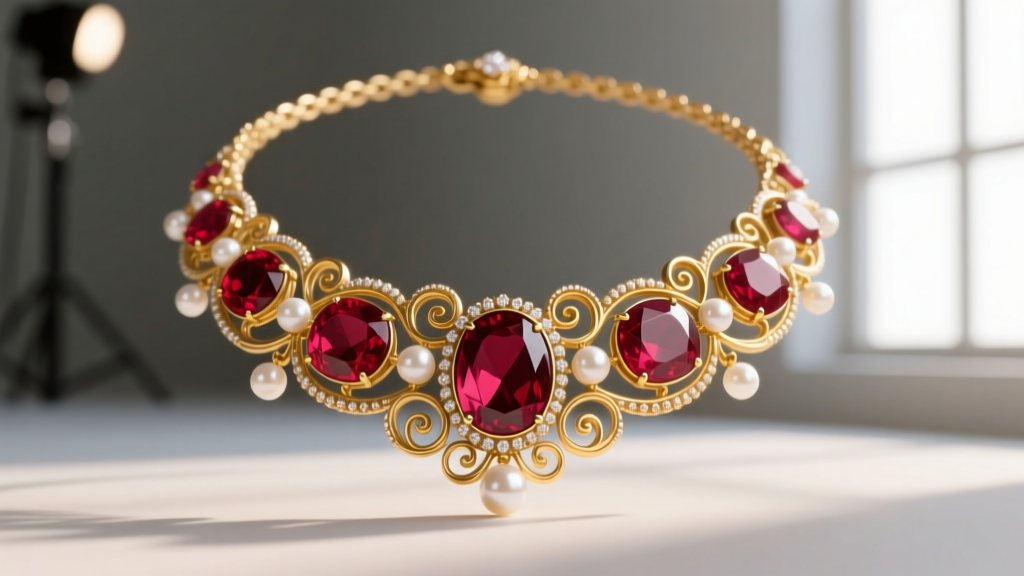
This beginner-friendly explainer will demystify the process of evaluating an antique ruby necklace. We will cover the strict definitions of antique jewelry, the evolution of ruby treatments, era-specific metal hallmarks, and the critical questions you must ask before transferring funds.
What Qualifies as an "Antique" Ruby Necklace?
In the jewelry trade, the term "antique" is not a subjective marketing buzzword; it is a strict chronological classification. For a piece to be considered truly antique in 2026, it must be at least 100 years old, meaning it was crafted in 1926 or earlier. This cutoff places genuine antique pieces squarely in the Art Deco, Edwardian, Art Nouveau, and Victorian eras.
Pieces made between 1927 and the late 1990s are classified as "vintage" or "estate" jewelry. While a 1950s Retro-era ruby necklace may be incredibly valuable and beautiful, it is technically vintage, not antique. Understanding this distinction is vital because the metalworking techniques, gem-cutting styles, and synthetic manufacturing capabilities differ vastly between these periods. According to the Gemological Institute of America (GIA), understanding the historical context of a gemstone's cutting style is often the first clue to its true age and origin.
Decoding Ruby Treatments: Natural vs. Treated vs. Synthetic
The most common mistake beginners make is assuming that an antique mounting guarantees an antique, natural ruby. Stones were frequently replaced, upgraded, or swapped out over the last century. Furthermore, synthetic rubies have existed for over a hundred years.
The Verneuil Synthetic Threat
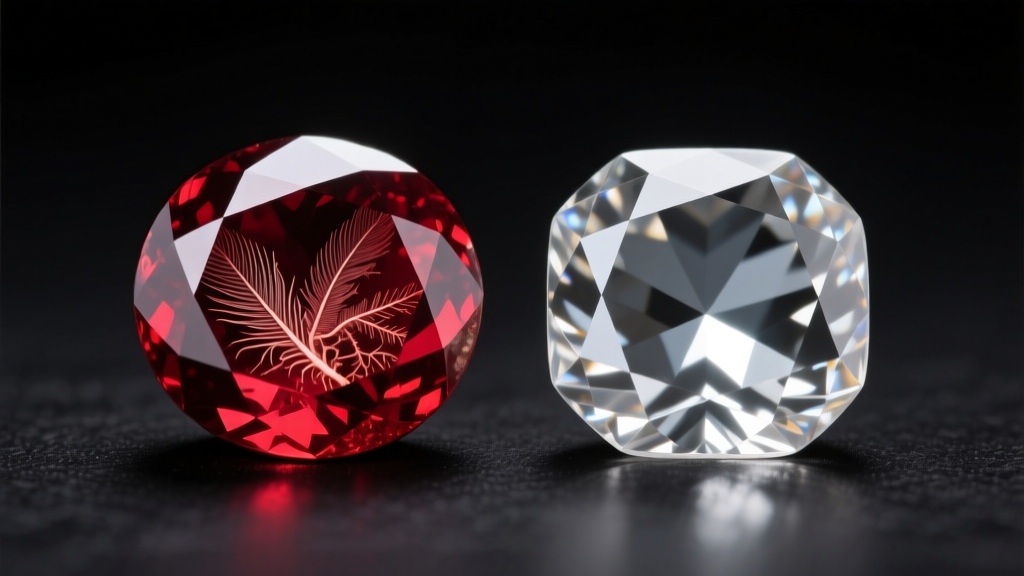
The Verneuil flame-fusion process was invented by Auguste Verneuil in 1902. By the 1910s and 1920s, synthetic rubies were widely used in jewelry, including high-end Art Deco pieces. Therefore, an authentic 1920s platinum antique ruby necklace might legitimately feature a synthetic ruby. Under a 10x jeweler's loupe, Verneuil synthetics reveal curved striae (growth lines) and microscopic gas bubbles, whereas natural rubies exhibit angular growth zoning and crystalline inclusions.
Modern Treatments in "Antique" Settings
Be highly suspicious of modern fracture-filling treatments. Lead-glass-filled rubies were introduced to the market in the early 2000s. Unscrupulous dealers sometimes set these heavily treated, low-grade stones into genuine antique gold mountings to command premium prices. According to GIA's ruby description guidelines, lead-glass-filled rubies exhibit a distinct flash effect (blue and orange flashes) along the fracture planes when viewed under darkfield illumination and are valued at a fraction of the cost of traditionally heated or unheated stones.
| Treatment Type | Era of Origin | Value Impact | How to Spot |
|---|---|---|---|
| Unheated (Natural) | All Eras | Highest Premium (Base + 50-200%) | Intact rutile silk, angular growth zoning |
| Traditional Heat | Centuries Old | Standard Market Value | Disc-like tension halos, melted crystal inclusions |
| Verneuil Synthetic | 1902 - Present | Low Gem Value (Antique metal value only) | Curved striae, gas bubbles |
| Lead-Glass Filled | 2000s - Present | Severe Devaluation (Red Flag) | Blue/orange flash effect in fractures |
Identifying Historical Eras in Antique Ruby Jewelry
The design motifs and metal choices of an antique ruby necklace serve as a roadmap to its authenticity. Here is what to look for in the three primary antique eras.
Victorian Era (1837–1901)
Victorian ruby necklaces heavily feature yellow gold, often in 15k or 18k purities (especially in British pieces). A hallmark authentication trick for early Victorian pieces is the presence of silver-topped gold. Jewelers of this era set diamonds and rubies in silver to achieve a white metal look, but backed the silver with gold to prevent tarnish from staining the skin. Over time, the silver layer often wears thin or oxidizes. Rubies from this era are typically cabochon-cut or early cushion-cuts, often sourced from the legendary Mogok valley in Burma (Myanmar).
Edwardian Era (1901–1915)
The introduction of platinum to jewelry making revolutionized the Edwardian era. If you are examining an Edwardian antique ruby necklace, look for intricate, lace-like filigree work and milgrain edges. The metalwork should be incredibly delicate yet strong. Rubies were often used as vibrant accent stones in garland-style necklaces, contrasting with old European cut diamonds.
Art Deco Era (1915–1930s)
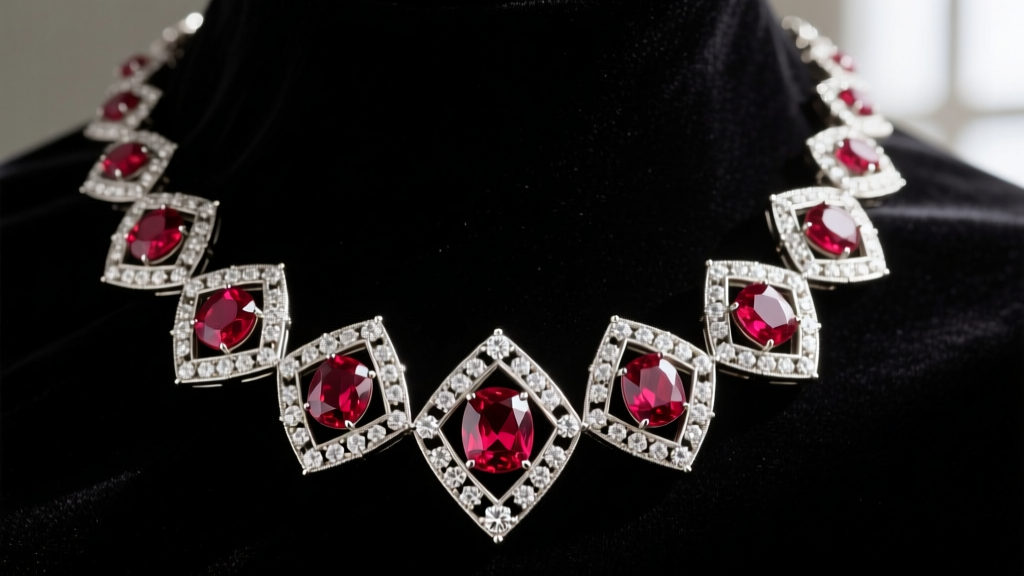
Art Deco design favored bold geometry, high contrast, and architectural precision. An authentic Art Deco antique ruby necklace will likely feature calibré-cut rubies—stones custom-cut to fit seamlessly into geometric channels or halos without any gaps. The platinum mountings will be heavier and more angular than Edwardian pieces, often incorporating black onyx or rock crystal for stark color blocking.
Pricing Expectations and Market Realities
Pricing an antique ruby necklace is complex because you are paying for three distinct elements: the intrinsic value of the gemstones, the precious metal weight, and the historical/artisan premium of the mounting. Here is a realistic pricing framework for the current market:
- Synthetic Ruby in Antique Mounting ($2,000 – $6,000): You are paying strictly for the historical craftsmanship, the platinum or gold weight, and the accent diamonds.
- Heated Natural Ruby, Good Color ($8,000 – $25,000): Standard for high-quality Art Deco or Victorian pieces with commercially graded, traditionally heated rubies.
- Unheated Burmese Ruby, Certified ($40,000 – $250,000+): The holy grail. If the necklace features unheated "pigeon's blood" rubies with origin reports from top-tier labs, the price scales exponentially based on carat weight and provenance.
Essential Questions to Ask the Seller
Never rely solely on a dealer's verbal appraisal. When evaluating an antique ruby necklace, demand clear answers and documentation for the following:
- Is there an origin and treatment report from a Tier-1 laboratory? For colored gemstones, reports from the AGL (American Gemological Laboratories), SSEF, or Gübelin are the gold standard. A standard GIA identification report is good, but AGL provides specific grading for antique colored stones.
- Are the rubies original to the mounting? It was common practice in the 1970s and 80s to swap out damaged antique stones for modern machine-cut replacements. A loupe will reveal if the prongs have been re-tipped or if the stone's girdle is overly polished compared to the wear on the metal.
- Has the necklace been restored or altered? Check the clasp. An authentic Victorian or Edwardian necklace should feature a C-clasp or an early tube clasp. If it has a modern lobster clasp, the piece has been altered, which can diminish its collector value.
"Provenance is the ultimate multiplier in antique jewelry. A ruby necklace with a documented history of ownership, original period receipts, or exhibition records can command a 30% to 50% premium over an identical piece with no paper trail."
Final Thoughts for the Beginner Collector
Purchasing an antique ruby necklace is an exercise in historical detective work. By understanding the timeline of synthetic manufacturing, recognizing era-specific metal hallmarks like silver-topped gold and platinum filigree, and demanding rigorous gemological lab reports, you can navigate the estate market with confidence. Take your time, invest in a quality 10x triplet loupe, and never rush into a purchase without verifying the stone's treatment status.


