Jewelry Care Guide: What to Do When You Dress with Necklace Chains
Learn essential jewelry maintenance, snag prevention, and cleaning tips to protect your chains and gems when you dress with necklace accessories.

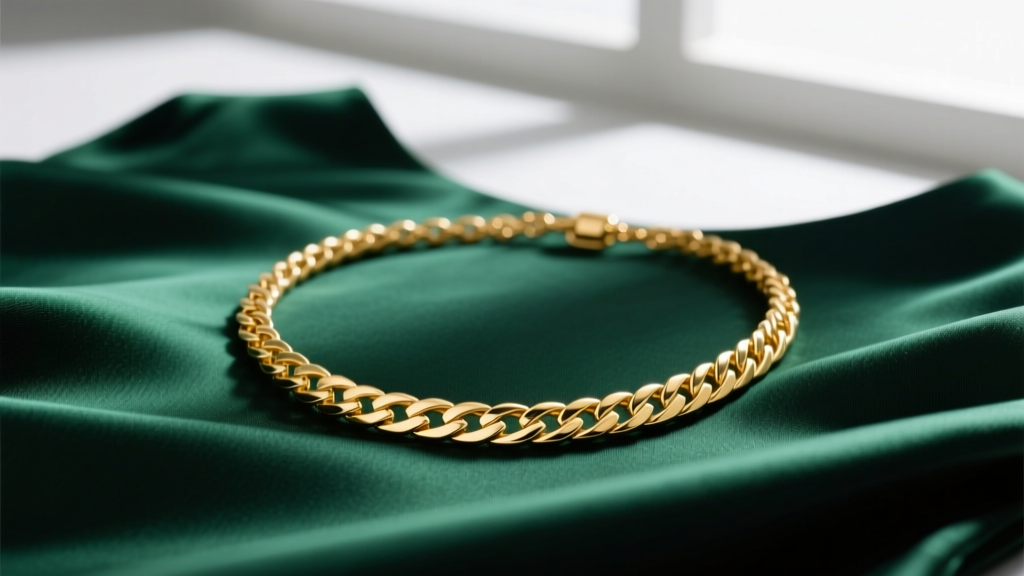
Pairing fine jewelry with formal wear is an art form, but the intersection of delicate fabrics and precious metals requires meticulous attention. When you dress with necklace pieces for galas, weddings, or evening events, the risk of micro-damage, chemical degradation, and fabric snagging multiplies exponentially. As a domain expert in jewelry maintenance, I have compiled this comprehensive guide to ensure your pendants, chains, and gemstones remain pristine while protecting your haute couture garments.
The Hidden Dangers of Formal Wear and Delicate Chains
The physics of snagging is often overlooked until a beloved chain breaks. Formal dresses frequently feature intricate lace appliqués, glass beading, or metallic threads. These textures act like microscopic saws against vulnerable chain links. For instance, a herringbone chain—characterized by its flat, interlocking links—is notoriously prone to kinking and permanent structural failure if caught on a beaded bodice. Similarly, snake chains can trap loose silk threads between their tight metal bands, pulling and fraying expensive fabrics.
Conversely, delicate prong-set pendants can easily catch on chiffon or tulle. If you are wearing a dress with a high-friction neckline or heavy embroidery, it is critical to inspect your jewelry's prongs and jump rings beforehand. Using a 10x jeweler's loupe, check that the solder on your clasp's jump ring is completely flush. A gap of even 0.2 millimeters is enough to hook a stray thread and snap a lightweight chain.
Pre-Dressing Protocol: Perfume, Hairspray, and Lotions
The order in which you prepare for an event dictates the longevity of your jewelry's finish. Cosmetics and fragrances are highly reactive. Ethanol and essential oils found in perfumes can rapidly degrade the rhodium plating on white gold and sterling silver. Rhodium plating is typically applied at a thickness of just 0.75 to 1.0 microns; repeated exposure to aerosolized alcohol breaks down this microscopic layer, exposing the yellowish gold or copper alloys beneath.
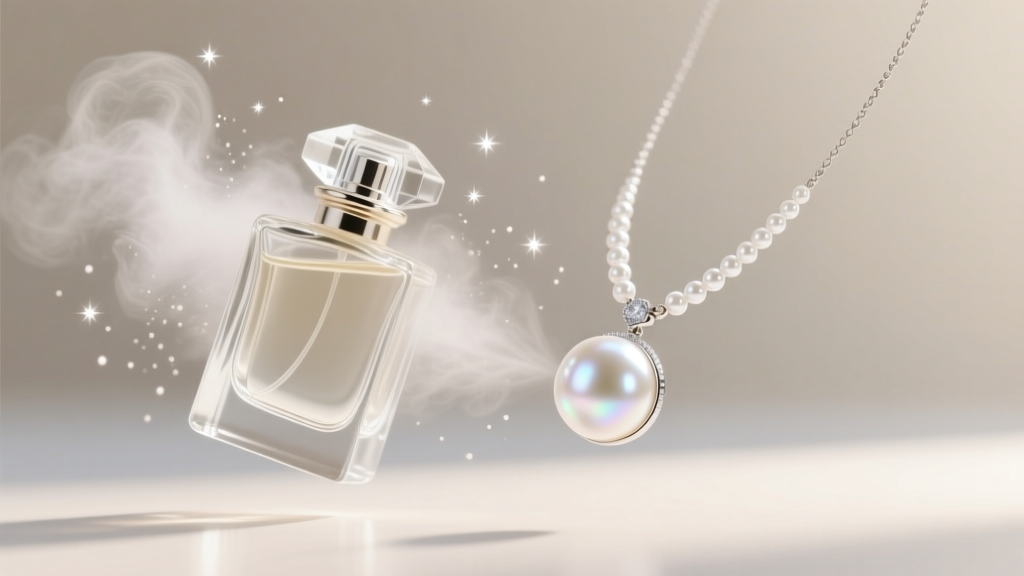
Furthermore, hairspray leaves a sticky, microscopic resin film on gemstones. This film drastically reduces a diamond's refractive index, robbing it of its brilliance and fire. Porous organic gems like Akoya pearls, coral, and opal are even more vulnerable. Pearls rank at a mere 2.5 to 3.0 on the Mohs hardness scale and possess a delicate nacre structure that can be permanently etched by the acidic pH of certain skincare serums or the alcohol in setting sprays.
The Golden Rule of Preparation
- Step 1: Apply all lotions, serums, and sunscreens at least 20 minutes before dressing to allow for full dermal absorption.
- Step 2: Spray perfumes and hairsprays in a separate room, allowing the aerosolized mist to settle completely.
- Step 3: Put your dress on first, followed by your shoes and accessories.
- Step 4: Fasten your necklace last, ensuring the clasp rests flat against the nape of your neck to avoid friction against dress zippers or hooks.
Snag Prevention: Matching Chain Gauges to Fabric Weights
Not all chains are created equal, and matching your chain's gauge (thickness) and link structure to your dress's fabric weight is a crucial preventative measure. Below is a structural decision framework for pairing chains with formal textiles.
| Dress Fabric Type | Recommended Chain Style | Ideal Gauge / Thickness | Pendant Setting |
|---|---|---|---|
| Silk, Satin, Charmeuse | Box Chain, Snake Chain | 1.0mm - 1.5mm | Bezel-set or plain metal |
| Lace, Tulle, Chiffon | Cable Chain, Rolo Chain | 1.2mm - 2.0mm | Prong-set (with rounded prongs) |
| Heavy Beading, Sequins | Wheat Chain, Rope Chain | 2.0mm - 3.0mm+ | Solitaire, no dangling elements |
| Velvet, Brocade | Curb Chain, Figaro | 1.5mm - 2.5mm | Lockets or heavy pendants |
When wearing silk or satin, smooth chains like the box or snake are imperative. Textured chains like the rope or wheat will create micro-abrasions on the fabric's surface, leading to pilling and permanent dullness. Always opt for a sturdy lobster clasp over a spring-ring clasp for formal events; spring rings are prone to catching on delicate garment linings when the tiny trigger mechanism is accidentally depressed.
The Impact of Event Perspiration and Skin pH
Formal events often involve dancing, crowded rooms, and elevated stress levels, all of which induce perspiration. Human sweat is mildly acidic, typically ranging from a pH of 4.5 to 7.0, and contains urea, ammonia, and lactic acid. When this acidic moisture pools in the crevices of a 925 sterling silver chain, it accelerates the oxidation process, reacting with the copper alloy to form silver sulfide—the black tarnish that dulls your jewelry.
If you are wearing a high-necked dress or a choker-style necklace that sits directly against the pulse points of your neck, the accumulation of body oils and sweat is inevitable. For individuals with highly acidic skin chemistry, gold vermeil (a thick layer of gold over sterling silver) can wear down prematurely at the clasp and jump rings where friction is highest.
Post-Event Cleaning: Removing Body Oils and Cosmetic Residue
Proper post-event maintenance is non-negotiable. Never simply toss your necklace into a jewelry box after a long evening. According to the Gemological Institute of America (GIA), regular, gentle cleaning is the best way to maintain a gemstone's luster and a metal's structural integrity.
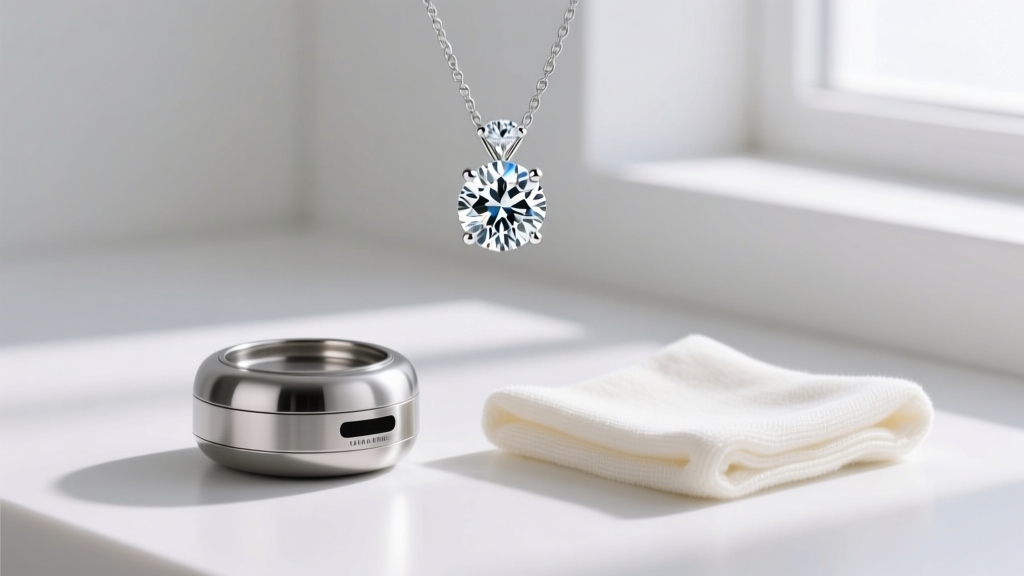
The Safe At-Home Cleaning Protocol
Forget harsh commercial dips and toothpaste (which contains abrasive silica that scratches gold). Follow this precise methodology for safe post-event cleaning:
- The Initial Wipe: Before introducing any moisture, gently wipe the chain and pendant with an untreated, lint-free microfiber cloth to remove surface oils and perfume residue.
- The Bath: Mix one cup of lukewarm distilled water (tap water contains chlorine and minerals that can spot metals) with three drops of mild, phosphate-free dish soap (such as Dawn).
- The Agitation: Submerge the necklace for exactly 3 to 5 minutes. Do not exceed this time, especially if the piece contains fracture-filled emeralds or dyed jade.
- The Brushing: Use an extra-soft baby toothbrush to gently sweep the back of the pendant setting and the clasp mechanism. Never scrub the front of soft gems like opals or pearls.
- The Rinse and Dry: Rinse thoroughly under a gentle stream of distilled water. Pat dry with a fresh microfiber cloth and allow it to air dry completely on a paper towel before storage.
Crucial Warning: While Jewelers of America notes that ultrasonic cleaners are excellent for diamonds and sapphires, they use high-frequency sound waves that can shatter emeralds, opals, tanzanite, and pearls. Never place organic or heavily included stones in an ultrasonic bath.
Proper Storage After the Event
Once your necklace is completely dry, proper storage is the final step in your maintenance routine. Never store your necklaces in PVC (polyvinyl chloride) plastic bags or cheap velvet rolls. PVC emits sulfur gases over time, which will rapidly tarnish silver and copper alloys. Instead, utilize polyethylene zip bags, which are chemically inert. For ultimate protection, drop a 3M anti-tarnish strip into the bag; these strips absorb airborne sulfides and can protect your jewelry for up to 12 months in a sealed environment.
Always store necklaces flat or hanging. If you must pack them in a travel case after an event, thread the chain through a plastic drinking straw and clasp it. This tension prevents the links from folding in on themselves, entirely eliminating the risk of tangles and kinks the next time you decide to dress with necklace elegance.


