Turquoise Pearl Necklace Buying Guide: What to Look For
Expert guide to buying a turquoise pearl necklace. Learn about gem grades, pearl luster, stringing methods, and pricing tiers to make a smart investment.

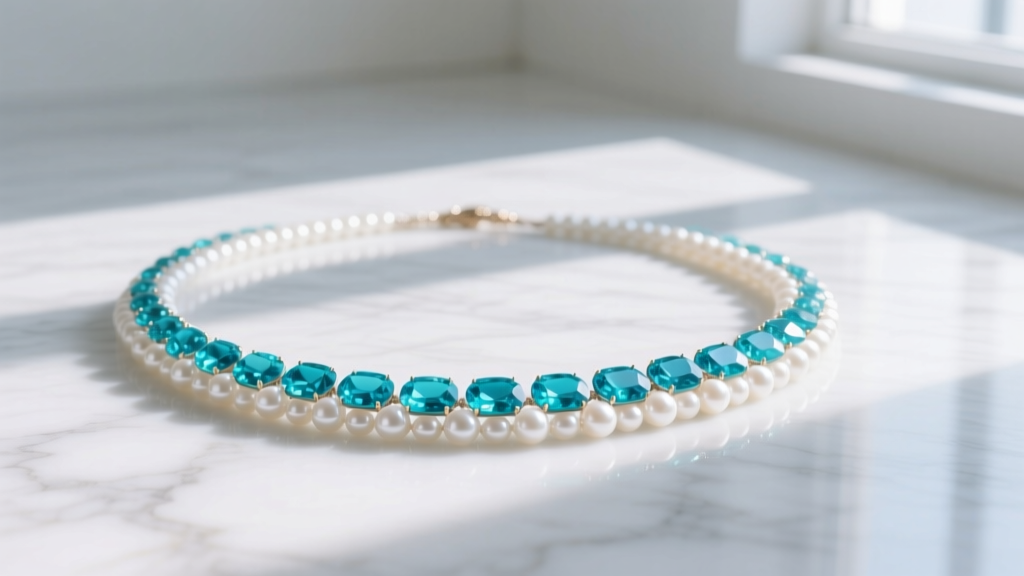
The Allure of Turquoise and Pearl Combinations
The juxtaposition of turquoise and pearl in a single necklace is a masterclass in color theory and textural contrast. The opaque, earthy vibrancy of turquoise grounds the ethereal, iridescent luster of pearls, creating a piece that bridges Southwestern ruggedness with classic elegance. However, combining a porous semi-precious gemstone with a delicate organic material introduces unique structural and chemical challenges. As we navigate the 2026 jewelry market, where synthetic treatments and misleading origin claims are increasingly sophisticated, knowing exactly what to look for in a turquoise pearl necklace is essential. This guide breaks down the gemological, structural, and economic factors you must evaluate before making a purchase.
Decoding Turquoise: Natural, Stabilized, and Treated
Turquoise is a hydrous phosphate of copper and aluminum, ranking between 5 and 6 on the Mohs hardness scale. Because it is inherently porous, understanding how the stone has been treated is the most critical step in your buying process. According to the Gemological Institute of America (GIA), the vast majority of turquoise on the market undergoes some form of enhancement.
Natural vs. Stabilized
Truly natural, untreated turquoise is rare and commands a massive premium. It is hard enough to be cut and polished without chemical reinforcement. However, over 90% of the market consists of stabilized turquoise. Stabilization involves impregnating the porous stone with a clear epoxy resin under pressure. This is an accepted industry standard that enhances durability and color permanence without altering the stone's fundamental chemical identity. When buying, always ask if the stones are stabilized; if a vendor claims a mid-priced necklace is '100% natural and untreated,' proceed with extreme caution.
Origin and Matrix
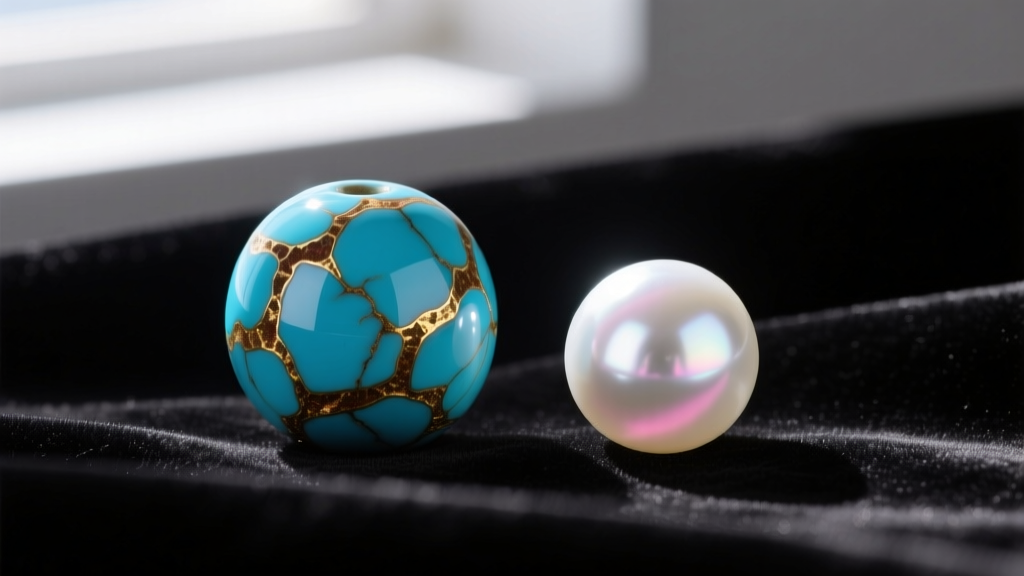
The mine origin heavily dictates value. The famed Sleeping Beauty mine in Arizona closed in 2012, meaning authentic, untreated Sleeping Beauty turquoise (known for its pure, matrix-free robin's egg blue) is now a collector's item with prices reflecting its scarcity. For modern buyers, Kingman turquoise offers an excellent alternative. Kingman stones often feature a striking pyrite or copper matrix (the brown or black webbing within the stone), which provides a beautiful earthy contrast to the smooth surface of a pearl.
Red Flag Warning: Avoid 'reconstituted' or 'chalk' turquoise. This is made from turquoise dust and low-grade chalk bound together with resin and synthetic dyes. It lacks the structural integrity and gemological value of genuine stone.
Pearl Selection: Nacre, Luster, and Overtone Matching
While turquoise provides the color anchor, the pearl dictates the necklace's overall refinement. The GIA Pearl Quality Guide emphasizes that nacre thickness and luster are the primary drivers of a pearl's value and longevity.
Freshwater vs. Akoya
- Freshwater Pearls: Often used in turquoise necklaces due to their affordability and availability in baroque (irregular) shapes, which complement the rustic feel of turquoise. High-quality freshwater pearls are composed of solid nacre, making them highly durable.
- Akoya Pearls: If you are purchasing a high-end, perfectly round strand, Akoya pearls are the standard. Look for a nacre thickness of at least 0.4mm. Akoya pearls offer a 'mirror-like' luster that elevates the turquoise from casual to formal.
The Art of Overtone Matching
Pearls possess an 'overtone'—a secondary color that floats over the primary body color. When pairing them with turquoise, the overtone must harmonize with the turquoise's matrix. If your turquoise features a warm, golden-brown spiderweb matrix, select pearls with a cream or rose overtone. If the turquoise is a cool, clear blue with a black pyrite matrix, opt for pearls with a silver or cool-rose overtone to maintain a cohesive temperature palette.
Stringing Architecture: Preventing Hidden Failures
The most common point of failure in a turquoise pearl necklace is not the clasp, but the stringing material. Turquoise and pearls have vastly different physical properties, and treating them identically during the stringing process can lead to catastrophic breakage.
The Drill Hole Hazard
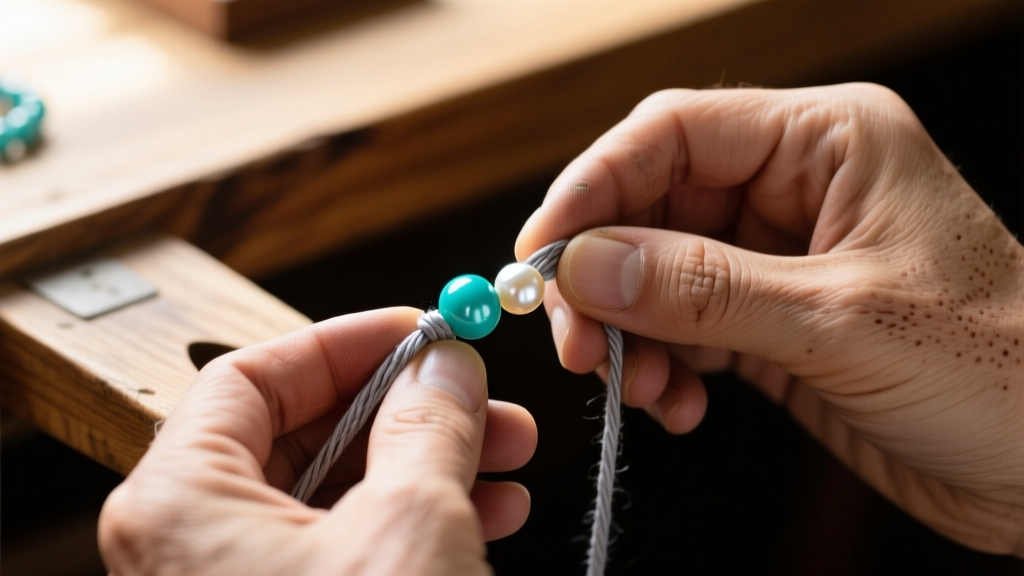
Turquoise is often drilled with diamond-tipped core bits, which can leave microscopic, razor-sharp burrs inside the drill channel. If strung on traditional silk thread, these sharp edges will slowly saw through the fibers as the necklace flexes against the wearer's collarbone, eventually causing the strand to snap. To mitigate this, high-end jewelers use synthetic nano-silk or braided polyethylene wire (like PowerPro) for the turquoise sections, or they insert tiny metal 'bead bumpers' to protect the thread.
Knotting and French Wire
Pearls must always be individually knotted to prevent them from rubbing against each other and to ensure you only lose one pearl if the strand breaks. However, knotting synthetic wire is difficult and can look bulky. A master stringer will often use a hybrid technique: silk thread with French wire (gimp) protectors at the clasp for the pearl sections, and micro-knotted synthetic cord for the turquoise sections. Always inspect the area immediately surrounding the clasp; if the silk is frayed or lacks a metal gimp guard, the necklace is poorly constructed.
2026 Pricing Tiers and Market Expectations
Understanding the pricing matrix helps you identify whether a necklace is fairly valued or artificially inflated. The table below outlines what you should expect to pay based on material grades in the current market.
| Quality Tier | Turquoise Grade | Pearl Type | Stringing & Hardware | Estimated Price Range |
|---|---|---|---|---|
| Entry / Fashion | Reconstituted or Dyed Howlite | Low-grade, blemished Freshwater | Unclassified nylon, base metal clasp | $40 - $120 |
| Mid-Tier / Artisan | Stabilized Kingman or Hubei | AAA Round or Baroque Freshwater | Knotted silk/synthetic blend, Sterling Silver | $250 - $650 |
| High-End / Fine | Natural Persian or High-Grade Kingman | AA+ Akoya or High-Luster Edison | Hand-knotted silk with French wire, 14k/18k Gold | $800 - $2,500+ |
| Collector / Estate | Untreated Sleeping Beauty (Pre-2012) | Gem-Grade South Sea or Mikimoto Akoya | Master-strung, bespoke artisan clasps | $3,500 - $10,000+ |
Care Protocols for Porous and Organic Gems
Both turquoise and pearls are highly sensitive to environmental factors, making their care regimen more demanding than that of diamonds or sapphires. Turquoise is porous and will absorb oils, lotions, and chemicals, which can permanently alter its color from a vibrant blue to a dull, muddy green. Pearls, composed of calcium carbonate and conchiolin, are easily etched by acids and degraded by prolonged exposure to perspiration.
The 'Last On, First Off' Rule
Your turquoise pearl necklace must be the very last thing you put on after applying cosmetics, perfumes, and hairspray, and the first thing you take off when you return home. Never wear this combination in a swimming pool (chlorine will destroy the pearl nacre and bleach the turquoise) or in a sauna (extreme heat will dehydrate the stones and cause micro-fractures).
Storage and Cleaning
Never store your necklace in a sealed plastic bag; pearls require ambient moisture to prevent their nacre from cracking and peeling. Store the piece flat in a soft, breathable linen pouch. If cleaning is required, use only a damp, lint-free microfiber cloth. Never use ultrasonic cleaners, steamers, or commercial jewelry dips, as the harsh chemicals and high-frequency vibrations will instantly ruin both the epoxy stabilization in the turquoise and the delicate surface of the pearls.
By scrutinizing the gemstone treatments, demanding proper stringing architecture, and understanding the nuanced color pairing between matrix and overtone, you can confidently invest in a turquoise pearl necklace that is not only visually breathtaking but structurally engineered to last a lifetime.


