Nepali Necklace Care: Cleaning Silver, Coral & Turquoise
Discover expert care and cleaning tips for your Nepali necklace. Learn how to safely polish silver, protect porous coral, and maintain turquoise.

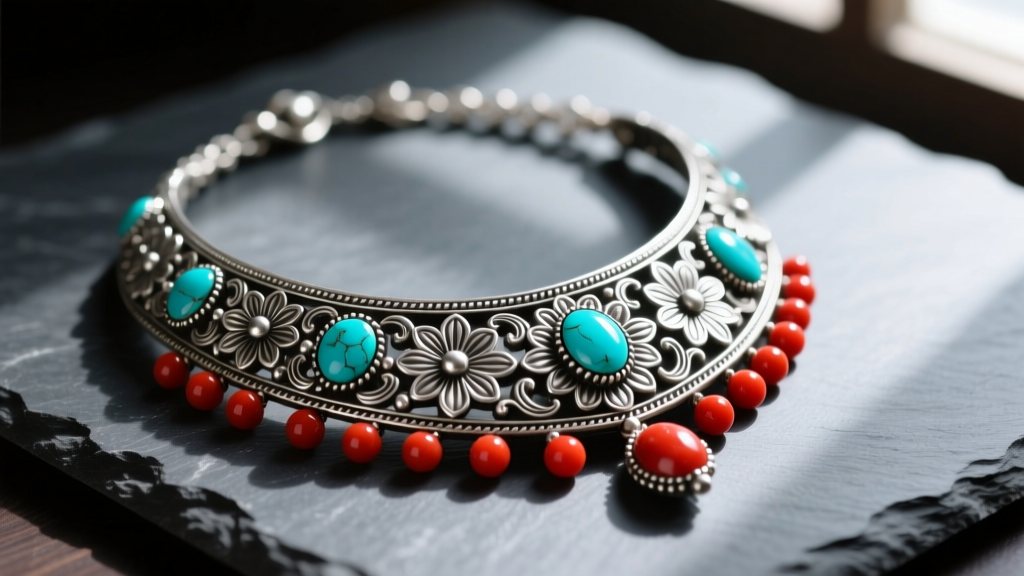
Owning a traditional Nepali necklace is like holding a piece of Himalayan history. Whether it is an intricate Newari silver choker, a Tibetan-inspired coral and turquoise statement piece, or a spiritual rudraksha bead mala, these necklaces are masterclasses in mixed-media craftsmanship. However, the very diversity of materials that makes a Nepali necklace so visually stunning also makes it notoriously difficult to clean. Standard jewelry cleaning methods—like ultrasonic baths or liquid silver dips—will permanently destroy the porous gemstones and organic components native to these designs.
As we navigate the jewelry landscape in 2026, conservation-grade care is no longer just for museums. With the rising value of antique and artisanal Himalayan jewelry, understanding the specific chemical and physical vulnerabilities of your pieces is essential. This comprehensive guide will teach you how to clean, maintain, and store your Nepali necklace without compromising its structural integrity or historical patina.
Understanding the Anatomy of a Nepali Necklace
Before applying any cleaning agent, you must identify the materials in your specific piece. Traditional Nepali necklaces typically combine three distinct material categories:
- The Metalwork: Usually 925 sterling silver, lower-alloy coin silver, or brass with gold vermeil. Artisans frequently use repoussé (hammering from the reverse side to create a raised design) and filigree (delicate wirework). These techniques create deep crevices and hollow pockets.
- The Gemstones: Tibetan turquoise, Mediterranean or bamboo coral, lapis lazuli, and agate. These are often cut en cabochon and set in bezel or prong settings.
- The Organic Components: Rudraksha seeds, carved yak bone, horn, and the silk or cotton cords used for stringing.
The primary failure mode in Nepali jewelry cleaning occurs when a treatment meant for the metal is accidentally applied to the stones or organics, or when moisture becomes trapped inside the hollow repoussé metalwork, leading to irreversible copper rot.
The Golden Rule: Never Submerge Mixed-Media Jewelry
If you take only one piece of advice from this guide, let it be this: never submerge a Nepali necklace in water or liquid cleaners.
According to conservation guidelines from the Victoria and Albert Museum, silver objects with complex, hollow constructions are highly susceptible to moisture entrapment. When you dunk a repoussé Nepali pendant into a liquid silver dip, the chemical solution seeps into the microscopic seams between the silver backing and the raised floral motifs. Because these areas cannot be easily dried, the trapped moisture and harsh chemicals (often containing thiourea) will cause the copper alloys within the silver to oxidize rapidly, resulting in a powdery green corrosion that eats through the metal from the inside out.
Furthermore, submerging the necklace weakens the structural integrity of the stringing materials. Silk and cotton cords absorb water, stretch, and eventually rot, leading to catastrophic bead loss.
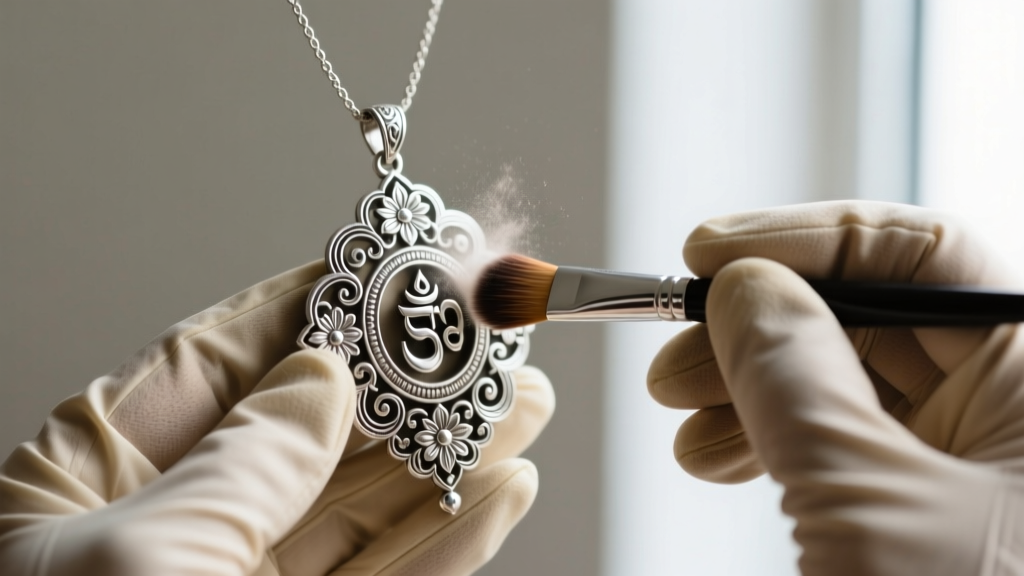
Step-by-Step Dry Cleaning Method for Metal Components
To safely remove tarnish (silver sulfide) from the metalwork without endangering the adjacent stones, you must rely on mechanical, dry-cleaning methods.
1. Dusting the Crevices
Before polishing, remove loose abrasive dust. Use a clean, soft goat-hair makeup brush to gently sweep inside the filigree and repoussé crevices. Avoid using compressed air, as the propellants can leave a residue that attracts moisture.
2. Targeted Polishing
Use a high-quality micro-abrasive polishing cloth, such as a Sunshine cloth. These cloths are embedded with microscopic polishing agents and anti-tarnish inhibitors.
- Technique: Fold the cloth to a fine point to reach into deeper grooves.
- Avoidance: Carefully polish around the bezel settings. Do not rub the polishing cloth directly over turquoise or coral, as the micro-abrasives will dull the natural waxy luster of the cabochons.
- Patina Preservation: Many collectors prefer the dark oxidation in the recesses of Nepali silver, as it highlights the intricate relief work. Only polish the raised, high-contact areas, leaving the dark recesses intact to maintain the piece's dimensional contrast.
Caring for Porous Gemstones and Organic Beads
The gemstones most commonly found in Himalayan jewelry are highly reactive. The Gemological Institute of America (GIA) warns that turquoise is a porous, water-bearing copper aluminum phosphate (Mohs hardness 5-6). It is incredibly sensitive to heat, acids, and even the natural oils and cosmetics on human skin.
Turquoise and Coral Vulnerabilities
Red coral is an organic gemstone composed primarily of calcium carbonate (Mohs hardness 3-4). It is highly reactive to acids. Even mild, everyday substances like lemon juice, vinegar, or acidic perspiration can etch the surface of coral, leaving permanent dull, white spots. Similarly, the GIA notes that coral can be damaged by ultrasonic cleaners and harsh chemicals.
Surface Cleaning: If your turquoise or coral becomes smudged with skin oils, wipe it gently with a dry, lint-free microfiber cloth. If a deeper clean is absolutely necessary, slightly dampen a cotton swab with distilled water (never tap water, which contains chlorine and minerals) and gently roll it over the stone's surface. Dry immediately with a separate soft cloth.
Maintaining Rudraksha and Bone
Organic beads like rudraksha seeds and carved yak bone require a different approach. Over time, these materials can dry out and crack, especially in low-humidity environments. Once or twice a year, apply a single drop of food-grade mineral oil to a soft cloth and gently buff the beads. This replenishes their natural moisture barrier. Never use olive oil or vegetable oil, as these will eventually turn rancid and emit an unpleasant odor.
Material-Specific Cleaning Matrix
Use the following reference table to ensure you are applying the correct care protocol to each component of your Nepali necklace.
| Material | Mohs Hardness | Safe Cleaning Method | Strictly Avoid |
|---|---|---|---|
| Sterling Silver (Repoussé) | 2.5 - 3 | Dry micro-abrasive cloth; soft brush for dust | Liquid dips, ultrasonic, water submersion |
| Turquoise | 5 - 6 | Dry microfiber cloth; occasional damp swab (distilled water) | Chemicals, cosmetics, heat, ultrasonic |
| Red/Bamboo Coral | 3 - 4 | Dry microfiber cloth only | Acids, perfumes, ultrasonic, steam |
| Lapis Lazuli | 5 - 5.5 | Dry cloth; avoid getting wet due to calcite/pyrite inclusions | Water soaking, acidic cleaners |
| Rudraksha / Yak Bone | N/A (Organic) | Dry brush; occasional food-grade mineral oil buffing | Water soaking, harsh detergents |
| Silk/Cotton Stringing | N/A | Surface wipe with barely damp cloth; air dry | Submersion, pulling while wet |
Storage and Environmental Protection
Proper storage is 80% of jewelry maintenance. Silver tarnishes when it reacts with hydrogen sulfide in the air, a process accelerated by high humidity. Meanwhile, porous stones can absorb ambient moisture and odors.
The Ideal Storage Setup
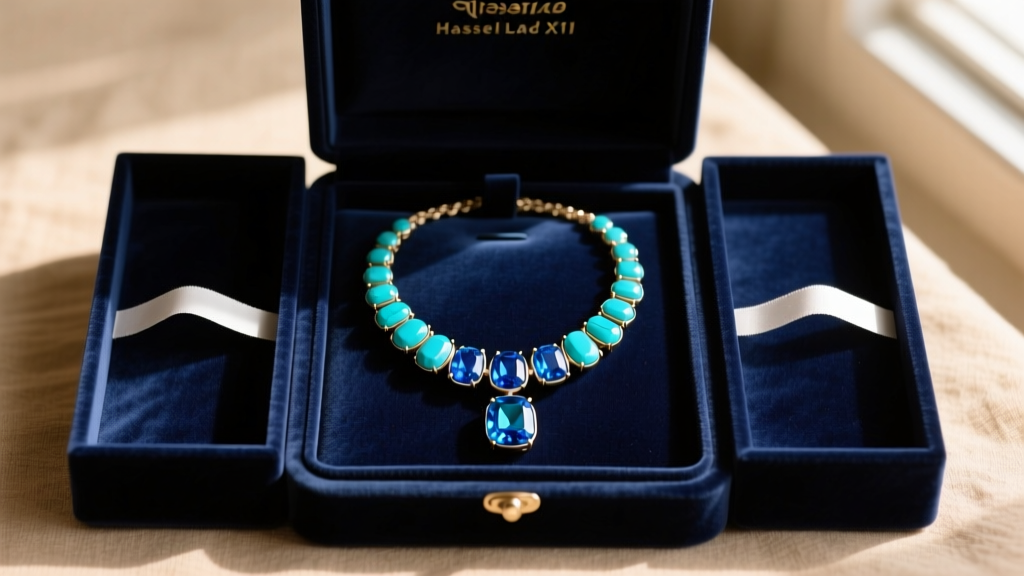
- Individual Compartments: Never store a Nepali necklace in a tangled pile with other jewelry. The silver components will easily scratch the softer coral and turquoise stones. Store the piece flat in its own velvet-lined compartment.
- Anti-Tarnish Technology: Place 3M Pacific Silvercloth strips or treated anti-tarnish tabs inside the storage box. These strips absorb airborne sulfur compounds before they can reach your silver.
- Humidity Control: Include a small packet of silica gel in the storage drawer to maintain a dry microclimate, which protects both the silver from rapid tarnishing and the organic stringing materials from mold.
When to Seek Professional Restoration
While routine maintenance can be done at home, certain issues require the hands of a master jeweler or conservator.
- Restringing: If you notice the silk or cotton cord stretching, fraying, or showing a greenish tint (indicating copper corrosion from adjacent beads transferring to the wet cord), it is time for a professional restring. Plan to have heavily worn pieces restrung every 3 to 5 years.
- Stone Tightening: Because traditional bezel settings are often folded over the stone by hand, they can loosen over time. If a turquoise cabochon rattles or shifts when tapped gently, a jeweler must re-burnish the metal bezel.
- Structural Repairs: If a repoussé pendant is crushed or dented, do not attempt to push it out from the back yourself. This requires specialized pitch and chasing tools to restore the relief without tearing the aged silver.
Expert Insight: The beauty of a vintage Nepali necklace lies in its history. Do not attempt to make 100-year-old silver look brand new. Embracing the soft, oxidized patina in the recesses of the metalwork not only preserves the physical integrity of the piece but also honors the original artisan's intent to use light and shadow to bring the Himalayan motifs to life.


