Styling a Beautifully Broken Necklace: A Beginner's Guide
Discover how to choose, style, and care for a beautifully broken necklace. Learn about fractured quartz, shattered glass, and Kintsugi pendants.

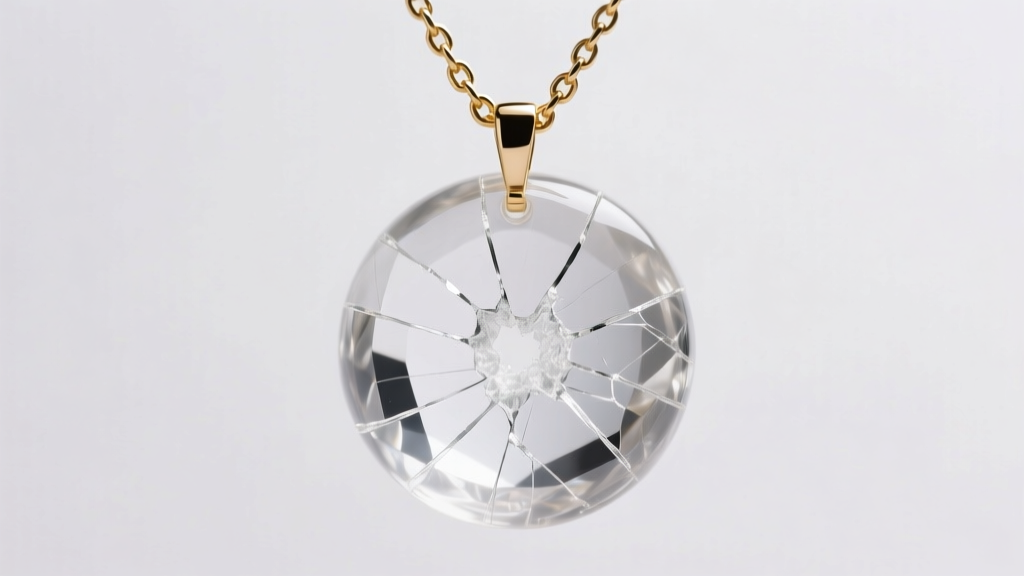
The Allure of the Beautifully Broken Necklace
In the ever-evolving landscape of 2026 jewelry trends, perfection is out, and intentional imperfection is in. The beautifully broken necklace has emerged as a staple for those who appreciate the Japanese philosophy of wabi-sabi—finding beauty in the flawed, the fractured, and the ephemeral. Unlike traditional faceted gemstones that rely on symmetrical cuts to maximize light return, fractured and shattered pendants capture light unpredictably, creating a raw, edgy, and deeply personal aesthetic.
For beginners, navigating this niche can be daunting. How do you differentiate between a deliberately fractured artisan piece and a cheap, mass-produced imitation? How do you style a jagged pendant without it looking out of place? This comprehensive guide will break down the materials, craftsmanship markers, and styling frameworks you need to confidently wear and care for fractured jewelry.
Three Core Styles of Fractured Jewelry
When shopping for a beautifully broken necklace, you will generally encounter three distinct categories of design, each with its own structural properties and visual appeal:
- Deliberately Fractured Gemstones: Artisans take raw or lightly polished stones (most commonly quartz, bismuth, or fluorite) and apply controlled thermal or physical shock to create internal and external fissures. These are often wire-wrapped to maintain structural integrity.
- Shattered Glass and Recycled Crystal: A highly sustainable option where broken vintage glass, sea glass, or upcycled chandelier crystals are tumbled slightly to remove lethal sharp edges, then set in bezels or encased in resin.
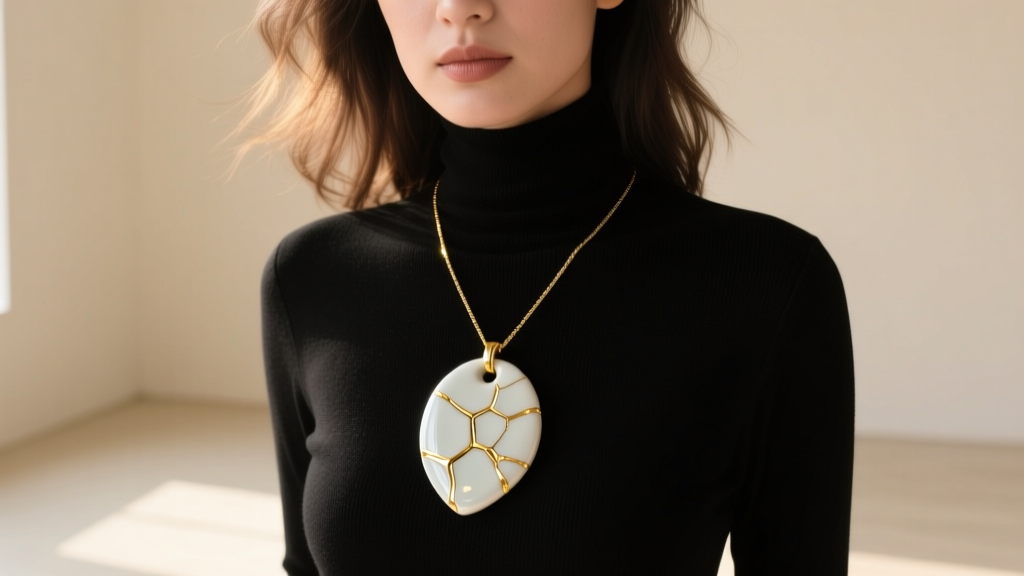
- Kintsugi-Inspired Ceramics and Stones: Borrowing from the traditional Japanese art of repairing broken pottery with lacquer mixed with powdered gold, modern jewelers intentionally break ceramic or stone pendants and reassemble them using 14k gold-filled wire or gold-tinted epoxy along the fault lines.
Material & Durability Matrix
Understanding the physical properties of your pendant is crucial for longevity. The Gemological Institute of America (GIA) notes that while quartz has a Mohs hardness of 7, internal fractures significantly compromise its structural stability, making it vulnerable to thermal shock and pressure. Below is a breakdown of what to expect from common materials in 2026.
| Material Type | Mohs Hardness | Common Setting Technique | Average Price Range (2026) |
|---|---|---|---|
| Fractured Clear Quartz | 7 (Compromised) | 22-Gauge Wire Wrapping | $85 - $250 |
| Recycled Shattered Glass | 5.5 | Epoxy Resin Encasement | $40 - $120 |
| Kintsugi Ceramic | N/A (Brittle) | Gold-Filled Adhesive / Bail | $150 - $400 |
| Raw Bismuth Crystal | 2.25 (Very Soft) | Deep Bezel or Resin Cast | $60 - $180 |
How to Spot Quality Craftsmanship
The market is currently flooded with low-effort "broken glass" pendants. To ensure you are investing in a high-quality beautifully broken necklace, you must evaluate the setting and edge treatment. Here is your E-E-A-T checklist for inspecting fractured jewelry:
The Edge Safety Test
Never purchase a shattered glass or fractured stone pendant with raw, unsealed sharp edges. High-quality artisans either tumble the shards to create a frosted, smooth edge, or completely encapsulate the sharp points in a high-Shore-D hardness epoxy resin. If the edges look like they could snag a silk blouse or scratch your collarbone, it is a manufacturing defect, not an aesthetic choice.
Wire Wrapping Gauges
For wire-wrapped fractured stones, the gauge of the wire dictates the pendant's lifespan. According to jewelry supply experts at Rio Grande, 22-gauge or 20-gauge half-hard sterling silver or gold-filled wire is required for the structural "cage" of a heavy, fractured stone. If the artisan uses 26-gauge or thinner wire for the main frame, the wire will easily bend out of shape, and the compromised stone could slip out and shatter on the floor.
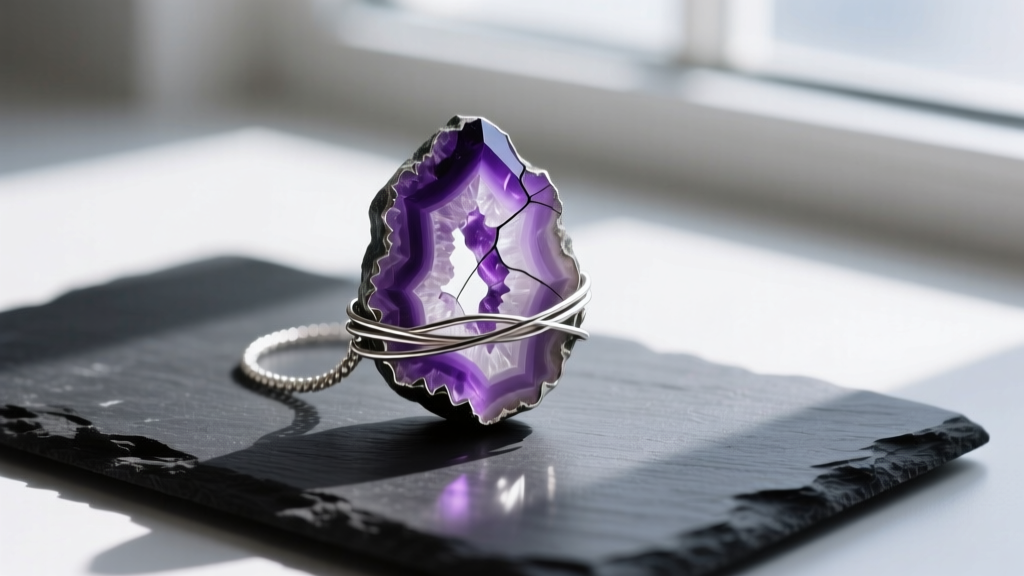
Resin Encasement Quality
When dealing with resin-encased shattered glass, look for optical clarity. Cheap UV-cured resins often trap micro-bubbles and yellow within six months of UV exposure. Premium pieces use a two-part jeweler's epoxy that requires a 24-to-48-hour slow cure time, resulting in a glass-like, non-yellowing finish that securely locks every micro-shard in place.
Styling Framework: Necklines and Textures
A beautifully broken necklace is inherently a statement piece. Because of its chaotic geometry, it requires specific necklines to anchor it visually. Here is how to style your fractured pendants based on your wardrobe.
The V-Neck and Plunge Line
Fractured quartz and elongated shattered glass pendants naturally form a "Y" or teardrop shape. Pair these with V-neck sweaters, wrap dresses, or deep plunge tops. An 18-inch to 20-inch chain allows the jagged point of the pendant to perfectly parallel the geometric lines of the neckline, creating a cohesive, elongating effect on the torso.
The Crew Neck and High Collar
For crew necks, turtlenecks, and high collars, opt for Kintsugi-style ceramic pendants or wide, horizontally fractured geode slices. The horizontal fault lines contrast beautifully with the high, rounded neckline. A 16-inch choker-length chain keeps the piece sitting squarely on the sternum, turning the pendant into a focal point that mimics a bold, asymmetrical brooch.
Fabric Pairings: Contrast is Key
The raw, rugged texture of a broken necklace shines best against contrasting fabrics. Pair jagged, wire-wrapped stones with soft, fluid fabrics like silk, satin, or fine-gauge cashmere. The juxtaposition of the aggressive, fractured metal and stone against delicate textiles creates a high-fashion, avant-garde look. Avoid wearing heavily fractured pieces with chunky knits or lace, as the microscopic fissures and wire wraps will inevitably catch and pull the threads.
Care Protocols for Compromised Structures
The most critical mistake beginners make is treating a beautifully broken necklace like a standard diamond or solid gold piece. Because the structural integrity of the stone has been intentionally compromised, standard jewelry cleaning methods can be disastrous.
- Avoid Ultrasonic Cleaners: The high-frequency vibrations of an ultrasonic cleaner will literally shake a fractured stone apart, turning a beautiful fissure into a pile of dust. Furthermore, the heat and chemicals can dissolve the adhesives used in Kintsugi repairs or cloud epoxy resin.
- Beware of Thermal Shock: Fractured quartz and glass are highly susceptible to rapid temperature changes. Do not wear your necklace in a sauna, a hot tub, or while jumping into a freezing pool. The rapid expansion and contraction will cause the internal fissures to spiderweb and split the stone entirely.
- The Soft Brush Method: To clean your pendant, mix a few drops of mild, phosphate-free dish soap in lukewarm water. Use a baby-soft toothbrush to gently sweep away skin oils and lotion from the wire wraps and resin crevices. Pat dry immediately with a microfiber cloth; do not let water sit in the fractures, as it can cause the wire wrapping to oxidize prematurely.
Final Thoughts on Embracing Imperfection
The beautifully broken necklace is more than just a fleeting 2026 trend; it is a wearable art form that celebrates resilience, history, and the unique nature of flaws. By understanding the material science behind the fractures, demanding high-quality wire wrapping and resin work, and styling the piece to complement your wardrobe's geometry, you can confidently rock this avant-garde aesthetic. Whether you choose the icy chaos of shattered quartz or the golden scars of Kintsugi ceramic, your necklace will serve as a striking conversation starter that proves true beauty doesn't have to be flawless.


