Beginner Guide to Styles of Necklace Chains & Durability
Discover the most popular styles of necklace chains, from cable to Cuban links. Learn about gauge sizes, durability, and how to choose the right one.

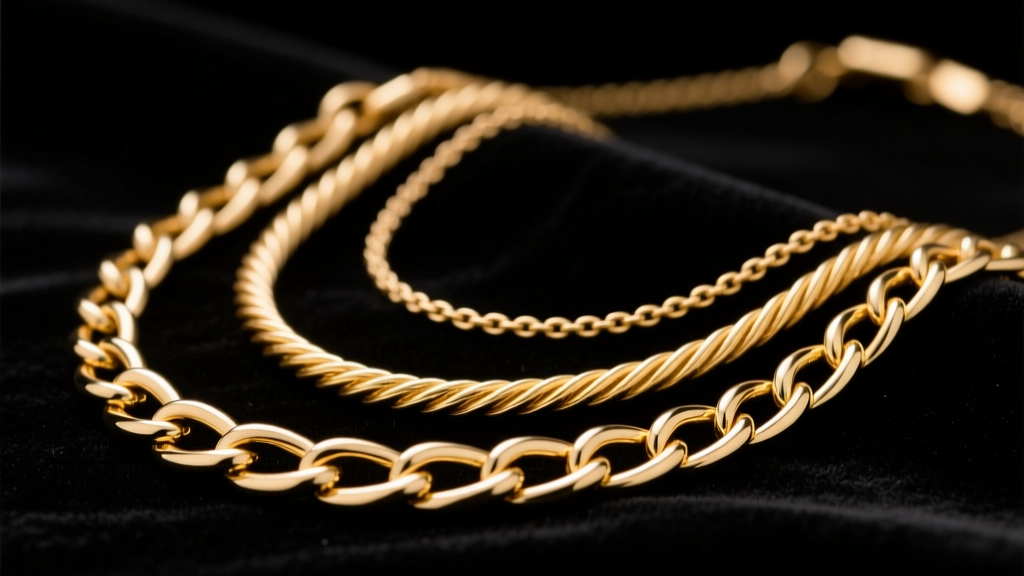
Understanding Chain Anatomy: Gauge, Soldering, and Links
When exploring the various styles of necklace chains, beginners often focus solely on aesthetics. However, a chain's longevity is dictated by its underlying anatomy: wire gauge, link geometry, and soldering techniques. The "gauge" refers to the thickness of the wire used to form the links. In the jewelry industry, chains typically range from a delicate 0.8mm to a bold 5.0mm. For everyday wear, a 1.2mm to 1.5mm gauge offers the ideal balance between visibility and structural integrity.
Equally important is the metal grade. According to the Gemological Institute of America (GIA), 14k gold (58.5% pure gold) is alloyed with metals like copper and zinc, granting it superior tensile strength compared to 18k gold. While 18k gold offers a richer yellow hue, its softer nature makes it more prone to link deformation and stretching over time. For maximum durability on a budget, 316L surgical stainless steel provides exceptional tarnish resistance and strength, though it requires specialized laser welding for repairs.
The 5 Essential Styles of Necklace Chains
Not all links are created equal. The geometry of the link determines how the chain drapes, how it reflects light, and most importantly, its specific failure modes.
1. The Cable Chain
The cable chain is the most fundamental and ubiquitous style, featuring uniform round or oval links connected at alternating 90-degree angles. Pros: It is classic, unobtrusive, and relatively easy for jewelers to repair if a link breaks. Cons: Because the links are simple loops, they are susceptible to stretching if pulled sharply. A 1.0mm cable chain should only be used for lightweight pendants under 2 grams.
2. The Curb Chain
Curb chains feature links that have been twisted and flattened so they interlock and lie flush against the skin. Pros: This interlocking geometry makes curb chains incredibly durable and highly resistant to tangling. Cons: The flattened edges can sometimes catch on fine body hair. Curb chains are excellent for heavier pendants and statement pieces, particularly in gauges above 2.0mm.
3. The Figaro Chain
Originating in Italy, the Figaro chain is a patterned curb chain, typically alternating three short links with one elongated link. Pros: It offers significant visual interest even without a pendant. Cons: The asymmetrical pattern means that if the long link breaks, the visual rhythm is ruined. Furthermore, the varying link sizes can lead to asymmetrical wear over decades of use.
4. The Box Chain
Box chains are constructed from square links connected at right angles, creating a smooth, geometric, and highly reflective surface. Pros: They drape beautifully and offer a modern, minimalist aesthetic. Cons: They are notorious for "kinking." If a box chain is bent sharply, the square links fold in on themselves. Once kinked, the structural geometry is permanently compromised, and attempting to flatten it often weakens the metal further.
5. The Rope Chain
Rope chains feature small links twisted together to mimic the appearance of a woven rope. Pros: They possess a high visual weight and refract light brilliantly from multiple angles. Cons: The "unraveling" failure mode. Because the links are tightly twisted under tension, a single failed solder joint can cause the chain to rapidly unravel, making repairs difficult and often visible.

Durability Matrix: Gauge Sizes and Pendant Weight Limits
Choosing the right chain requires matching the gauge to the weight of your pendant. A general rule of thumb in jewelry engineering is the 3:1 ratio: your chain's tensile strength should comfortably support at least three times the weight of the pendant it holds. Below is a practical matrix for solid 14k gold chains.
| Chain Gauge (mm) | Recommended Max Pendant Weight | Best Chain Styles for this Gauge | Primary Use Case |
|---|---|---|---|
| 0.8mm - 1.0mm | 1.0 - 2.5 grams | Cable, Delicate Box | Minimalist solitaires, layering |
| 1.2mm - 1.5mm | 3.0 - 6.0 grams | Box, Curb, Figaro | Standard everyday pendants |
| 2.0mm - 3.0mm | 7.0 - 15.0 grams | Curb, Rope, Figaro | Statement pieces, heavy lockets |
| 4.0mm+ | Worn alone (No pendant) | Cuban Curb, Thick Rope | Standalone statement necklaces |
Solid vs. Hollow Chains: The Durability Trap
Many beginners are tempted by hollow chains, which are manufactured using electroforming or a resin core that is later melted out. These chains offer the imposing look of a thick 5.0mm necklace at the price point of a thin 1.5mm solid chain. However, this is a significant durability trap. Hollow links are highly susceptible to denting from minor impacts. Unlike solid gold, which a skilled jeweler can hammer, reshape, and polish, a dented hollow link is almost always irreparable. For any piece intended for daily wear, always prioritize solid links, even if it means compromising on overall thickness.
Additionally, hollow chains lack the structural density required to hold heavy pendants; the concentrated stress at the bail connection point will quickly warp the hollow links. If you desire a bold, heavy look without the premium price tag of solid gold, consider vermeil or gold-plated sterling silver over hollow gold, as the solid silver core provides the necessary tensile backbone.
Matching Your Chain to the Pendant Bail
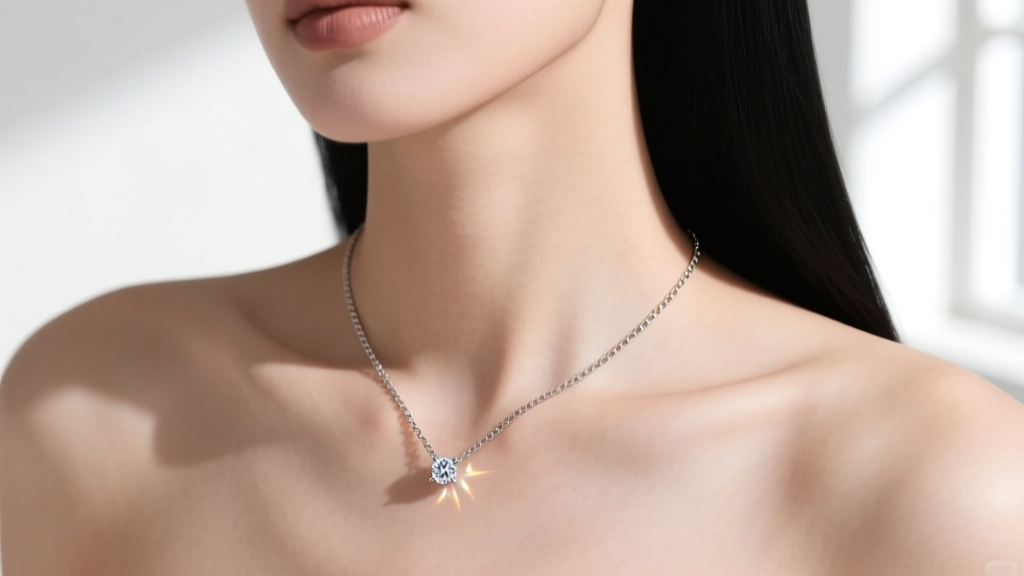
Beyond weight, you must consider the physical dimensions of the pendant's bail (the loop that connects the pendant to the chain). A common beginner mistake is purchasing a beautiful 2.5mm curb chain, only to find it cannot pass through the delicate 1.5mm bail of their pendant. Forcing a thick chain through a tight bail causes constant metal-on-metal friction, leading to premature wear on both the chain links and the pendant loop. Always measure the inner diameter of the bail before selecting your chain style and gauge.
Jeweler's Pro Tip: When buying a chain, always inspect the clasp. A standard spring-ring clasp is suitable for chains under 1.5mm. For anything thicker, or for holding valuable pendants, upgrade to a lobster claw or a barrel clasp to prevent accidental unfastening and loss.
Expert Care and Maintenance
The longevity of your chain depends heavily on maintenance. The Jewelers of America strongly recommends removing chains before swimming in chlorinated pools, as chlorine can chemically attack the alloys in gold, causing microscopic stress fractures in the solder joints. For routine cleaning, avoid ultrasonic cleaners for chains holding porous gemstones like opals or emeralds. Instead, use a soft-bristled brush with warm water and a few drops of mild dish soap, gently agitating the links to remove trapped sebum and lotions that can dull the metal's finish over time.
Furthermore, store your chains flat or hung vertically. Tossing a box chain or a delicate cable chain into a jewelry box creates tangles that, when forcefully pulled apart, stretch the links and weaken the solder points. Using a dedicated jewelry box with individual velvet-lined compartments or hanging hooks will preserve the geometric integrity of your chains.
By understanding the mechanical realities behind the various styles of necklace chains, you can make informed purchases that balance aesthetic desires with structural longevity, ensuring your jewelry remains a staple in your collection for decades to come.


