The Ultimate Beginner Guide to Buying a Custom Nameplate Necklace
Discover how to choose the perfect custom nameplate necklace. Learn about metal grades, font styles, chain pairings, and pricing in this beginner guide.

Introduction to the Custom Nameplate Necklace
The custom nameplate necklace is far more than a fleeting pop-culture trend. While it saw massive mainstream surges in the early 2000s and again in the 2010s, it has firmly cemented itself as a permanent staple in modern jewelry wardrobes. For beginners stepping into the world of personalized jewelry, a nameplate offers a unique blend of self-expression and everyday wearability. However, ordering a custom piece can be intimidating. Unlike buying a pre-made pendant off the shelf, you are making critical decisions about metal grades, font styles, structural thickness, and chain pairings before the item even exists.
This guide strips away the marketing fluff and provides a comprehensive, beginner-friendly explainer on how to commission a high-quality nameplate necklace that will last for years. We will cover the exact material specifications you should look for, the structural engineering of the pendant, and how to avoid common pitfalls that lead to bent plates and snapped chains.
Choosing the Right Metal: Durability vs. Budget
The most critical decision you will make is the base metal. The metal dictates not only the price but the lifespan, tarnish resistance, and skin compatibility of your necklace. Beginners often confuse 'gold plated' with 'gold vermeil' or 'solid gold,' leading to disappointment when the piece degrades within months.
| Metal Type | Composition & Standards | Durability & Lifespan | Estimated Price Range |
|---|---|---|---|
| Sterling Silver (925) | 92.5% pure silver, 7.5% copper alloy. | High. Will tarnish over time but can be polished indefinitely. | $60 - $120 |
| Gold Vermeil | Sterling silver base with a minimum of 2.5 microns of gold plating, as regulated by the FTC. | Medium to High. Lasts years with proper care, but will eventually require re-plating. | $90 - $180 |
| Solid 14k Gold | 58.5% pure gold mixed with durable alloys like zinc and copper. See GIA for karat breakdowns. | Lifetime. Will not tarnish or rub off. Can withstand daily wear and water exposure. | $350 - $800+ |
| Surgical Stainless Steel | Iron-based alloy with chromium and nickel (often 316L grade). | Extremely High. Tarnish-free and rigid, but cannot be easily resized or soldered. | $30 - $75 |
Expert Tip: Avoid standard 'gold-plated' brass or copper bases. The plating is usually less than 0.5 microns thick and will rub off against the skin within weeks, exposing a base metal that frequently causes allergic contact dermatitis. Always insist on Gold Vermeil at a minimum if you are on a budget but want the look of gold.
Font Selection and Structural Sizing Rules
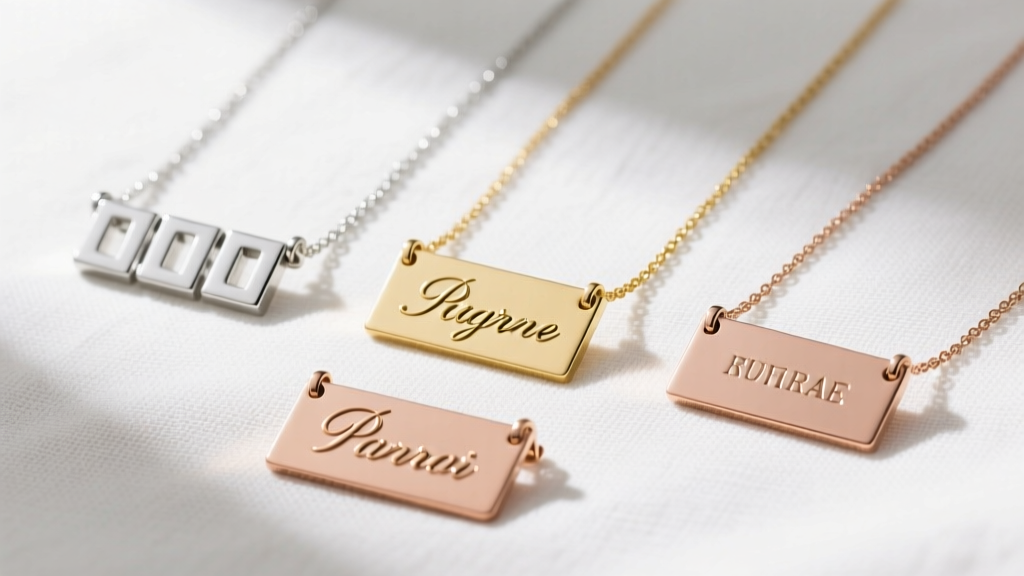
The font you choose dramatically affects the structural integrity of the nameplate. Because the letters are laser-cut or die-struck from a flat sheet of metal, certain fonts create weak points that are prone to bending or snapping.
The Big Three Font Categories
- Classic Script (Cursive): The most popular choice. The continuous connecting lines provide excellent structural support, making the plate surprisingly rigid. However, ensure the loops (like in 'g' or 'y') are not cut too thin.
- Block / Sans-Serif: A modern, minimalist aesthetic. Because the letters are disconnected, the jeweler must add a hidden support bar across the back or top to hold the word together. If this bar is too thin, the plate will warp.
- Serif / Typewriter: Features small decorative feet on the letters. These tiny protrusions are fragile and can easily catch on clothing and snap off. Not recommended for active wearers.
Thickness and Letter Count
Standard nameplate thickness is 1.2mm. While this is fine for short names (4-6 letters), it is entirely inadequate for longer names or words. If your custom piece exceeds 8 characters, you must request a 1.5mm or 1.8mm gauge thickness. Furthermore, keep the total width in mind. A standard 5-letter name in a classic script spans about 1.5 inches. If your word is longer than 10 letters, the pendant will exceed 3 inches across, making it cumbersome and prone to catching on hair and fabrics. For long phrases, opt for a two-line stacked design.
Chain Pairings: Matching the Pendant Weight
A custom nameplate is only as strong as the chain holding it. Beginners frequently pair heavy, solid gold nameplates with delicate, hollow chains, resulting in inevitable breakage. The chain must be rated to hold at least three times the weight of the pendant.
Cable and Curb Chains: The Reliable Standards
For nameplates weighing under 10 grams, a solid 1.5mm to 2.0mm cable or curb chain is ideal. Curb chains, with their interlocking flattened links, offer superior tensile strength and lay flat against the collarbone, preventing the pendant from flipping backward. Ensure the links are soldered closed; unsoldered links will pull apart under the pendulum-like swinging motion of a heavy nameplate.
Rope and Figaro Chains: For Heavier Plates
If you have commissioned a large, 1.5mm thick solid gold nameplate, you need a heavier chain. A 2.5mm rope chain provides excellent structural support and adds a beautiful textural contrast to the smooth, polished surface of the nameplate. Avoid box chains entirely for nameplates; the sharp 90-degree edges of the box links can actually saw through the bail (the loop connecting the pendant to the chain) over time due to friction.
Understanding Bail Types
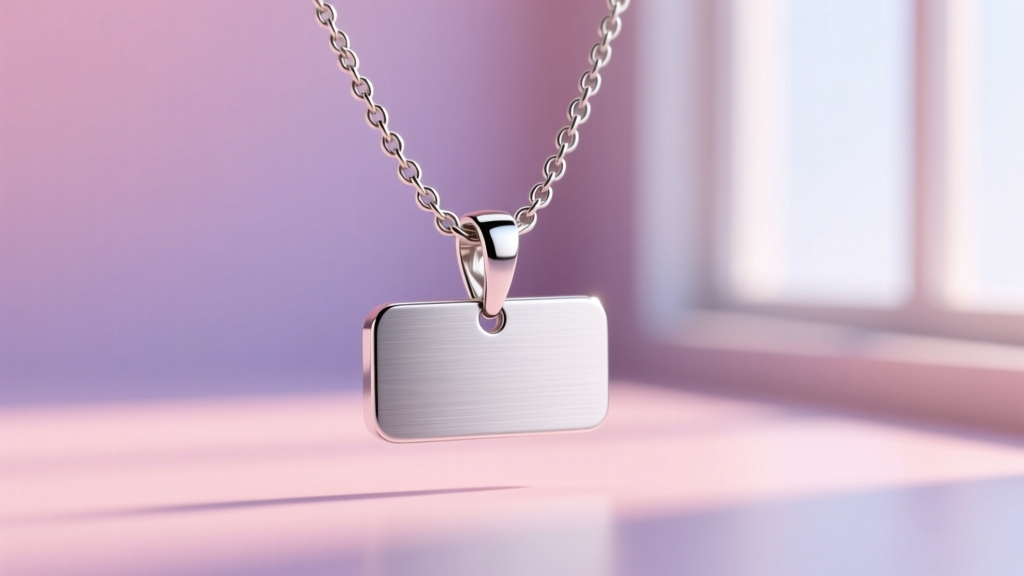
The bail is the critical junction between your chain and your custom word. There are two main types used in nameplate manufacturing:
- Integrated Ring Bail: A small ring is soldered directly to the top center letter or the hidden support bar. This is the most secure method but limits the pendant to sitting exactly centered.
- Hidden Tube Bail: A small horizontal tube is soldered to the back of the top letters, allowing the chain to thread directly through the pendant. This creates a seamless 'floating' look but requires a chain with a small enough end-clasp to pass through the tube, or the chain must be threaded before the clasp is soldered on.
Pricing Breakdown: What Should You Actually Pay?
Custom jewelry carries a premium, but understanding the market rates prevents you from overpaying for subpar materials. In 2026, the baseline pricing for a standard 5-to-7 letter nameplate (1.2mm thickness, 16-18 inch chain) generally falls into these brackets:
The Vermeil Warning: If a jeweler is charging over $150 for a gold vermeil nameplate, you are likely paying for brand marketing rather than material quality. Vermeil is fundamentally a sterling silver piece with a thick gold wash. True luxury pricing should be reserved for solid 14k or 18k gold, where the raw material cost alone justifies the $400+ price tag.
Always ask the jeweler for a breakdown of the cost. Reputable custom jewelers, as endorsed by organizations like Jewelers of America, will transparently list the metal weight, the karatage, and the labor cost for the custom laser cutting and polishing.
Care and Maintenance for Longevity
Because nameplate necklaces feature intricate cutouts and sharp inner corners, they trap skin oils, lotions, and environmental dust more easily than solid pendants. To maintain the brilliant shine of your custom piece, follow these strict maintenance protocols:
- Ditch the Ultrasonic Cleaners: While ultrasonic cleaners are great for solid diamond rings, the high-frequency vibrations can weaken the micro-solder joints holding the bail to the nameplate, especially on thinner 1.2mm gauges.
- Use a Polishing Cloth, Not Liquid Dips: Liquid silver and gold dips contain harsh sulfates that can strip the intentional oxidation (blackening) used to create contrast in certain font styles, and can degrade gold vermeil plating. Stick to a treated microfiber jewelry cloth.
- The 'Last On, First Off' Rule: Hairspray, perfumes, and chemical sunscreens are the enemies of custom jewelry. Always put your nameplate on after your beauty routine is complete, and take it off before showering or swimming to preserve the metal's finish and prevent the chain links from seizing up with soap scum.
By understanding the mechanics of metal gauges, font structures, and chain tensile strength, you can confidently commission a custom nameplate necklace that is not just a beautiful accessory, but a durable, lifelong keepsake.


