The Beginner's Guide to Buying a Diamond Dangle Necklace
Learn how to choose, style, and care for a diamond dangle necklace. Our beginner-friendly guide covers metals, diamond grades, and chain lengths.


What Exactly is a Diamond Dangle Necklace?
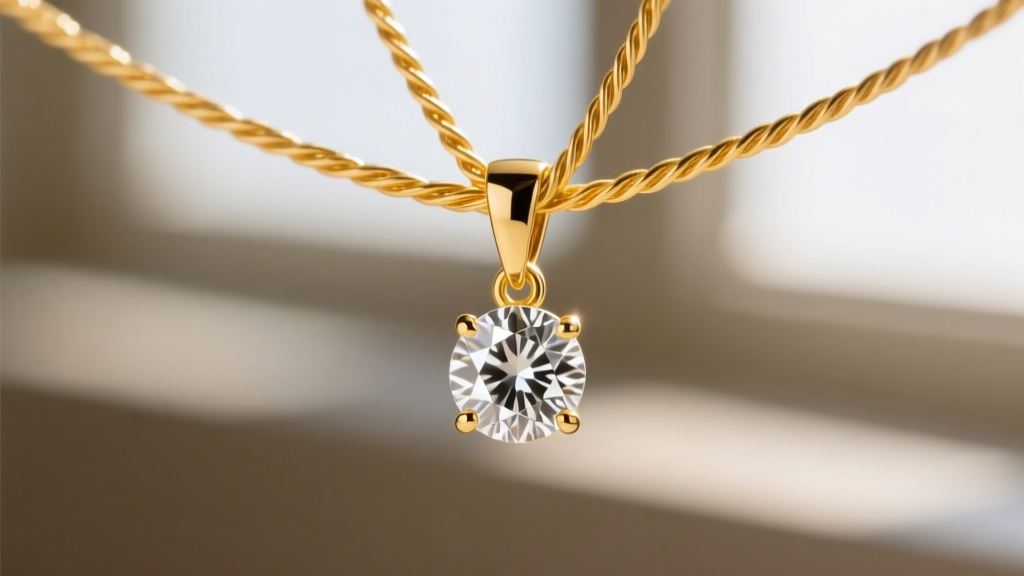
A diamond dangle necklace is a sophisticated jewelry piece where the primary pendant drops or hangs below the chain, rather than sitting flush against the skin. Unlike a standard solitaire pendant that rests flat on the collarbone, a dangle necklace incorporates a vertical element that moves with the wearer. This kinetic movement is the secret to its brilliance; as the diamond shifts, it catches and refracts light from multiple angles, creating a dynamic display of scintillation.
For beginners, navigating the anatomy of a dangle necklace is the first step toward making a smart purchase. The piece consists of three main components: the chain, the bail (the loop that connects the pendant to the chain), and the drop (the dangling diamond element). Understanding how these parts interact is crucial for both comfort and aesthetics.
The Anatomy and the 'Flip Factor'
One of the most common complaints from first-time buyers is the 'flip factor'—when a pendant continuously slides to the side of the neck or flips upside down. This happens due to an imbalance in the center of gravity. If a diamond dangle is heavy but paired with a lightweight, delicate chain, the chain will slide through the bail until the clasp rests in the front.
Expert Tip: To prevent this, ensure your chain's gauge thickness is proportional to the pendant's weight. For a diamond dangle weighing between 1.5 and 3.0 carats (total weight), opt for a chain with a minimum thickness of 1.0mm to 1.2mm. Additionally, look for a pendant with a 'hidden bail' or a integrated V-shaped loop that lowers the center of gravity, keeping the stone anchored centrally on your chest.
Decoding Diamond Quality for Moving Stones
When evaluating diamonds for a dangle setting, the traditional 4Cs (Cut, Color, Clarity, Carat) must be adjusted based on how the jewelry is actually worn. Because the stone is in constant motion and sits a few inches away from the observer's eye, you can optimize your budget by prioritizing certain traits over others.
Cut: The Non-Negotiable Priority
Cut quality dictates how well a diamond interacts with light. For a dangle necklace, an 'Excellent' or 'Ideal' cut grade is mandatory. The movement of the pendant relies entirely on the precision of the facets to throw off flashes of light (scintillation). A poorly cut diamond will look like a dull piece of glass, no matter how much it moves.
Clarity: Where You Can Save
According to the Gemological Institute of America (GIA), clarity measures internal inclusions and surface blemishes. For a stationary ring, you might want a VS1 or VVS2 grade. However, for a moving dangle necklace, an SI1 (Slightly Included 1) or even a well-chosen SI2 clarity grade is often completely eye-clean. The continuous motion makes it virtually impossible for the naked eye to spot minor inclusions, allowing you to redirect those funds toward a larger carat weight or better cut.
Color: Matching the Metal
If you are setting your dangle in white gold or platinum, aim for a near-colorless grade of G or H. These grades face up brilliantly white to the naked eye but cost significantly less than D or F color grades. If you choose yellow or rose gold, you can safely drop down to a J or K color, as the warm reflections of the metal will mask the faint yellow tint of the diamond.
Lab-Grown vs. Natural: The 2026 Market Reality
The jewelry market has shifted dramatically, and lab-grown diamonds are now a mainstream, scientifically identical alternative to mined stones. For beginners building their first fine jewelry collection, understanding the pricing difference is essential for maximizing your budget.
| Feature | Natural Diamond Dangle | Lab-Grown Diamond Dangle |
|---|---|---|
| Average Price (1.00 ct Total Weight) | $3,500 - $6,000+ | $600 - $1,200 |
| Resale Value | Moderate (20-40% of retail) | Low (Primarily sentimental) |
| Physical & Optical Properties | Identical | Identical |
| Best For | Heirlooms, traditional milestones | Maximizing size, everyday luxury |
As noted in the GIA Diamond Buying Guide, lab-grown diamonds possess the exact same chemical and physical properties as natural diamonds. Choosing lab-grown allows a beginner to purchase a striking 2-carat diamond dangle necklace for the price of a modest 0.5-carat natural stone.
Choosing the Right Metal and Chain Style
The metal you choose impacts both the durability and the maintenance of your necklace.
- 14k Gold: The ideal choice for everyday wear. It contains 58.5% pure gold mixed with stronger alloys, making it highly resistant to bending and scratching. It is the most practical choice for securing heavy dangle pendants.
- 18k Gold: Contains 75% pure gold, offering a richer, warmer color. However, it is softer and more prone to micro-scratches. Best reserved for special occasion pieces.
- Platinum: The premium choice. It is naturally white, hypoallergenic, and incredibly dense. Platinum prongs offer the highest security for expensive diamonds, though the metal itself is heavier and more expensive.
For the chain style, a classic Cable Chain or Box Chain is recommended. Avoid Snake chains for dangle pendants; their tight, interlocking links are notorious for catching on body hair and snapping under the swinging weight of a heavy pendant.
Styling Your Dangle Necklace for Any Neckline
The versatility of a diamond dangle necklace lies in its ability to elongate the neck and draw the eye downward. Here is a practical framework for pairing your necklace with common necklines:
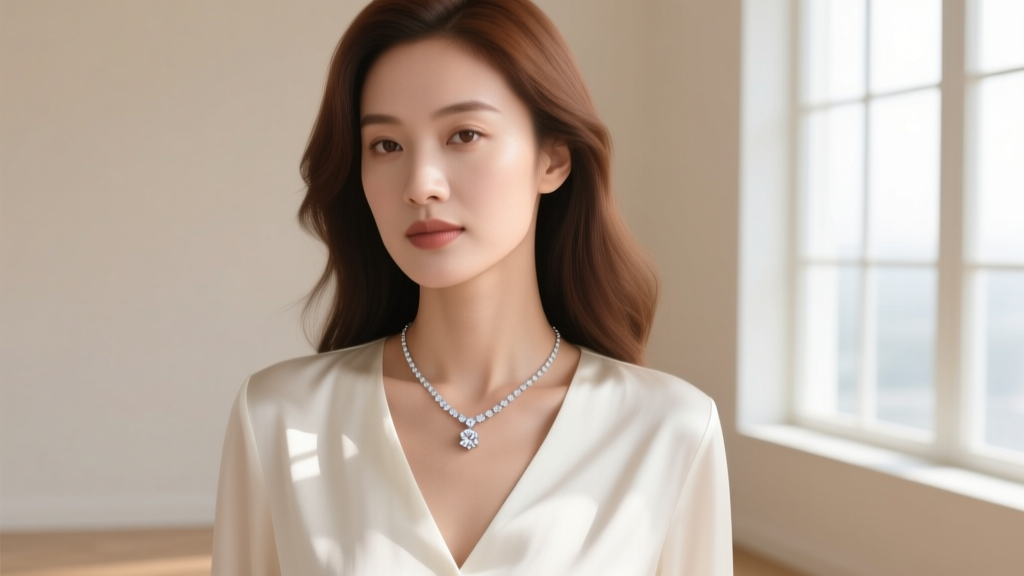
- V-Neck and Wrap Tops: The natural geometry of a V-neck perfectly frames a dangle pendant. Choose a pendant with a pear or marquise cut diamond to echo the V-shape of the garment. An 18-inch chain is usually the perfect length here.
- Scoop and Crew Necks: These higher, rounded necklines require a longer drop to prevent the jewelry from looking crowded. Opt for a 20-inch chain (matinee length) so the dangle rests below the fabric line, creating a layered, intentional look.
- Off-the-Shoulder and Strapless: This is where a dangle necklace truly shines. With the collarbone and upper chest fully exposed, a shorter 16-inch choker-length chain with a dramatic, elongated diamond drop creates a stunning, red-carpet-worthy focal point.
- Button-Down Shirts: Leave the top two buttons undone and layer a delicate diamond dangle over a simple gold or silver herringbone chain for a polished, professional aesthetic.
Maintenance and Cleaning Protocols
Because dangle necklaces swing and brush against clothing and skin, they accumulate oils, lotions, and dust faster than stationary rings. A diamond is lipophilic, meaning it naturally attracts grease, which will quickly dull its sparkle.
To maintain maximum brilliance, clean your necklace once every two weeks. Create a solution of warm water and a few drops of mild, ammonia-free dish soap. Soak the necklace for 15 minutes, then gently agitate the diamond drop with a soft-bristled baby toothbrush. Pay special attention to the underside of the diamond (the pavilion), where dirt accumulates and blocks light return.
Warning: Avoid using ultrasonic cleaners on diamond dangle necklaces if the setting includes secondary melee diamonds or if the center stone is fracture-filled. The high-frequency vibrations can loosen the delicate prongs holding the smaller accent stones or exacerbate internal fractures in treated diamonds.
By understanding the mechanics of the bail, optimizing your diamond grades for movement, and matching the chain gauge to the pendant's weight, you can confidently select a diamond dangle necklace that offers both breathtaking brilliance and lifelong durability.


