Multi Colored Necklace Styling: 2026 Trend Analysis
Discover 2026 multi colored necklace trends. Learn how to style vibrant gemstone, enamel, and beaded layers with specific necklines and materials.

The Shift to Dopamine Jewelry in 2026
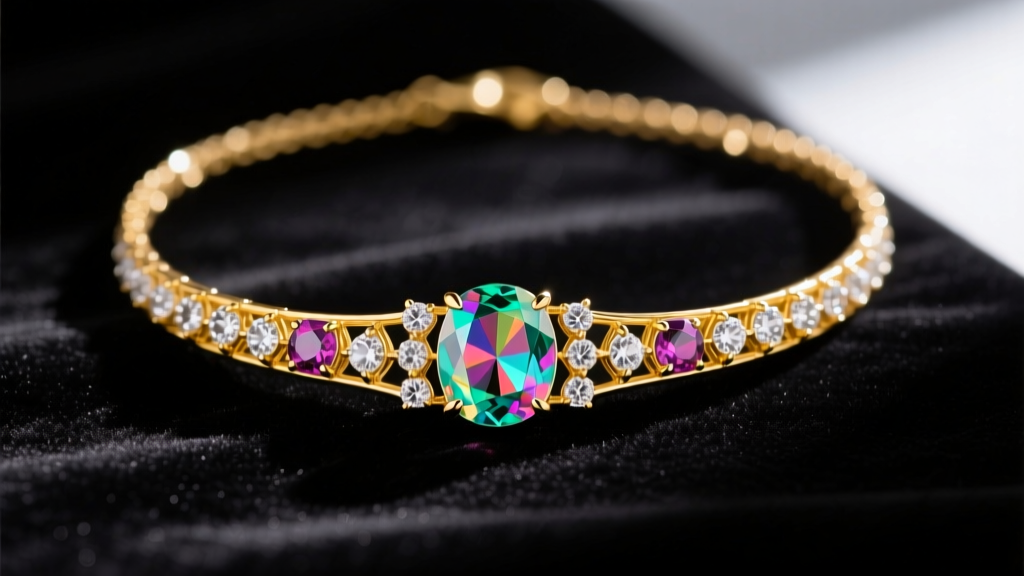
The jewelry landscape of 2026 has decisively pivoted away from the muted tones and ultra-minimalism of the early 2020s. Today, the multi colored necklace stands at the forefront of what industry analysts call 'dopamine jewelry'—pieces engineered to evoke joy through high-contrast, saturated palettes. According to Vogue, the modern consumer is no longer afraid to mix warm and cool tones in a single silhouette, favoring pieces that act as the focal point of an outfit rather than a subtle accent. This macro-trend has pushed jewelry designers to experiment with unconventional gemstone pairings, advanced enamel techniques, and asymmetrical color blocking.
However, pulling off a multi colored necklace requires more than just throwing every hue onto a single chain. It demands an understanding of color theory, material compatibility, and structural integrity. As a senior style analyst for Jewel Style Radar, I have broken down the exact anatomy, styling frameworks, and gemological pitfalls of the modern polychromatic necklace.
Material Anatomy of a Multi Colored Necklace
The vibrancy of a multi colored necklace relies entirely on the materials chosen to deliver the color. In 2026, we are seeing a distinct bifurcation in the market: hyper-natural gemstone zoning and hyper-crafted artisanal enamel.
Natural Bicolor and Zoning Gemstones
High-end designers are moving away from clustered single-color stones and embracing gems that naturally exhibit multiple colors within a single crystal. Watermelon tourmaline, which features a pink core and a green rind, is currently dominating the luxury market. When sliced into cabochons or faceted into step cuts, it provides a built-in multi colored effect that feels organic rather than manufactured. Another staple is bi-color ametrine, which seamlessly blends purple amethyst and golden citrine. A genuine 18k gold multi colored necklace featuring natural, unheated sapphires and tsavorites will command between $4,500 and $12,000, whereas vermeil and cubic zirconia alternatives sit in the $120 to $250 bracket.
The Enamel Revival: Plique-à-jour and Champlevé
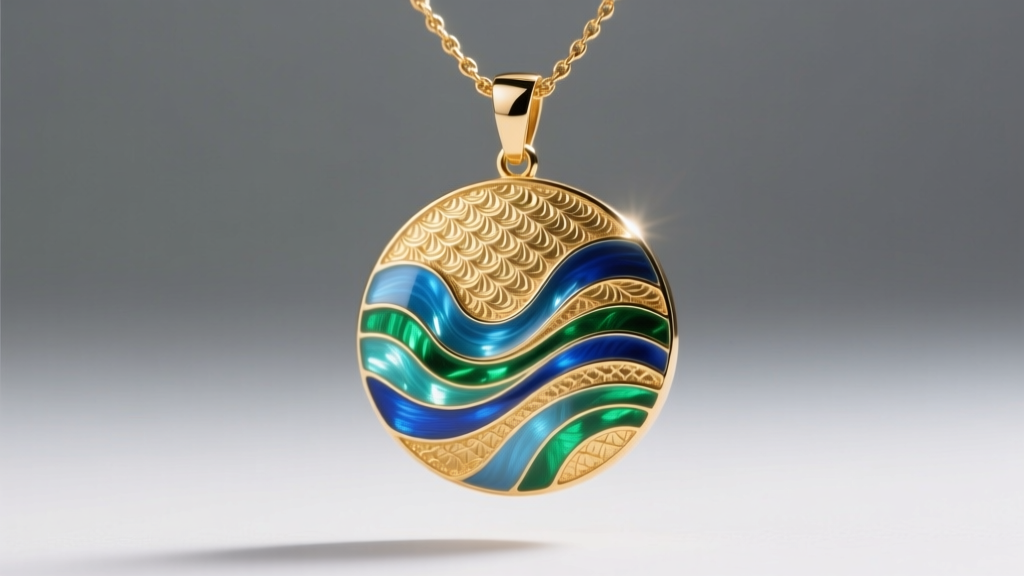
For those seeking vivid, opaque, or translucent color without the exorbitant price tag of rare gemstones, enamel has made a massive resurgence. Specifically, the plique-à-jour technique—a backless enamel application that resembles stained glass—allows light to pass through the multi colored segments of the necklace, creating an ethereal glow. Meanwhile, champlevé enamel, where powdered glass is fired into carved troughs in the base metal, offers deep, saturated blocks of color. The risk with enamel is thermal shock; sudden temperature changes can cause the glass to fracture and pop out of the metal setting.
Color Theory Framework for Polychromatic Styling
Styling a multi colored necklace without looking chaotic requires adherence to foundational color theory. The most successful 2026 collections rely on three specific color wheel strategies. Below is a decision matrix to help you select the right piece for your wardrobe.
| Color Strategy | Gemstone / Material Combination | Best Metal Pairing | Approx. Price Range |
|---|---|---|---|
| Analogous (Harmonious) | Emerald, Peridot, and Chrysoprase | 14k Yellow Gold | $800 - $3,200 |
| Complementary (High Contrast) | Blue Sapphire and Orange Spessartite Garnet | Platinum or White Gold | $2,500 - $8,000 |
| Triadic (Vibrant & Balanced) | Amethyst, Citrine, and Rhodolite Garnet | Rose Gold | $1,200 - $4,500 |
When styling, remember that the metal acts as the neutral anchor. Yellow gold amplifies warm stones (garnet, citrine), while white gold and platinum provide a crisp, icy backdrop that makes cool stones (sapphire, tanzanite) pop. Rose gold serves as an excellent bridge for triadic combinations, softening the visual transitions between disparate hues.
Neckline Architecture and Length Mapping
The impact of your multi colored necklace is entirely dependent on how it interacts with the architecture of your clothing's neckline. A poorly matched length will disrupt the visual flow of both the garment and the jewelry.
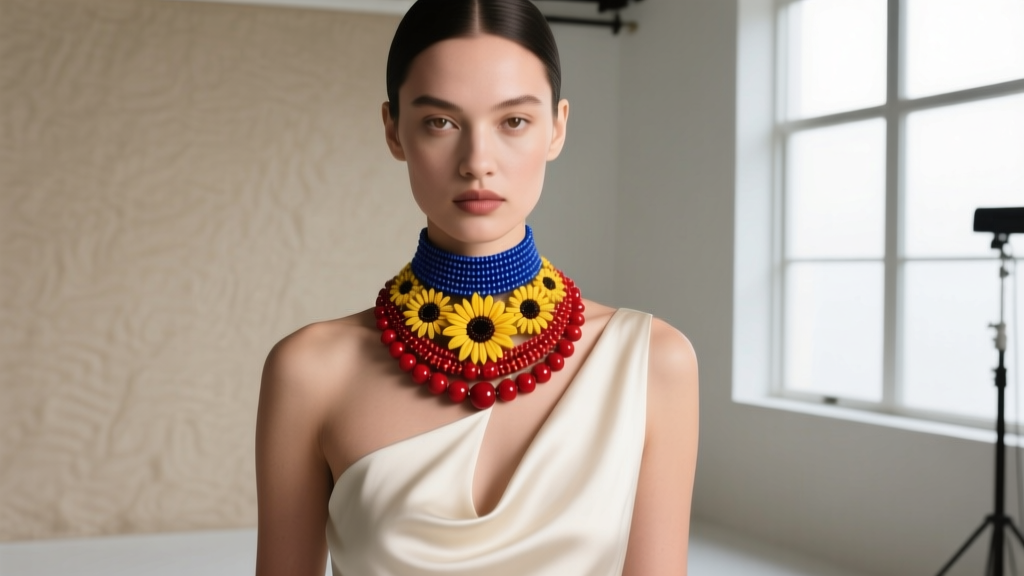
- The Asymmetric Neckline: Pair with a 14-to-16-inch choker or collar-style multi colored necklace. The rigidity of a collar grounds the asymmetry of the fabric. Avoid long pendants, which will compete with the diagonal lines of the top.
- The Sweetheart Neckline: Opt for an 18-inch Y-drop or lariat necklace. The central drop mimics and elongates the sweetheart dip, while the multi colored stones resting on the collarbone draw the eye upward toward the face.
- The Crew Neck: This requires a 20-to-24-inch opera-length piece. A multi colored necklace featuring graduated stone sizes (smaller at the nape, larger at the sternum) creates a flattering V-illusion over the high, round fabric line.
- The Halter Top: Skip the traditional necklace entirely. Instead, opt for a multi colored lariat that wraps around the upper arm or a heavily jeweled multi-strand bracelet that pulls focus to the wrists, allowing the halter's neck strap to stand alone.
Gemological Pitfalls and Maintenance Protocols
While a multi colored necklace is a stunning accessory, mixing different materials introduces complex maintenance challenges that most consumers overlook. Understanding these failure modes is critical for preserving your investment.
The Mohs Hardness Mismatch
When designers mix stones of vastly different hardness levels in a single bezel or channel setting, the softer stone is at risk. For example, setting tanzanite (Mohs 6.5) adjacent to sapphire (Mohs 9) in a multi colored necklace means that everyday micro-abrasions will cause the sapphire to slowly scratch and dull the tanzanite over time. Always inspect the settings of polychromatic pieces to ensure there is a metal buffer between stones of differing hardness.
Dye Bleeding and Porous Stones
In the mid-tier market, many multi colored beaded necklaces utilize dyed howlite (passed off as turquoise) or dyed agate. According to the Gemological Institute of America (GIA), these porous stones are highly susceptible to dye bleeding when exposed to the alcohol and chemical bases found in perfumes, hairsprays, and lotions. Always apply your fragrances and cosmetics at least 15 minutes before putting on your jewelry.
Galvanic Corrosion in Mixed Metals
A popular 2026 trend is mixing sterling silver and 14k gold links within the same multi colored necklace. However, when these two dissimilar metals are exposed to an electrolyte (like sweat, saltwater, or high humidity), galvanic corrosion occurs. The sterling silver acts as a sacrificial anode and will oxidize and degrade at an accelerated rate. To prevent this, remove mixed-metal pieces before exercising or swimming, and store them in anti-tarnish cloth pouches.
'The beauty of a multi colored necklace lies in its tension. It is the jeweler's job to ensure that the tension is purely visual, not structural. Mixing a 5.5 hardness opal with a 9 hardness ruby in a shared prong setting is a recipe for a shattered stone.' — Master Gemologist Appraiser
By understanding the gemological realities, color theory frameworks, and styling architectures outlined above, you can confidently navigate the vibrant world of 2026's multi colored necklace trends. Whether you are investing in a high-jewelry watermelon tourmaline piece or a playful enamel choker, the key is intentionality. Let the colors speak, but ensure the materials and proportions are working in perfect harmony.


