Beginner's Guide to Choosing a Gold Orchid Necklace
Learn to choose, style, and care for a gold orchid necklace. We cover gold karats, casting methods, and the best chain pairings for botanical pendants.

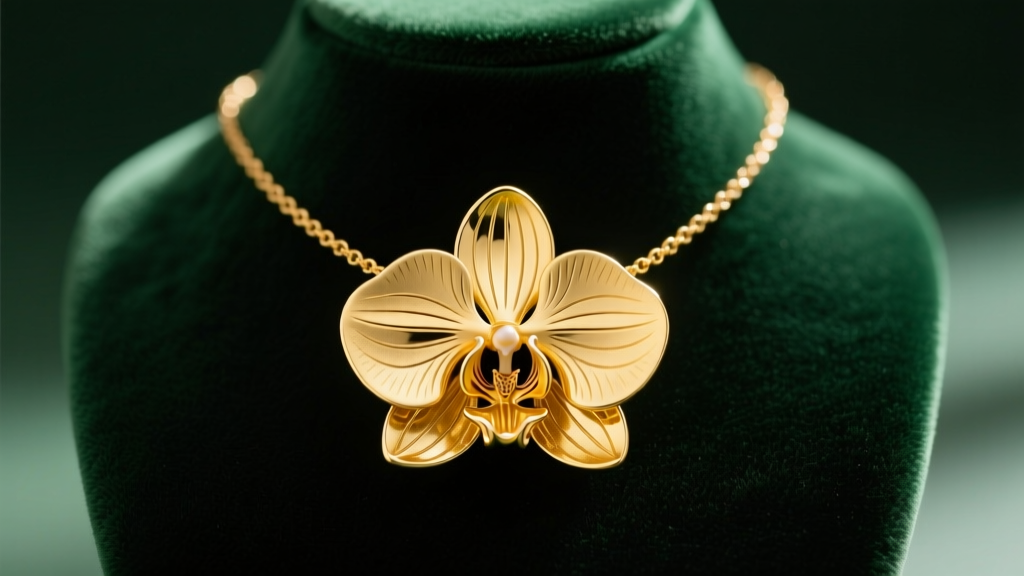
Botanical jewelry has long captivated those who wish to wear a piece of the natural world. Among the most sophisticated and enduring designs in this category is the gold orchid necklace. Unlike simple geometric pendants, an orchid pendant requires a mastery of metallurgy and sculpting to capture the flower's intricate lip, ruffled petals, and delicate column. For beginners stepping into the world of fine botanical jewelry, understanding the nuances of gold purity, manufacturing techniques, and proper chain pairing is essential. This guide will walk you through everything you need to know before investing in a gold orchid necklace, ensuring you select a piece that is both structurally sound and aesthetically breathtaking.
Decoding the Gold: 14K vs. 18K for Floral Pendants
When selecting a gold orchid necklace, the karat weight of the metal is your first major decision. The delicate nature of floral designs—particularly the thin, protruding petal tips of a Cattleya or Phalaenopsis orchid—demands careful consideration of metal hardness.
According to the Gemological Institute of America (GIA), pure 24K gold is too soft for everyday jewelry. Therefore, it is alloyed with metals like copper, silver, and zinc. For botanical pendants, the choice usually comes down to 14K and 18K gold.
| Feature | 14K Gold Orchid Pendant | 18K Gold Orchid Pendant |
|---|---|---|
| Gold Purity | 58.5% Pure Gold | 75.0% Pure Gold |
| Durability & Hardness | High (Ideal for thin petal tips) | Moderate (More prone to bending) |
| Color Profile | Warm, slightly paler yellow | Rich, deep, saturated yellow |
| Avg. Price (4g Pendant, 2026) | $280 - $400 | $450 - $650 |
| Best For | Everyday wear, intricate designs | Special occasions, heirloom pieces |
For a beginner, a 14K gold orchid necklace is often the most practical choice. Its higher Vickers hardness means the delicate petal edges are less likely to bend or warp if the pendant is accidentally pressed against a hard surface. However, if you prioritize a richer, deeper yellow hue and plan to wear the necklace only on special occasions, 18K gold offers an unmistakable luxury.
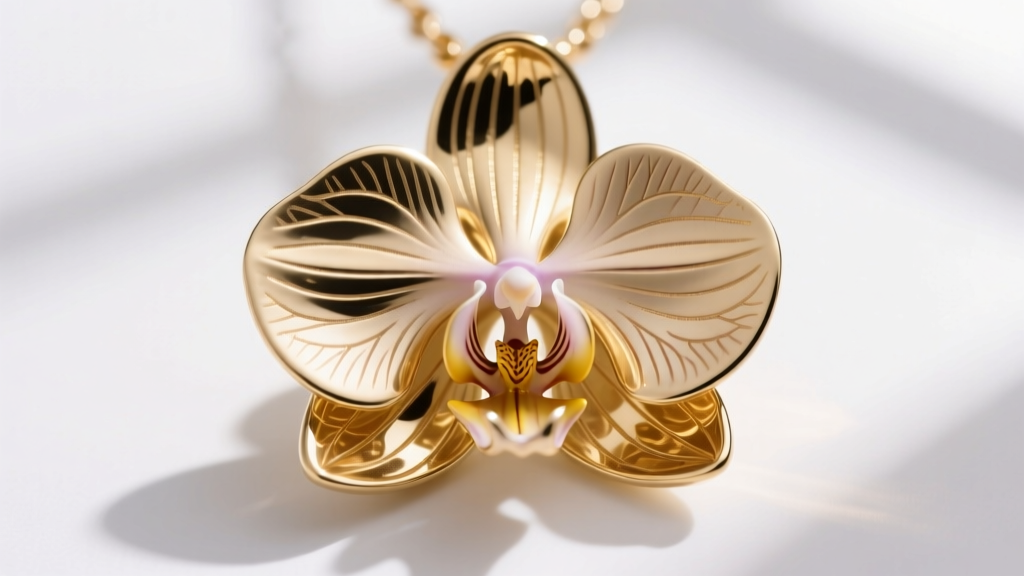
Manufacturing Methods: Lost-Wax Casting vs. Electroforming
Not all gold orchid necklaces are created equal. The manufacturing method dictates the level of detail, the weight of the pendant, and its overall durability. There are two primary methods used by jewelers today:
Lost-Wax Casting
This is the industry standard for high-quality botanical jewelry. A master model of the orchid is meticulously carved from wax or 3D-printed using high-resolution resin. A rubber mold is created, into which wax is injected. This wax model is then encased in investment plaster and burned out in a kiln, leaving a hollow cavity. Molten gold is poured or centrifuged into this cavity. Lost-wax casting allows jewelers to create hollow-backed orchid pendants, which keeps the gold weight (and price) manageable while maintaining a large, impressive face-up size. A typical 20mm lost-wax orchid pendant might weigh only 3.5 to 5 grams.
Electroforming (Real Flower Dipping)
Some artisan jewelers use real orchids, painting them with a conductive copper lacquer and submerging them in an electroplating bath. Gold is slowly deposited onto the organic material over several days. While this captures 100% authentic natural details, the resulting pendants can be fragile. The organic matter inside may eventually degrade or become brittle, and the gold layer is often quite thin. Beginners are generally advised to stick to solid cast gold orchid necklaces for long-term heirloom durability.
Pro Tip: Always ask the jeweler if the pendant is solid cast or electroformed. A solid cast 14K gold piece will easily last generations, whereas electroformed pieces require extremely gentle handling.
Choosing the Right Chain for Intricate Botanical Pendants
The chain you pair with your gold orchid necklace is just as critical as the pendant itself. Orchid pendants often feature complex topographies, including deep throats and overlapping petals. If the chain is too textured, it can snag on the bail or the delicate edges of the flower.
- Box Chains (1.0mm - 1.5mm): These are the top recommendation for botanical pendants. The smooth, square links glide effortlessly through standard bails and will not catch on intricate floral details.
- Cable Chains (1.2mm - 1.8mm): A classic choice that offers excellent tensile strength. Ensure the links are soldered closed so they do not pull apart under the weight of a solid gold orchid.
- Rope Chains: While beautiful, the twisted grooves of a rope chain can sometimes trap microscopic debris and may cause friction against the pendant's bail over time.
- Chains to Avoid: Snake chains and herringbone chains are notoriously prone to kinking and can easily snag on the protruding petal tips of an orchid design. Keep these chains for simple, smooth geometric pendants.
For a standard 4-gram orchid pendant, a 1.2mm solid box chain in 14K gold provides the perfect balance of visual delicacy and structural support, typically costing between $120 and $180 in 2026.
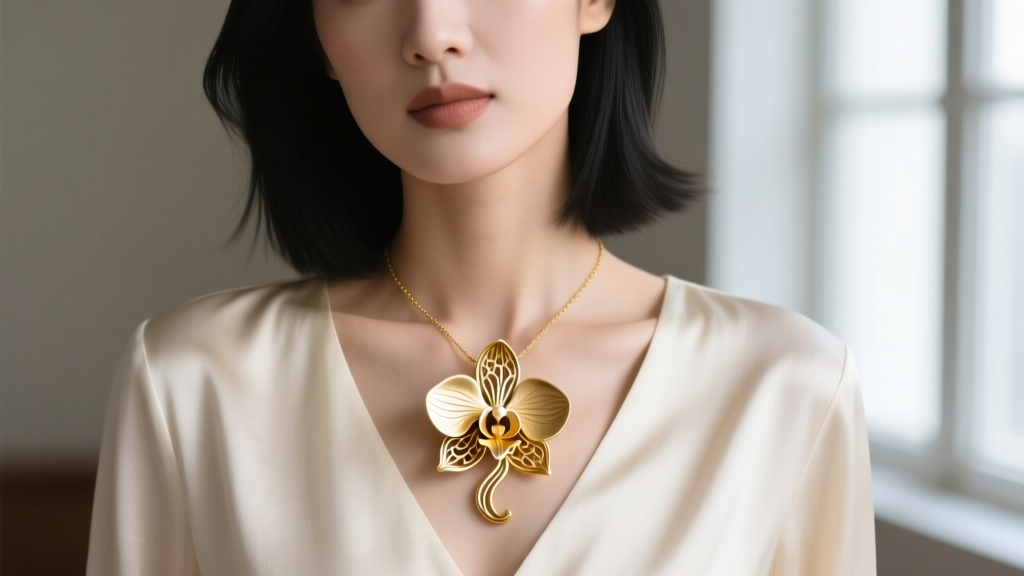
Styling Your Orchid Pendant: Necklines and Layering
Because a gold orchid necklace is inherently detailed and visually heavy, it requires the right canvas to truly shine. The goal is to let the botanical pendant serve as the focal point without competing with busy patterns or overly complex garments.
Best Necklines:
- V-Neck and Plunge: The downward angle of a V-neck perfectly frames the natural teardrop shape of most orchid pendants, drawing the eye directly to the flower's center.
- Scoop Neck: A simple, wide scoop neckline provides a broad expanse of skin, allowing a 16-inch or 18-inch orchid chain to lay flat and unobstructed.
- Collared Blouses: Wearing the pendant over a crisp, unbuttoned white or cream silk blouse creates a striking contrast between the organic gold texture and the structured fabric.
Layering Techniques:
If you wish to layer your gold orchid necklace, adhere to the 'rule of contrast.' Pair the intricate orchid pendant on an 18-inch chain with a completely smooth, unadorned 14-inch gold choker or a simple 16-inch satellite chain. Avoid layering it with other highly detailed pendants, such as zodiac signs or filigree crosses, as the visual noise will diminish the impact of the orchid.
Maintenance: Cleaning Deep Crevices Without Damage
The very details that make a gold orchid necklace beautiful—the ruffled petal edges, the deep central column, and the textured veining—are also magnets for skin oils, lotions, and cosmetic dust. Over time, this buildup can dull the gold's natural luster.
The Jewelers of America recommends gentle, non-abrasive cleaning methods for intricate gold jewelry. Here is a beginner-friendly, step-by-step maintenance routine:
- Prepare a Bath: Mix a few drops of mild, degreasing dish soap into a bowl of lukewarm water. Avoid hot water, which can shock any secondary gemstones set in the flower's center.
- Soak: Let the necklace soak for 10 to 15 minutes to loosen trapped debris from the orchid's throat and petal crevices.
- Brush Gently: Use an extra-soft baby toothbrush. Brush in gentle, circular motions, paying special attention to the back of the pendant and the bail where sweat accumulates.
- Rinse and Dry: Rinse thoroughly under lukewarm running water. Pat dry with a lint-free microfiber cloth. Do not use paper towels, as the wood fibers can snag on micro-details and leave behind microscopic lint.
A Crucial Warning on Ultrasonic Cleaners: While ultrasonic cleaners are fantastic for plain gold chains, they should be used with extreme caution on botanical pendants. If your gold orchid features micro-pavé diamonds or delicate enamel work in the center, the high-frequency vibrations can easily loosen the adhesive or shake the tiny prongs out of alignment. Stick to manual, gentle brushing for any orchid necklace with secondary embellishments.
Final Thoughts on Botanical Elegance
A gold orchid necklace is more than just an accessory; it is a wearable sculpture that celebrates the intersection of nature and human craftsmanship. By understanding the structural benefits of 14K gold, the superiority of lost-wax casting, and the importance of pairing your pendant with a snag-free box chain, you can confidently select a piece that will endure for a lifetime. Whether you are drawn to the broad, elegant sweep of a moth orchid or the wild, ruffled edges of a cattleya, your botanical pendant will remain a timeless testament to natural beauty when properly chosen and meticulously cared for.


