The Ultimate Beginner's Guide to the Happy Face Necklace
Discover how to choose, style, and layer a happy face necklace. Our beginner's guide covers metals, chain gauges, and pendant sizes for everyday wear.

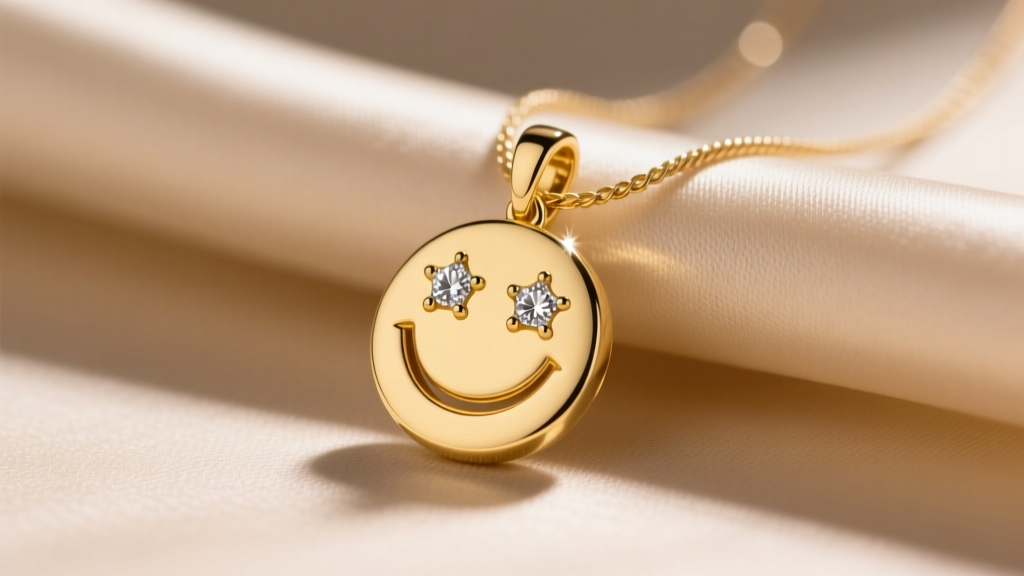
The happy face necklace has transcended its mid-century pop-culture origins to become a permanent fixture in fine jewelry. Originally popularized in 1971 by French journalist Franklin Loufrani, the simple yellow smiley was initially a typographic tool to highlight good news. Today, it serves as a cornerstone of what the jewelry industry calls "dopamine dressing"—the practice of wearing pieces that evoke genuine joy. As we navigate the jewelry landscape of 2026, the happy face pendant is no longer just an ironic novelty; it is a versatile, sentimental staple. However, for beginners stepping into the world of fine jewelry, navigating metal grades, chain gauges, and enamel types can be overwhelming. This comprehensive guide will break down exactly how to choose, wear, and care for a happy face necklace that will last a lifetime.
Decoding Materials: Solid Gold, Vermeil, and Enamel
When shopping for a smiley face pendant, the material dictates not only the price but the longevity of the piece. According to the Gemological Institute of America (GIA), understanding gold alloys is crucial for everyday jewelry. Pure 24k gold is too soft for daily wear, which is why pendants are typically cast in 14k or 18k gold.
14k vs. 18k Gold
14k gold (58.5% pure gold) is alloyed with metals like copper and zinc, giving it a higher Vickers hardness rating than 18k gold. For a happy face necklace that you plan to wear in the shower, at the gym, or while sleeping, 14k gold is the superior choice due to its resistance to scratching and bending. 18k gold offers a richer, more saturated yellow hue but requires slightly more mindful wear.
The Enamel Factor: Vitreous vs. Cold
Many happy face pendants feature a yellow enamel face. Beginners should know the difference between cold enamel and vitreous enamel. Cold enamel is essentially an epoxy resin; it is affordable but prone to yellowing and chipping over time. Vitreous enamel, however, is powdered glass fused to metal at extreme temperatures (around 1,400°F). It is scratch-resistant, waterproof, and will never lose its vibrant color.
| Material Type | Average Price Range | Durability & Care | Best For |
|---|---|---|---|
| Solid 14k Gold | $350 - $850 | Excellent; waterproof, tarnish-resistant | Daily wear, heirlooms, sensitive skin |
| Solid 18k Gold | $500 - $1,200 | High; richer color but softer alloy | Special occasions, luxury collectors |
| Gold Vermeil | $60 - $180 | Moderate; requires dry storage | Trend-chasing, budget-friendly gifting |
| Vitreous Enamel | +$50 - $150 (Add-on) | High; chip and scratch resistant | Vibrant color lovers, vintage aesthetics |
The Anatomy of the Perfect Chain
A common beginner mistake is pairing a beautiful pendant with an incompatible or fragile chain. As noted in Blue Nile's Gold Education Guide, the structural integrity of your chain is just as important as the pendant itself. For a standard 10mm to 15mm happy face pendant, you need a chain that balances visual delicacy with tensile strength.
Chain Gauge and Style
The "gauge" or thickness of your chain should ideally sit between 1.0mm and 1.5mm. Anything thinner (like a 0.8mm thread chain) risks snapping under the weight of a solid gold pendant. Anything thicker (2.0mm+) will visually overpower the charm.
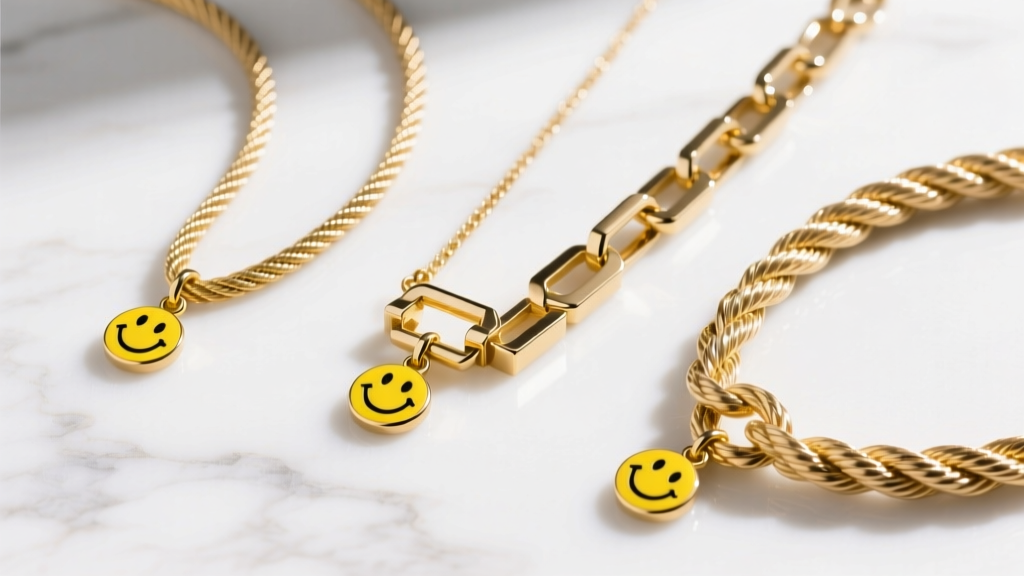
- Cable Chain: The classic choice. Uniform oval links that allow the pendant to slide freely and lay flat against the collarbone.
- Box Chain: Features square, interlocking links. It offers a modern, geometric contrast to the circular smiley face and is highly resistant to kinking.
- Rope Chain: Twisted links that catch the light beautifully. Best for a vintage or retro aesthetic, though the intricate links can occasionally snag on fine knits.
Clasp Mechanics
Always inspect the clasp. Avoid spring ring clasps, which are notoriously difficult to operate with one hand and feature a weak internal spring. Opt for a lobster clasp, which provides a secure, spring-loaded lock that easily threads through the pendant's bail.
Sizing Framework: Choosing the Right Diameter
Happy face pendants are not one-size-fits-all. The diameter of the charm completely changes the vibe of the necklace, from a subtle skin-flashing detail to a bold streetwear statement.
Micro (5mm - 8mm)
Micro pendants are incredibly discreet. They sit close to the skin and are often mistaken for simple gold beads from a distance. This size is strictly for layering or for those who prefer ultra-minimalist, "whisper" jewelry.
Classic (10mm - 15mm)
This is the sweet spot for 90% of buyers. A 12mm happy face pendant offers enough surface area to showcase the facial features (especially if they are set with micro-pave diamonds or carved relief) while remaining elegant enough for office wear.
Statement (20mm+)
Oversized smiley pendants lean heavily into Y2K nostalgia and streetwear. These require heavier chains, such as a 3.5mm Cuban link or a thick paperclip chain, to support the weight and match the visual volume.
The 2026 Layering Masterclass
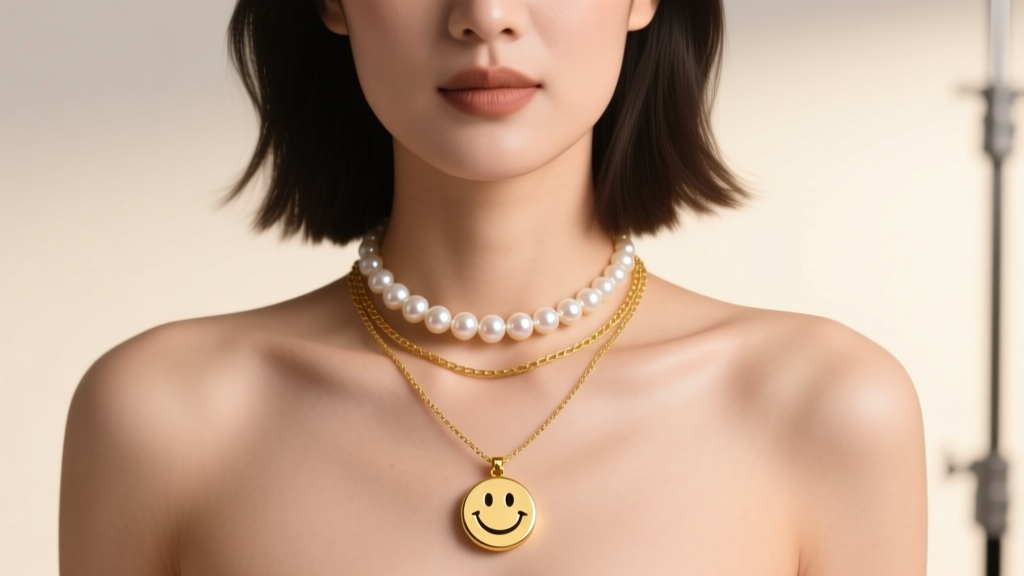
Layering necklaces is an art form that requires an understanding of proportions and textures. The golden rule of the necklace stack is the "2-inch drop." To prevent your chains from tangling and to ensure each pendant is visible, each subsequent chain should be exactly 1.5 to 2 inches longer than the one above it.
A Beginner-Friendly Stack Formula
Imagine building a stack from the collarbone down:
- The Base (14 inches): A delicate freshwater pearl choker or a simple 1.0mm gold herringbone chain. This frames the face.
- The Anchor (16 inches): Your 12mm happy face necklace on a 1.2mm cable chain. This is the focal point of the stack, resting perfectly on the upper chest.
- The Elongator (18 or 20 inches): A textured chain, like a gold paperclip or a lariat, featuring a larger, abstract pendant (like a solitaire diamond or a simple gold bar) to draw the eye downward and elongate the neck.
"Jewelry should never feel like a uniform. The happy face pendant acts as the perfect 'palate cleanser' in a stack, breaking up the seriousness of traditional diamonds and gemstones with a flash of personality and warmth."
Authenticity and The Smiley Company
As you shop, you may notice that some high-end jewelers feature a specific, trademarked smiley face, while others offer generic variations. The original smiley face is fiercely protected by The Smiley Company, which holds the rights to Loufrani's original 1971 design.
When purchasing from luxury or contemporary fine jewelry brands, you are often paying for the official licensing of this iconic, proportionally exact design (where the eyes and mouth take up exactly 43% of the yellow circle). Generic smiley faces are perfectly legal to produce and wear, provided they alter the proportions or features enough to avoid trademark infringement. For the purist and the collector, seeking out officially licensed collaborations ensures you are wearing a genuine piece of design history.
Caring for Your Pendant
To keep your happy face necklace shining, avoid exposing it to chlorine (which can cause microscopic stress fractures in gold alloys) and apply perfumes or lotions before putting the jewelry on. For enamel pieces, a gentle wipe with a microfiber cloth is all that is needed to maintain the glass-like luster of the vitreous finish.
Final Thoughts
The happy face necklace is a testament to the idea that fine jewelry does not have to be overly serious to be valuable. By understanding the structural differences between 14k and 18k gold, selecting the correct chain gauge, and mastering the 2-inch layering rule, you can confidently integrate this joyful icon into your everyday wardrobe. Whether you opt for a diamond-set micro charm or a bold, enameled classic, your smiley necklace is a daily reminder to embrace the lighter side of luxury.


