The Beginner’s Guide to Buying a Large Link Gold Necklace
Learn how to choose, style, and care for your first large link gold necklace. We break down chain styles, gold karats, weights, and pricing.

Why the Large Link Gold Necklace is a Timeless Staple
As we navigate the jewelry trends of 2026, the market has seen a definitive shift away from ultra-delicate, barely-there chains toward bold, architectural statements. The large link gold necklace has cemented its place as a foundational wardrobe staple, transcending streetwear origins to become a versatile anchor for both casual and high-fashion ensembles. However, for a beginner, the world of heavy gold chains is fraught with confusing terminology, hidden quality traps, and significant financial investment. This guide will decode the mechanics of large link chains, ensuring your first purchase is an heirloom-quality piece rather than a costly mistake.
Decoding Chain Styles: Cuban, Figaro, and Paperclip
Not all links are created equal. The geometry of the link dictates how the chain drapes, reflects light, and withstands daily friction. Here are the three dominant styles you will encounter:
The Cuban Link
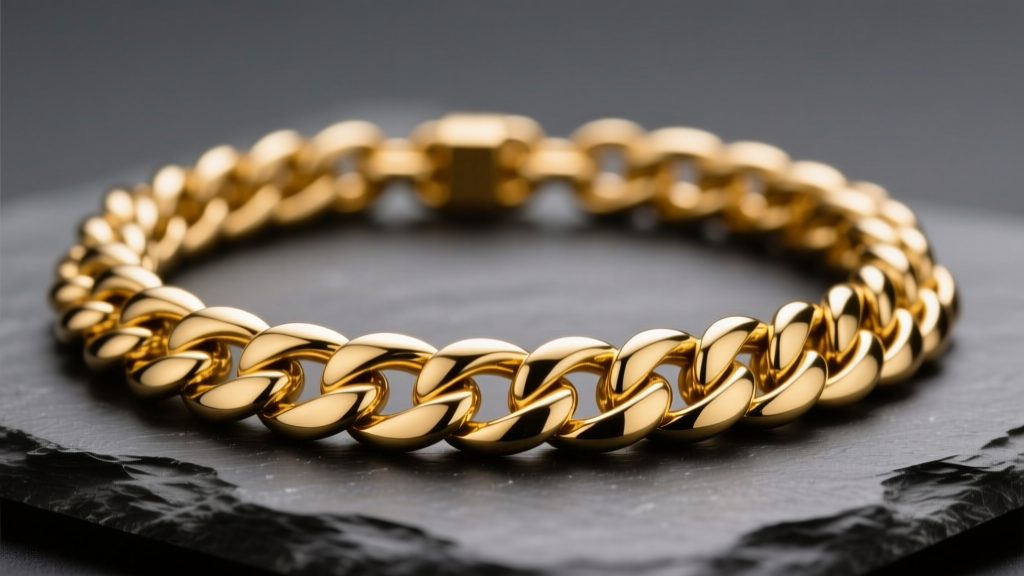
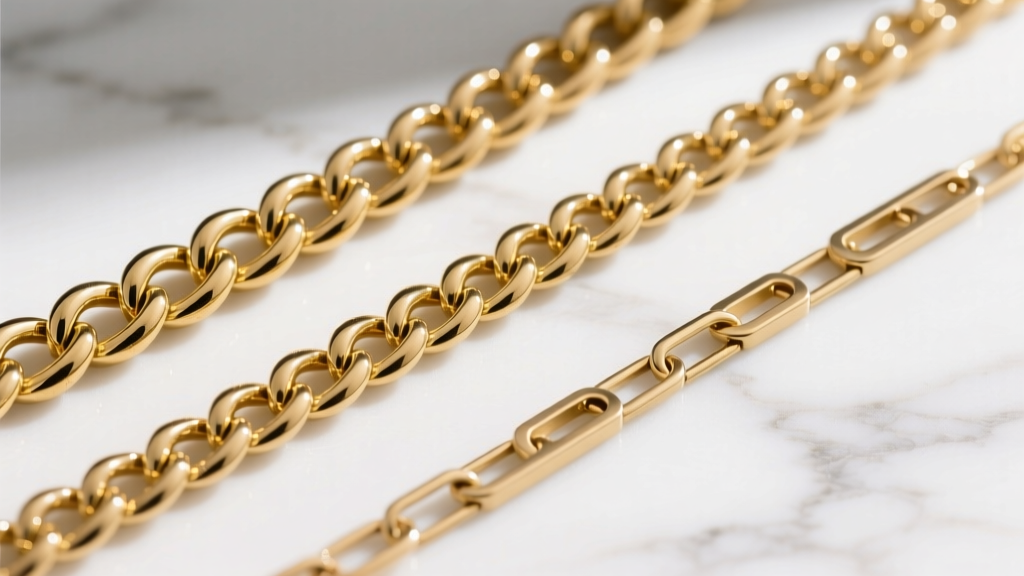
The undisputed king of large link chains. Cuban links feature interlocking round or oval links that are filed flat on the top and bottom. This flat surface maximizes light reflection and allows the chain to lay flush against the collarbone. A standard 10mm Cuban link is rigid enough to hold its shape but flexible enough to drape elegantly.
The Figaro Chain
Originating in Italy, the Figaro is characterized by a repeating pattern of three short, round links followed by one elongated oval link. It offers a vintage, textured aesthetic that catches the light differently than the uniform Cuban. It is generally lighter than a Cuban of the same millimeter width, making it an excellent entry-level large link style.
The Paperclip Chain
A modern favorite, the paperclip chain consists of elongated, rectangular links. Because the links are hollowed out in the center, paperclip chains offer a massive visual footprint (often 12mm to 15mm wide) without the crushing weight and high gold cost of a solid Cuban link of the same size.
Solid vs. Hollow: The Biggest Beginner Trap
When shopping for a large link gold necklace, you will inevitably see two drastically different price points for chains that look identical. The secret lies in the manufacturing method.
- Solid Links: Cast or stamped from solid gold alloy. They are heavy, durable, and can be easily repaired by a jeweler if a link snaps. A 20-inch, 10mm solid 14k Cuban link will weigh roughly 75 to 85 grams.
- Hollow Links: Made by wrapping thin gold sheeting over a base metal or resin core, or via electroforming. They are incredibly light and affordable but dent easily if dropped on a hard surface. Worse, hollow chains cannot be soldered. If a hollow link breaks, the chain is effectively ruined.
Expert Verdict: Always invest in solid or semi-solid gold for large link necklaces. The structural integrity is non-negotiable for pieces of this scale.
Gold Purity, Weight, and Pricing
Gold purity is measured in karats, which directly impacts both the color of the metal and its tensile strength. According to the Gemological Institute of America (GIA), pure 24k gold is far too soft for large link chains; the weight of the chain itself would cause the links to stretch and warp over time. Therefore, alloying metals like copper, silver, and zinc are added for durability.
| Karat | Gold Content | Durability for Large Links | Est. Price Range (10mm, 20") |
|---|---|---|---|
| 10k | 41.7% | Excellent (Highly scratch-resistant) | $2,200 - $3,500 |
| 14k | 58.3% | Very Good (Industry standard) | $4,500 - $7,500 |
| 18k | 75.0% | Good (Rich color, prone to stretching) | $6,500 - $11,000 |
| 24k | 99.9% | Poor (Will warp under own weight) | Not Recommended |
Note: Pricing is highly dependent on the daily spot price of gold and the jeweler's craftsmanship premium. Always calculate the 'price per gram' to ensure you aren't being overcharged.
The Hardware: Why Your Clasp Matters
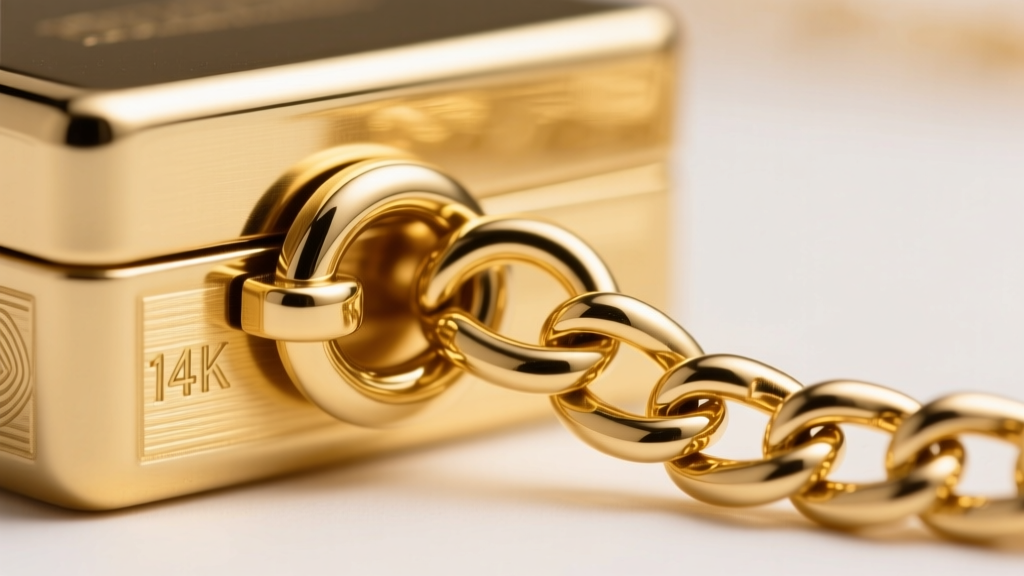
Beginners often obsess over the links and ignore the hardware. For a large link gold necklace, the clasp is the single most critical point of failure. A standard lobster claw clasp relies on a tiny internal steel spring. When supporting 80 grams of solid gold, the leverage and pendulum effect of walking can easily warp the clasp jaw or snap the spring, resulting in a lost chain.
The Solution: For any chain exceeding 40 grams, you must insist on a box clasp with a figure-eight safety latch. The box clasp uses a friction-fit tongue that clicks securely into a reinforced housing, while the figure-eight wire acts as a secondary backup that snaps over a small button on the outside of the clasp. This dual-mechanism ensures your investment stays safely around your neck.
Sizing and Proportions: Finding Your Ideal Fit
The visual impact of a large link chain changes dramatically based on width and length. Use this framework to match the chain to your personal style and body type:
- 5mm to 7mm Width: The subtle statement. Excellent for layering or for wearing with a pendant. It reads as 'large' compared to standard jewelry but remains appropriate for conservative office environments.
- 8mm to 12mm Width: The sweet spot for a standalone statement piece. It commands attention without looking like a costume piece. Ideal for wearing over a plain white t-shirt or a dark turtleneck.
- 14mm and Above: Heavy streetwear territory. These chains are thick, rigid, and serve as the absolute focal point of any outfit. They are best reserved for casual, fashion-forward styling.
For length, a 20-inch chain is the universal standard for men and women, resting comfortably just below the collarbone. An 18-inch chain will sit higher, creating a choker-like effect with thick links, while a 24-inch chain will drape lower on the chest, offering a more relaxed, vintage hip-hop aesthetic.
Verifying Authenticity and Avoiding Scams
When purchasing a large link gold necklace, especially from secondary markets or private sellers, verification is mandatory. Look for the hallmark stamped on the clasp tongue or the final jump ring. You should see '14K', '585' (the European standard for 14k), '18K', or '750'.
Additionally, perform the magnet test. Gold is diamagnetic, meaning it does not attract to magnets. If your chain aggressively sticks to a neodymium magnet, it is either gold-plated steel or heavily mixed with magnetic alloys. (Note: The tiny spring inside a lobster clasp will stick to a magnet, but the links themselves should not).
Care and Maintenance: Keeping the Shine Alive
Large links have more surface area to collect sebum, lotions, and environmental dust, which can quickly dull the metal's luster. According to Jewelers of America, regular at-home maintenance is key to preserving the finish.
- The Cleaning Bath: Mix a few drops of mild, phosphate-free dish soap (like Dawn) into a bowl of lukewarm water. Let the chain soak for 15 minutes.
- The Agitation: Use a brand-new, ultra-soft baby toothbrush to gently sweep inside the crevices of the links. Never use stiff-bristled brushes, as they can leave micro-scratches on high-polish gold.
- The Rinse and Dry: Rinse thoroughly under warm running water. Pat dry with a lint-free microfiber cloth. Never let a gold chain air-dry, as water spots will cling to the flat surfaces of Cuban and Figaro links.
By understanding the mechanics of chain styles, prioritizing solid construction, and demanding the correct hardware, you can confidently invest in a large link gold necklace that will remain a cornerstone of your jewelry collection for decades.


