How to Choose and Style Your First Owl Pendant Necklace
Discover how to choose, style, and care for an owl pendant necklace. Learn about metal grades, chain pairings, and ideal lengths in this guide.

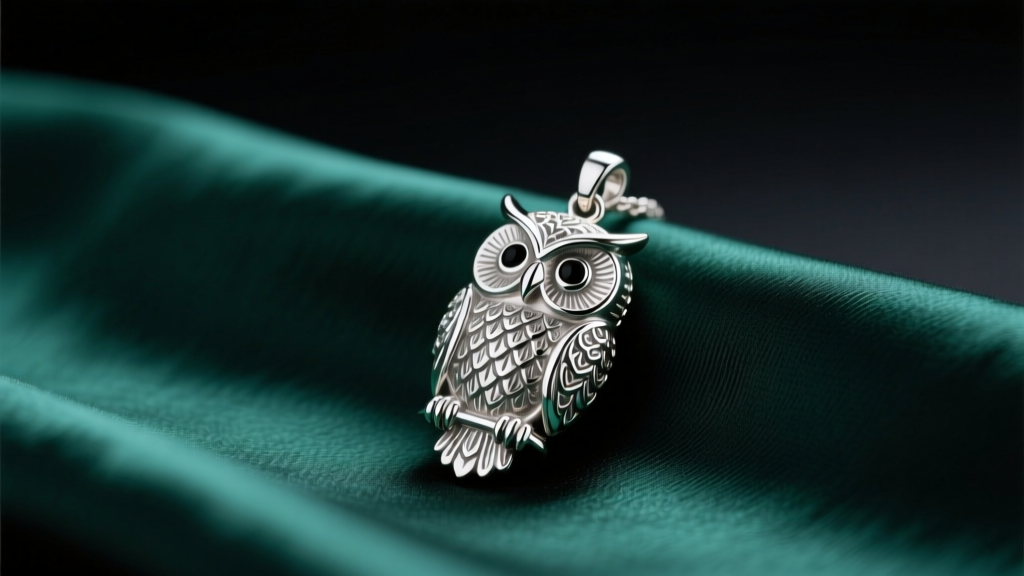
The Enduring Symbolism of the Owl
Before diving into the metallurgy and mechanics of jewelry design, it is essential to understand why the owl remains one of the most sought-after motifs in pendant jewelry. Historically, the owl is inextricably linked to Athena, the Greek goddess of wisdom and warfare. In this context, an owl pendant necklace is not merely a decorative accessory; it is a talisman of intellect, strategy, and foresight. Beyond Greek mythology, various Celtic traditions view the owl as a guide through the underworld and a protector of sacred knowledge, while certain Native American cultures revere the bird as a symbol of transition and deep intuition. When you wear an owl pendant, you are participating in a lineage of symbolism that spans millennia, making it a deeply personal and meaningful addition to any jewelry collection.
Decoding Metal Grades and Materials
The longevity, skin-safety, and overall drape of your owl pendant necklace depend entirely on its material composition. Beginner buyers often fall into the trap of purchasing cheap base metals that oxidize rapidly or cause contact dermatitis. To ensure your pendant lasts, you must understand the difference between standard plating, vermeil, and solid alloys. According to the Gemological Institute of America (GIA), understanding gold purity and alloy mixtures is the first step in making an informed fine jewelry purchase.
| Material | Composition & Grade | Price Range | Durability & Maintenance |
|---|---|---|---|
| Pewter / Zinc Alloy | Base metals, often lead-free tin mix | $15 - $35 | Low; prone to bending, snapping, and dark tarnish |
| 925 Sterling Silver | 92.5% Pure Silver, 7.5% Copper | $45 - $120 | High; requires occasional polishing to remove sulfide tarnish |
| Gold Vermeil | Min. 2.5µm of 10k+ Gold over Sterling Silver | $60 - $150 | Medium; avoid water, sweat, and harsh chemicals |
| Solid 14k Gold | 58.5% Pure Gold alloyed for structural strength | $250 - $800+ | Very High; lifetime wear, minimal maintenance required |
A critical distinction to note is the difference between "gold plated" and "gold vermeil." Standard gold plating involves a microscopic layer of gold (often less than 0.5 microns) flashed over cheap brass, which will wear off in weeks. Gold vermeil, however, is strictly regulated. It must feature a heavy coating of at least 2.5 microns of gold over a sterling silver base. If you want the look of gold without the solid gold price tag, vermeil is the only beginner-friendly option that offers genuine longevity.
Chain Selection and Bail Mechanics
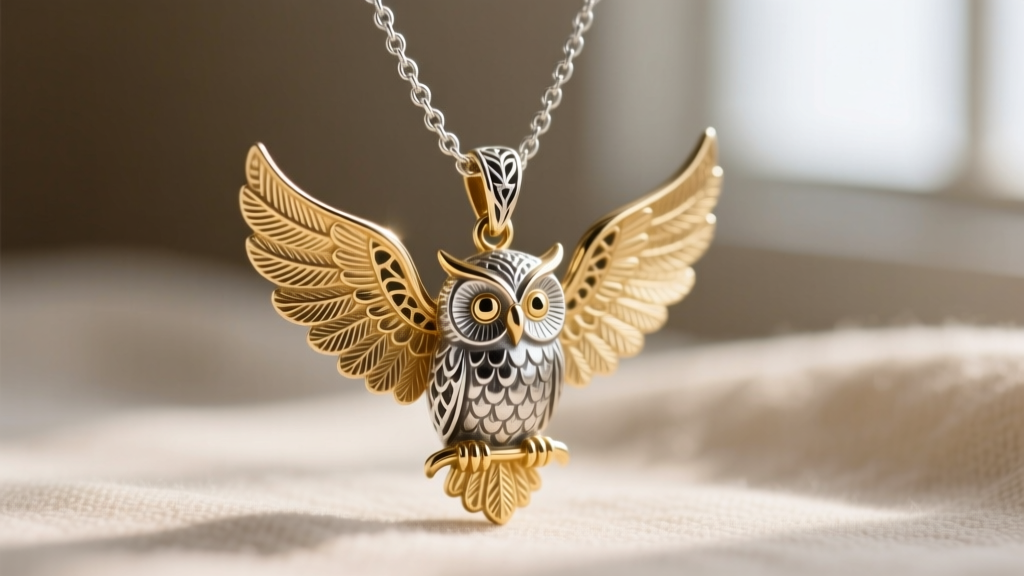
The most common failure point in an owl pendant necklace is not the pendant itself, but the chain and bail combination. Owl pendants are notoriously top-heavy. Their wide wingspans and dense, rounded bodies create a pendulum effect when you walk. If you pair a heavy, wide-winged silver owl with a flimsy 1mm cable chain, the chain will inevitably kink, tangle, and eventually snap at the clasp or the jump ring.
Why Top-Heavy Pendants Need Specific Chains
For any owl pendant weighing more than 4 grams, you must upgrade to a structural chain. A 2mm to 3mm box chain or rolo chain is ideal. Box chains feature interlocking square links that distribute weight evenly and resist kinking, while rolo chains use thick, uniform circular links that offer excellent tensile strength. Furthermore, inspect the bail—the loop at the top of the owl through which the chain threads. Ensure the bail is soldered directly to the pendant or cast as a single piece. Avoid pendants where the bail is merely glued to the back of the owl's head, as the adhesive will degrade over time, leading to the loss of your pendant.
Sizing, Lengths, and Neckline Pairing
The visual impact of your owl pendant is dictated by the chain length and the neckline of your clothing. The experts at Jewelers of America emphasize that matching pendant scale to chain length is crucial for balanced proportions. Here is a practical framework for sizing your necklace:
- 16 Inches (Choker/Collar): Best reserved for minimalist, geometric, or tiny owl silhouettes. This length sits tightly against the base of the throat and pairs beautifully with deep V-neck blouses or off-the-shoulder tops, allowing the small pendant to act as a subtle focal point.
- 18 Inches (Collarbone/Princess): The universal standard for medium-sized, highly detailed owl pendants. At this length, the owl rests perfectly in the clavicle hollow. It is the most versatile option, sitting elegantly above crewnecks, scoop necks, and button-down shirts.
- 20 to 24 Inches (Sternum/Matinee): Required for large, heavy statement owls with expansive wingspans. This length allows the pendant to rest on the sternum or upper chest. It is specifically designed to be worn over clothing, such as chunky knit turtlenecks, bohemian maxi dresses, or tailored blazers.
Advanced Care and Cleaning Protocols
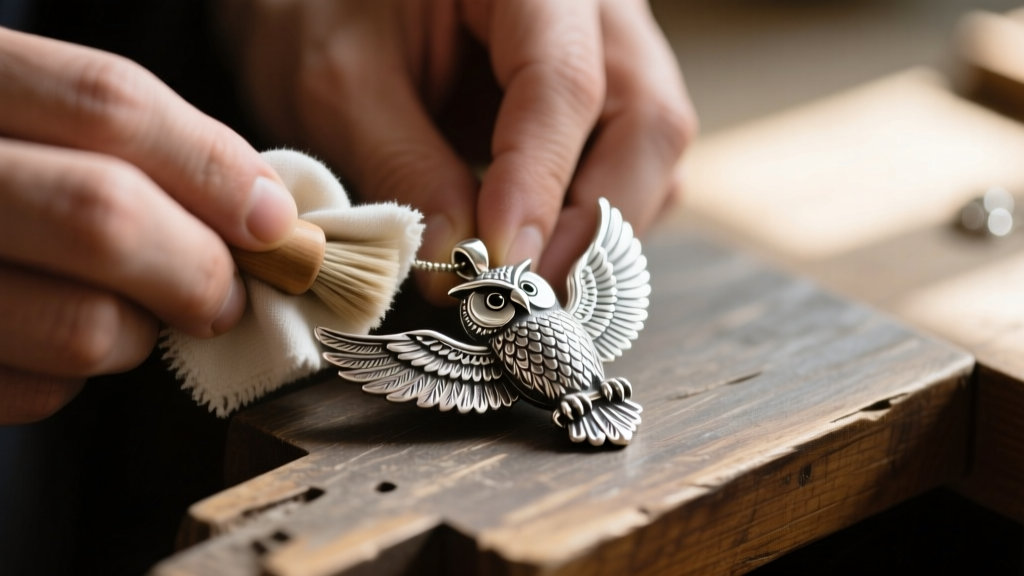
Because owl pendants often feature intricate feather texturing and crevices, they trap skin oils, lotions, and environmental dust more quickly than smooth, polished jewelry. Regular maintenance is required to keep the metal luminous and the details sharp.
The Ultrasonic Cleaner Warning
Many modern owl pendants feature pave-set gemstone eyes, such as black onyx, sapphires, or cubic zirconia. Never place a pave-set owl pendant in an ultrasonic jewelry cleaner. The high-frequency acoustic cavitation bubbles generated by ultrasonic machines are powerful enough to shake the microscopic prongs holding the gemstone eyes loose, resulting in lost stones. Instead, create a lukewarm bath of water and a few drops of mild, phosphate-free dish soap. Let the pendant soak for five minutes, then gently agitate the crevices and feather details using a soft-bristled baby toothbrush. Rinse thoroughly and pat dry with a lint-free microfiber cloth. For 925 sterling silver owls that have developed dark sulfide tarnish, use a treated jeweler's polishing cloth (such as a Sunshine cloth) to gently buff the wings and beak back to a high shine without removing the intentional oxidation in the deep feather grooves.


