Belt Buckle Necklaces: The Ultimate Hardware Buying Guide
Discover what to look for when buying belt buckle necklaces. Our expert guide covers metal grades, chain gauges, and hardware mechanisms for lasting style.

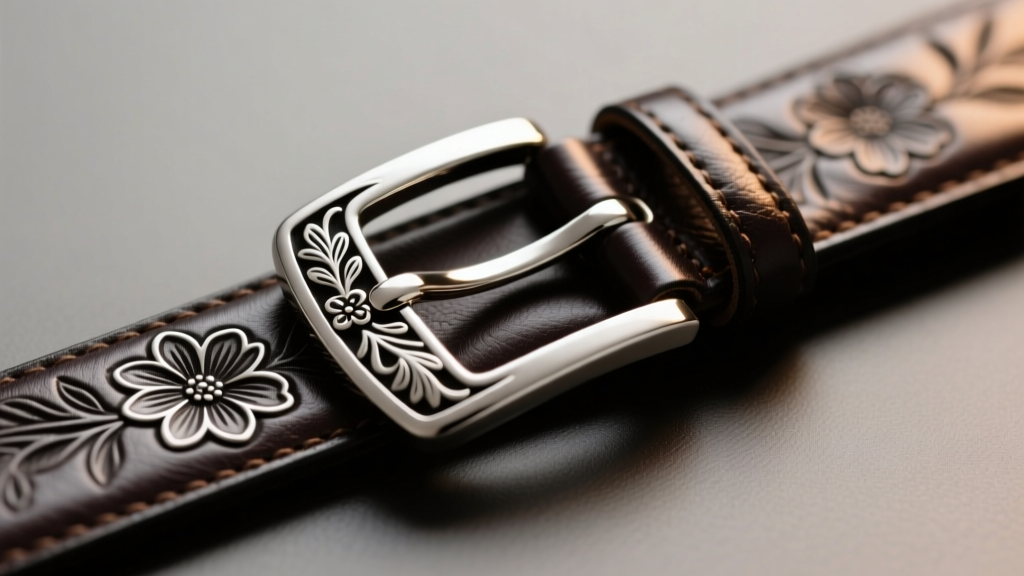
Belt buckle necklaces have transcended their Western wear, punk-rock, and Y2K origins to become a permanent staple in contemporary hardware jewelry. Whether you are drawn to the biker-chic aesthetic, Southwestern turquoise accents, or minimalist industrial designs, a belt buckle pendant offers a bold, structured focal point that standard geometric pendants simply cannot match. However, because these pieces mimic functional hardware, they present unique structural challenges regarding weight distribution, metal durability, and chain compatibility.
This comprehensive buying guide cuts through the fluff to provide actionable, expert-level advice on selecting a belt buckle necklace that will withstand daily wear while maintaining its structural integrity and aesthetic appeal.
The Anatomy of a Belt Buckle Pendant
Before evaluating materials, you must understand the anatomy of the piece. A high-quality belt buckle pendant translates the mechanics of a real belt into jewelry form. Look for these specific design elements:
- The Frame: The outer boundary. In premium pieces, the frame should have slightly rounded inner edges to prevent the chain from catching or fraying.
- The Prong (Tang):strong> The metal piece that rests across the center. In functional designs, this prong moves on a hinge; in cast designs, it is fixed.
- The Roller: The small cylindrical tube at the base of the buckle where a real belt strap would fold over. In necklaces, this often houses the hidden bail or serves as a decorative anchor.
Functional vs. Cast Hardware: What to Choose
When shopping, you will encounter two primary manufacturing methods. Understanding the difference is critical for assessing long-term durability.
Functional (Assembled) Hardware
These pendants are constructed from multiple stamped or machined components pinned together. The prong actually moves, and the roller is a separate piece. While visually impressive and highly authentic, the micro-hinges and tension pins are potential failure points if the piece is dropped or snagged. Functional hardware is best reserved for occasional wear or lighter gauge metals like aluminum or thin sterling silver.
Solid Cast Hardware
Created via lost-wax casting, these pendants are a single, solid piece of metal. The prong and roller are integrated into the frame. According to manufacturing standards detailed by Rio Grande Jewelry Supplies, cast pieces offer superior tensile strength and are highly recommended for everyday wear, as there are no small pins or hinges to break under the stress of a heavy chain.
Material Grades & Tarnish Resistance
Because belt buckle pendants feature deep crevices, engravings, and overlapping metal layers, they are highly susceptible to trapping moisture, skin oils, and environmental sulfur. Choosing the right metal grade is non-negotiable. Below is a comparison of the most common materials used in hardware jewelry.
| Metal Grade | Composition & Traits | Tarnish Resistance | Average Price Range |
|---|---|---|---|
| 316L Stainless Steel | Marine-grade steel with low nickel release. Highly durable and heavy. | Excellent (Will not oxidize or turn skin green) | $40 - $120 |
| 925 Sterling Silver | 92.5% pure silver, 7.5% copper. Traditional for Western and high-end designs. | Poor (Requires rhodium plating or frequent polishing) | $150 - $450 |
| Solid Brass (PVD Coated) | Heavy base metal coated via Physical Vapor Deposition for a gold or black finish. | Good (Until the PVD layer wears down in high-friction areas) | $60 - $180 |
| Zinc Alloy (Zamak) | Die-cast base metal. Lightweight but brittle. | Poor (Prone to pitting and corrosion if plated poorly) | $15 - $45 |
Expert Tip: If you opt for 925 sterling silver, ensure the buckle has been flashed with rhodium. Rhodium not only provides a bright, white-metal finish but also seals the porous silver, preventing the deep crevices of the buckle from turning black with oxidation.
Chain Pairings: Gauges and Link Styles
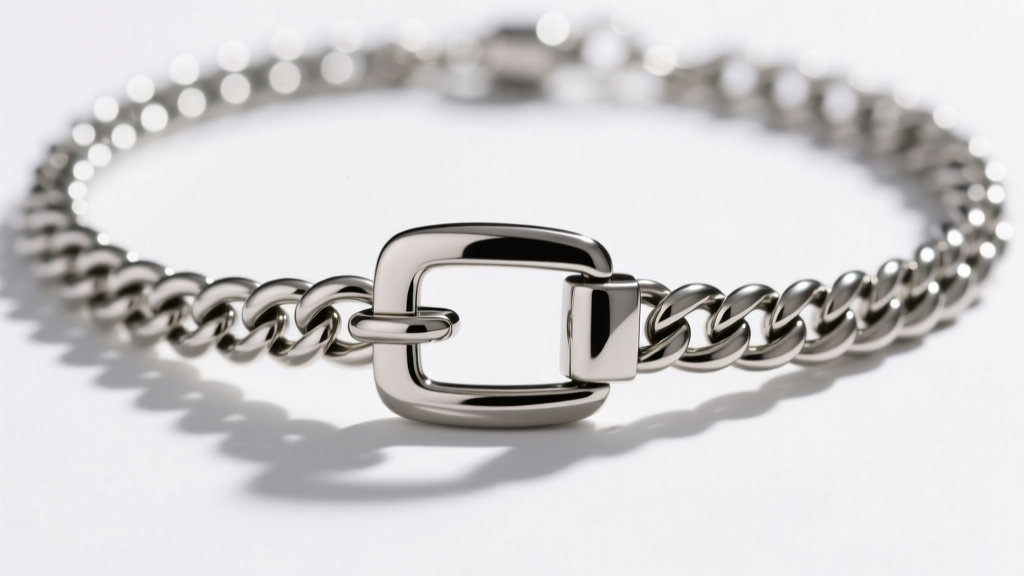
The most common mistake buyers make with belt buckle necklaces is pairing a heavy, oversized pendant with an inadequate chain. A standard cast brass or steel buckle pendant weighing 25 to 40 grams will easily snap a delicate 1.5mm cable chain.
To support hardware pendants, you must look for specific chain characteristics:
- Gauge (Thickness): Never go below 3mm. The ideal thickness for a standard buckle pendant is between 4mm and 5.5mm. This provides the visual weight necessary to balance the chunky pendant.
- Link Style: Curb, Cuban, and Figaro chains are the best choices. Their flat, interlocking links distribute the weight of the heavy pendant evenly across the collarbone, preventing the chain from twisting or kinking.
- Welded Links: Inspect the chain links under magnification if possible. Every single link must be soldered or laser-welded shut. Open links will pull apart under the pendulum-like swing of a heavy buckle.
Bail Types and Clasp Mechanics
The bail is the loop that connects the pendant to the chain. For belt buckles, the bail is usually integrated into the top center of the frame or hidden behind the roller. Ensure the inner diameter of the bail is at least 5mm to 6mm; otherwise, your 4mm curb chain will not slide through smoothly, causing metal-on-metal grinding.
Furthermore, heavy hardware necklaces require robust clasps. Avoid standard spring-ring clasps, which are prone to spring failure under heavy loads. Instead, look for a heavy-duty lobster clasp (minimum 12mm in length) or a box clasp with a figure-eight safety latch for chains exceeding 50 grams in total weight.
Sizing, Proportions, and Neckline Pairing
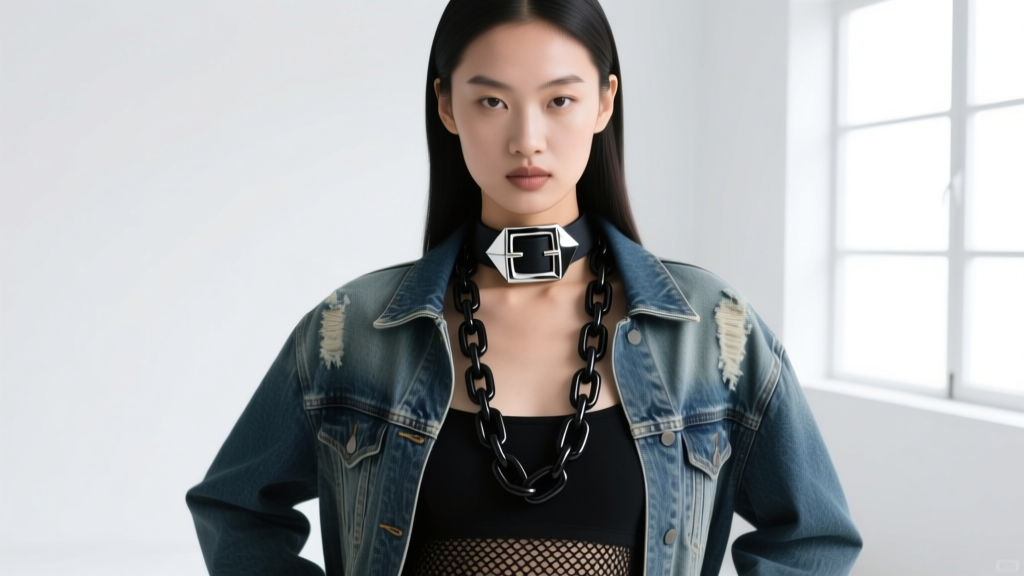
Belt buckle necklaces are inherently bold, meaning their placement on the chest dictates the entire outfit's balance. Here is a practical framework for sizing and styling:
- The Choker (14-16 inches): Best for smaller, minimalist buckle pendants (under 20mm wide). This length sits high on the collarbone and pairs exceptionally well with V-necklines or unbuttoned denim shirts, channeling a modern Y2K or grunge aesthetic.
- The Princess (18 inches): The most versatile length. The buckle will rest just below the collarbone, perfectly framing the face without overwhelming it. Ideal for crew necks and casual streetwear.
- The Matinee (20-24 inches): Reserved for oversized, ornate Western or biker buckles (often featuring turquoise or eagle motifs). This length allows the heavy pendant to hang over sweaters, leather jackets, or high-neck garments, acting as a statement piece akin to a bolo tie.
Care & Maintenance for Intricate Hardware
Because of their complex geometry, belt buckle pendants trap dirt, lotion, and environmental pollutants in the tight corners where the prong meets the frame. The Gemological Institute of America (GIA) recommends regular, gentle cleaning to prevent long-term corrosive buildup, especially for base metals and silver.
Warning: Never use ultrasonic cleaners on belt buckle necklaces that feature glued-in gemstones (like turquoise, onyx, or rhinestones) or PVD-coated brass. The high-frequency vibrations and heat will shatter the stones and delaminate the coating.
The Proper Cleaning Method:
- Mix a few drops of mild, phosphate-free dish soap into a bowl of warm distilled water.
- Submerge the pendant for 3 to 5 minutes to loosen surface oils.
- Use a soft-bristled baby toothbrush to gently agitate the crevices around the prong and roller. Do not use hard nylon brushes, as they will leave micro-scratches on polished silver and steel.
- Rinse thoroughly under lukewarm water and dry immediately with a lint-free microfiber cloth. Leaving the piece to air-dry will result in water spots, particularly in the hard-to-reach corners of the buckle frame.
By prioritizing solid cast construction, selecting the appropriate metal grade for your lifestyle, and pairing the pendant with a structurally sound, welded curb chain, your belt buckle necklace will remain a striking, durable cornerstone of your jewelry collection for years to come.


