Choosing The Best Metal For A V's Necklace: Material Guide
Discover the best metals for a V's necklace. Compare titanium, gold, platinum, and silver for durability, hardness, and structural integrity.

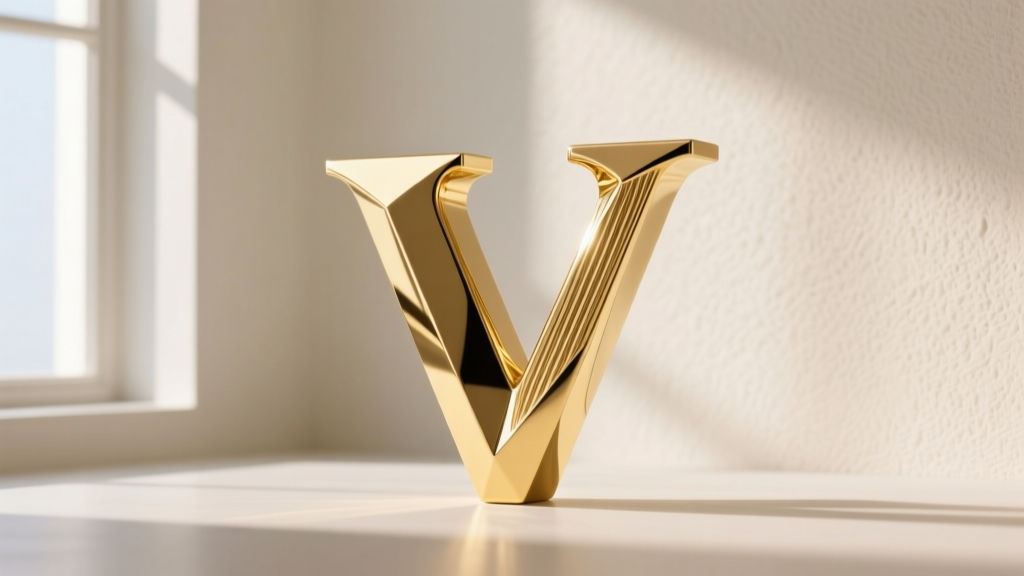
The geometric elegance of a V's necklace—often referred to as a chevron or V-pendant—has cemented its status as a staple in modern jewelry layering. However, the striking silhouette of a V's necklace introduces unique structural challenges that are rarely discussed in standard buying guides. The sharp vertex (the bottom point of the 'V') acts as a stress concentrator, meaning that any snagging or pulling force is magnified at this exact point. In 2026, as minimalist and architectural jewelry designs continue to dominate, understanding the metallurgical properties required to support this specific shape is critical for both designers and consumers.
This comprehensive material comparison breaks down the physical properties, failure modes, and maintenance requirements of the most common metals used in V-shaped pendants and chains, ensuring your piece remains structurally sound and visually pristine.
The Physics of the V's Necklace Vertex
Unlike circular or oval pendants that distribute kinetic energy evenly across their perimeter, a V's necklace features an acute angle that creates a natural weak point. When the pendant catches on a sweater or is pulled accidentally, the tensile stress focuses entirely on the inner vertex. If the metal lacks adequate yield strength, the V-shape will permanently deform, bending outward and losing its crisp geometric lines. Therefore, the ideal metal for this design must possess a high Vickers hardness (HV) rating and excellent tensile strength, while still being workable enough for a jeweler to cast or machine into a sharp, precise angle.
Metallurgical Breakdown for V-Shaped Pendants
Not all precious metals are created equal when it comes to architectural jewelry. Here is how the top contenders perform under the specific demands of a V-shaped silhouette.
14k vs. 18k Gold: The Hardness Dilemma
Gold is the traditional choice for fine jewelry, but its purity directly impacts its structural viability for a V's necklace. Pure 24k gold is far too soft. When alloyed, 14k gold (58.5% pure gold) achieves a Vickers hardness of approximately 140-160 HV, depending on the specific copper and silver alloy mix. This makes it highly resistant to the vertex-bending that plagues softer metals. Conversely, 18k gold (75% pure) sits at a softer 120-130 HV. While 18k offers a richer, deeper yellow hue, a sharp V-pendant crafted in 18k gold requires a thicker gauge (minimum 1.5mm at the vertex) to prevent warping. For delicate, razor-thin V designs, 14k gold is the superior engineering choice.
Grade 5 Titanium: The Modern Powerhouse
For contemporary, industrial, or men's jewelry, titanium is unmatched. However, jewelers must specifically use Grade 5 Titanium (Ti-6Al-4V), an aerospace-grade alloy that includes aluminum and vanadium. According to ASTM International standards, Grade 5 titanium boasts a tensile strength of up to 130 ksi (895 MPa) and a Vickers hardness of roughly 350 HV. A V's necklace machined from Grade 5 titanium is virtually unbendable under normal human force. The trade-off? Titanium cannot be easily soldered or resized using traditional jeweler's torches; it requires laser welding. Therefore, the V-shape must be CNC-milled or cast perfectly the first time.
Platinum 950: The Dense Heirloom
Platinum 950 (95% pure platinum, usually alloyed with ruthenium or iridium) is incredibly dense and heavy. It possesses a unique property called 'work hardening'—meaning it actually becomes harder and more resistant to deformation the more it is bent or stressed. While a platinum V's necklace might initially seem susceptible to bending due to its lower baseline hardness (around 110-130 HV), its high density and malleability mean it will deform slowly and can be easily pushed back into shape by a jeweler without cracking or snapping.
925 Sterling Silver: The Budget Risk
Sterling silver is highly accessible but metallurgically problematic for sharp geometric shapes. With a Vickers hardness of only 60-70 HV, a thin sterling silver V's necklace will almost certainly bend if subjected to lateral pressure. If you are purchasing a silver chevron pendant, insist on a heavy-cast piece with a reinforced, thickened vertex or a supportive backing bar to maintain the structural integrity of the 'V'.
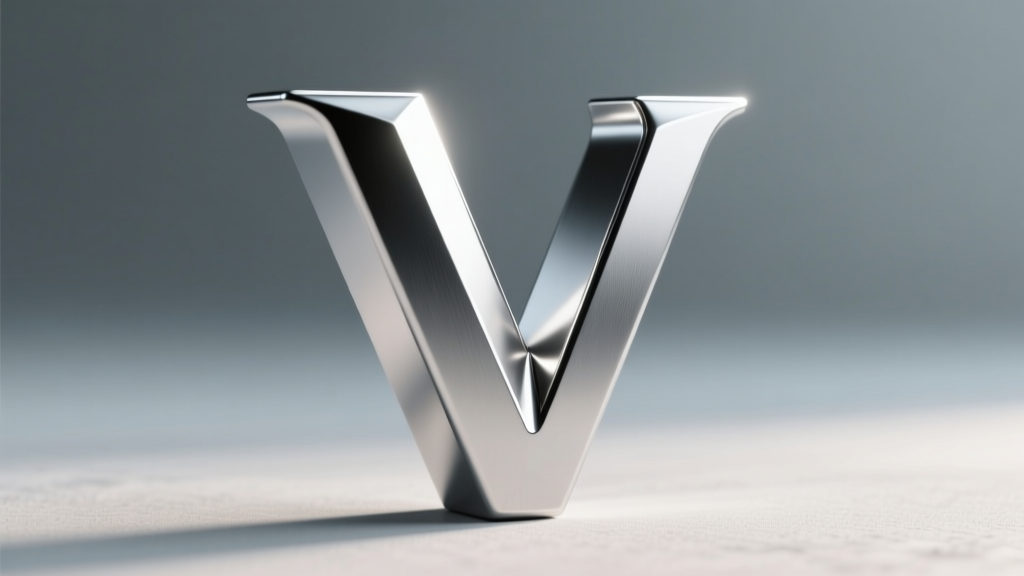
Material Properties Comparison Chart
The following data table summarizes the mechanical properties of these metals as they specifically relate to the structural demands of a V's necklace design in 2026.
| Metal / Alloy | Vickers Hardness (HV) | Tensile Strength | Vertex Bend Risk | Avg. Price Range (Pendant Only) |
|---|---|---|---|---|
| Grade 5 Titanium | ~350 HV | 895 MPa | Extremely Low | $150 - $400 |
| 14k Yellow/White Gold | 140 - 160 HV | 500 - 700 MPa | Low | $350 - $800 |
| 18k Yellow/Rose Gold | 120 - 130 HV | 350 - 500 MPa | Moderate | $600 - $1,500 |
| Platinum 950 | 110 - 130 HV | 300 - 450 MPa | Low (Work-hardens) | $900 - $2,500+ |
| 925 Sterling Silver | 60 - 70 HV | 250 - 300 MPa | High | $40 - $150 |
Chain Pairing and Clasp Mechanics
The pendant is only half the equation; the chain supporting your V's necklace must complement its weight and geometry. Because the V-shape naturally pulls downward and outward, the chain experiences lateral friction against the collarbone.
- Box Chains: Excellent for V-pendants. The square, interlocking links lay flat against the skin and resist kinking, providing a stable, rigid line that emphasizes the geometric nature of the pendant.
- Rope Chains: While beautiful, the twisted links can catch on the sharp bail (the loop connecting the pendant to the chain) of a V's necklace, leading to premature wear on the pendant's hanging loop.
- Cable Chains: A classic choice, but ensure the wire gauge is at least 1.2mm. Anything thinner will stretch over time under the persistent downward pull of a solid metal V-pendant.
Furthermore, pay attention to the clasp. A heavy platinum or 14k gold V's necklace requires a secure lobster clasp or a custom tension barrel clasp. Spring-ring clasps are entirely insufficient for architectural pendants and will fail under the dynamic weight shifts of daily wear.
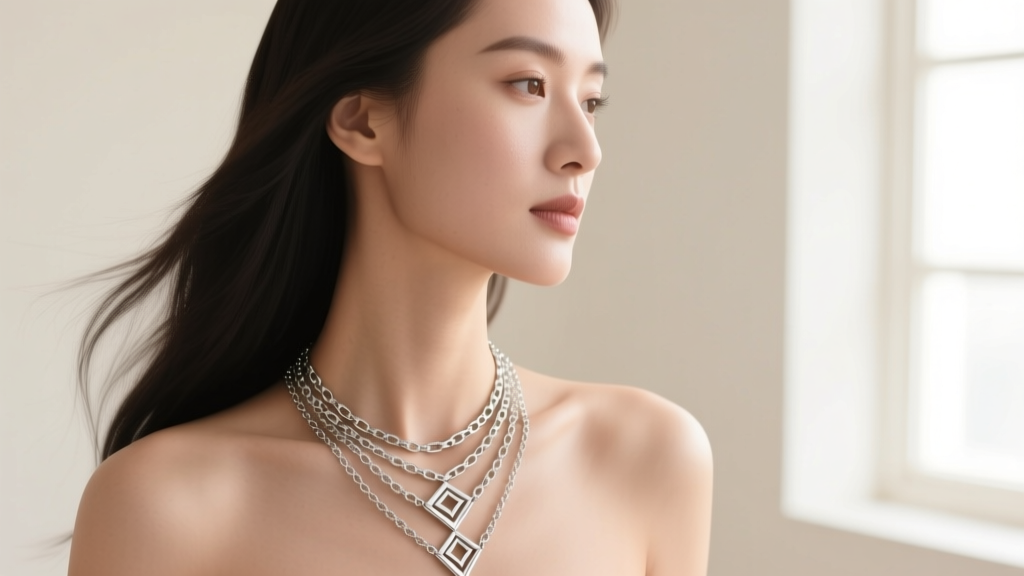
Real-World Failure Modes & Maintenance
Understanding how different metals fail allows you to troubleshoot and maintain your V's necklace effectively over decades of wear.
The Rhodium Wear Problem in White Gold
If you choose a 14k or 18k white gold V's necklace, be aware that white gold is naturally yellowish and is plated with rhodium to achieve a bright white finish. The inner vertex of the V-shape, as well as the bail where the chain rubs, are high-friction zones. The rhodium plating will wear off in these specific areas much faster than on the flat faces of the pendant, revealing the warm, pale yellow alloy beneath. Plan for professional rhodium re-plating every 12 to 18 months.
Polishing Without Rounding the Edges
When a V's necklace accumulates micro-scratches, standard jewelry polishing can be disastrous. Jewelers typically use high-speed rotary buffing wheels with rouge compounds, which will aggressively round off the crisp, sharp edges of the V-shape, turning a geometric masterpiece into a soft, melted-looking blob. If your titanium, gold, or platinum V-pendant needs refinishing, explicitly instruct your jeweler to use hand-polishing techniques with abrasive lapping tapes or to use a laser-welder to fill scratches without removing base metal from the critical geometric lines.
Sweat and Lotion Accumulation
The acute angle of the V-shape acts as a natural trap for skin oils, lotions, and sweat. In porous metals or lower-karat gold alloys, this accumulation can lead to localized oxidation or skin discoloration. Clean the inner vertex of your V's necklace weekly using a soft-bristled toothbrush and a mild, ammonia-free dish soap solution to prevent chemical buildup that can degrade the metal's polish over time.
Final Verdict: Choosing Your Metal
Selecting the right material for your V's necklace ultimately depends on your budget, lifestyle, and design preferences. If you demand a razor-sharp, ultra-thin geometric profile that will never bend, Grade 5 Titanium or a heavily cast 14k Gold are your best engineering choices. For those seeking a heavy, luxurious heirloom piece that can be easily repaired and maintained across generations, Platinum 950 remains the undisputed king of fine jewelry. Avoid thin, stamped sterling silver for this specific silhouette, as the structural demands of the chevron shape will inevitably lead to deformation. By matching the metallurgical properties of the metal to the physical realities of the V-shape, you ensure your necklace remains a striking, flawless statement piece for years to come.


