Which Type of Necklace Chain Should You Buy? A Beginner Guide
Discover every type of necklace chain, from cable to rope. Learn which chain style, gauge, and metal best suits your pendants and everyday wear.

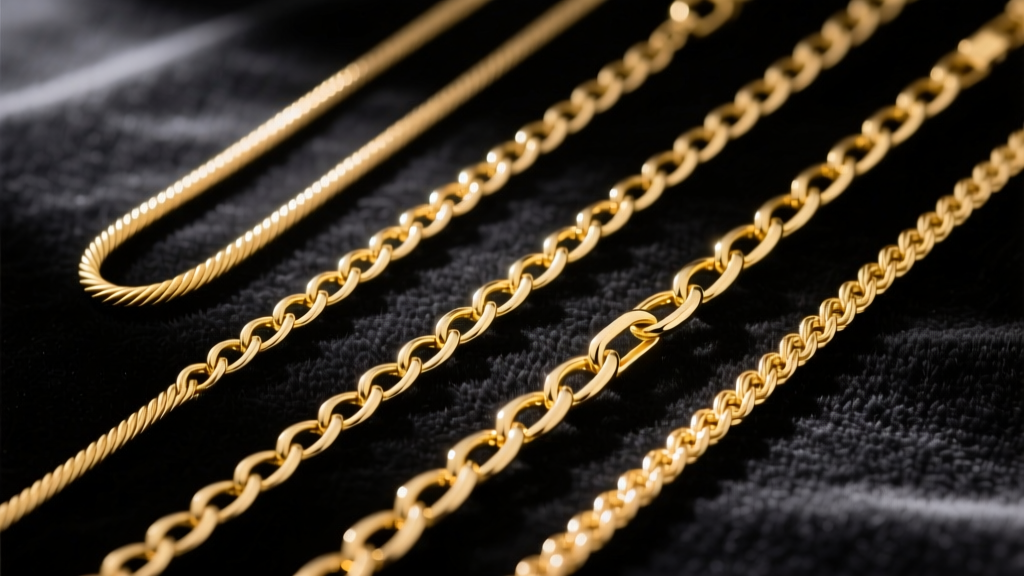
Choosing the right jewelry goes far beyond picking a beautiful pendant. The foundation of your necklace—the chain—dictates how the piece drapes, how long it survives daily wear, and whether it can safely support your favorite charms. If you have ever experienced the heartbreak of a snapped chain or a pendant that constantly flips upside down, you already know that structural integrity matters just as much as aesthetics.
For beginners navigating the jewelry market, the sheer variety of links, gauges, and metals can be overwhelming. This guide breaks down every major type of necklace chain, explaining their unique failure modes, ideal use cases, and how to match them perfectly to your pendants.
The 5 Most Common Chain Types (And When to Use Them)
Not all links are created equal. The way a chain is soldered and woven determines its tensile strength, flexibility, and repairability. Here are the industry standards you will encounter most frequently.
1. Cable Chain: The Classic Standard
The cable chain is the most traditional and recognizable style, featuring uniform oval or round links connected to each other.
- Best For: Lightweight, delicate pendants and minimalist layering.
- Durability & Failure Mode: While classic, thin cable chains (20-gauge and above) are prone to stretching if pulled. Once the oval links stretch out of shape, the chain weakens and becomes difficult for jewelers to repair without replacing entire sections.
2. Curb Chain: The Flat Statement
Curb chains feature interlocking links that have been flattened, allowing them to lay flush against the skin.
- Best For: Worn alone as a statement piece or supporting medium-weight pendants.
- Durability & Failure Mode: Highly durable due to the flat, interlocking nature of the links. However, the flattened edges can sometimes catch on fine knitwear or pull chest hair if worn too tightly.
3. Figaro Chain: The Patterned Choice
Originating in Italy, the Figaro chain is a variation of the curb chain featuring a repeating pattern of two or three small circular links followed by one elongated oval link.
- Best For: Adding visual texture without needing a pendant.
- Durability & Failure Mode: Moderately durable. The primary drawback is repairability; if a link breaks, replacing it without disrupting the distinct visual pattern requires a highly skilled jeweler.
4. Box Chain: The Pendant Powerhouse
Box chains are constructed from square links that form a continuous, smooth box-like structure.
- Best For: Heavy pendants and everyday wear. The smooth surface prevents friction against the pendant bail.
- Durability & Failure Mode: Exceptionally strong and resistant to stretching. However, if a box chain is bent sharply at a bad angle, the solder joints can crease and snap. According to the Jewelers of America, storing box chains flat rather than crumpled in a jewelry box prevents these micro-creases.
5. Rope Chain: The Textured Spinner
Rope chains feature small metal links twisted together to mimic the appearance of a woven rope, offering incredible light reflection.
- Best For: Standalone wear or holding heavy, valuable pendants securely.
- Durability & Failure Mode: While thick rope chains are incredibly strong, they are notorious for snagging on hair and fabrics. If a thin rope chain snags and pulls, the twisted links can unspool, making repairs nearly impossible.
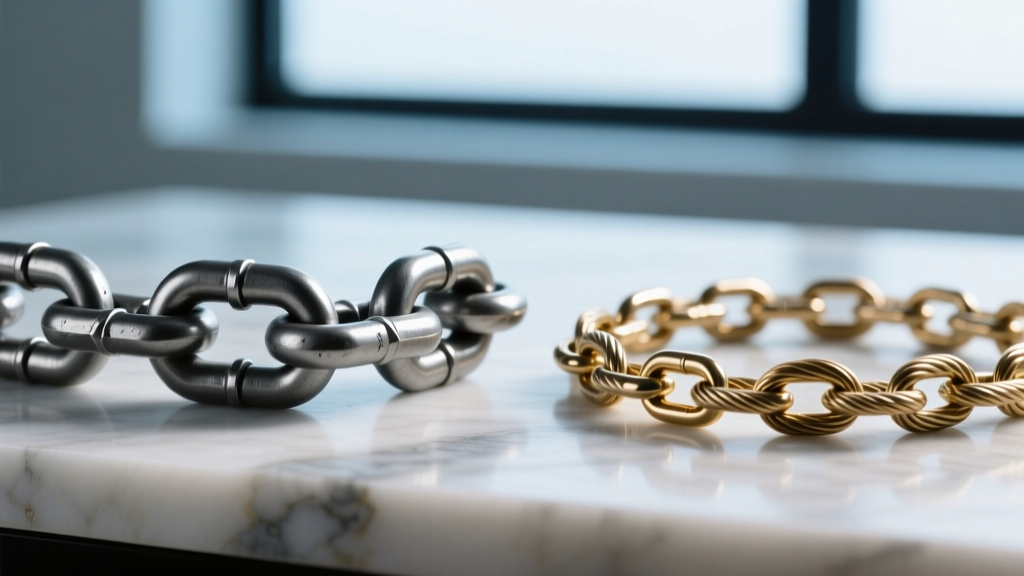
Decoding Chain Gauges: Thickness Matters
In jewelry, the thickness of the metal wire is measured in gauges. Counterintuitively, the lower the gauge number, the thicker the chain. Choosing the correct gauge is critical for pendant support. A chain that is too thin will snap under a heavy pendant, while a chain that is too thick will overpower a delicate charm.
| Gauge Size | Width (mm) | Best Use Case | Pendant Weight Limit |
|---|---|---|---|
| 22 - 20 Gauge | 0.6mm - 0.8mm | Ultra-light pendants, layering, bare wear | Under 3 grams |
| 18 - 16 Gauge | 1.0mm - 1.3mm | Standard everyday pendants, lockets | 3 to 8 grams |
| 14 - 12 Gauge | 1.6mm - 2.0mm | Heavy pendants, gemstone statement pieces | 8 to 15 grams |
| 10 - 8 Gauge | 2.5mm - 3.2mm+ | Standalone statement chains, no pendants | N/A (Worn alone) |
Metal Choices for Everyday Durability
The type of necklace chain you select must also account for the metal alloy. The Gemological Institute of America (GIA) notes that pure 24k gold is far too soft for chain links, which is why alloying is essential for structural integrity.
- 14k Solid Gold: The gold standard for everyday chains. Composed of 58.3% pure gold mixed with strengthening alloys like copper and zinc. It resists scratching and bending far better than 18k gold.
- 18k Solid Gold: Contains 75% pure gold. It offers a richer, deeper yellow hue but is noticeably softer. An 18k cable chain will stretch and warp much faster than a 14k equivalent under the weight of a pendant.
- 925 Sterling Silver: An excellent budget-friendly option, but silver oxidizes and tarnishes when exposed to sulfur and moisture. It is also a relatively soft metal, making it prone to micro-abrasions over time.
- 316L Surgical Stainless Steel: The ultimate choice for durability on a budget. It is highly resistant to tarnish, water damage, and bending. However, steel chains cannot be easily resized or soldered by traditional jewelers if they break.
How to Match Your Chain to Your Pendant
Matching a chain to a pendant is an exercise in physics and proportion. The most critical component to examine is the bail (the loop at the top of the pendant that the chain slides through).
The Rule of Thirds: For optimal wear and to prevent friction damage, the width of your chain should be roughly one-third the width of the pendant's bail. If a chain is too thick, it will pinch the bail, causing excessive metal-on-metal wear. If it is too thin, the pendant will slide too freely, causing the chain to fray from the inside out.
Additionally, consider the center of gravity. A top-heavy pendant requires a stiffer chain, like a box or wheat chain, to keep the charm facing forward. Highly flexible chains, like snake or herringbone chains, will allow heavy pendants to slide continuously to the side of the neck, requiring constant adjustment.
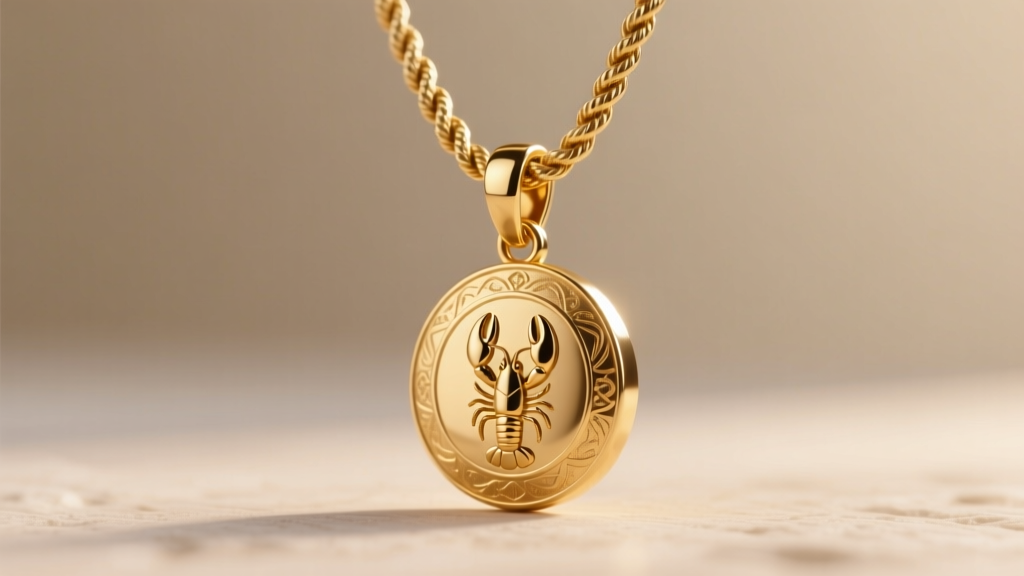
Clasp Types: The Unsung Heroes of Security
A chain is only as secure as its clasp. When investing in a quality piece of jewelry, always verify the clasp mechanism.
Lobster Clasp
Named for its resemblance to a lobster's claw, this spring-loaded clasp is the industry standard for security. It is self-closing and robust enough to handle the tension of medium-to-heavy chains. Always ensure the lever action is smooth and snaps back forcefully.
Spring Ring Clasp
Commonly found on budget-friendly or ultra-delicate chains (20-gauge and thinner). While lightweight and unobtrusive, the internal spring mechanism is prone to failing, and the tiny lever can be difficult to operate with one hand.
Box Clasp with Safety Latch
For heavy 10-gauge or 8-gauge chains, a box clasp is mandatory. This mechanism features a folded piece of metal that compresses and clicks securely into a decorative box housing. High-end box clasps include a secondary wire "safety latch" that hinges over the top, ensuring the chain stays intact even if the primary box mechanism is accidentally depressed.
Final Thoughts on Chain Selection
Understanding every type of necklace chain empowers you to make purchases that last a lifetime. By prioritizing the correct gauge for your pendant's weight, choosing a durable metal alloy like 14k gold or 316L steel, and verifying the security of the clasp, you transform a simple accessory into a reliable, everyday staple. Treat your chain with the same respect as the pendant it holds, and it will serve you flawlessly for decades.


