The Best Way to Store Necklaces Without Tangling or Tarnishing
Discover the best way to store necklaces to prevent tangling, kinking, and tarnish. Expert step-by-step guide on archival materials and chain care.

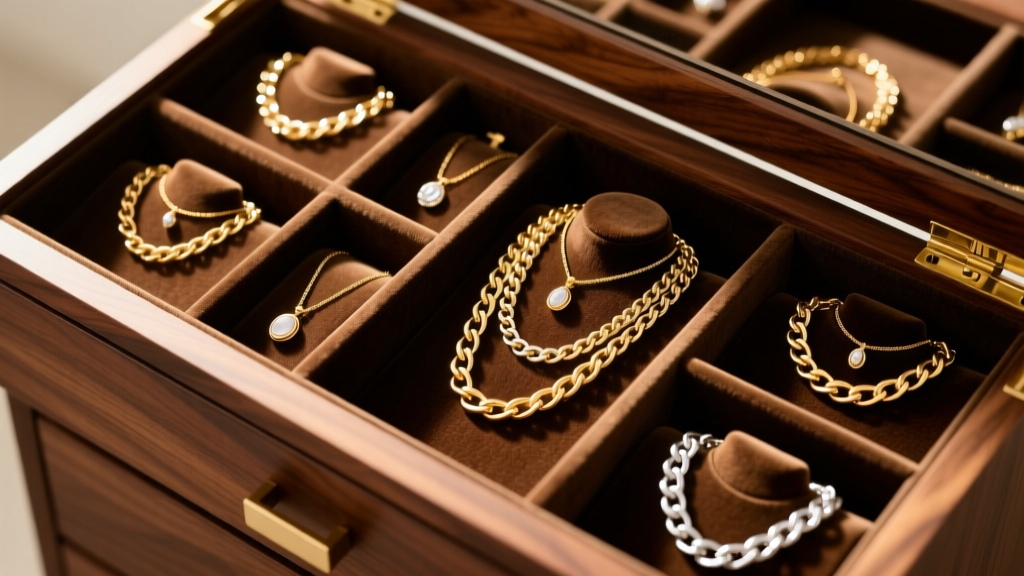
Tossing your favorite necklaces into a velvet-lined box seems logical until you open it a week later to find a metallic rat's nest. Finding the best way to store necklaces requires understanding metal friction, chain geometry, and atmospheric chemistry. When you mix delicate gold alloys, reactive sterling silver, and the micro-agitations of daily life, standard jewelry boxes fail. This step-by-step guide moves beyond basic organization hacks and dives into the archival science of jewelry preservation, ensuring your chains remain untangled, unkinked, and brilliantly polished for decades.
The Physics of Spontaneous Knotting
To solve the tangle problem, we must first understand why it happens. In a landmark study published in the Proceedings of the National Academy of Sciences, physicists Dorian Raymer and Douglas Smith mapped the 'spontaneous knotting of confined strings.' They proved that when a flexible string is agitated in a confined space, it forms complex knots within seconds. Necklaces in a shared drawer undergo micro-agitations every time you open and close it. The kinetic energy forces the chain ends to weave through the links, creating topological knots that tighten under the weight of the metal. The only way to prevent this is to eliminate the degrees of freedom by isolating and immobilizing each chain.
Step 1: Categorize by Chain Link and Metal Grade
Not all chains behave identically. The structural geometry of the links dictates their vulnerability to both tangling and permanent deformation. Before selecting a storage medium, audit your collection and sort it using the framework below.
| Chain Type | Tangling Risk | Kinking Risk | Ideal Storage Method |
|---|---|---|---|
| Snake Chain | Low | High | Flat, rigid, padded surface |
| Box Chain | High | Low | Individual poly-bags or hanging |
| Rope Chain | Very High | Medium | Hanging or tightly rolled |
| Cable Chain | Medium | Low | Hanging with clasp secured |
| Herringbone | Low | Very High | Flat, never folded or hung |
Snake and herringbone chains are composed of tightly interlocking bands that lack lateral flexibility. If bent past a 45-degree angle, the metal yields and creates a permanent kink. These must never be hung or tossed into a pile. Conversely, box and rope chains have high degrees of rotational freedom, making them prime candidates for spontaneous knotting if left unconfined.
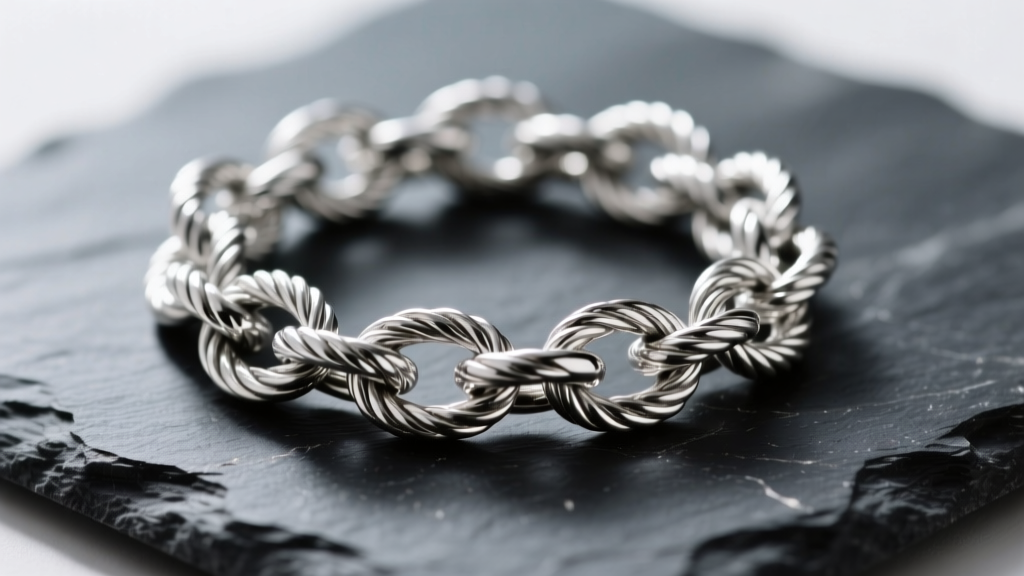
Step 2: Select Archival-Grade Storage Mediums
The material touching your jewelry is just as critical as the physical storage method. Many commercial jewelry organizers are manufactured using polyvinyl chloride (PVC) or rubber-based adhesives. As of 2026, conservation standards strictly warn against these materials. PVC off-gasses plasticizers and sulfur compounds over time. When sulfur interacts with the copper alloyed in sterling silver (which is 7.5% copper), it rapidly forms silver sulfide ($Ag_2S$), manifesting as a stubborn black tarnish.
Always opt for polyethylene (PE) or polypropylene (PP) plastics, which are chemically inert and safe for long-term archival storage. If using fabric organizers, ensure they are lined with untreated, unbleached cotton or specialized tarnish-inhibiting fabrics like Pacific Silvercloth, which embeds microscopic silver and zinc particles to absorb sulfur before it reaches your jewelry.
Implementing Anti-Tarnish Technology
For enclosed storage like drawers or armoires, passive anti-tarnish strips are essential. Products like 3M Anti-Tarnish Strips utilize a copper-based chemistry that aggressively binds with airborne sulfur and hydrogen sulfide. Place one strip per cubic foot of enclosed storage space. Crucially, these strips have a finite lifespan; they must be replaced every six months, or when the indicator dot on the strip turns from white to black. According to the Victoria and Albert Museum's conservation guidelines, maintaining a localized microclimate with these absorbers is vastly superior to constantly polishing silver, which microscopically strips the metal over time.
Step 3: The Wrapping and Hanging Protocol
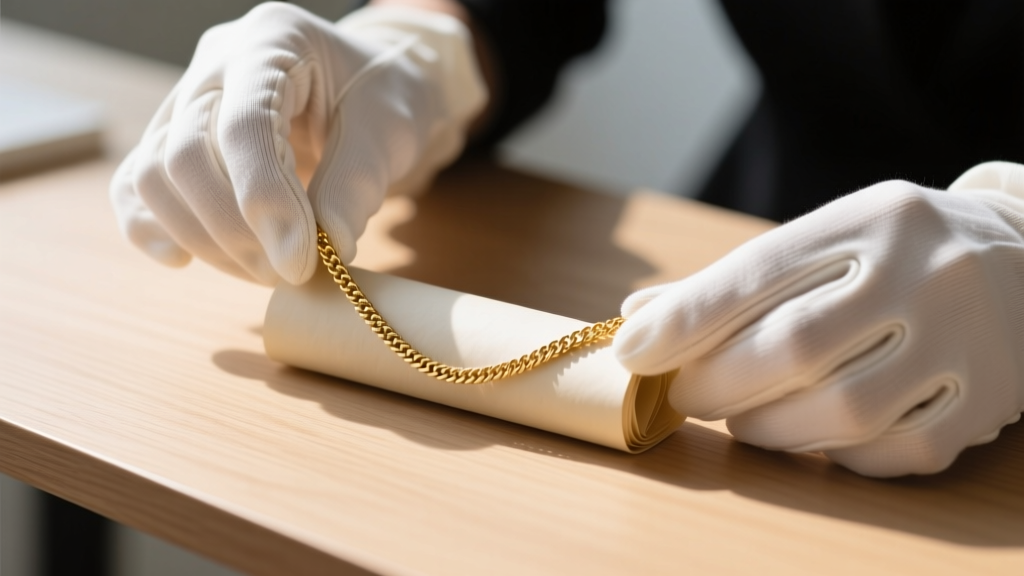
For chains that require flat storage (like snake or herringbone), the 'roll method' is the professional standard. Do not use standard tissue paper or toilet paper rolls, as wood-pulp papers are highly acidic and can degrade delicate gold alloys and pearls over time.
- Prepare the Surface: Lay out a sheet of acid-free, archival-grade tissue paper or a clean, lint-free microfiber cloth.
- Secure the Clasp: Fasten the necklace clasp to prevent the ends from weaving into the links during the rolling process.
- Align the Chain: Lay the chain perfectly straight. For herringbone, ensure it is completely flat with no twists.
- The Roll: Place the chain at the bottom edge of the tissue paper. Roll the paper upward, keeping the tension even. The chain should be encased in multiple layers of acid-free paper, immobilizing it and protecting it from airborne pollutants.
- Label and Stack: Store the rolls horizontally in a shallow drawer. Never stack heavy items on top of them.
For cable and rope chains, hanging is the best way to store necklaces without tangling. Use acrylic or flocked hanging boards with individual slots. Always ensure the clasp is fastened and hooked securely so the chain cannot slip through the slot and pool at the bottom of the drawer.
Step 4: Environmental Controls for Long-Term Archival
The environment surrounding your storage unit dictates the rate of chemical degradation. High humidity accelerates tarnishing and can cause organic components (like silk threading in pearl necklaces or coral pendants) to rot or stretch.
- Humidity: Maintain a relative humidity (RH) between 45% and 55%. Use indicating silica gel packets (which change color when saturated) inside enclosed armoires. Avoid standard calcium chloride desiccants, which can sometimes leak corrosive brine if over-saturated.
- Temperature: Keep the storage area at a stable room temperature (65°F to 70°F). Avoid attics or exterior walls where thermal expansion and contraction can stress soldered chain links.
- Location: Never store jewelry in a bathroom. The rapid fluctuations in humidity and the presence of aerosolized sulfur from personal care products create a highly corrosive environment for precious metals.
Troubleshooting: Untangling and Deep Cleaning
Even with the best protocols, accidents happen. If you encounter a severe knot, never pull the ends of the chain; this reduces the loop diameter and tightens the topological knot, potentially snapping the soldered links.
Instead, lay the chain flat on a hard, non-porous surface like a glass pane or ceramic tile. Apply a tiny amount of baby powder or finely ground graphite to the knot. These dry lubricants reduce the coefficient of friction between the metal links. Using two fine-tipped sewing needles or dental picks, gently work the needles into the center of the knot to loosen the core loop. Once the core is loose, the rest of the chain will easily feed through.
If tarnish has already set in due to improper storage, avoid abrasive home remedies like baking soda or toothpaste, which the Gemological Institute of America (GIA) warns will permanently scratch high-polish finishes. Use a dedicated liquid silver dip for severe silver sulfide buildup, followed by a thorough rinse in distilled water and immediate drying with a microfiber cloth to prevent water spots.
By treating your jewelry collection with the same respect as a museum archive, you eliminate the daily frustration of tangles and preserve the structural integrity and brilliance of your necklaces for a lifetime.


