Troubleshooting Your Bezel Set Diamond Necklace: Care & Fixes
Is your bezel set diamond necklace flipping, cloudy, or snagging? Discover expert troubleshooting tips, cleaning methods, and chain repair fixes.

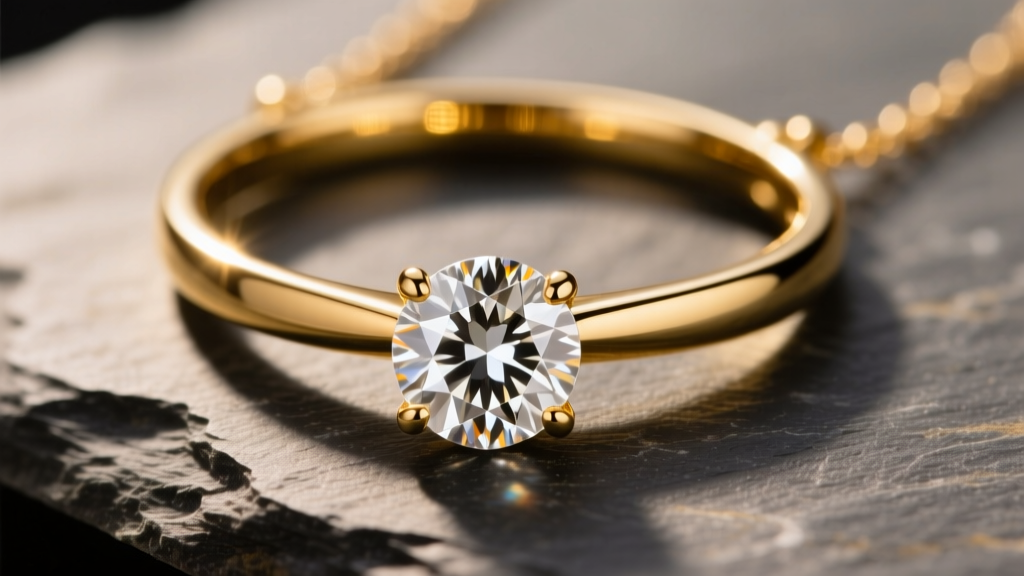
A bezel set diamond necklace is a staple of modern jewelry, prized for its sleek profile, secure stone placement, and contemporary aesthetic. Unlike traditional prong settings, a bezel encircles the diamond with a custom-fitted metal rim, protecting the vulnerable girdle from chipping. However, this unique architecture introduces specific maintenance quirks and structural challenges. Whether you are dealing with a pendant that constantly flips, a diamond that looks unexpectedly cloudy, or a metal rim that snags on your favorite silk blouse, these issues require targeted solutions.
In this comprehensive 2026 troubleshooting guide, we break down the most common failure modes of bezel settings and provide actionable, expert-level fixes to restore your necklace to perfect condition.
The Flipping Problem: Why Your Pendant Won't Stay Put
One of the most frequent complaints regarding bezel pendants is their tendency to flip upside down, hiding the diamond against the skin. This is rarely a defect in the diamond itself; rather, it is an issue of physics and center of gravity.
Understanding the Weight Distribution
Because a bezel setting requires a solid wall of metal (often 14k or 18k gold, or platinum) surrounding the entire circumference of the stone, the pendant head is inherently heavier and more front-loaded than a minimalist four-prong solitaire. If the chain you have selected lacks torsional rigidity, the heavy pendant will drag the chain forward, causing the clasp to slide to the front or the pendant to invert.
- The Chain Gauge Factor: Ultra-thin chains (0.5mm to 0.7mm) are highly popular but lack the structural stiffness to support a heavy bezel. Upgrading to a 0.9mm or 1.1mm cable or box chain provides the necessary backbone.
- The Bail Design: A standard loop bail forces the pendant to hang close to the neck, restricting movement and increasing flip frequency. A "floating" or articulated bail allows the diamond to swing freely and settle face-up.
- Counterweight Solutions: If your chain is lightweight, the clasp is likely heavier than the chain links, pulling the necklace off-center. A jeweler can solder a small gold counterweight bead directly opposite the clasp to balance the necklace.
Cloudy Diamonds: Troubleshooting Bezel Grime and Light Blockage
A bezel setting inherently covers the diamond's girdle and a portion of the upper pavilion. This design blocks approximately 15% to 20% of lateral light entry compared to an open prong setting. Because light return is already slightly restricted, any accumulation of oils, lotions, or soap scum will drastically reduce the stone's brilliance, making it appear cloudy or dull.
The Open-Back vs. Closed-Back Bezel
Before cleaning, inspect the back of your pendant. A closed-back bezel features a solid metal plate behind the diamond. While this prevents dirt from accumulating underneath, it eliminates bottom light entry, making top-surface cleanliness absolutely critical. An open-back bezel allows light through the pavilion but creates a microscopic shelf where sebum and cosmetic residues trap themselves against the culet and lower facets.
Expert Warning: While ultrasonic cleaners are generally safe for solid, untreated diamonds, you must never use ultrasonic vibration on fracture-filled diamonds or stones with significant internal inclusions. The high-frequency waves can expand existing fissures, compromising the stone's integrity against the tight pressure of the bezel wall.
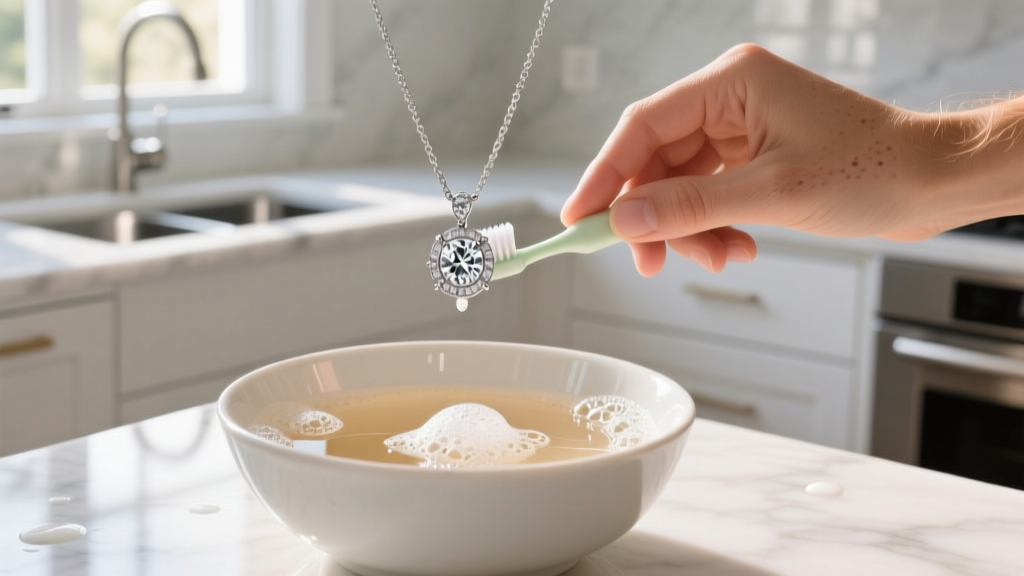
For safe, effective home maintenance, soak the necklace in a ceramic bowl of warm water and a few drops of degreasing dish detergent (like Dawn) for 15 minutes. Use a soft-bristled baby toothbrush to gently sweep the underside of the bezel lip where the metal meets the diamond. Rinse with distilled water to prevent hard water spots and dry with a lint-free microfiber cloth.
Snagging on Fabric: Fixing a Poorly Burnished Bezel
If your bezel set diamond necklace catches on knitwear, lace, or silk, the issue lies in the metalwork. Creating a bezel involves pushing a wall of metal over the diamond's girdle and "burnishing" it smooth. If the jeweler rushed this process, microscopic burrs or a raised metal lip will remain.
The hardness of the metal plays a role here. 14k gold (approx. 130 HV on the Vickers hardness scale) is harder and more resistant to smooth finishing than 18k gold (approx. 100 HV). Platinum, while dense, work-hardens quickly and requires specialized polishing compounds. If your necklace snags:
- Inspect with a Loupe: Use a 10x jeweler's loupe to trace the rim. Look for areas where the metal doesn't sit perfectly flush against the diamond.
- The Polishing Cloth Test: Gently drag a soft jewelry polishing cloth over the bezel. If the cloth catches on microscopic fibers, the metal needs professional re-burnishing.
- Professional Repair: A master jeweler will use a hardened steel burnishing tool or a rubber polishing wheel to compress the metal lip completely flush against the stone, followed by a high-grit rouge polish.
Troubleshooting Matrix: Quick Diagnostics and Solutions
Use the table below to quickly diagnose the specific issue plaguing your bezel set diamond necklace and determine whether a DIY approach or a professional bench jeweler is required.
| Problem Identified | Root Cause | DIY Mitigation | Professional Repair |
|---|---|---|---|
| Pendant Flipping | Chain gauge too thin for bail weight | Switch to a lighter spring-ring clasp | Solder a counterweight bead or resize bail |
| Cloudy Stone | Sebum trapped under bezel lip | Soak in warm water + dish soap, soft brush | Ultrasonic cleaning & steam blast |
| Fabric Snagging | Incomplete burnishing of metal rim | Gently rub with a soft polishing cloth | Jeweler re-burnishes and polishes bezel |
| Bail Wear | Friction from jump ring rubbing | Rotate jump ring periodically | Laser weld a new bail or add protective sleeve |
Chain Breakage and Bail Wear: Critical Failure Modes

The connection point between your chain and the bezel pendant—the bail and the jump ring—is the highest stress point on the entire necklace. Because a bezel pendant is heavier than a prong pendant, it exerts more localized friction on the chain links.
Identifying Jump Ring Grooves
Over time, the constant sliding of the chain's jump ring against the bail will carve a microscopic groove into the metal. If left unchecked, this friction will eventually wear completely through the bail, resulting in the loss of the pendant. According to the Gemological Institute of America (GIA), regular inspection of necklace findings is crucial for preventing catastrophic loss.
How to check for wear: Remove the pendant and look closely at the inside curve of the bail. If you see a deep indentation or if the metal feels paper-thin to the touch, it is time for a repair. Modern jewelers utilize laser welding to fuse new metal into the worn groove without applying the broad, damaging heat of a traditional jeweler's torch, which could shatter the diamond via thermal shock.
Choosing the Right Chain for Heavy Bezels
For bezel pendants weighing over 2.5 grams, avoid delicate chains like the snake chain or ultra-fine rope chain. Instead, opt for a 1.2mm Franco chain or a 1.0mm solid box chain. These styles feature interlocking links that distribute the weight of the pendant evenly, drastically reducing the risk of chain stretching and bail degradation. For more insights on finding a certified professional to handle these precise laser repairs, consult the directory at Jewelers of America.
Final Thoughts on Bezel Maintenance
A bezel set diamond necklace is an investment in both security and style. By understanding the unique structural dynamics of the bezel rim, maintaining rigorous cleaning habits, and ensuring your chain gauge is appropriately matched to the pendant's weight, you can eliminate the most common frustrations associated with this setting. When in doubt, an annual check-up with a certified bench jeweler will keep your diamond brilliant and your mounting perfectly secure for decades to come.


