How to Style a Bf Necklace: Expert Sizing & Layering Guide
Master the bf necklace trend with our expert guide. Discover precise chain widths, durable link weaves, and advanced layering techniques for 2026.

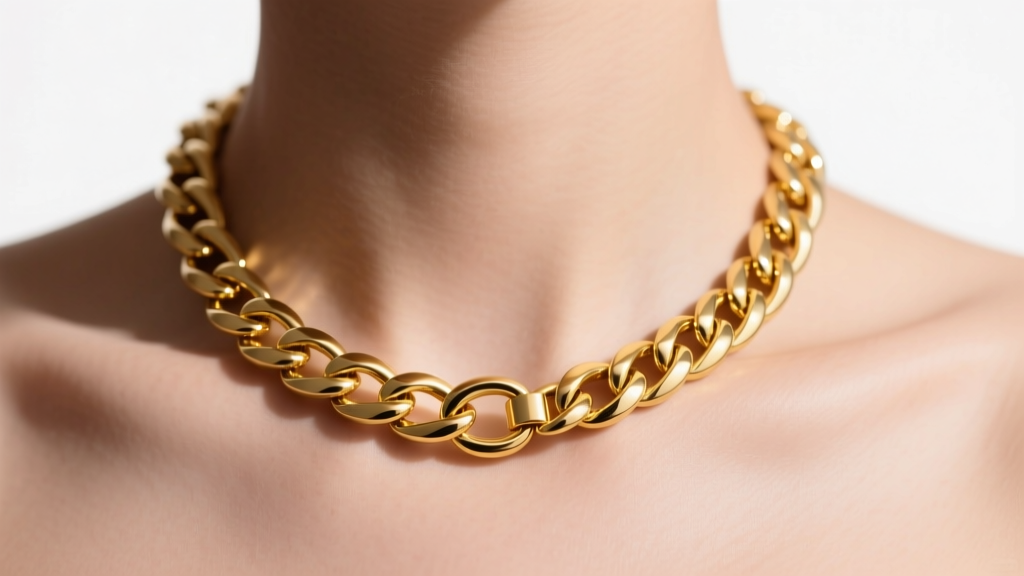
The "bf necklace" (boyfriend necklace) has transcended its origins as a borrowed accessory to become a staple of structural, hardware-inspired jewelry. As we navigate the style landscape of 2026, the bf necklace is no longer just about throwing on an oversized chain; it is an exercise in proportion, metallurgy, and tensile engineering. A true bf necklace mimics the substantial weight, thicker gauge, and longer drape of traditional men's chains, yet requires precise styling to integrate seamlessly into a modern wardrobe.
Unlike delicate pendant chains that rely on invisibility, a bf necklace commands attention through its physical mass and light-reflecting geometry. However, wearing heavy chains introduces specific mechanical challenges: clasp failure, link kinking, and layering friction. This expert deep dive deconstructs the technical specifications of the bf necklace, providing actionable frameworks for sizing, material selection, and advanced stacking.
The Anatomy of a True Bf Necklace
To qualify as a genuine bf necklace, a chain must meet specific dimensional thresholds that separate it from standard unisex or women's jewelry. The defining characteristics are width, weight, and link density.
- Width: Typically ranges from 4mm to 12mm. Anything below 4mm reads as a standard chain; anything above 12mm crosses into statement hip-hop territory, losing the effortless "borrowed" aesthetic.
- Weight: A true bf necklace carries substantial gram weight, usually between 15g and 60g for a 20-inch length. This weight is crucial for the drape—heavier chains lay flat against the sternum and resist flipping.
- Length: The ideal "boyfriend" drape sits between 18 and 24 inches. An 18-inch chain sits at the collarbone, while a 22-inch chain falls mid-sternum, mimicking the natural drop of a chain sized for a broader male frame.
Technical Breakdown: Chain Weaves & Tensile Strength
The structural integrity of a heavy chain relies entirely on its weave. According to manufacturing standards detailed by JCK Online, the link pattern dictates not just the visual texture, but the chain's vulnerability to kinking and snapping under tension.
| Chain Weave | Width Range | Tensile Durability | Kink Resistance | Best Use Case |
|---|---|---|---|---|
| Cuban Link | 4mm - 12mm | Very High | Excellent | Everyday heavy wear, flat drape |
| Franco | 3mm - 8mm | Extremely High | Superior | Supporting heavy pendants, 3D look |
| Figaro | 4mm - 10mm | Moderate | Good | Visual contrast, vintage styling |
| Rope (Soldered) | 3mm - 7mm | High | Poor (Prone to catching) | High-sparkle environments, evening wear |
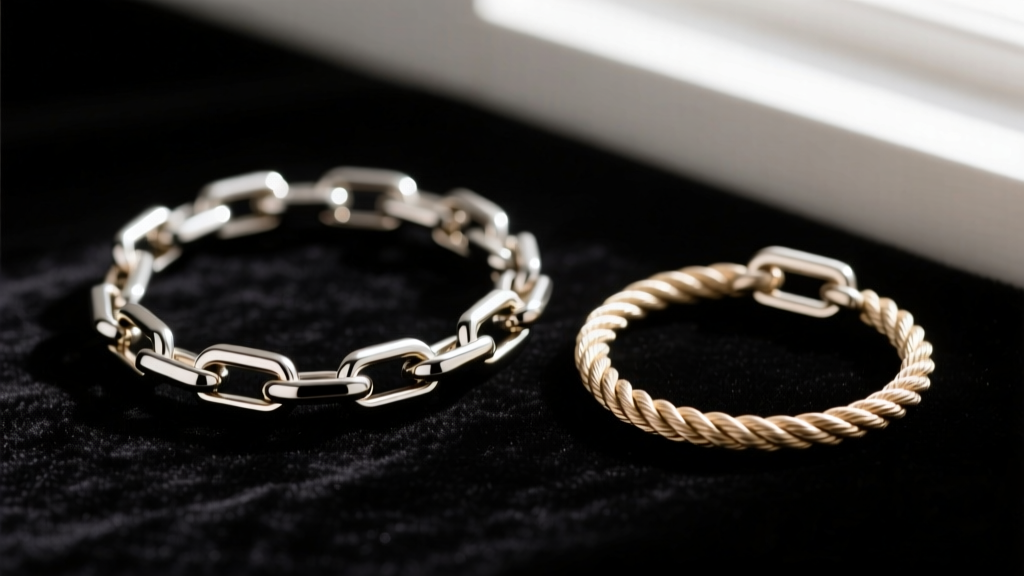
The Figaro Vulnerability
While the Figaro chain offers a beautiful alternating pattern (usually three small links followed by one elongated link), it introduces a structural weak point. The smaller links bear disproportionate stress when the chain is pulled or caught. If you are investing in a heavy Figaro bf necklace (over 30g), ensure the links are soldered shut. Unsoldered Figaro links on heavy chains will eventually pull apart at the micro-junctions.
Precision Sizing: Width vs. Neck Circumference
Styling a thick chain requires balancing the metal's visual weight against your physical proportions. A 10mm Cuban link on a 13-inch neck circumference will look overpowering and sit rigidly, while a 4mm chain might get lost on a broader frame. Use the following framework to select your width:
The Proportion Matrix
- Neck Circumference 12" - 14": Opt for 4mm to 6mm widths. Lengths should stay between 18" and 20" to maintain a graceful drape without choking the neckline.
- Neck Circumference 14" - 16": The sweet spot for 7mm to 9mm chains. A 20" to 22" length allows the chain to rest over crew necks and turtlenecks effortlessly.
- Neck Circumference 16"+: You can easily carry 10mm to 12mm widths. Longer lengths (22" - 24") provide the authentic, relaxed bf necklace silhouette.
Clasp Engineering: Securing Heavy Chains
The most common failure point in a 40g bf necklace is not the chain itself, but the clasp. Standard 5mm lobster clasps are rated for chains up to 15g. When subjected to the pendulum effect of a heavier chain, the tiny internal spring mechanism will fatigue and fail.
Expert Tip: Never trust a standard lobster clasp on a chain exceeding 20g. The kinetic energy generated by a heavy Cuban link swinging during a brisk walk can easily snap a lightweight clasp trigger.
Heavy-Duty Clasp Alternatives
For a true bf necklace, demand a 10mm to 15mm Trigger Lobster Clasp with a reinforced jump ring. Alternatively, a Box Clasp with a Figure-8 Safety Catch is the gold standard for luxury heavy chains. The box clasp distributes the tensile load across a wider surface area, while the figure-8 wire acts as a secondary fail-safe, ensuring the chain stays around your neck even if the primary tongue mechanism loosens.
Advanced Layering: Mixing Gauges Without Tangling
Layering a heavy bf necklace with delicate pieces is a hallmark of 2026 styling, but it introduces the physics of friction and entanglement. When two chains of similar gauge and weave are worn together, their links act like gears, meshing and tangling within minutes.

The Anti-Tangle Layering Protocol
To successfully stack a bf necklace, you must manipulate the variables of length, texture, and mass.
- The Length Gap: Maintain a minimum 3-inch difference between chains. If your bf necklace is 20 inches, your secondary chain must be 17 inches (a choker) or 23 inches (a long pendant). This prevents the chains from overlapping in the high-friction zone of the collarbone.
- Texture Disruption: Never layer two rope chains, or two Cuban links. Pair a smooth, flat-surfaced bf necklace (like a polished Cuban) with a highly textured or non-metallic secondary chain (like a baroque pearl strand or a fine, matte box chain). The differing surface coefficients of friction prevent them from locking together.
- Weight Anchoring: The bf necklace should always be the heaviest piece in the stack. Its mass will keep it anchored against the body, while lighter chains float above or below it, reducing kinetic twisting.
Metallurgy & Tarnish Resistance for Daily Wear
Because a bf necklace is often worn daily and subjected to higher friction against clothing and skin, the metal alloy you choose dictates its longevity. According to the Gemological Institute of America (GIA), the purity of gold directly impacts its hardness and suitability for heavy jewelry.
14k vs. 18k Gold
While 18k gold (75% pure gold) offers a richer, deeper yellow hue, it is relatively soft. A heavy 18k Cuban link will scratch, dent, and lose its sharp, diamond-cut edges faster due to the high gold content. For a bf necklace meant for daily, rugged wear, 14k gold (58.5% pure gold) is vastly superior. The higher alloy content (typically copper, silver, and zinc) increases the Vickers hardness, allowing the chain to retain its crisp link geometry and resist deformation.
Sterling Silver vs. Argentium
Traditional 925 sterling silver is prone to oxidation and micro-scratches, which can make a heavy silver chain look dull over time. If you prefer the white metal aesthetic, seek out Argentium Silver (935 or 960). Argentium replaces some of the copper alloy with germanium, creating a highly tarnish-resistant surface that requires significantly less polishing and maintains a bright, white luster even under heavy daily friction.
Ultimately, mastering the bf necklace is about respecting the hardware. By selecting the correct weave for your lifestyle, engineering the right clasp, and understanding the physics of layering, you transform a simple borrowed trend into a permanent, structurally sound pillar of your jewelry collection.


