How to Style and Layer a Maple Leaf Necklace: Expert Guide
Learn how to style, layer, and care for a maple leaf necklace. Discover expert tips on metal grades, chain lengths, and neckline pairings for any season.

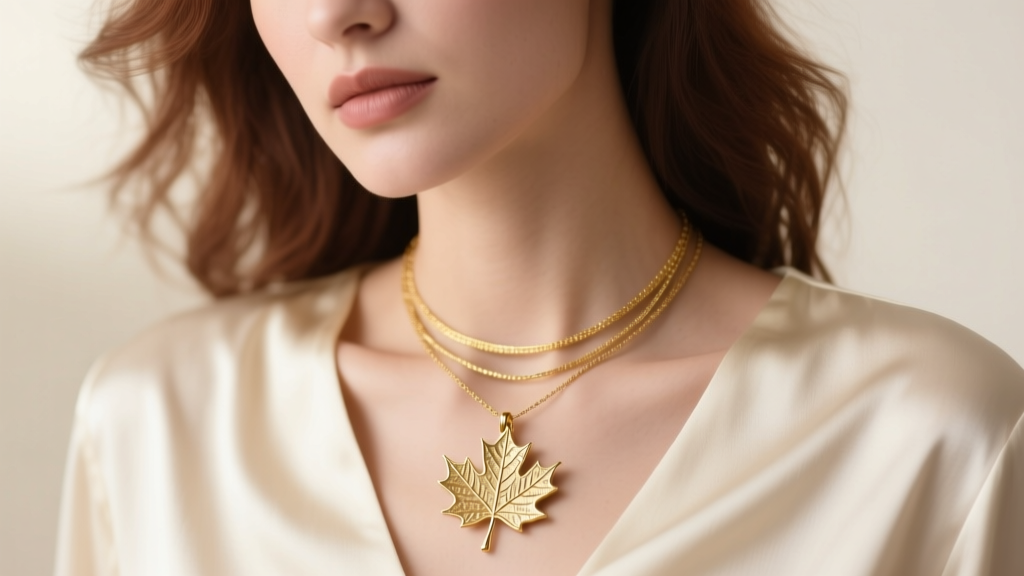
The maple leaf necklace is a masterclass in botanical jewelry design. Far from being a mere seasonal novelty for autumn, a well-crafted maple leaf pendant serves as a versatile, year-round staple when styled with intention. Whether you are working with a delicate 14k gold vermeil piece or a bold, oxidized sterling silver statement, mastering the art of styling and layering this specific motif requires an understanding of proportions, metallurgy, and neckline geometry.
In this comprehensive step-by-step guide, we break down exactly how to select, layer, and maintain your maple leaf necklace to achieve a curated, high-end aesthetic.
Step 1: Selecting the Right Metal Grade and Finish
The foundation of any enduring jewelry piece lies in its metallurgy. When shopping for a maple leaf necklace, the metal grade dictates not only the price point but also the longevity and skin compatibility of the piece.
- 925 Sterling Silver: The industry standard, comprising 92.5% pure silver and 7.5% copper. The copper adds necessary tensile strength but is also the culprit behind tarnishing. For a low-maintenance silver leaf, look for Argentium Silver (96% silver alloyed with germanium), which offers superior tarnish resistance and a naturally brighter white luster.
- Gold Vermeil vs. Gold Plated: If you prefer a gold-toned maple leaf, insist on 14k or 18k gold vermeil. According to industry standards, vermeil must feature a base of 925 sterling silver plated with a minimum of 2.5 microns of gold. Standard gold-plated jewelry often uses a brass base with a mere 0.5-micron flash of gold, which will wear off rapidly against the friction of clothing.
- Finish Textures: A high-polish finish reflects maximum light, making the leaf look dewy and modern. Conversely, a matte or sandblasted finish highlights the intricate vein detailing of the maple leaf, offering a more organic, vintage aesthetic.
Step 2: Choosing the Ideal Chain Gauge and Length
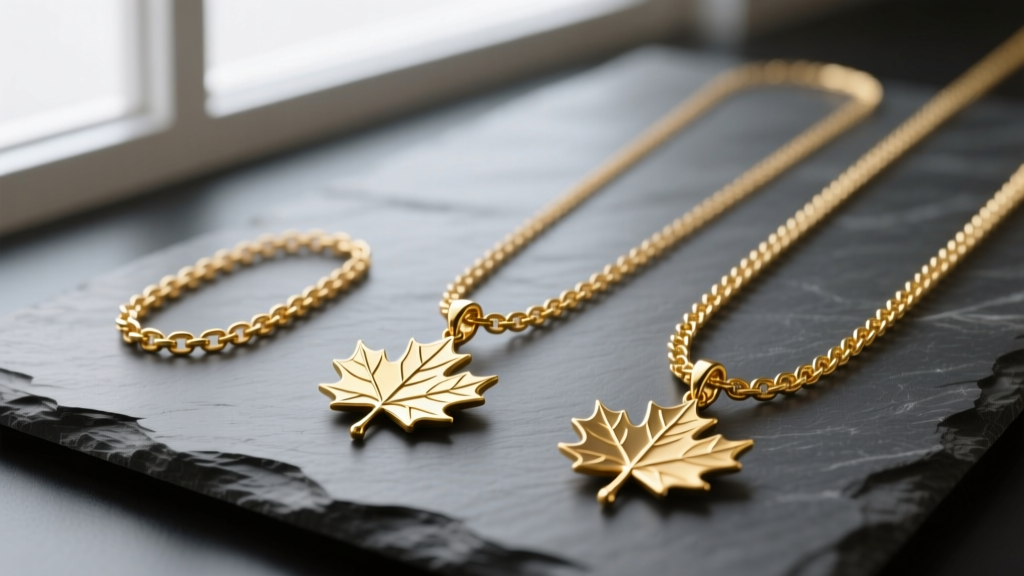
The chain you select must visually and physically support the maple leaf pendant without overpowering its delicate serrated edges. The gauge (thickness) of the chain should be proportional to the surface area of the leaf.
For a petite, minimalist maple leaf (measuring roughly 12mm x 10mm), opt for a 0.9mm to 1.2mm cable or box chain. These fine chains disappear slightly against the skin, allowing the leaf to appear as though it is floating on the collarbone. For larger, solid-cast maple leaves (25mm or wider), you need the structural integrity of a 1.5mm to 2.0mm rope or Figaro chain to prevent the chain from snapping under the pendant's weight.
Stylist Insight: Always check the clasp mechanism. For chains thicker than 1.2mm, a standard spring-ring clasp is too fragile and difficult to operate. Upgrade to a lobster clasp or a magnetic neodymium clasp for secure, effortless wear.
Step 3: Mastering the Layering Technique (The 2-Inch Rule)
Layering a maple leaf necklace is where personal style truly shines. The most common mistake in multi-strand styling is tangling, which occurs when chains are too close in length. To achieve a flawless, cascading drape, employ the strict 2-to-3-inch drop rule.
Start with a base chain that sits snugly, add a mid-length chain to bridge the gap, and let your maple leaf pendant serve as the longest, focal anchor.
| Layer Position | Chain Length | Chain Style | Pendant / Role |
|---|---|---|---|
| Base (Layer 1) | 14" - 15" | 1.0mm Cable | Simple solitaire pearl or bare chain |
| Middle (Layer 2) | 17" - 18" | 1.5mm Rope | Small geometric charm or coin |
| Focal (Layer 3) | 20" - 22" | 1.2mm Box | Maple Leaf Necklace (15mm+) |
Step 4: Matching Your Maple Leaf Pendant to Necklines
The architectural lines of your clothing should dictate the length and volume of your necklace. The maple leaf motif, with its distinct pointed lobes, interacts uniquely with different fabric cuts.
The V-Neck and Wrap Dress
A V-neckline creates a natural geometric arrow pointing downward. Mirror this shape by wearing your maple leaf necklace on an 18-inch or 20-inch chain. The pointed tip of the leaf should rest precisely in the center of the 'V', elongating the neck and drawing the eye vertically.
The Crew Neck and T-Shirt
For high, rounded necklines, avoid chains that get swallowed by the fabric rim. Opt for a shorter 16-inch princess-length chain so the maple leaf rests entirely above the collarbone on bare skin, providing a sharp contrast between the organic jewelry and the casual cotton.
The Turtleneck and Heavy Knits
When styling thick autumn or winter knits, delicate chains will look lost and may catch on the wool. Transition to an opera-length chain (28 to 30 inches) featuring a larger, heavier maple leaf pendant. The weight of the metal will lay flat against the sweater, creating a sophisticated, bohemian silhouette.
Step 5: Incorporating Enamel and Gemstone Accents
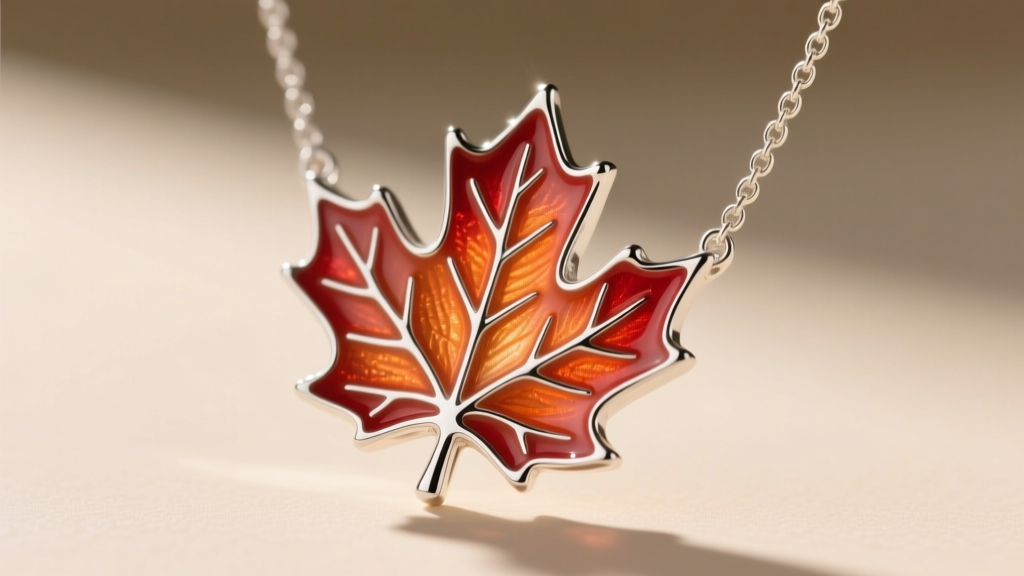
While solid metal is timeless, a maple leaf necklace featuring enamel or gemstone inclusions can elevate your styling game by introducing seasonal color theory without resorting to costume jewelry.
Look for champlevé enamel techniques, where the metal is carved out and filled with vitreous enamel, then fired. A maple leaf with translucent amber, ruby, or burnt orange enamel captures the essence of autumn beautifully. For spring and summer styling, seek out leaves inlaid with pale green chrysoprase or peridot, which mimic the fresh, vibrant energy of new foliage.
Step 6: Proper Care and Anti-Tarnish Maintenance
Because maple leaf pendants often feature deep, intricate vein engravings, they are highly susceptible to trapping moisture, lotions, and environmental pollutants. Proper maintenance is non-negotiable to preserve the piece's brilliance.
According to the Jewelers of America, silver and gold alloys require specific cleaning protocols to avoid micro-scratches. Follow these expert care steps:
- Daily Wiping: After wearing, gently wipe the leaf with a non-abrasive microfiber cloth to remove skin oils and acidic sweat, which accelerate the oxidation of copper alloys in sterling silver.
- Deep Cleaning Engravings: If tarnish builds up inside the delicate leaf veins, do not use harsh liquid silver dips, which can strip patinas and damage enamel. Instead, use a specialized jewelry polishing cloth infused with anti-tarnish compounds, gently working the cloth into the grooves with a soft-bristled baby toothbrush.
- Strategic Storage: Store your maple leaf necklace in an airtight polyethylene ziplock bag alongside a 3M anti-tarnish strip. The Gemological Institute of America (GIA) notes that silver tarnishes primarily due to exposure to sulfur and humidity in the air; removing these elements from the storage environment will keep your piece pristine for years.
Final Thoughts on Botanical Styling
A maple leaf necklace is far more than a fleeting trend; it is a celebration of natural geometry and masterful metalwork. By paying strict attention to metal grades, adhering to the 2-inch layering rule, and matching the pendant's scale to your wardrobe's necklines, you transform a simple botanical charm into a cornerstone of your personal jewelry collection. Treat your pieces with the metallurgical respect they deserve, and they will continue to elevate your style through every season.


