Bible Necklace Metals: Silver, Gold & Steel Compared
Compare the best metals for a bible necklace. Discover how silver, gold, and steel hold up to daily wear, engraving, and skin sensitivities.

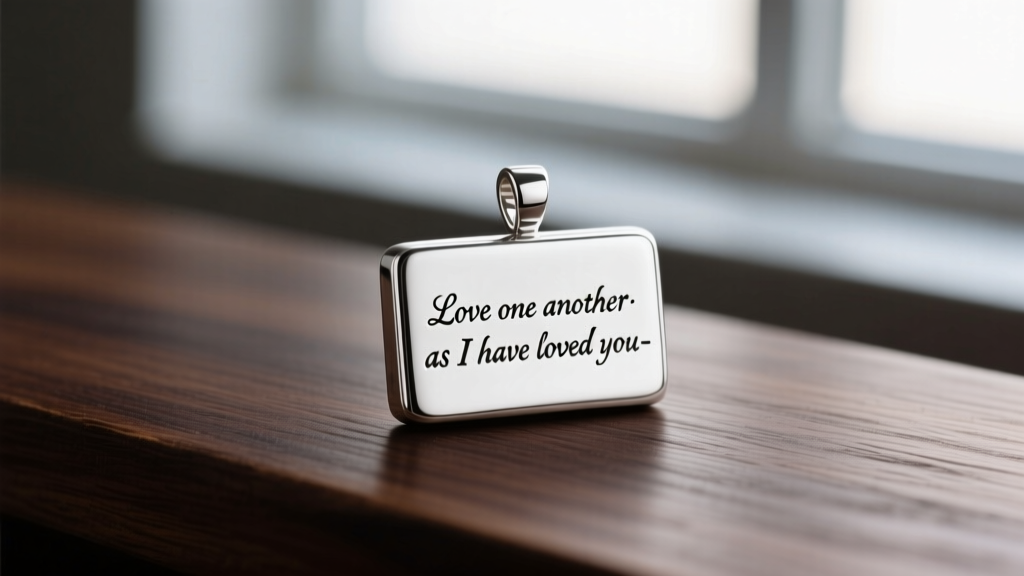
When selecting a bible necklace, the spiritual significance of the scripture often overshadows the physical properties of the metal holding it. However, from a metallurgical and jewelry-design perspective, the material you choose dictates not only the longevity of the piece but also the legibility of the sacred text over time. A scripture pendant is unique in jewelry because it relies heavily on micro-engraving. Fitting a complete verse—such as Psalm 23 or Proverbs 3:5-6—onto a wearable surface requires precise laser etching or rotary carving, processes that interact very differently with various metal alloys.
In this comprehensive guide, we break down the exact material properties, Vickers hardness ratings, and engraving compatibilities of the most popular metals used for faith-based jewelry. Whether you are investing in an heirloom piece or seeking a durable everyday pendant, understanding these material nuances is critical.
The Engraving Factor: Why Metal Choice Dictates Text Clarity
Unlike gemstone settings or cast motifs, a bible necklace requires a flawless, flat, or perfectly cylindrical canvas for text. Modern jewelers primarily use fiber lasers (1064 nm wavelength) for bare metals. Fiber lasers create high-contrast, permanent marks by altering the surface structure of the metal without removing significant material. This is vital for thin pendants (typically 1.0mm to 1.5mm gauge sheets), where deep rotary engraving could compromise structural integrity.
The reflectivity and thermal conductivity of the metal affect the laser's contrast. For instance, highly reflective metals like pure silver require specific laser frequencies to achieve a dark, readable mark, whereas stainless steel naturally oxidizes under the laser to produce a stark black contrast. If the metal is too soft, the edges of micro-engraved serif fonts will blur over years of friction against clothing and skin.
Comprehensive Metal Comparison Chart
Below is a technical comparison of the primary metals used in scripture jewelry, evaluated on criteria critical to engraved pendants.
| Metal / Alloy | Vickers Hardness (HV) | Engraving Contrast | Tarnish Resistance | Hypoallergenic | Avg. Price Range |
|---|---|---|---|---|---|
| 925 Sterling Silver | 60 - 70 HV | Medium (requires oxidation) | Low (tarnishes) | No (contains copper) | $45 - $120 |
| 14k Solid Gold | 140 - 160 HV | High (excellent edge retention) | High | Mostly Yes | $250 - $600+ |
| 18k Solid Gold | 125 - 135 HV | Medium (softer edges) | Very High | Yes | $400 - $900+ |
| 316L Stainless Steel | 150 - 190 HV | Very High (deep black) | Very High | Yes (low nickel release) | $25 - $75 |
| Grade 5 Titanium | 330 - 350 HV | High | Extreme | Yes (biocompatible) | $80 - $150 |
Deep Dive: Silver, Gold, and Steel Properties
925 Sterling Silver: The Traditional Standard
Sterling silver is an alloy consisting of 92.5% pure silver and 7.5% copper. The copper adds necessary tensile strength, but it is also the culprit behind silver's tendency to tarnish when exposed to sulfur compounds in the air and human sweat. For a bible necklace, silver presents a specific engraving challenge: raw silver is highly reflective, making laser-etched text difficult to read in bright light. Jewelers solve this by applying a chemical oxidizing agent (like liver of sulfur) to the engraved areas, turning the text black, and then polishing the high points. According to the London Assay Office, authentic sterling silver must be hallmarked to guarantee its 925 purity, a crucial check when buying precious metal scripture jewelry.
14k vs. 18k Solid Gold: Durability Meets Prestige
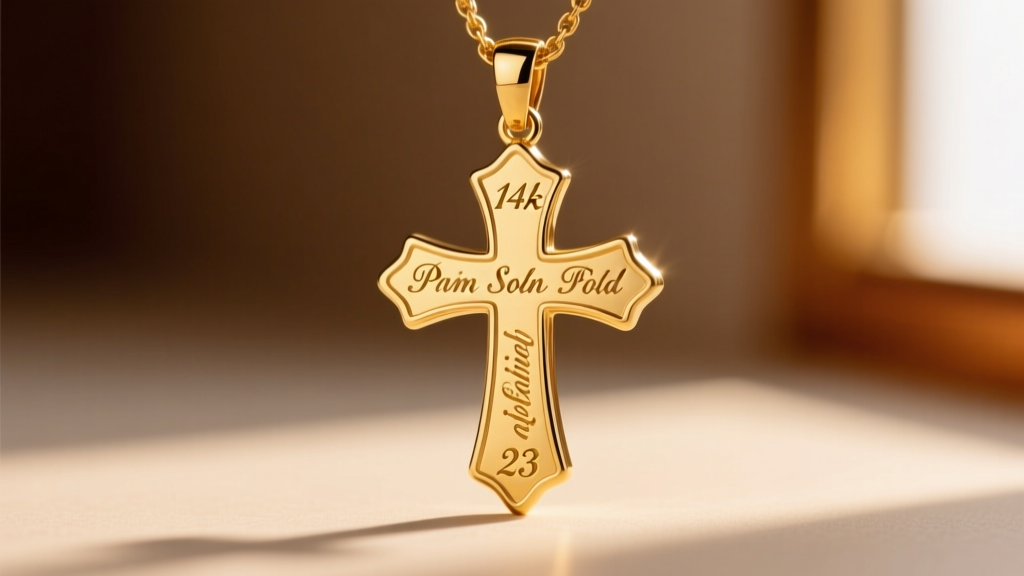
Gold is the premier choice for heirloom faith jewelry, but the karat weight drastically alters its physical properties. Pure 24k gold is far too soft for daily wear. 18k gold (75% pure gold) offers a rich, warm hue but has a lower Vickers hardness, meaning the microscopic edges of engraved letters can wear down over decades of friction. 14k gold (58.5% pure gold), alloyed with metals like zinc and copper, offers superior hardness. As noted by the Gemological Institute of America (GIA), the specific alloy mix in 14k gold not only increases durability but also provides a crisper canvas for laser engraving, ensuring that the scripture remains legible for generations.
316L Surgical Stainless Steel: The Modern Workhorse
For those seeking an affordable, ultra-durable option, 316L stainless steel is unmatched. The "L" stands for low carbon, and the alloy includes 2-3% molybdenum, which drastically increases resistance to chlorides and industrial solvents. This makes it impervious to sweat, swimming pool chlorine, and ocean salt. Furthermore, 316L yields the highest contrast when laser-engraved, producing a stark, matte-black text against a mirror-polished background without the need for chemical oxidation. It is also highly hypoallergenic, as the nickel within the alloy is tightly bound at a molecular level, preventing skin reactions.
Chain Mechanics and Pendant Weight Ratios
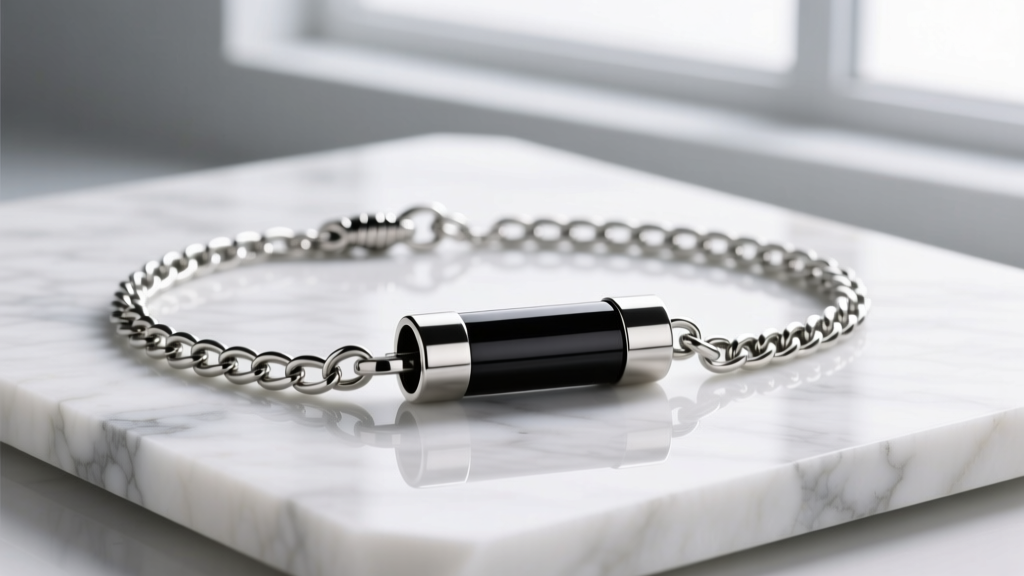
A common failure point in bible necklaces is not the pendant itself, but the chain and clasp mechanism. Scripture pendants, particularly cylindrical "scroll" tubes or thick rectangular plaques, carry significant weight—often between 12 and 25 grams.
- Chain Gauge: Avoid delicate cable chains under 1.2mm. For a 15g+ pendant, a minimum 1.5mm gauge box chain or a 2.0mm rope chain is required to withstand the pendulum stress of daily movement.
- Clasp Integrity: Spring ring clasps are notorious for failing under heavy loads due to their weak internal tension springs. Always opt for a solid lobster clasp (12mm or 15mm in size) or a secure magnetic neodymium clasp with a safety latch.
- Jump Rings: Ensure the jump ring connecting the pendant to the chain is soldered shut or made of heavy-gauge wire (at least 18-gauge). An unsoldered, thin jump ring will easily pull apart when the heavy pendant catches on clothing.
Maintenance: Cleaning Without Fading the Word
Maintaining the brilliance of your metal while protecting the integrity of the micro-engraved text requires specific care protocols. Many consumers mistakenly use ultrasonic jewelry cleaners or harsh chemical dips on their scripture necklaces. While ultrasonic waves are generally safe for solid metals, chemical silver dips can strip the intentional oxidation from the engraved letters, leaving the text flush and illegible against the shiny background.
"The true heirloom value of a scripture necklace lies in the legibility of its message. Aggressive polishing compounds like rouge or tripoli will inevitably round off the sharp edges of micro-engraved fonts, slowly erasing the very words you sought to preserve."
Instead, clean your sterling silver or gold bible necklace using a few drops of mild, phosphate-free dish soap and warm water. Use a baby-hair toothbrush to gently dislodge sebum and lotion from the engraved crevices. For stainless steel and titanium, a simple wipe with a microfiber cloth and a spritz of isopropyl alcohol is sufficient to restore the mirror finish without risking the laser-etched contrast.
Final Verdict: Choosing Your Metal
Ultimately, the best material for your bible necklace depends on your lifestyle and budget. If you desire a budget-friendly, indestructible piece with maximum text contrast that you can wear in the shower and the gym, 316L stainless steel is the undisputed champion. If you are commissioning a baptism gift or a generational heirloom meant to be passed down, 14k solid gold provides the perfect balance of prestige, edge-retention for engraving, and lifelong durability. Sterling silver remains a beautiful, traditional middle-ground, provided you are willing to perform gentle, oxidation-safe maintenance to keep the scripture vividly alive.


