Necklace Prayer Beads: Budget and Value Assessment Guide
Evaluate necklace prayer beads for true value. Compare materials, stringing methods, and pricing tiers to avoid overpriced fakes and poor craftsmanship.

The Intersection of Devotion and Adornment
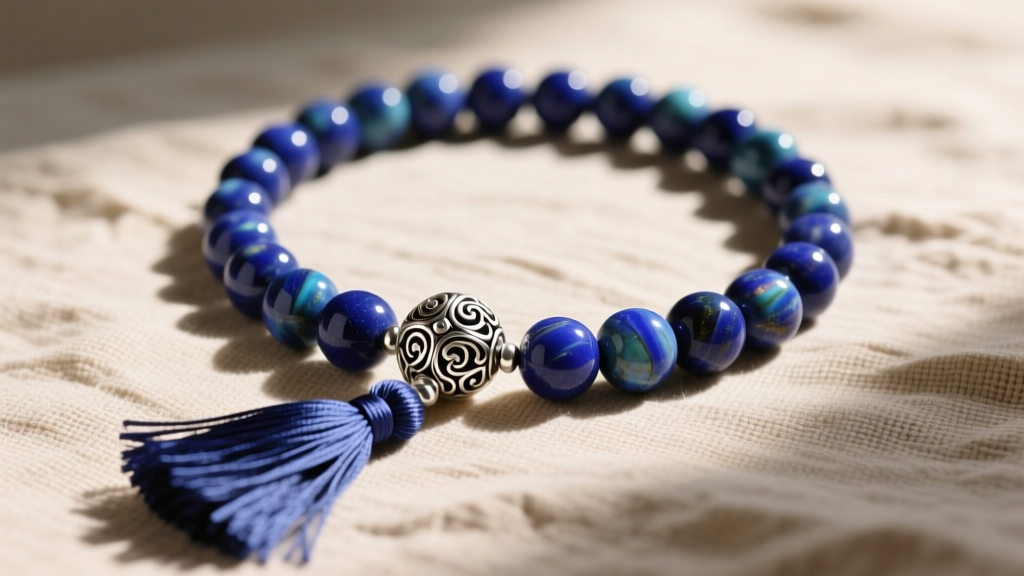
Once reserved strictly for spiritual practice, the mala and rosary have evolved into mainstream jewelry staples. However, the surge in popularity of the necklace prayer beads aesthetic has flooded the market with everything from mass-produced, elastic-strung glass imitations to ethically sourced, hand-knotted artisan pieces. For the discerning buyer, navigating this market requires a sharp eye for material integrity, structural longevity, and fair pricing. This budget and value assessment guide will help you determine exactly what you are paying for, ensuring your investment aligns with both your aesthetic standards and your financial boundaries.
Anatomy and Sizing: How Bead Diameter Dictates Value and Drape
Before assessing price, you must understand how bead sizing impacts both the cost of raw materials and the way the necklace wears on the body. Traditional malas feature 108 beads, while Islamic misbahas feature 99, and Orthodox kombolois vary. In the jewelry market, the 108-bead mala is the most prevalent.
The 6mm vs. 8mm Dilemma
- 6mm Beads: Yields a total length of roughly 26 to 28 inches. This is the ideal size for jewelry, as it rests gracefully on the sternum, layering perfectly over V-necks and scoop necklines without overwhelming the torso. Because the beads are smaller, they require more precise drilling and stringing, slightly increasing labor costs.
- 8mm Beads: Yields a length exceeding 34 inches. While cheaper to produce per bead, an 8mm necklace prayer beads strand will often hang near the navel, making it prone to swinging, catching on objects, and striking tables. Many wearers are forced to double-wrap them, which can cause excessive friction and cord wear.
Expert Insight: Always prioritize 6mm or 7mm beads for everyday jewelry wear. If a brand charges a premium for 8mm beads citing "more material," recognize that the labor savings and poor drape often negate the value.
Material Tiers and Pricing Matrix
The core value of any bead necklace lies in its raw materials. Below is a realistic 2026 pricing matrix for a standard 108-bead strand, excluding luxury designer markups.
| Material Category | Avg. Bead Size | Stringing Method | Fair Market Price (USD) | Value Retention |
|---|---|---|---|---|
| Dyed Wood / Glass | 6-8mm | Machine Elastic | $12 - $25 | Very Low |
| Genuine Rudraksha / Bodhi | 8-12mm | Hand-Knotted Silk | $45 - $110 | Medium |
| Semi-Precious (Onyx, Lapis) | 6mm | Hand-Knotted Nylon | $85 - $220 | High |
| High-Grade Amber / Turquoise | 6-8mm | Macrame / Knotting | $350 - $900+ | Very High |
Assessing Craftsmanship: The Hidden Cost of Stringing
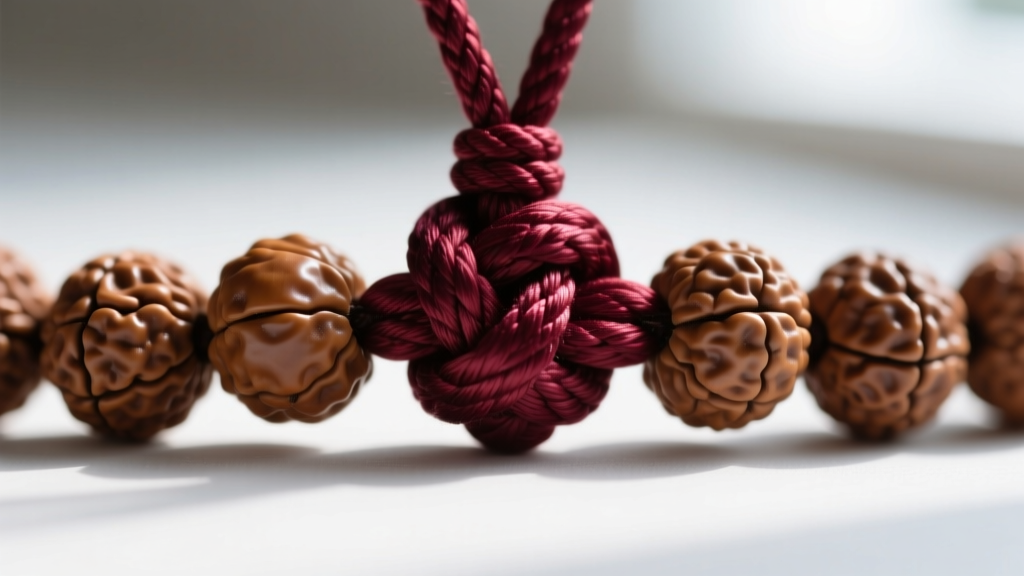
The most common failure point in beaded jewelry is not the stone, but the cord. When evaluating the budget of a necklace prayer beads piece, you are paying for the stringing technique.
Elastic vs. Hand-Knotted Cord
Mass-market brands utilize continuous elastic or nylon wire to string beads rapidly. While this keeps retail prices under $30, elastic degrades rapidly when exposed to human sebum, sweat, and UV light. Expect an elastic-strung mala to stretch, sag, or snap within 8 to 14 months of regular wear.
Conversely, hand-knotting involves placing a microscopic knot between every single bead. This process takes an artisan 4 to 7 hours. It prevents bead-on-bead friction (which degrades softer stones like turquoise and amber) and ensures that if the cord snaps, you lose only one bead rather than all 108. If a retailer is selling a "hand-knotted" lapis lazuli necklace for $40, it is almost certainly a machine-tied imitation or a dropshipped factory product where knots are merely glued spacers.
Cord Material: Silk vs. C-Lon Nylon
Traditionalists favor Griffin silk cord, but silk is highly susceptible to acidity in human sweat, leading to rot. Modern high-value pieces utilize C-Lon or equivalent bonded nylon cords, which offer the traditional aesthetic with complete water and UV resistance. A premium piece should specify the cord material in its product description.
Ethical Sourcing: Woods and Resins
When budgeting for organic materials, you must account for sustainability and ethical harvesting, which heavily influences price.
The Sandalwood Illusion
True Mysore Sandalwood (Santalum album) is heavily regulated under CITES guidelines due to overharvesting. A genuine 108-bead sandalwood mala will rarely cost less than $150. The $25 "sandalwood" necklaces found in boutique shops are typically dyed boxwood or pearwood, infused with synthetic sandalwood fragrance oils. Over time, the scent fades, leaving you with a cheap, dyed wooden necklace. Value assessment dictates that you either pay the premium for certified, ethically farmed Australian Sandalwood (Santalum spicatum) or opt for a completely different, un-faked wood like olive or rosewood.
Spotting Overpriced Fakes and Synthetics
The semi-precious stone market is rife with treatments that inflate the value of inferior materials. According to the Gemological Institute of America (GIA), a vast majority of commercial turquoise is heavily treated or outright imitation.
- Turquoise: Genuine, untreated turquoise is porous and expensive. Most commercial "turquoise" necklace prayer beads are actually dyed howlite or magnesite. You can often spot dyed howlite by examining the matrix (the brown or black veins); if the dye pools deeply in the cracks and looks like spiderwebs of ink, it is likely howlite. Reconstituted turquoise (chalk turquoise mixed with resin) is another common budget trap.
- Amber: Copal (immature tree resin) and plastic are frequently sold as Baltic Amber. The GIA notes that genuine amber has a specific gravity of roughly 1.05 to 1.09, meaning it will float in a saturated saltwater solution (1 part salt to 2.5 parts water) but sink in fresh water. Copal and plastic will generally sink in both. Furthermore, a carefully applied hot needle test will yield a piney, resinous scent for amber, but a harsh, chemical plastic smell for fakes.
Styling Considerations for the Modern Wardrobe
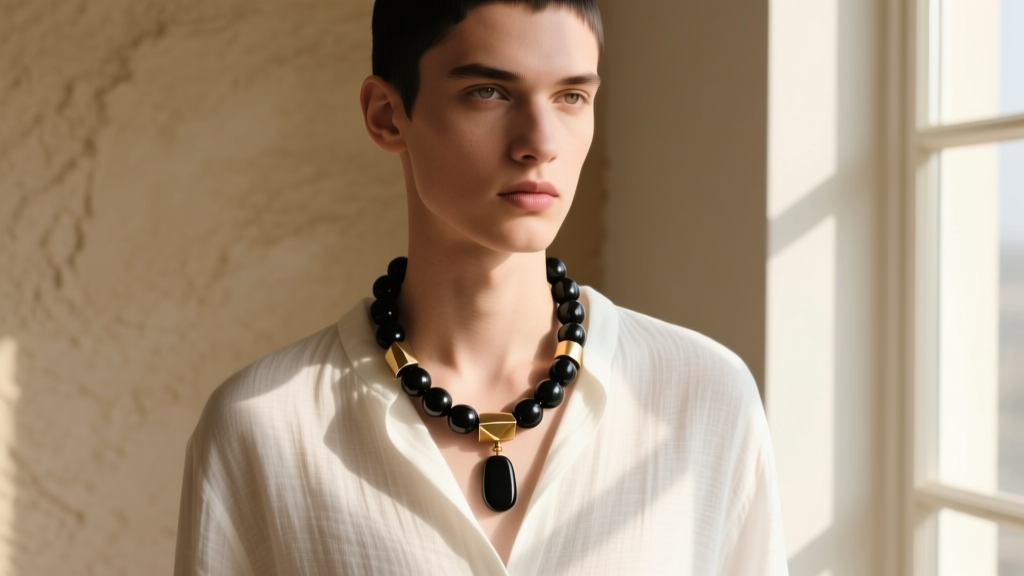
From a purely sartorial perspective, the value of a necklace prayer beads piece is also determined by its versatility. Matte stones like black onyx, unpolished lava rock, and dark rudraksha offer a grounded, minimalist aesthetic that pairs seamlessly with both casual streetwear and smart-casual linen shirts. Conversely, highly polished lapis lazuli or amber requires careful styling to avoid looking costumey. For maximum cost-per-wear value, invest in a high-quality, matte-finish stone with subtle sterling silver or brass spacer beads, allowing the piece to transition effortlessly from a meditation tool to a layered fashion accessory.
Final Verdict: Where to Allocate Your Budget
When shopping for a necklace prayer beads strand, reallocate your budget away from branded packaging and heavily marketed "festival" aesthetics. Instead, direct your funds toward verifiable stone authenticity and hand-knotted nylon construction. A $120 hand-knotted matte onyx mala will outlast, outperform, and out-style a $300 elastic-strung, brand-name glass bead necklace every single time. Demand transparency regarding cord materials, bead origins, and knotting techniques, and you will secure a piece that holds both spiritual resonance and enduring material value.


