Diamond L Necklace Value Guide 2026: Lab vs Natural
Assess the true value of a diamond L necklace in 2026. Compare lab vs natural melee pricing, metal grades, and chain durability to avoid brand markups.

Deconstructing the Diamond L Necklace: Where the Money Goes
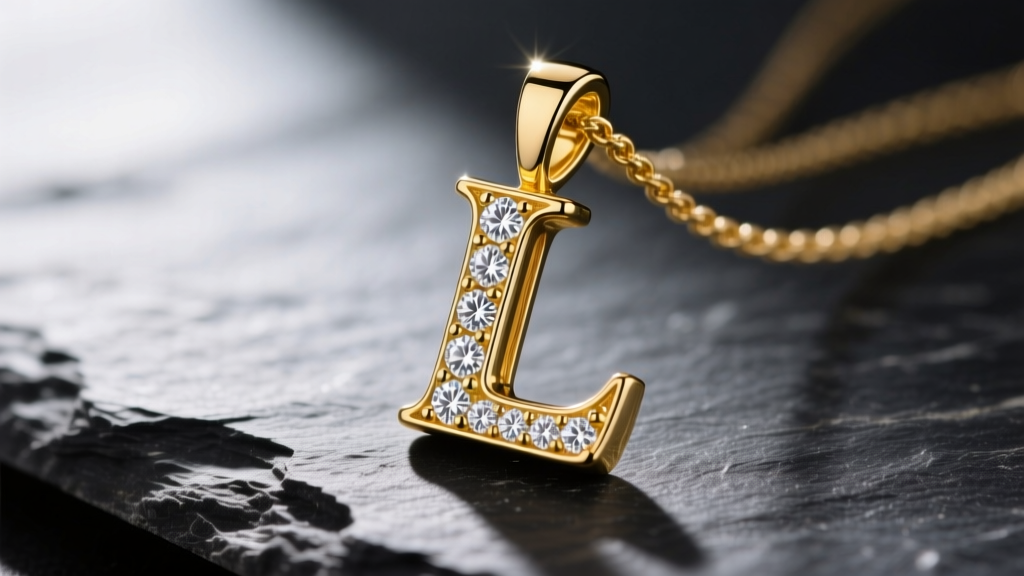
The personalized jewelry market has exploded, and the diamond L necklace remains a cornerstone of this trend. Whether representing names like Liam, Luna, Olivia, or simply a classic initial, the letter L features a strong, geometric silhouette that lends itself perfectly to diamond setting. However, as we navigate the jewelry market in 2026, consumers are increasingly falling victim to inflated brand markups and misleading carat weights. To perform a proper budget and value assessment, you must look past the designer logo and evaluate the actual materials, engineering, and diamond quality.
The Anatomy of an Initial Pendant
A standard diamond L necklace pendant typically measures between 12mm and 18mm in height. Because the letter L is composed of two intersecting rectangular bars, it requires a specific pavé setting technique. The diamonds used are known as "melee"—small stones usually ranging from 0.01 to 0.05 carats each (approximately 1.0mm to 1.3mm in diameter). A well-proportioned 15mm diamond L pendant will generally hold between 0.25 and 0.40 Total Carat Weight (TCW). If a retailer is charging a massive premium for a 0.20 TCW pendant, you are paying for the brand name, not the intrinsic value of the gold or diamonds.
Lab-Grown vs. Natural Melee: The 2026 Value Matrix
When assessing the budget for a diamond L necklace, the most critical decision you will make is choosing between lab-grown and natural melee diamonds. Unlike center stones (1.00ct+), melee diamonds are traded in wholesale parcels and do not retain individual resale value. Therefore, the financial argument heavily favors lab-grown diamonds for initial pendants.
| Value Metric | Natural Melee Diamonds | Lab-Grown Melee Diamonds |
|---|---|---|
| Wholesale Price per Carat | $400 - $800 | $150 - $300 |
| Retail Markup on Initial Pendants | 3x - 5x | 2x - 3x |
| Visual Difference (Naked Eye) | None | None |
| Long-Term Resale Value | Low (Sold as scrap/parcel) | Near Zero |
| Value Verdict for 2026 | Best for strict heirloom purists | Undisputed champion for budget & sparkle |
By opting for lab-grown melee, you can reallocate your budget toward a heavier, more durable gold chain or a higher karat metal, vastly improving the overall longevity and value of the piece.
The Melee Quality Trap: Stop Overpaying for VVS Clarity
One of the most common mistakes buyers make when shopping for a diamond L necklace is over-indexing on clarity and color grades. According to GIA clarity guidelines, inclusions in diamonds smaller than 1.5mm are virtually impossible to see without 10x magnification.
Many luxury brands charge a 40% premium for "VVS clarity, D-color" melee diamonds in their initial pendants. This is a poor allocation of funds. The diamonds in a pavé L pendant are set closely together, and the light return is dictated by the collective sparkle of the parcel, not the individual purity of a 1.0mm stone.
The Sweet Spot for Maximum Value
- Clarity: SI1 to SI2. At this size, inclusions are completely masked by the facets and the setting.
- Color: G to H. These near-colorless grades face up brilliantly white when set in 14k or 18k white gold, and offer a beautiful, warm contrast in yellow or rose gold.
- Cut: This is the one area you should not compromise on. Ensure the jeweler uses "Ideal" or "Excellent" cut melee. A poorly cut 1.0mm diamond will look like dull glass, regardless of its clarity. Reference GIA color scales to ensure your melee parcel is well-matched.
Chain and Clasp Engineering: Assessing Long-Term Durability
A $2,500 diamond L pendant hanging on a fragile, hollow chain is a massive liability. True value assessment requires looking at the structural engineering of the necklace. Initial pendants, especially the letter L with its sharp 90-degree angle, can catch on clothing. You need a chain that can withstand moderate snagging without snapping.
Chain Gauge and Style Recommendations
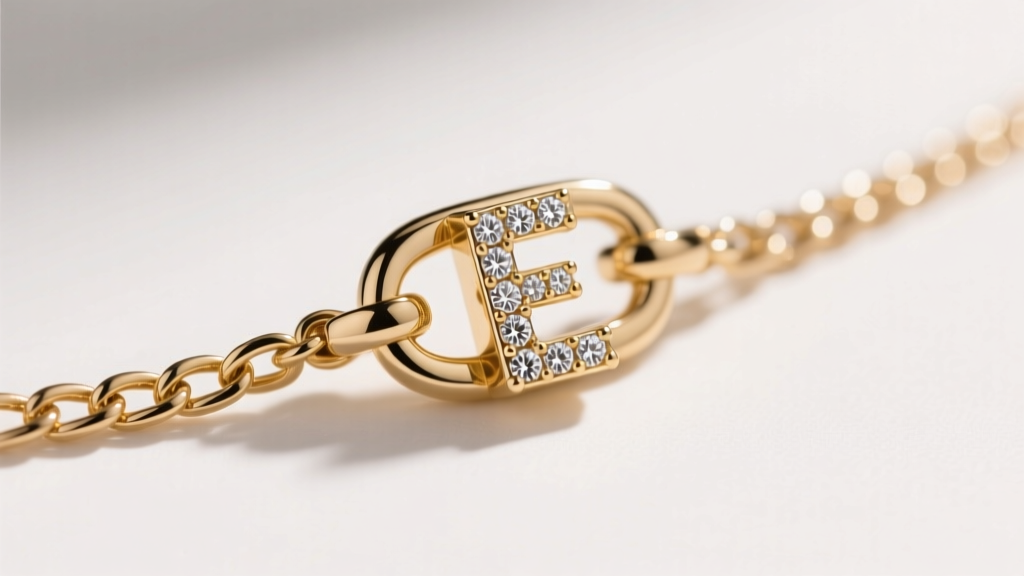
Avoid hollow rope chains and ultra-thin cable chains (under 0.9mm). For a diamond L necklace, the optimal choice is a solid 14k or 18k gold box chain or wheat chain measuring between 1.0mm and 1.5mm in width. These styles distribute tension evenly and resist kinking. Furthermore, inspect the jump ring (the loop connecting the pendant to the chain). It should be soldered shut or feature a heavy-gauge split mechanism. An open, thin jump ring will eventually wear down from friction and drop your pendant.
The Clasp Imperative
Never accept a spring-ring clasp on a diamond necklace. Spring rings rely on a tiny internal spring that degrades over time and easily catches on hair. Insist on a lobster clasp. A standard 10mm or 12mm lobster clasp provides a secure, locking mechanism that dramatically reduces the risk of accidental loss.
2026 Pricing Tiers: What You Should Actually Pay
To help you benchmark your purchase, here is a realistic value assessment for a standard 14k solid gold diamond L necklace featuring approximately 0.30 TCW of G-H color, SI clarity melee diamonds, on a 1.2mm box chain.
- Tier 1: Direct-to-Consumer & Custom Jewelers ($450 - $750)
This is the true intrinsic value tier. You are paying for the raw materials (gold weight + diamond parcel cost) plus a reasonable labor margin for casting and hand-setting. This offers the highest value-to-cost ratio. - Tier 2: Mid-Tier Mall Brands ($800 - $1,400)
You are paying a moderate premium for brand recognition, physical retail overhead, and standardized packaging. The quality is usually reliable, but the markup is roughly 2x the material cost. - Tier 3: High-End Designer & Luxury Houses ($1,800 - $3,500+)
At this tier, you are purchasing a status symbol. The materials are identical (or sometimes inferior in chain weight) to Tier 1, but the price is inflated by 400% to 800% to support luxury marketing campaigns and flagship real estate.
"When buying initial jewelry, remember that you are wearing a personal sentiment, not an investment asset. Prioritize structural durability and optical sparkle over brand prestige and inflated diamond grades."
Final Verdict on Diamond L Necklace Value
The diamond L necklace is a timeless staple, but its market is rife with pricing inefficiencies. By choosing lab-grown melee diamonds, accepting SI1/G-H color grades, and demanding a solid 1.2mm box chain with a lobster clasp, you can secure a breathtaking, highly durable piece of personalized jewelry for a fraction of the luxury retail price. In 2026, smart value assessment means paying for the craftsmanship and the sparkle, not the markup.


