Big Butterfly Necklace Value Guide: Is It Worth the Price in 2026?
Assess the true value of a big butterfly necklace in 2026. We break down materials, price tiers, and durability to help you invest wisely.

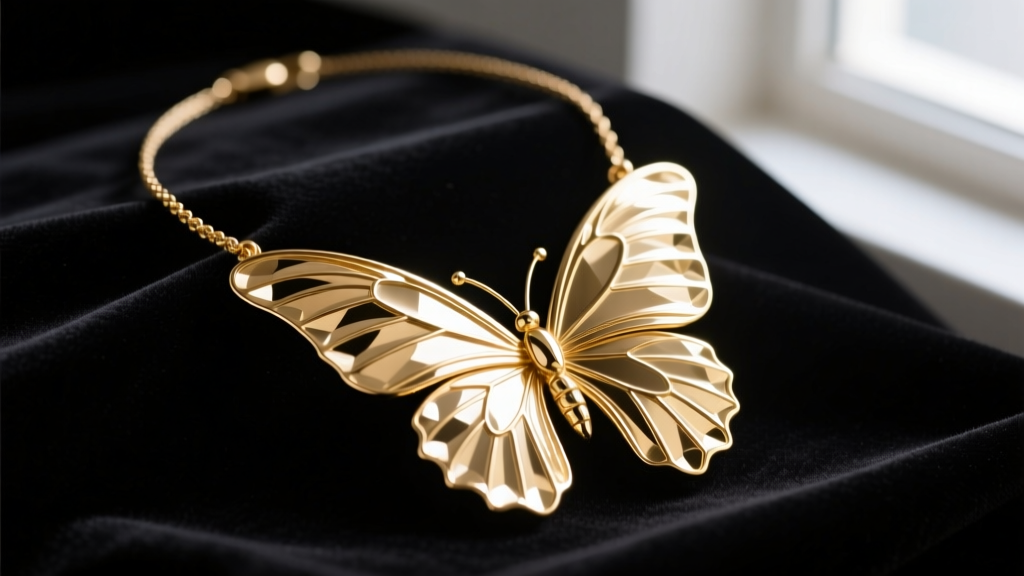
The Resurgence of the Big Butterfly Necklace: Trend or Investment?
The Y2K jewelry revival has firmly cemented the big butterfly necklace as a staple in contemporary styling. However, as we move through 2026, the market is flooded with options ranging from $15 fast-fashion pieces to $5,000 fine jewelry interpretations. For the savvy collector and everyday wearer, the question is no longer just about aesthetics—it is about value retention, material integrity, and cost-per-wear. A statement piece of this size requires a rigorous budget and value assessment to ensure you are paying for craftsmanship rather than just a recognizable silhouette.
Unlike delicate, barely-there chains, a large butterfly pendant (typically spanning 2 to 4 inches across) demands structural integrity. The sheer surface area requires more raw material, heavier plating, and robust chain engineering. In this comprehensive guide, we dissect the pricing tiers, material grades, and hidden failure modes of the big butterfly necklace to help you make an informed investment.
Material Breakdown: What You Are Actually Paying For
When evaluating the price tag of a large pendant, the base metal and surface treatment dictate the baseline value. Because of the large surface area, manufacturing defects and plating shortcuts are highly visible.
Base Metals & Flash Plating (The $20–$60 Tier)
In the lowest tier, pendants are cast from brass or zinc alloys and coated with "flash plating"—a microscopic layer of gold or rhodium measuring less than 0.05 microns. While visually appealing on day one, the large surface area of a big butterfly necklace means it will inevitably brush against clothing, skin, and perfumes. Flash plating typically wears through to the base metal within 3 to 6 months of regular wear, leaving a dull, tarnished finish that cannot be polished back to life.
Sterling Silver & Gold Vermeil (The $80–$250 Tier)
This is the sweet spot for contemporary jewelry buyers. According to the Federal Trade Commission Jewelry Guides, true gold vermeil must consist of a sterling silver base coated with a minimum of 2.5 microns of gold (usually 14k or 18k). A big butterfly necklace in this tier offers excellent value: the sterling silver core ensures the piece retains intrinsic scrap value and can be professionally polished, while the thick gold layer provides years of wear before any potential re-plating is needed.
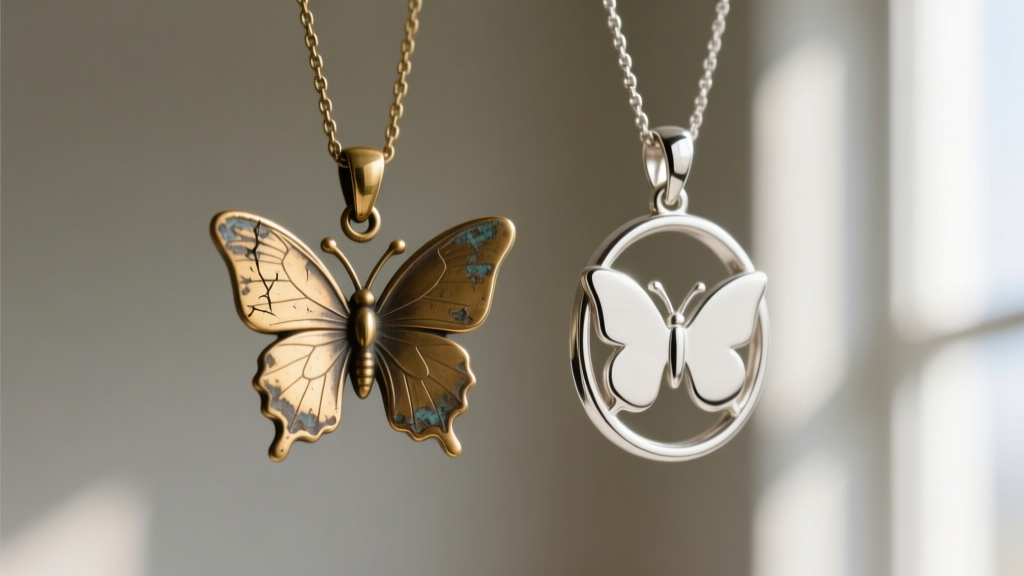
Solid Gold & Vitreous Enamel (The $800+ Tier)
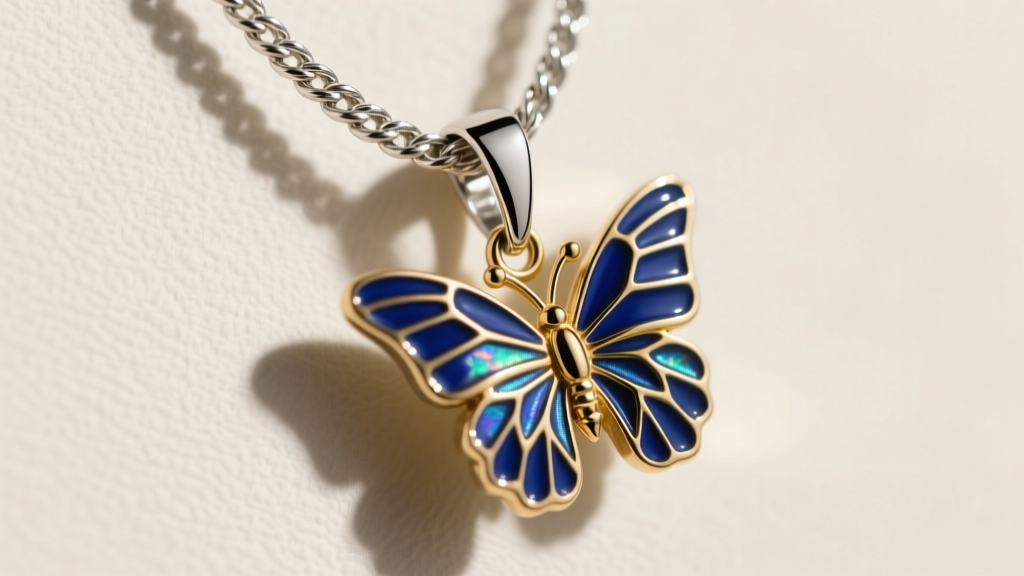
At the fine jewelry level, you are paying for solid 14k or 18k gold and advanced enameling techniques. While cheaper pieces use cold enamel (an epoxy resin that scratches and chips easily), high-end pieces utilize vitreous enamel—a powdered glass fused to metal at over 1,400°F. As noted in the GIA Gem Encyclopedia, vitreous enamel is incredibly durable, resistant to UV fading, and maintains a glass-like luster indefinitely, justifying the premium price tag for heirloom-quality pieces.
The Hidden Costs: Failure Modes and Durability
A large pendant introduces unique physical stresses to a necklace assembly. The value of your purchase is instantly negated if the piece breaks or degrades beyond repair. Below is a breakdown of common failure modes specific to oversized butterfly pendants and their associated repair costs.
| Failure Mode | Primary Cause | Prevention / Repair Cost |
|---|---|---|
| Bail Friction Wear | Heavy 20g+ pendant rubbing against soft chain links, acting like a saw. | Use a hardened steel jump ring or T-bar clasp ($15-$30 repair). |
| Cold Enamel Chipping | Resin-based enamel cracking upon impact with hard surfaces. | Unrepairable; requires full pendant replacement. |
| Chain Link Elongation | Dynamic swinging stress causing soft gold/silver links to stretch and snap. | Upgrade to a 1.8mm+ curb or rope chain ($60-$120). |
| Wing Tip Bending | Thin, hollow-cast wings catching on knitwear and warping. | Professional jeweler reshaping and soldering ($40+). |
Chain Mechanics: The Unsung Hero of Heavy Pendants
The most frequent point of failure for a big butterfly necklace is not the pendant itself, but the chain. A substantial butterfly pendant typically weighs between 15 and 35 grams. Standard fashion chains (0.8mm to 1.2mm cable chains) are simply not engineered for this dynamic load. When you walk, the heavy pendant swings, creating localized tensile stress on the bottom links of the chain. Over time, this causes metal fatigue at the weld points.
The Value-Driven Solution: If you are investing in a heavy vermeil or solid gold pendant, allocate an additional $50 to $100 of your budget toward a proper chain. Opt for a 1.5mm to 2.0mm rope, box, or curb chain. These weaves distribute weight more evenly and possess a significantly higher tensile strength. Furthermore, inspect the "bail" (the loop connecting the pendant to the chain). A separately soldered, thick-gauge bail will outlast a thinly cast integrated bail by decades.
Brand Benchmarking: Where Does Your Money Go?
To accurately assess value, we must look at how different market segments price the big butterfly necklace in 2026. Here is a benchmark guide to help you contextualize retail prices:
- Fast Fashion ($15–$40): Brands like Shein or H&M. Materials are zinc alloy with flash plating and cold enamel. Value Verdict: Purely disposable costume jewelry. Expect a 3-month lifespan.
- Contemporary Demi-Fine ($90–$220): Brands like Missoma, Jenny Bird, and Astrid & Miyu. Materials are sterling silver with 2.5-micron gold vermeil. Value Verdict: Excellent cost-per-wear. Offers the luxury look with reasonable durability for everyday styling.
- Vintage & Archival ($300–$1,500+): Sourced from resale platforms like 1stDibs or The RealReal. Think 1990s Chanel or Dior crystal-studded butterflies. Value Verdict: High value retention. You are paying for brand heritage and discontinued craftsmanship, which often appreciates over time.
- Modern Fine Jewelry ($1,500–$8,000+): Designers like Anita Ko or Sydney Evan. Solid 18k gold, pavé diamonds, and guilloché enamel. Value Verdict: An heirloom investment. The intrinsic metal and gemstone value provides a baseline floor for the price.
Cost-Per-Wear Analysis: Evaluating Long-Term Value
The ultimate metric for jewelry value is Cost-Per-Wear (CPW). A $30 fast-fashion butterfly necklace that tarnishes and breaks after 10 wears costs you $3.00 per wear. Conversely, a $200 sterling silver and vermeil piece worn twice a week for three years (roughly 300 wears) costs just $0.66 per wear. When you factor in the $40 re-plating cost that might be needed in year four, the demi-fine piece remains vastly superior in long-term financial logic.
"In 2026, smart jewelry consumers are pivoting away from micro-trend costume pieces and pooling their budgets into heavy, vermeil, or solid gold statement pieces that anchor a wardrobe for a decade."
Final Verdict: How to Buy Smart
A big butterfly necklace is absolutely worth the investment, provided you buy with a focus on structural integrity and material honesty. Avoid hollow-cast base metals at all costs; the surface area is simply too large to hide poor manufacturing. Target the $120–$250 range for high-quality gold vermeil over solid sterling silver, ensuring the piece features a reinforced bail and is paired with a 1.8mm+ chain. By prioritizing weight, plating thickness, and chain mechanics over brand markups, you secure a striking, durable statement piece that delivers exceptional value for years to come.


