Big Link Chain Necklace Guide: 2026 Trend Analysis
Discover the 2026 big link chain necklace trend. Learn how to style, layer, and choose the right metal weight, clasp, and link profile for your wardrobe.

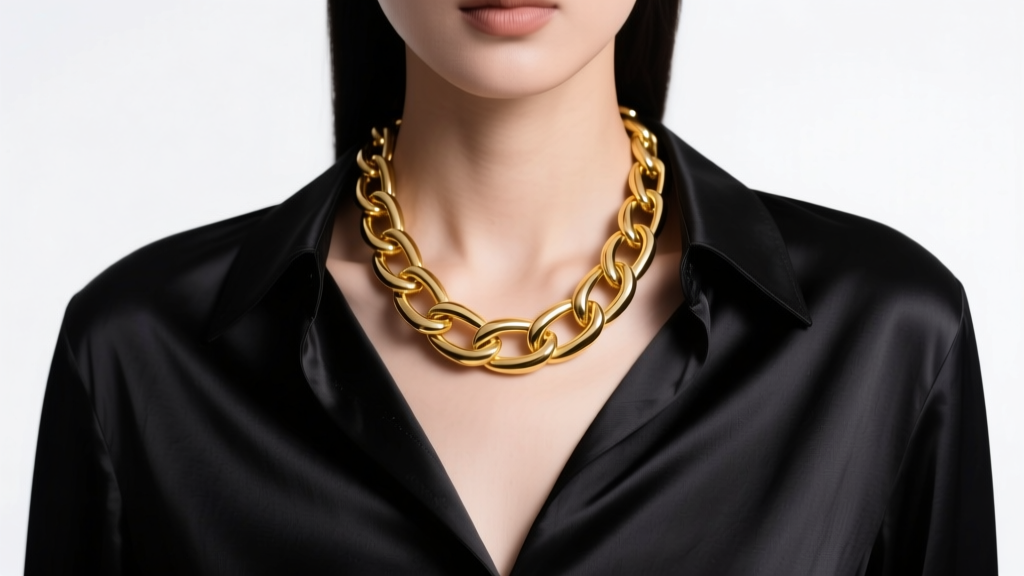
The Evolution of the Big Link Chain Necklace in 2026
The big link chain necklace has officially transcended its cyclical trend status to become a foundational pillar of modern jewelry architecture. In 2026, the jewelry industry has shifted away from the hollow, lightweight, fast-fashion resin and plated brass links of the early 2020s. Today’s consumer demands structural integrity, heirloom-quality metallurgy, and deliberate, oversized proportions. We are seeing a definitive move toward "hardware as jewelry," where chains are engineered with the same precision as luxury watch bracelets. Whether you are investing in solid gold or exploring advanced stainless steel alloys, understanding the mechanics, weight, and styling frameworks of oversized chains is critical for making an informed purchase.
Anatomy of the Modern Link: Profiles and Dimensions
Not all links are created equal. The visual weight and drape of a big link chain necklace are dictated by the specific link profile and its exact millimeter dimensions. In 2026, three distinct profiles dominate the high-end market:
- The Rounded Paperclip: Moving away from sharp, flat edges, the 2026 paperclip link features heavily beveled, rounded interiors. This profile catches light from multiple angles and prevents the links from pinching body hair or catching on delicate knitwear. Ideal widths range from 12mm to 18mm.
- The Beveled Cuban: A modernization of the classic hip-hop staple. The contemporary Cuban link features deeper diamond-cut bevels, creating a faceted, high-contrast sparkle. For a bold statement without crossing into costume territory, a 14mm to 20mm width is the current sweet spot.
- The Asymmetric Geometric: The true avant-garde choice of 2026. These chains alternate between elongated rectangular links and smaller, thick circular jump rings. Because of their irregular structure, they drape with an organic, fluid movement that rigid symmetrical chains cannot achieve.
According to manufacturing standards outlined by Rio Grande, the thickness of the wire used to forge these links (the gauge) must scale proportionally with the link's width. A 15mm wide link should be forged from at least 3.5mm to 4.5mm thick wire to prevent warping under its own weight.
Material Grades and Weight: A Technical Comparison
When dealing with oversized links, material density becomes a primary factor in both comfort and price. A chain that looks identical in design can vary in weight from 40 grams to over 150 grams depending on the metal. The Gemological Institute of America (GIA) notes that the alloy composition in karat gold significantly impacts durability, which is vital for heavy chains that endure high tensile stress.
| Material | Composition & Grade | Avg. Weight (18" Chain) | 2026 Price Range | Durability & Notes |
|---|---|---|---|---|
| Solid 14k Gold | 58.5% Gold, Copper/Silver Alloy | 45g - 85g | $3,500 - $7,500 | High. Excellent tensile strength for heavy links. |
| Solid 18k Gold | 75% Gold, Alloyed | 50g - 95g | $5,500 - $11,000+ | Medium. Softer; prone to micro-scratches on large surface areas. |
| Gold Vermeil | Sterling Silver Base, 2.5µm Gold | 30g - 55g | $350 - $900 | Low-Medium. High friction between links will wear through plating over time. |
| 316L Stainless Steel | Iron, Chromium, Molybdenum | 70g - 140g | $90 - $300 | Extremely High. Hypoallergenic, virtually scratch-proof, very heavy drape. |
The Clasp Conundrum: Engineering for Heavy Chains
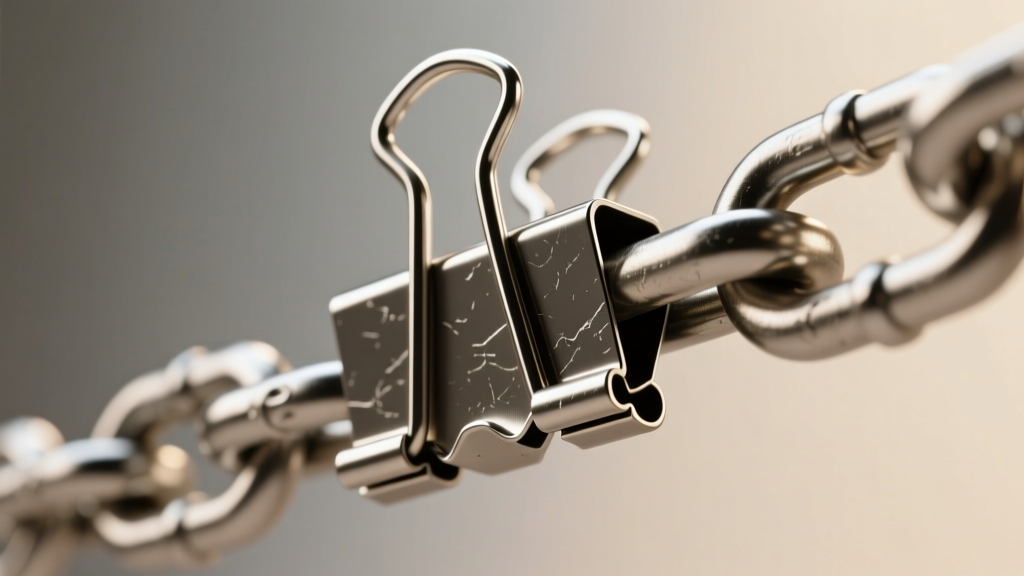
The most common point of failure on any big link chain necklace is the clasp. Standard 10mm or 12mm lobster clasps rely on a tiny internal spring mechanism. When subjected to the constant kinetic pull of a 75-gram chain, these springs fatigue, leading to accidental unfastening and lost jewelry. In 2026, high-end jewelers have abandoned the lobster clasp for heavy chains in favor of engineered alternatives:
- The T-Bar Toggle: A thick, weighted metallic bar that passes through a large oval ring. The sheer weight of the chain keeps the bar pulled taut against the ring, making it physically impossible to slip out during normal wear. Ensure the T-bar is at least 20% wider than the ring's inner diameter.
- The Box Clasp with Figure-8 Safety: A V-shaped lever clicks into a boxed housing. The "figure-8" safety catch is a secondary wire loop that snaps over a small bead on the opposite side, providing redundant security. This is the gold standard for chains exceeding 100 grams.
- Hidden Magnetic Clasps: New neodymium magnetic clasps encased in 14k gold offer a seamless, invisible closure. However, they are only recommended for chains under 50 grams, as the magnetic shear force can be overcome by a heavy chain catching on a sweater.
2026 Styling Frameworks: Proportion, Layering, and Necklines
Styling a big link chain necklace requires an understanding of visual weight and negative space. The "quiet luxury" movement has evolved into "architectural minimalism," meaning the chain should act as the sole focal point of the upper body. Here is a practical decision framework for styling your oversized chain this year.
The Neckline Matrix
- Crew Necks & Turtlenecks: Opt for a 20-inch to 22-inch chain length. The chain must rest entirely below the collarbone or entirely on top of the turtleneck fabric. A 16-inch choker-length big link will look cramped and cause fabric bunching.
- Deep V-Necks & Silk Slip Dresses: A 16-inch to 18-inch length works beautifully here, allowing the bottom link to sit precisely in the negative space of the V-neck without touching the bare skin of the sternum, which can cause the metal to heat up uncomfortably.
- Off-the-Shoulder & Asymmetric Tops: Choose a 14-inch collar-style length. The chain should frame the collarbone, acting almost as a metallic garment extension rather than a traditional pendant necklace.
The Art of High-Contrast Layering
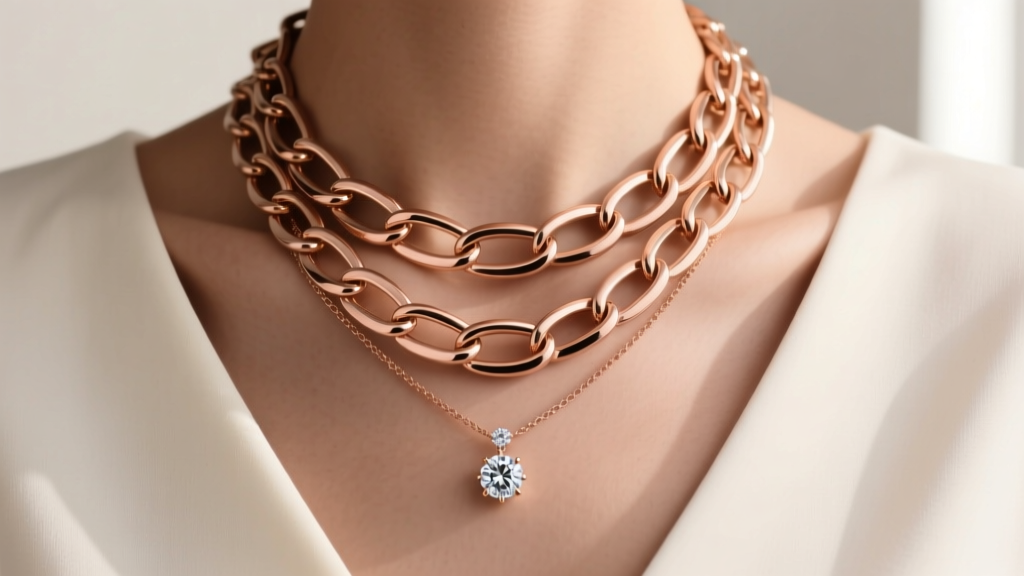
While wearing a single oversized chain remains the most elegant approach, 2026 has seen a resurgence in high-contrast layering. The golden rule is the Rule of Thirds. If your big link chain necklace is 18 inches long and 15mm wide, your secondary chain should be exactly 24 inches long and no wider than 2mm (such as a delicate box or cable chain with a solitary diamond pendant). This creates a deliberate, calculated disparity in scale that looks intentional rather than cluttered. Avoid layering two oversized chains; the friction between the large links will cause severe scratching and metal degradation.
Maintenance and Tarnish Prevention for Heavy Hardware
Cleaning a big link chain necklace requires specific protocols. Because of the large surface area and the friction points where the links interlock, grime, lotions, and dead skin cells accumulate rapidly in the crevices.
- Avoid Ultrasonic Cleaners for Hollow Links: If your chain is made of hollowed-out links (common in budget-friendly gold vermeil), ultrasonic vibrations can cause microscopic fractures in the soldered joints, and water can become trapped inside, leading to internal corrosion and skin irritation.
- The Soak and Brush Method: For solid gold and stainless steel, soak the chain in a bowl of warm water with three drops of mild, phosphate-free dish soap for ten minutes. Use a baby-soft toothbrush to gently agitate the interlocking joints. Rinse with distilled water to prevent hard water spotting.
- Polishing Large Facets: Use a treated jeweler's cloth specifically designed for the metal's karat. Because oversized links have broad, flat facets, micro-scratches are highly visible under direct sunlight. Wipe the chain in a single direction along the length of the link, rather than in circles, to maintain a uniform grain.
"A truly exceptional big link chain necklace is not just an accessory; it is a piece of wearable architecture. The way it articulates, the precision of its bevels, and the engineering of its clasp are what separate a fleeting trend from a generational heirloom."
By prioritizing structural engineering, proportional styling, and meticulous care, your oversized chain will remain a dominant, sophisticated force in your wardrobe for decades to come.


