The Ultimate Care Guide for Your Big Shell Necklace
Learn how to safely clean, polish, and maintain your big shell necklace. Expert tips on preventing nacre damage, cord rot, and calcium buildup.

The Unique Vulnerability of Large Shell Jewelry
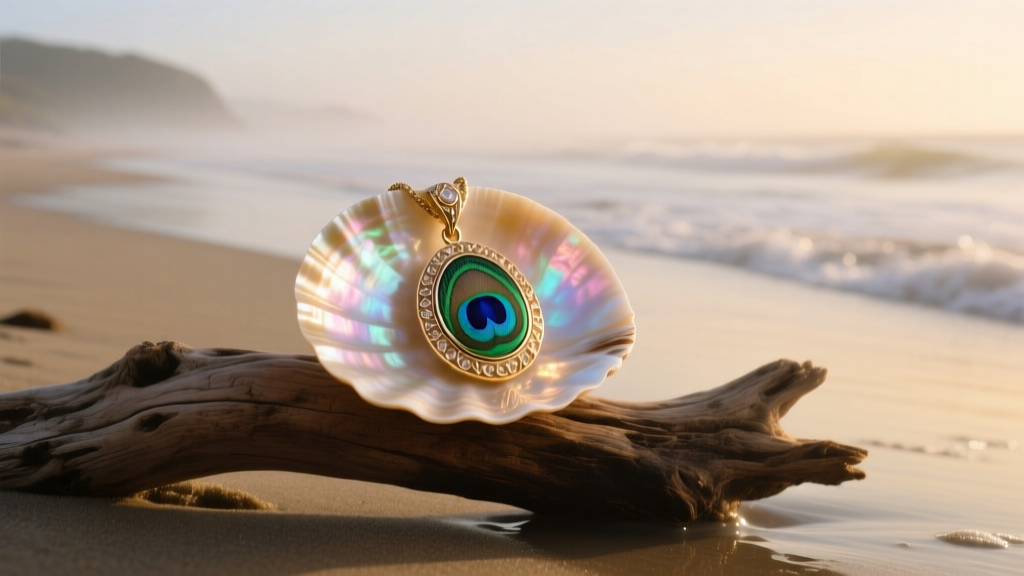
A big shell necklace is more than just a seasonal beach accessory; it is a substantial, organic statement piece. Whether your necklace features a massive carved Mother of Pearl pendant, a vibrant Abalone slice, or a strand of large Puka shells, you are wearing a biological marvel. However, the very properties that give shells their iridescent luster also make them uniquely vulnerable to environmental damage.
According to the GIA Gem Encyclopedia, shells are primarily composed of calcium carbonate (in the form of aragonite or calcite) bound together by an organic protein matrix called conchiolin. This composite structure, known as nacre, ranks between 2.5 and 4.0 on the Mohs hardness scale. To put that in perspective, it is significantly softer than quartz (7.0) and even window glass (5.5). Because of this organic-inorganic matrix, big shell necklaces are highly susceptible to acidic degradation, thermal shock, and micro-abrasions.
Daily Wear Rules: Preventing Nacre Degradation
The most common failure mode for large shell pendants is not physical impact, but chemical erosion. The calcium carbonate structure reacts violently with acids, leading to a dull, chalky appearance that cannot be reversed with simple polishing.
The Sunscreen and Sweat Factor
Modern chemical sunscreens often contain active ingredients like avobenzone and octocrylene, suspended in acidic or alcohol-heavy bases. When these formulations transfer to your shell necklace, they can strip the natural oils from the conchiolin, leading to microscopic flaking. Furthermore, human sweat has a pH ranging from 4.5 to 7.0, containing lactic acid and urea. If you wear a big shell necklace during a hot outdoor festival or a beach day without wiping it down afterward, the lactic acid will slowly etch the surface of the nacre.
Expert Rule of Thumb: Always adopt the 'Last On, First Off' protocol. Your shell necklace should be the final item you put on after applying SPF, perfume, and hairspray, and the very first item you remove when returning indoors.
Step-by-Step Cleaning Protocol for Big Shell Necklaces
When your necklace accumulates body oils, dust, or environmental grime, you must clean it using methods that respect its delicate Mohs rating. Never use ultrasonic jewelry cleaners. The high-frequency cavitation bubbles generated by ultrasonic machines will literally shatter the microscopic aragonite layers of the shell or detach it from its adhesive bezel.
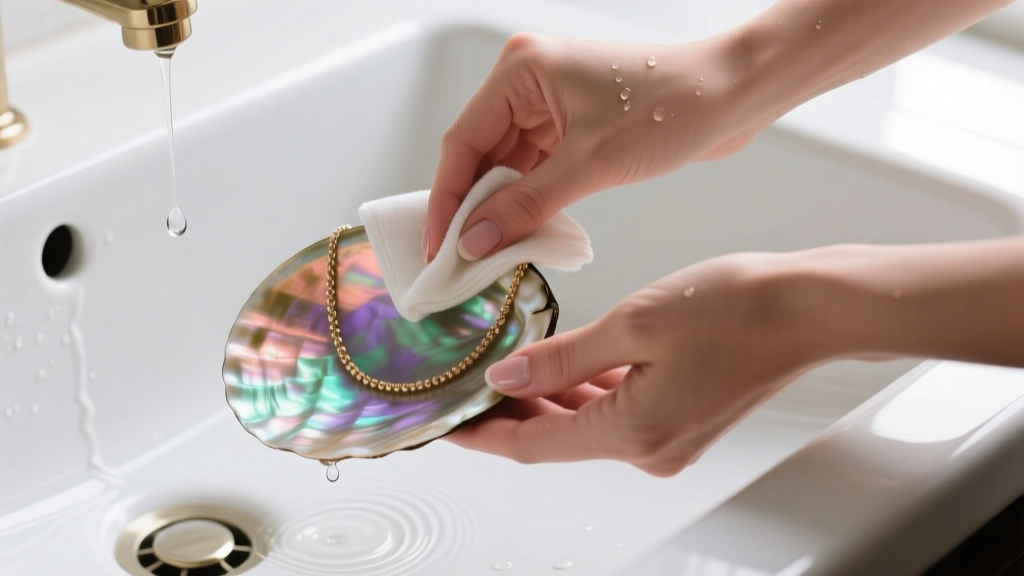
The Safe Cleaning Method
- Dry Dusting: Use a clean, dry, ultra-fine microfiber cloth to gently wipe away surface dust. Dust contains silica particles (Mohs 7.0); rubbing a dry shell without removing loose dust first will cause micro-scratches.
- The Damp Wipe: Mix two drops of pH-neutral, fragrance-free dish soap (like Dawn Free & Clear) into a bowl of lukewarm distilled water. Tap water often contains chlorine and dissolved minerals that can leave calcium deposits on the shell.
- Targeted Agitation: Dip a baby toothbrush (which has ultra-soft bristles) into the solution and gently agitate the crevices of the shell, especially around the bail or drill holes where sebum accumulates.
- Immediate Drying: Never submerge or soak a shell necklace. Water can weaken the silk or nylon cord and compromise the epoxy adhesives used in shell inlays. Wipe the shell immediately with a dry microfiber cloth.
Restoring Luster: Polishing and Oiling Techniques
Over time, even well-cared-for shells can lose their 'wet' look and appear slightly matte. This occurs when the conchiolin protein layer dries out. You can safely restore the luster of your big shell necklace using the right conditioning agents.
Food-grade mineral oil is the gold standard for shell maintenance. It is chemically inert, odorless, and will not go rancid. Apply a single drop of mineral oil to a soft cotton pad and buff it into the shell using circular motions. Let it sit for five minutes, then buff off the excess with a clean cloth. Avoid using olive oil, coconut oil, or petroleum jelly. Plant-based oils contain triglycerides that will eventually oxidize, turn rancid, and emit a sour odor, while petroleum products can degrade the organic protein matrix over time. For a specialized alternative, jewelers often use microcrystalline Renaissance Wax, which provides a protective barrier against humidity and acidic skin contact.
Hardware and Cord Maintenance
The structural integrity of a heavy shell pendant relies entirely on its suspension system. Large shells carry significant kinetic weight; a dropped shell necklace hitting a tile floor will almost certainly result in a catastrophic fracture due to the material's lack of cleavage and high brittleness.
- Silk Cords: Traditional and beautiful, but silk loses up to 20% of its tensile strength when wet and degrades rapidly under UV exposure and acidic sweat. Replace silk cords annually if worn frequently.
- Waxed Polyester/Nylon: The superior choice for everyday wear. These synthetic cords are impervious to sweat, UV resistant, and maintain their structural integrity indefinitely.
- Metal Chains: If your shell is suspended on a sterling silver or brass chain, be aware that the chain will tarnish. When polishing the metal chain with chemical silver dips or abrasive polishing cloths, remove the shell pendant first. The chemicals used to strip silver sulfide (tarnish) will permanently cloud the shell's nacre.
Shell Type Hardness & Vulnerability Chart
Different shells possess varying densities and structural weaknesses. According to mineralogical data from Mindat.org, the specific crystalline structure dictates how you should handle the piece. Refer to the chart below to identify your necklace's specific needs.
| Shell Material | Mohs Hardness | Primary Vulnerability | Specific Care Instruction |
|---|---|---|---|
| Mother of Pearl (Nacre) | 2.5 - 3.0 | Acid etching, scratching | Keep away from citrus and vinegar; store away from diamonds. |
| Abalone | 3.0 - 3.5 | Thermal shock, delamination | Never use hot water; avoid extreme temperature changes. |
| Conch (Porcelaneous) | 3.5 - 4.0 | UV fading, surface chalking | Store in dark environments; UV light destroys the pink pigment. |
| Puka (Naturally tumbled) | 3.0 | Staining from dyes/oils | Avoid contact with dark denim or heavily dyed fabrics when damp. |
| Cowrie | 3.0 - 3.5 | Loss of glossy enamel layer | Do not use abrasive polishing compounds; the glossy layer is finite. |
Proper Storage to Prevent Micro-Scratches
How you store your big shell necklace when it is not being worn is just as critical as how you clean it. Because shells rank so low on the Mohs scale, storing them in a communal jewelry box is a recipe for disaster. A standard gold or silver chain (Mohs 2.5-3.0 but often alloyed harder) or a gemstone like quartz (Mohs 7.0) will easily carve deep, irreversible scratches into the shell's surface.
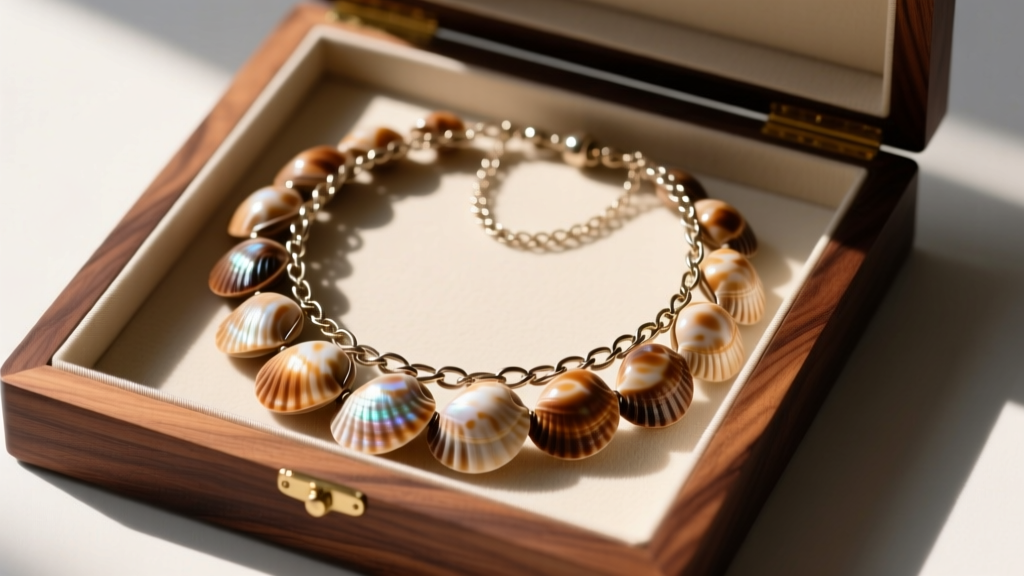
Store your shell necklace in a dedicated, soft-lined pouch. However, avoid airtight plastic bags or anti-tarnish ziplock bags for long-term storage. Organic gems require a stable, moderate humidity level (around 40-50%). If stored in an overly dry, airtight environment, the conchiolin can desiccate, leading to microscopic crazing (a network of fine cracks) across the surface of the shell. Conversely, high humidity can promote mold growth on natural fiber cords. A fabric-lined jewelry box in a climate-controlled bedroom offers the ideal microclimate for preserving the structural and visual integrity of your organic treasures.
Frequently Asked Questions
Can I wear my big shell necklace in the ocean or a swimming pool?
It is highly discouraged. While the ocean is the shell's natural habitat, saltwater crystallization can leave stubborn deposits in the drill holes and crevices of carved pendants. More importantly, swimming pools contain chlorine and bromine, which are highly reactive halogens that will rapidly degrade the calcium carbonate structure, leaving the shell permanently pitted and chalky.
My shell necklace has developed a white, chalky spot. Can I fix it?
A chalky spot indicates that the top layer of nacre has been chemically etched by acid (usually sweat or perfume). Because the material is physically removed, you cannot 'clean' it away. A professional lapidary may be able to lightly buff the surface to expose fresh nacre underneath, but this is risky on thin shell slices and should only be attempted by an expert.


