Custom Gold Necklace Name Value & Budget Breakdown
Discover the true cost of a custom gold necklace name pendant. We break down karat pricing, labor fees, and chain options to maximize your jewelry budget.

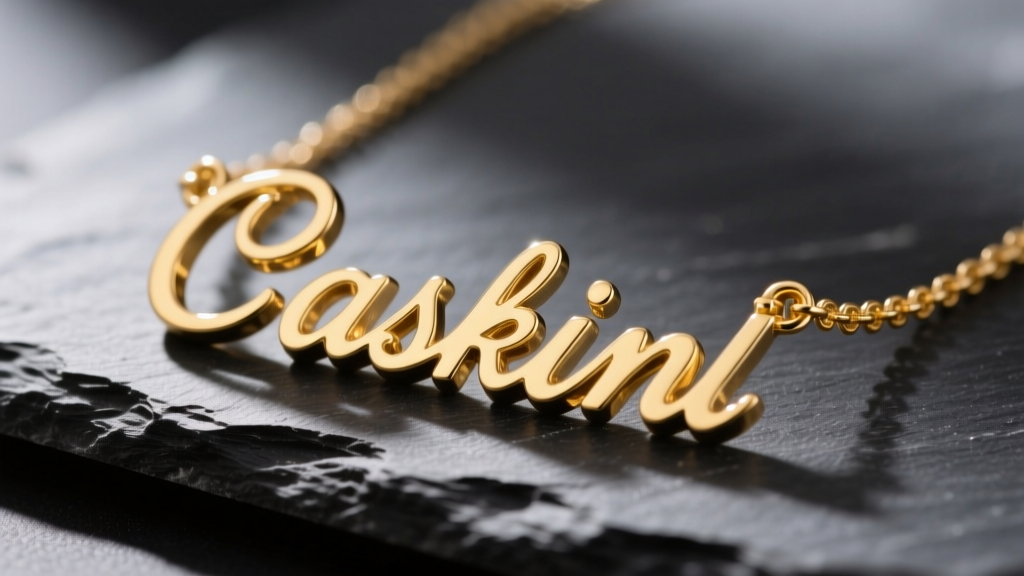
The personalized jewelry market has matured significantly as we move through 2026. Consumers are no longer satisfied with the thin, easily tangled, and quickly tarnishing fast-fashion nameplates of the early 2010s. Today, a custom gold necklace name pendant is viewed as an investment piece, a modern heirloom, and a staple of everyday layering. However, this shift toward quality has created a confusing pricing landscape. When you request a quote for a custom nameplate, the prices can range from $150 to well over $1,500. Understanding where your money is actually going is the key to assessing true value and avoiding inflated retail markups.
In this comprehensive budget guide, we will deconstruct the anatomy of a name necklace price tag, analyze the structural engineering required for daily wear, and provide a concrete framework to evaluate any quote you receive from a jeweler.
The Anatomy of a Name Necklace Price Tag
To accurately assess the value of a custom piece, you must separate the raw material cost from the manufacturing labor. The price of any solid gold nameplate is dictated by three primary variables: the daily spot price of gold, the karat purity, and the total gram weight of the final cut piece. According to the Kitco precious metals market, gold spot prices have seen substantial upward momentum over the last few years, meaning the baseline material cost for jewelers is higher than ever.
Jewelers calculate the base cost by converting the troy ounce spot price into a per-gram metric, then multiplying it by the purity percentage of the chosen alloy. But the raw gold is only half the equation. The 'kerf' (the width of the material removed by the laser or saw) and the connecting bridges between cursive letters add hidden weight and labor complexity to your final bill.
2026 Market Pricing Matrix: Karat vs. Weight
The table below provides a realistic baseline for what you should expect to pay for the pendant only (excluding the chain) based on an average 4-gram to 6-gram nameplate. These estimates include a standard retail markup and basic laser-cutting labor.
| Karat Grade | Purity % | Durability Profile | Est. Price (4g Script) | Est. Price (6g Script) |
|---|---|---|---|---|
| 10k Gold | 41.7% | Highly durable, prone to dulling | $180 - $240 | $260 - $320 |
| 14k Gold | 58.5% | Industry standard, excellent balance | $280 - $380 | $400 - $520 |
| 18k Gold | 75.0% | Softer, richer color, luxury tier | $450 - $600 | $650 - $850 |
| 22k Gold | 91.6% | Very soft, high risk of bending | $700 - $900 | $1,000 - $1,300 |
Karat Weight vs. Durability: What Should You Pay?
When commissioning a gold necklace name design, selecting the right karat is a critical budget and longevity decision. The Gemological Institute of America (GIA) outlines that pure 24k gold is far too malleable for intricate, thin-cut jewelry. If you drop a 22k or 24k nameplate, the delicate loops connecting the cursive letters will likely bend or snap under the impact.
14k Gold (58.5% Pure): This is the undisputed champion of personalized nameplates. The alloy mix (typically copper, silver, and zinc) provides the necessary tensile strength to support the delicate 'bridges' between script letters. If you are on a strict budget but refuse to compromise on structural integrity, 14k is your target.
18k Gold (75% Pure): Choose 18k if you prioritize a deeper, richer yellow hue and have a higher budget. However, be aware that 18k script nameplates require slightly thicker connecting bridges to prevent snapping, which increases the overall gram weight and, consequently, the final price.
White Gold Considerations: If you prefer a silver-toned nameplate, remember that 14k and 18k white gold are naturally pale yellow. They require rhodium plating to achieve a bright white finish. Factor in a $30 to $50 re-plating cost every 12 to 18 months, as the friction against your skin and clothing will eventually wear the rhodium away from the back of the nameplate.
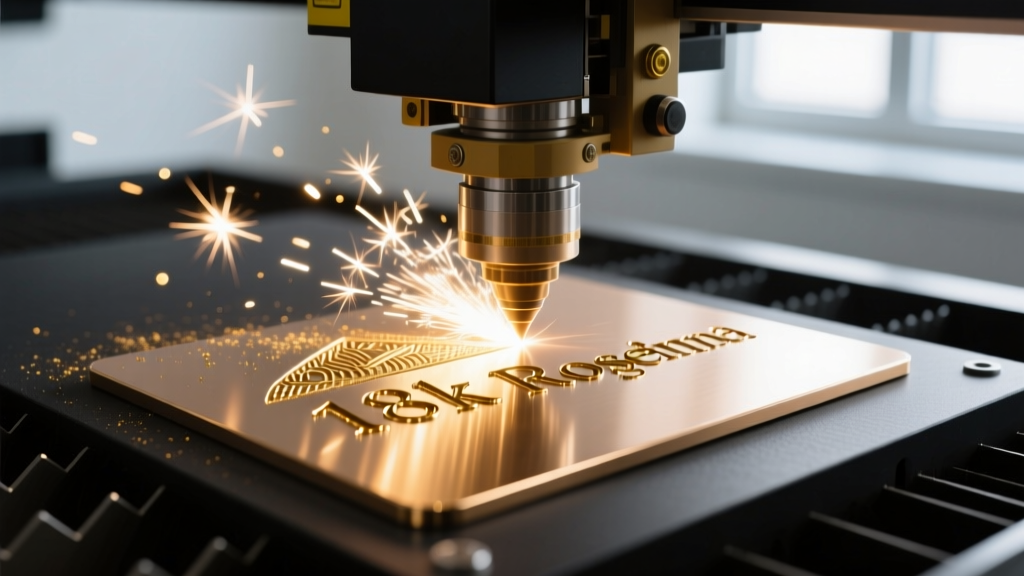
Manufacturing Methods: Laser Cutting vs. Die Striking
The way your nameplate is born from a sheet of gold drastically affects both the price and the design possibilities. In 2026, advanced fiber lasers are the industry standard, but older methods still exist in mass-market retail.
- Fiber Laser Cutting (Custom): A high-powered laser vaporizes the gold along a CAD vector path. This allows for infinite font customization, exact sizing, and the inclusion of small charms (like hearts or stars) attached to the final letter. The labor cost is a flat setup fee (usually $40-$75) plus the gold weight.
- Die Striking (Mass Produced): A machine stamps pre-made fonts out of thin gold sheets. These are cheaper but limit you to standard, often outdated, block fonts. The edges can sometimes be sharp, and the metal is often work-hardened to the point of brittleness.
- Hand Engraving / Fretwork: A master jeweler cuts the nameplate using a microscopic saw blade. This is exceptionally rare today and commands a massive premium (often $300+ just for labor), but yields slightly softer, rounded edges that lasers cannot replicate without secondary polishing.
The Hidden Cost of Cursive 'Bridges'
Many buyers do not realize that choosing a cursive script font over a block font increases the gold weight. Cursive requires overlapping loops and structural bridges to keep the letters connected in a single, cohesive unit. A block-letter nameplate where the letters are separated by jump rings will weigh significantly less than a continuous cursive script of the same physical length. Always ask your jeweler for the estimated final gram weight based on your specific font choice before authorizing the cut.
Chain Selection: The Hidden Cost Multiplier
A heavy gold nameplate on a weak chain is a recipe for disaster. The most common failure point in personalized jewelry is not the nameplate itself, but the chain snapping under the pendant's dynamic weight. When budgeting, you must allocate at least 30% to 40% of your total budget to a high-quality chain.
Engineering the Perfect Chain-to-Pendant Ratio
As a general rule of thumb endorsed by master bench jewelers, your chain should weigh at least one-third of the pendant's weight for safe daily wear. If your custom nameplate weighs 6 grams, you need a chain that weighs a minimum of 2 to 3 grams.
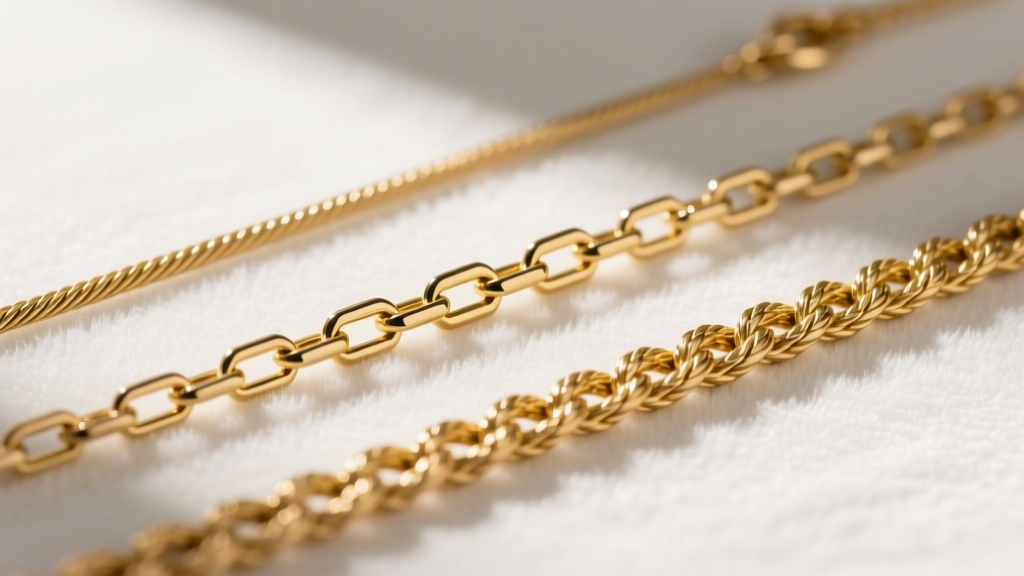
- Cable Chain (0.8mm - 1.0mm): Best for lightweight, minimalist nameplates (under 3 grams). Delicate and prone to kinking if slept in.
- Box Chain (1.2mm - 1.5mm): The optimal choice for standard 4g to 8g nameplates. The square, interlocking links distribute weight evenly and resist kinking.
- Rope Chain (1.5mm - 2.5mm): Necessary for oversized, heavy statement nameplates (10+ grams). The twisted links provide immense tensile strength and a high-sparkle finish that complements the solid nameplate.
Pro Tip: Never use a spring-ring clasp for a nameplate over 4 grams. The internal spring mechanism is a weak point. Always upgrade to a solid lobster claw clasp, which adds about $15 to $25 to your chain cost but drastically improves security.
How to Spot Overpriced Custom Nameplates
Not all jewelers price their custom work transparently. When evaluating a quote for your gold necklace name piece, watch out for these common retail traps:
- The 'Per Letter' Markup: Some mall kiosks charge a flat rate per letter (e.g., $50 per letter). This is a massive red flag. You are paying for the gold weight and the machine time, not the alphabet. A 4-letter name and an 8-letter name cut from the same thickness sheet should only differ in price based on the exact gram weight of the final cut.
- Inflated Soldering Fees: Attaching the two jump rings to the outer edges of the nameplate requires basic laser or torch soldering. If a jeweler charges more than $30 for this standard bench procedure, they are padding the labor cost.
- Hollow or Puffed Gold: Some manufacturers create 'puffed' nameplates that look thick from the front but are hollowed out in the back to save on gold weight. While cheaper upfront, these are nearly impossible to repair if dented and hold very little resale or scrap value.
Final Verdict: Calculating Your ROI on Personalized Gold
Ultimately, the value of a custom gold name necklace lies in its emotional resonance paired with its physical durability. By focusing on 14k solid gold, selecting a structurally sound font with adequate bridging, and pairing it with a weight-appropriate box or rope chain, you ensure the piece will survive decades of daily wear. When you receive a quote, break it down: calculate the melt value of the estimated grams, add a reasonable $50-$100 labor and setup fee, and factor in the chain cost. If the retail quote is more than 2.5x that total baseline, it is time to negotiate or find a more transparent custom jeweler.


