Bigfoot Necklace Deep Dive: Metals, Casting & Chain Pairings
Explore the technical details of a premium bigfoot necklace. Learn about silver casting, patina techniques, and ideal chain gauges for heavy pendants.

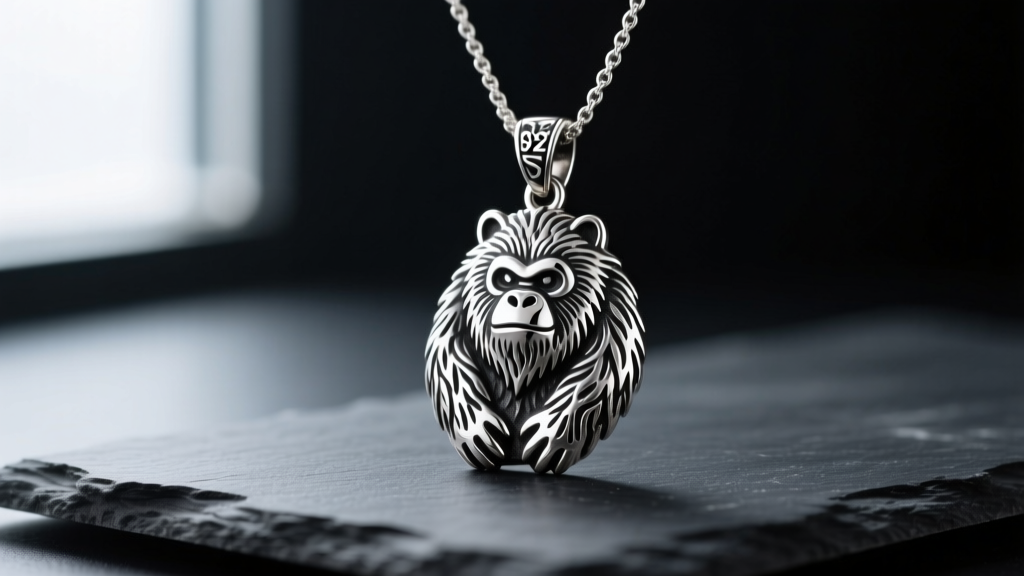
The bigfoot necklace has evolved dramatically over the last decade. Once relegated to Pacific Northwest tourist trap gift shops as cheap, die-struck base metal trinkets, the Sasquatch profile has been reclaimed by artisanal jewelers and cryptozoology enthusiasts alike. Today, a premium bigfoot pendant is a masterclass in organic texture, heavy-metal casting, and deliberate patina work. For collectors and daily wearers, understanding the metallurgy, casting techniques, and structural chain pairings is essential to separating a novelty toy from a lifelong statement piece.
Beyond the Souvenir Shop: Anatomy of a Premium Bigfoot Pendant
Creating a high-end bigfoot necklace begins long before molten metal is poured. While mass-produced pendants are stamped from thin sheets of zinc alloy, premium pieces are born from lost-wax casting. The process starts with a digital 3D sculpt or a hand-carved wax model. Because the defining characteristic of a Sasquatch pendant is its dense, rugged fur, digital sculptors often use specialized alpha brushes in software like ZBrush to stamp directional hair textures. Unlike automated noise modifiers, hand-directed strokes ensure the fur flows naturally, mimicking wind and anatomical muscle structure.
Once the master model is 3D printed in castable resin or carved from jeweler's wax, a sprue is attached. For a heavy pendant weighing between 20g and 35g, the sprue must be exceptionally thick (often 3mm to 4mm in diameter) and attached at the base of the neck or behind the head. This strategic placement ensures that molten silver flows completely into the deep undercuts of the fur texture without premature cooling, which would otherwise result in porosity or incomplete fills. After casting, the sprue is cut flush, filed, and sanded, leaving no trace on the final profile.
Metallurgy & Material Grades for Cryptozoology Jewelry
The choice of metal dictates not only the price but the longevity, weight, and skin-reactivity of the pendant. While base metals are common in the novelty market, serious collectors gravitate toward precious metals for their density and ability to hold a polish. Below is a technical breakdown of the most common materials used in premium bigfoot jewelry.
| Material | Composition | Density (g/cm³) | Tarnish Resistance | Est. Price Range (25g Pendant) |
|---|---|---|---|---|
| Zinc Alloy (Zamak) | Zn, Al, Cu, Mg | 6.6 | Poor (Prone to pitting) | $15 - $35 |
| Solid Brass | Cu, Zn | 8.4 | Moderate | $45 - $85 |
| 925 Sterling Silver | 92.5% Ag, 7.5% Cu | 10.3 | Low (Patina prone) | $160 - $350 |
| Argentium Silver | 93.5% Ag, Ge, Cu | 10.3 | High (Firescale resistant) | $220 - $450 |
| 14k Yellow Gold | 58.5% Au, Ag, Cu | 13.0 | Excellent | $1,400 - $2,800 |
For most enthusiasts, 925 Sterling Silver offers the ideal balance of heft, detail retention, and price. However, Argentium Silver is increasingly favored by master jewelers. By replacing a portion of the copper alloy with germanium, Argentium drastically reduces firescale during the casting and soldering process, resulting in a brighter, more reflective canvas for oxidation techniques.
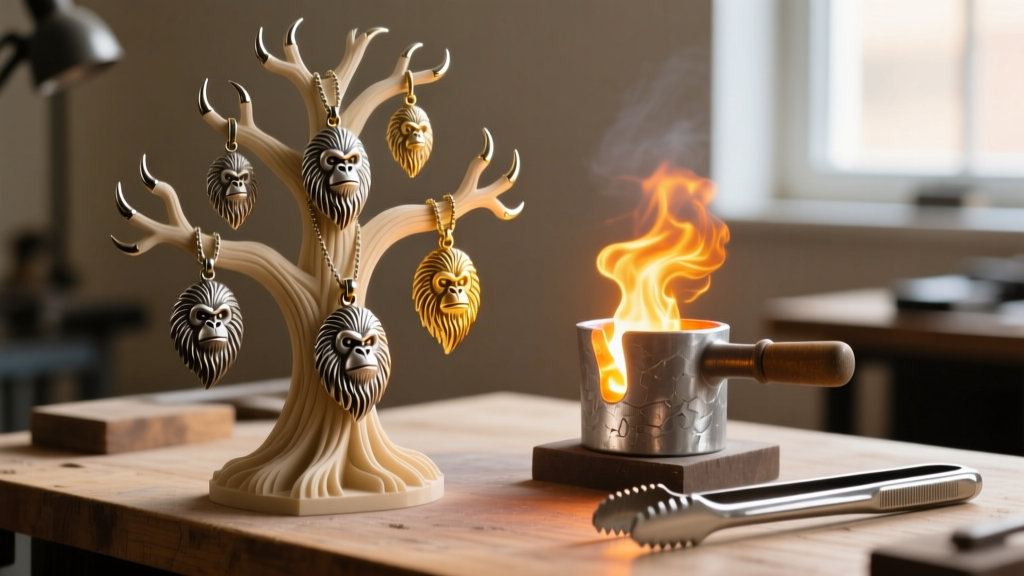
The Art of Oxidation: Achieving the Perfect Woodland Patina
A flat, highly polished silver bigfoot pendant loses much of its rugged character. The deep undercuts of the fur, the brow ridge, and the jawline require contrast to pop. This is achieved through chemical oxidation, most commonly using Liver of Sulfur (LOS), a mixture of potassium sulfide and potassium polysulfide. When applied to sterling silver, the sulfur reacts with the copper in the alloy to create copper sulfide, resulting in a dark, gunmetal-black finish.
According to metallurgical guidelines from Ganoksin, the key to a premium patina is dilution and temperature control. Amateurs often use a highly saturated, hot LOS solution, which results in a flaky, uneven 'shoe polish' black that easily rubs off. Experts use a weak, cool solution—roughly a pea-sized amount of LOS gel to two cups of lukewarm water. The pendant is dipped repeatedly for 10-second intervals, allowing the oxidation to build up in microscopic layers. This creates a durable, deeply embedded patina that will not easily chip or flake.
Once fully oxidized, the jeweler uses a treated polishing cloth or a mild abrasive pad to buff only the high-relief areas—the tip of the nose, the brow bone, and the outer edges of the fur. This two-tone finish, known as a 'burnished patina,' highlights the intricate 3D sculpting while maintaining the dark, mysterious shadows of the creature's profile.
Chain Selection: Matching Gauge and Bail to Heavy Pendants
A premium solid silver bigfoot pendant is remarkably heavy, often weighing between 25 and 40 grams. This mass creates significant kinetic force on the chain and bail during daily movement. Pairing a heavy pendant with an undersized chain is the leading cause of jewelry failure in the cryptozoology community.
Engineering the Bail
The bail is the critical bridge between pendant and chain. Standard loop bails soldered to the back of the head are prone to snapping under the leverage of a 35g pendant. Instead, look for a 'V-bail' or a wide 'saddle bail' that is cast directly into the wax model or soldered with heavy-duty paste. The inner diameter of the bail must be at least 5mm x 8mm to accommodate thicker, heavy-duty chains without causing friction wear.
Chain Gauges and Tensile Strength
When selecting a chain, tensile strength is more important than aesthetic alone. Data from industrial jewelry suppliers like Rio Grande highlights the vast differences in load-bearing capacities among chain styles.
- Wheat (Spiga) Chain (3.0mm - 4.0mm): The absolute best choice for heavy pendants. The interlocking, four-link braided structure distributes weight evenly and resists kinking. A 3.5mm wheat chain can withstand over 45 lbs of tensile force.
- Rope Chain (3.5mm - 5.0mm): Excellent durability and a twisted aesthetic that mimics natural fibers. However, the diamond-cut facets can sometimes catch on the rough texture of an oxidized pendant bail.
- Box Chain (2.5mm+): Generally discouraged for heavy pendants. The sharp 90-degree angles of the box links are prone to collapsing and kinking when subjected to heavy point-loads and lateral twisting.
- Cable Chain (Under 2.5mm): Strictly avoid. A standard 2.0mm cable chain has a breaking point of roughly 12-15 lbs, which a heavy bigfoot pendant can easily exceed during a sudden jerk or snag.
Maintenance and Care for Textured Silver Pendants
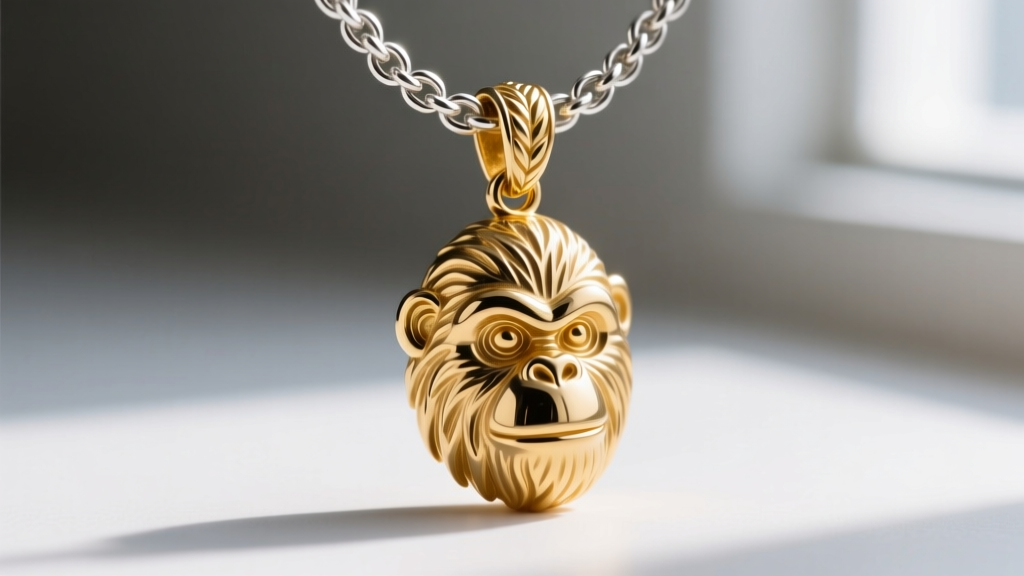
Maintaining a patinated bigfoot necklace requires a departure from standard silver cleaning routines. The most common mistake owners make is placing an intentionally oxidized pendant into an ultrasonic cleaner. The high-frequency cavitation bubbles generated by ultrasonic machines are highly effective at blasting dirt out of crevices, but they will also strip the delicate liver of sulfur patina right out of the fur textures, leaving the piece a flat, uniform gray.
Instead, clean your pendant using a solution of mild, phosphate-free dish soap and lukewarm water. Use a soft-bristled baby toothbrush to gently agitate the deep fur grooves, removing skin oils, lotions, and environmental dust. Rinse thoroughly and pat dry with a microfiber cloth.
Over time, the high-polish areas (the nose and brow) may naturally tarnish from exposure to sulfur in the air and your skin's pH. To restore the contrast, use a specialized jeweler's polishing cloth impregnated with mild micro-abrasives. Gently rub only the raised, high-relief areas. Never press the cloth deep into the recesses, as doing so will slowly erase the dark patina that gives the bigfoot necklace its depth, character, and woodland mystique.
Final Thoughts on Sourcing
When investing in a premium bigfoot necklace, always verify the maker's hallmark (such as a .925 stamp and a registered maker's mark) and inquire about the casting method. Hand-finished, lost-wax cast pieces in solid sterling silver or gold, paired with a structurally sound wheat or rope chain, will ensure your cryptozoology statement piece survives the trails, the woods, and the test of time.


