Bike Necklace Trends 2026: From Urban Cycling to High Jewelry
Discover the 2026 bike necklace trend. Explore how urban cycling culture transformed bicycle pendants into high-fashion, minimalist jewelry staples.

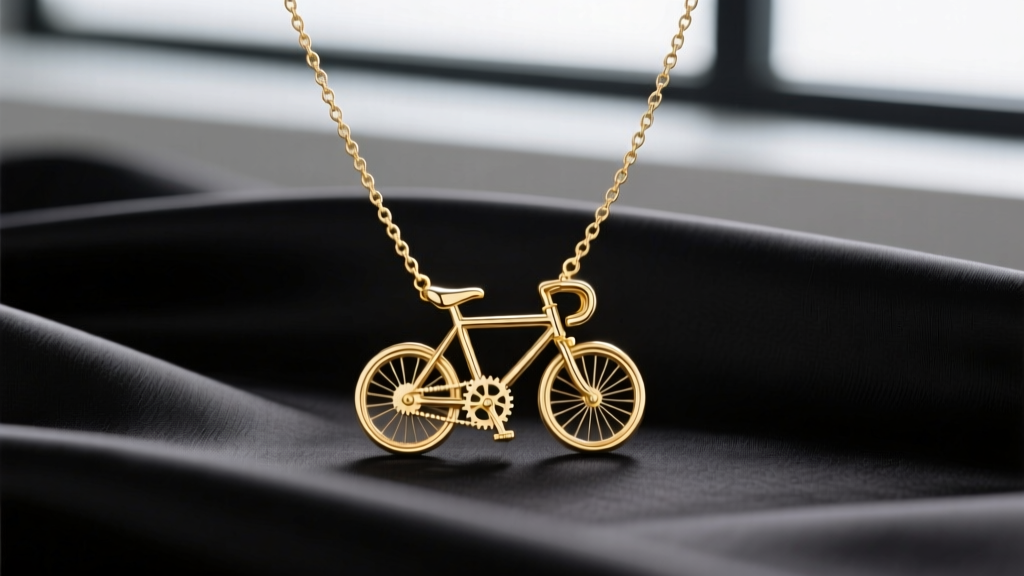
Once relegated to the realm of quirky novelty gifts and amateur cycling club merchandise, the bike necklace has undergone a radical metamorphosis. In 2026, the bicycle pendant is no longer just a literal representation of a hobby; it is a sophisticated emblem of urban mobility, sustainable living, and architectural minimalism. As global cities expand their cycling infrastructure and eco-conscious commuting becomes a core component of modern lifestyle branding, jewelry designers have responded by elevating the humble bicycle silhouette into a high-fashion staple.
This comprehensive style and trend analysis breaks down the metallurgical innovations, design variations, and precise styling techniques that define the modern bike necklace. Whether you are an everyday urban commuter or a high-end jewelry collector, understanding the nuances of this trend is essential for curating a contemporary wardrobe.
The Pedal-Powered Renaissance: Why the Bike Necklace is Dominating 2026
The intersection of "quiet luxury" and "eco-commuter" culture has created a perfect storm for the bike necklace. According to trend forecasts highlighted by Vogue Business, consumers are increasingly demanding that their accessories reflect their personal values without sacrificing aesthetic refinement. The bulky, enamel-filled bicycle pendants of the early 2010s have been entirely replaced by micro-engineered, negative-space silhouettes that prioritize clean lines and geometric balance.
This shift is heavily influenced by the aesthetics of modern bicycle manufacturing. Just as high-end road bikes now feature matte finishes, internal cable routing, and carbon-fiber monocoques, contemporary bike necklaces mimic these sleek, aerodynamic profiles. The result is a pendant that feels less like a souvenir and more like a piece of kinetic, wearable architecture.
Material Grades and Manufacturing: Beyond Cheap Alloys
The most significant evolution in the 2026 bike necklace market is the departure from cheap zinc alloys and brass bases. Today’s premium pendants are CNC-machined or precision-cast from high-performance metals designed to withstand the rigors of daily wear, sweat, and environmental exposure.
316L Surgical Stainless Steel: The Commuter’s Workhorse
For the active cyclist who wears their jewelry on the road, 316L stainless steel is the undisputed champion. Unlike standard 304 stainless steel, 316L contains molybdenum, which drastically increases its resistance to chloride corrosion (i.e., human sweat and coastal humidity). A 316L bike pendant will not tarnish, requires zero polishing, and is entirely hypoallergenic. Expect to pay between $45 and $95 for high-quality, PVD-coated steel pieces.
Recycled 14k Gold: The Eco-Conscious Luxury Choice
As sustainability becomes a non-negotiable metric for luxury buyers, the Responsible Jewellery Council has noted a massive spike in the demand for certified recycled precious metals. A 14k recycled gold bike necklace offers the warmth and prestige of fine jewelry while aligning with the eco-friendly ethos of cycling. These pieces are typically cast using the lost-wax method from 3D-printed resin models, allowing for impossibly thin frame tubes (often under 0.8mm in diameter) that maintain structural integrity.
Grade 5 Titanium (Ti-6Al-4V): The Performance Standard
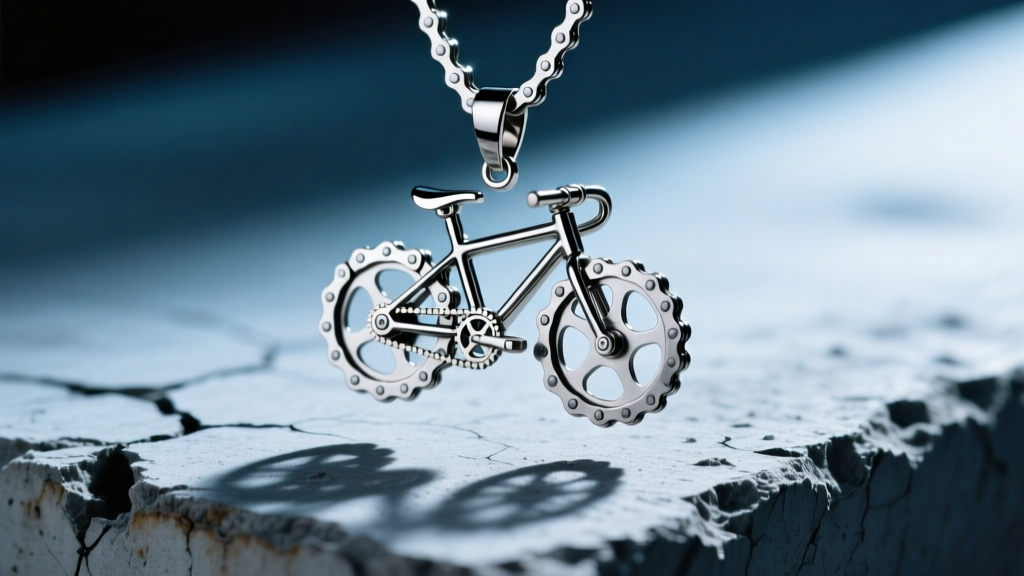
Grade 5 titanium is an aerospace alloy that is 45% lighter than steel but boasts superior tensile strength. Jewelers utilizing titanium for bike necklaces are often employing 5-axis CNC milling to carve the pendants from solid billets. The resulting pieces are featherlight, completely immune to corrosion, and possess a distinct, cool-grey gunmetal aesthetic that appeals to the performance-oriented cyclist.
Design Variations: Sprockets, Silhouettes, and Moving Parts
The 2026 market is segmented into three primary design philosophies, each catering to a different aesthetic preference.
- The Kinetic Chainring: The pinnacle of micro-engineering. These pendants feature a central chainring that actually spins. High-end versions utilize micro-ball bearings with 0.05mm tolerances, ensuring a smooth, silent rotation that mimics a real bicycle drivetrain. Lower-tier versions use simple friction washers, which can degrade and squeak over time.
- Negative Space Silhouettes: Instead of a solid metal bike, the pendant is a solid geometric shape (like a hexagon or circle) with the bicycle laser-cut out of the center. This minimalist approach allows the wearer's clothing or skin tone to provide the contrast, making it highly versatile for both casual and formal wear.
- The Spoke-Wheel Locket: A functional fusion of heritage and modern design. The front wheel of the bicycle pendant acts as a hinged locket, secured by a micro-magnetic clasp. It is designed to hold a 4mm micro-photo or a small keepsake, adding a layer of personal sentimentality to the mechanical design.
Chain Pairings and Lengths for the Cyclist Aesthetic
A common failure point in active jewelry is the chain. A delicate cable chain will easily snap if caught on a cycling jacket zipper or subjected to the tension of an active commute. Below is a structural comparison of the best chain types to pair with a bike necklace in 2026.
| Chain Type | Recommended Gauge | Tensile Strength | Best Use Case |
|---|---|---|---|
| Box Chain | 1.5mm - 2.0mm | High | Everyday urban commuting; resists kinking and lays flat against the collarbone. |
| Wheat Chain | 1.2mm - 1.8mm | Very High | Active cycling; the woven oval links distribute tension evenly, preventing snaps. |
| Rope Chain | 2.0mm - 3.0mm | Moderate | Fashion layering; highly reflective but prone to catching on body hair or fabrics. |
| Cable Chain | 1.0mm - 1.5mm | Low | Strictly formal/office wear; too fragile for the physical demands of cycling. |
How to Style a Bicycle Pendant for Different Occasions
Styling a bike necklace requires balancing its inherent sportiness with the formality of your outfit. The "Commuter Layer" is the dominant styling technique of 2026. This involves pairing a 16-inch box chain bike pendant with an 18-inch geometric bar pendant or a simple 3mm signet chain. The 2-inch difference in length prevents the clasps from tangling while creating a cohesive, intentional look.
For the office, opt for a negative-space silhouette in polished 14k gold, worn at a 17-inch length so it rests just below the collar of a button-down shirt. Avoid kinetic or moving parts in professional settings, as the subtle clicking sound can be distracting in quiet boardrooms. Conversely, for weekend rides or casual streetwear, a matte-finished Grade 5 titanium kinetic pendant on a 20-inch wheat chain perfectly complements the relaxed, utilitarian vibe of technical fabrics and denim.
Market Leaders and Price Points
Navigating the market requires understanding what you are paying for. The table below outlines the current 2026 pricing tiers for authentic, high-quality bike necklaces.
| Tier | Price Range | Typical Materials | Manufacturing Method |
|---|---|---|---|
| Entry / Active | $40 - $90 | 316L Steel, PVD Black Coating | Die-cast, machine-polished |
| Mid / Artisan | $120 - $350 | Grade 5 Titanium, Sterling Silver | CNC Milled, hand-finished |
| High / Luxury | $450 - $1,200+ | Recycled 14k/18k Gold, Lab Diamonds | Lost-wax casting, micro-pave setting |
"The modern bike necklace is a testament to the fact that functional lifestyle markers can be elevated to fine jewelry status without losing their core identity. It is jewelry for the forward-moving individual." — Contemporary Jewelry Design Quarterly
Ultimately, the 2026 bike necklace trend is about more than just a love for two wheels. It is a celebration of engineering, sustainable transport, and the quiet confidence of the modern commuter. By selecting the right material grade, prioritizing structural chain integrity, and embracing minimalist silhouettes, you can seamlessly integrate this dynamic pendant into your permanent jewelry rotation.


