The Necklace Hanger Wall: 2026 Jewelry Decor Trends
Discover the 2026 necklace hanger wall trend. Learn how to style, build, and protect your jewelry collection with expert layout and material tips.

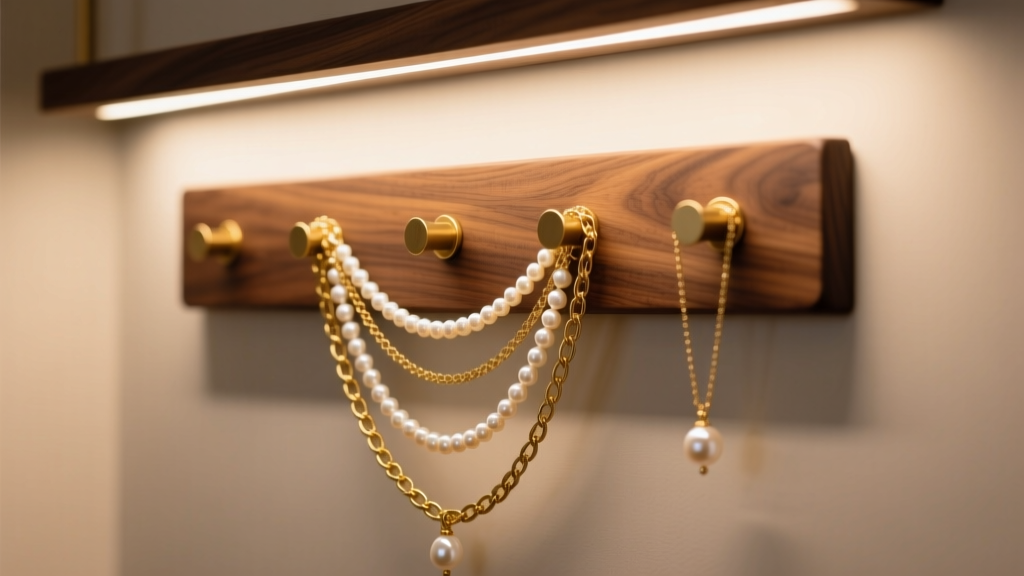
The Rise of the Curated Necklace Hanger Wall
In the evolving landscape of interior design and personal style, the way we interact with our jewelry collections has fundamentally shifted. As we move through 2026, the concept of hidden storage is being rapidly replaced by functional art. The 'necklace hanger wall' has emerged as a defining trend in modern dressing rooms, boutique-inspired bedrooms, and open-concept vanities. No longer relegated to tangled messes inside velvet-lined drawers, necklaces and pendants are now being curated as dynamic wall installations that serve both as daily organizational tools and striking visual focal points.
This shift toward 'Curated Maximalism' means that your jewelry display is an extension of your personal aesthetic. However, transforming a blank wall into a functional necklace hanger wall requires more than just hammering a few nails into drywall. It demands a deep understanding of material science, weight distribution, and environmental factors that can degrade precious metals and delicate gemstones. In this comprehensive guide, we will break down the exact specifications, materials, and layout frameworks required to build a necklace hanger wall that protects your investment while elevating your space.
Material Science: Protecting Your Pendants and Chains
The most critical mistake DIYers make when building a necklace hanger wall is selecting the wrong backing material. Many budget-friendly wall organizers utilize Medium-Density Fiberboard (MDF) or raw, untreated pine. From a conservation standpoint, this is a recipe for disaster. MDF off-gasses formaldehyde and sulfur compounds, especially in humid environments like bathrooms or sunlit dressing rooms. According to silver conservation experts at Herman Silver Restoration, sulfur is the primary catalyst for silver sulfide formation—the black tarnish that ruins sterling silver chains and pendants.
For a high-end, preservation-grade necklace hanger wall, you must use sealed hardwoods or specialized backing fabrics. Solid walnut, sealed oak, or cherry wood that has been finished with a water-based, non-acidic polyurethane provides a stable, non-reactive base. If you prefer a fabric-backed display, avoid standard craft felts, which often contain recycled materials with unknown chemical treatments. Instead, line your wooden panels with Pacific Silvercloth or 100% acid-free archival velvet to actively absorb tarnish-causing gases before they reach your jewelry.
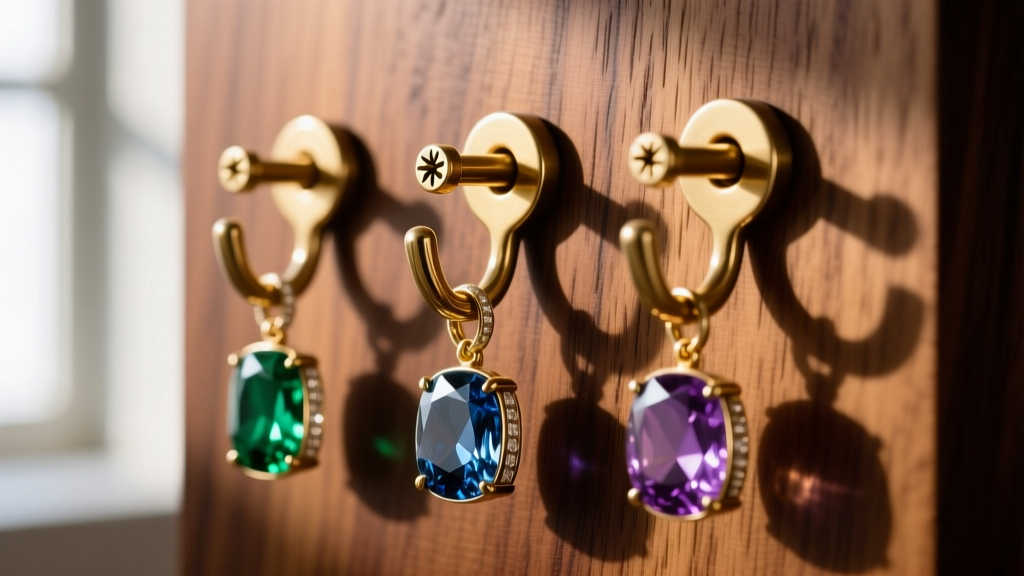
Hook Metallurgy and Weight Tolerances
The hooks themselves are the primary point of contact for your chains. Standard commercial displays often use zinc alloy hooks with a micro-thin layer of gold or nickel plating. Over time, friction from sliding chains on and off will wear through this plating, exposing the reactive zinc core, which can cause galvanic corrosion when it comes into contact with copper alloys or sterling silver.
For a permanent necklace hanger wall, invest in solid brass hooks with a baked-on clear lacquer finish, or surgical-grade stainless steel hooks for heavier pieces. When dealing with statement pendants that weigh upwards of 50 grams, standard 1-inch brass cup hooks may bend under the continuous load. Upgrade to 1.5-inch steel eye hooks with a brass veneer, ensuring the screw thread bites at least 3/4 of an inch into the solid wood backing to prevent pull-out over time.
The Ergonomic Layout Framework
A beautifully constructed wall will still look chaotic and function poorly if the spatial layout is ignored. The human eye naturally scans in 'Z' patterns, and your necklace hanger wall should be zoned by chain length and visual weight to prevent tangling and make selection intuitive. The Gemological Institute of America (GIA) emphasizes that proper handling and storage are key to preventing micro-abrasions on softer gems, which frequently occurs when necklaces are hung too closely together and sway into one another.
Below is the industry-standard spacing framework for a multi-tiered necklace hanger wall, designed to accommodate the natural drape of various chain lengths without overlapping.
| Chain Length Category | Standard Length | Minimum Hook Spacing | Optimal Wall Zone (from floor) |
|---|---|---|---|
| Collar / Choker | 14 - 16 inches | 3.0 inches | Eye-Level (60 - 64 inches) |
| Princess | 18 - 20 inches | 4.5 inches | Mid-Chest (54 - 58 inches) |
| Matinee | 22 - 24 inches | 5.5 inches | Lower-Chest (48 - 52 inches) |
| Opera / Rope | 28 - 34+ inches | 7.0 inches | Lower Tier (36 - 44 inches) |
By adhering to these spacing metrics, you ensure that an 18-inch princess chain will not brush against the clasp of a 22-inch matinee chain below it, effectively eliminating the most common cause of chain knotting on open displays.
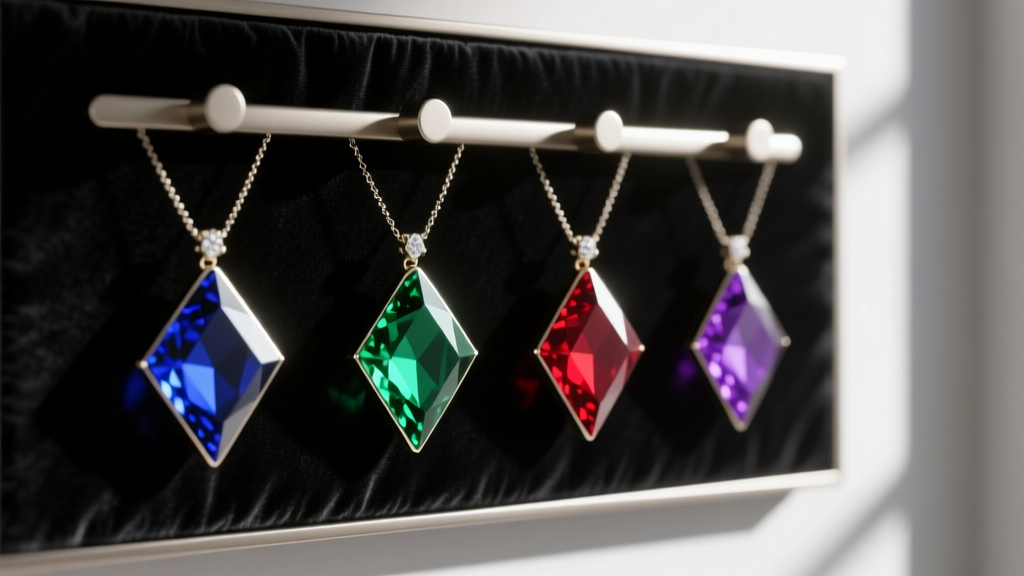
Styling Your Wall: Visual Weight and Color Theory
From a purely aesthetic perspective, the 2026 trend for necklace hanger walls leans heavily into color-blocking and metal-tone grouping. Rather than hanging pieces randomly as you acquire them, treat the wall as a curated gallery. Group your yellow gold vermeil and solid 14k gold pieces on the left flank, transitioning into white gold, platinum, and sterling silver on the right. This gradient approach not only looks highly intentional but also prevents galvanic reactions that can occur if dissimilar metals are stored in direct, prolonged contact in high-humidity environments.
For gemstone pendants, utilize the 'Visual Weight' principle. Heavy, dark stones like onyx, lapis lazuli, and deep amethyst should anchor the bottom corners of the display. Lighter, translucent stones such as moonstone, aquamarine, and rose quartz should be positioned near the top and center, where they can catch ambient light and create a sense of upward visual lift. This grounding technique mimics classical interior design principles, making the jewelry wall feel like a permanent, architectural fixture rather than a temporary cluttered rack.
Lighting and UV Protection
Illumination is what separates a basic storage solution from a true luxury necklace hanger wall. However, improper lighting can cause irreversible damage to your collection. Direct sunlight or unfiltered UV rays from nearby windows will cause severe fading in porous, organic, and dyed gemstones. Ametrine, kunzite, turquoise, and dyed pearls are particularly susceptible to UV degradation.
To properly light your wall without causing damage, install integrated LED strip lighting with a Color Rendering Index (CRI) of 95 or higher. A CRI of 95+ ensures that the true colors of your gemstones and the subtle warmth of rose gold are accurately represented, unlike cheaper LEDs that cast a sickly green or blue tint. Set the color temperature to 3000K (warm white) for a flattering, boutique-like glow, and ensure the LEDs are housed in UV-filtering acrylic channels to strip any harmful ultraviolet output before it reaches your pendants.
Troubleshooting Common Wall Display Failures
Even with meticulous planning, environmental and structural factors can cause issues. Here is how to troubleshoot the three most common failures associated with open necklace hanger walls:
- Drywall Anchor Pull-Out: A fully loaded 3-foot wooden panel holding 40 necklaces can easily exceed 25 pounds. Standard plastic drywall expansion anchors are rated for sheer weight but fail under the dynamic 'pull' of removing tight-clasped chains. Always use toggle bolts (snap toggles) rated for 50+ lbs, or securely lag-screw the backing board directly into the wall studs.
- HVAC-Induced Tangling: If your necklace hanger wall is located near an air conditioning vent or ceiling fan, the micro-breezes will cause delicate chains to sway and intertwine. If relocating the display isn't an option, install a custom-cut, anti-reflective museum glass or acrylic front panel, transforming the open wall into a sealed shadowbox.
- Velvet Backing Delamination: When using fabric backings, standard spray adhesives will eventually dry out, yellow, and off-gas harmful solvents. Use a mechanical fastening system, such as archival-quality linen tape or rust-free upholstery tacks along the perimeter, to secure the anti-tarnish fabric without relying on degrading chemical glues.
Conclusion
The necklace hanger wall is far more than a fleeting social media trend; it is a fundamental rethinking of how we value and interact with our personal adornments in 2026. By prioritizing archival-grade materials, respecting the metallurgy of your hooks, and applying strict ergonomic spacing frameworks, you can create a display that not only organizes your daily accessories but actively preserves them for future generations. Whether you are showcasing a collection of inherited vintage lockets or modern, minimalist gold chains, a properly engineered jewelry wall turns your collection into a living, breathing work of art.


