Billie Eilish Necklaces: Material & Weight Breakdown
Analyze the metals, weights, and hardware behind iconic Billie Eilish necklaces. Learn how to choose durable materials for heavy, layered chain stacks.


The Anatomy of Heavyweight Chains
When analyzing the evolution of Billie Eilish necklaces, the transition from standard streetwear accessories to high-end, custom fine jewelry is defined primarily by material weight and structural integrity. Replicating her signature oversized, layered aesthetic requires a deep understanding of metallurgy, as heavy chains behave entirely differently on the neck than lightweight alternatives. The drape, tensile strength, and skin reactivity of the metals chosen will dictate whether a stacked necklace look feels like a cohesive style statement or an uncomfortable burden.
Sterling Silver vs. Gold Alloys for Heavy Links
The foundation of any grunge-inspired or oversized chain stack is the base metal. 925 Sterling Silver (92.5% silver, 7.5% copper) is a popular entry point for thick Cuban or Figaro links due to its accessible price point. However, copper introduces a significant vulnerability: oxidation. According to Jewelers of America, the high surface area of chunky chain links accelerates tarnishing when exposed to ambient humidity and skin oils. To counteract this, high-quality silver chains in the 5mm to 8mm thickness range should be plated with a minimum of 0.10 microns of rhodium to seal the copper alloy and maintain a bright, white-metal finish.
For daily wear and heirloom-level durability, 14k gold (58.5% pure gold) is vastly superior to 18k gold for heavy chains. While 18k gold offers a richer yellow hue, its higher pure gold content makes it softer and more prone to stretching under the gravitational pull of heavy, oversized pendants. The alloy metals in 14k gold (typically a mix of copper, silver, and zinc) increase the Vickers hardness (HV) to approximately 135 HV, providing the necessary tensile strength to support heavy custom motifs without the links warping over time.
Pendant Construction: Enamel, Steel, and Diamond Pavé
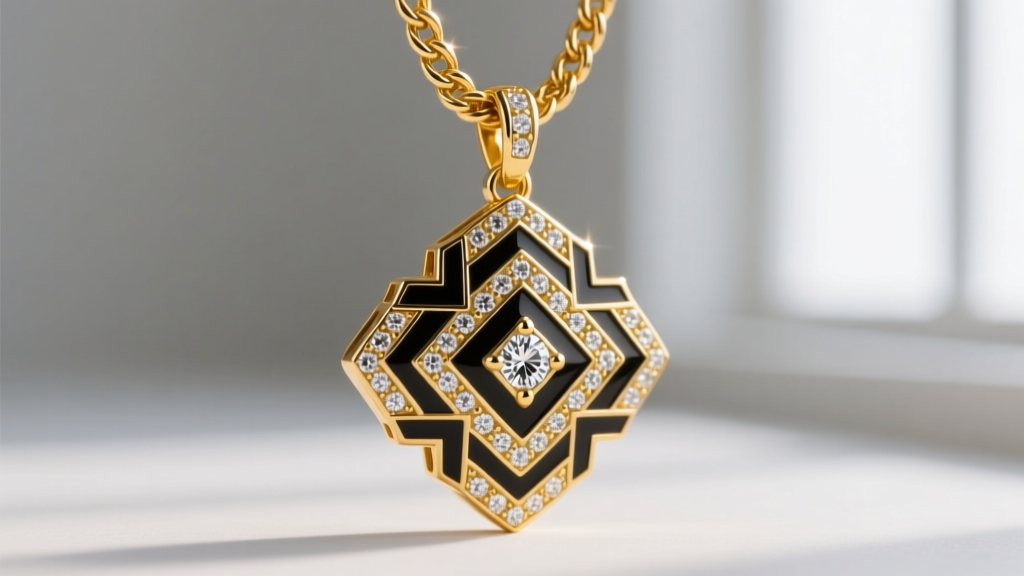
Billie Eilish’s custom pendants—ranging from the iconic 'Blohsh' silhouette to intricate spiderweb and gothic motifs—rely on a hybrid approach to material engineering. Combining precious metals with industrial or vitreous elements creates a visual contrast that defines her aesthetic. Understanding the physical properties of these secondary materials is crucial for anyone commissioning or purchasing similar statement pieces.
Vitreous Enamel vs. Cold Enamel
Many mass-market replicas of celebrity jewelry utilize 'cold enamel' (a two-part epoxy resin). While cheap to produce, cold enamel has a Mohs hardness of roughly 2.5, making it highly susceptible to scratching, yellowing from UV exposure, and chipping upon minor impacts. Authentic high-end pieces use vitreous enamel, which is essentially powdered glass fired at temperatures exceeding 1400°F. This process fuses the color directly into the metal's microscopic pores, resulting in a permanent, glass-like finish with a Mohs hardness of 5.5 that will not degrade over decades of wear.
| Material | Hardness | Tarnish / UV Resistance | Best Use Case |
|---|---|---|---|
| 925 Sterling Silver | ~60 HV | Low (Requires Rhodium) | Base layers, budget-heavy chains |
| 14k Yellow Gold | ~135 HV | High | Daily wear oversized pendants |
| 316L Surgical Steel | ~160 HV | Very High | Industrial accents, grunge layers |
| Vitreous Enamel | ~5.5 Mohs | N/A (Glass-based) | Custom motif color blocking |
Industrial Steel Accents
To achieve a mixed-metal, utilitarian edge, 316L surgical stainless steel is frequently integrated into modern grunge jewelry. With a high chromium content, 316L steel is virtually impervious to tarnish and boasts a tensile strength that far exceeds precious metals. It is an excellent, hypoallergenic choice for secondary layering chains or structural pendant bails that must bear extreme weight without bending.
Hardware Engineering: Clasp and Jump Ring Failure Modes
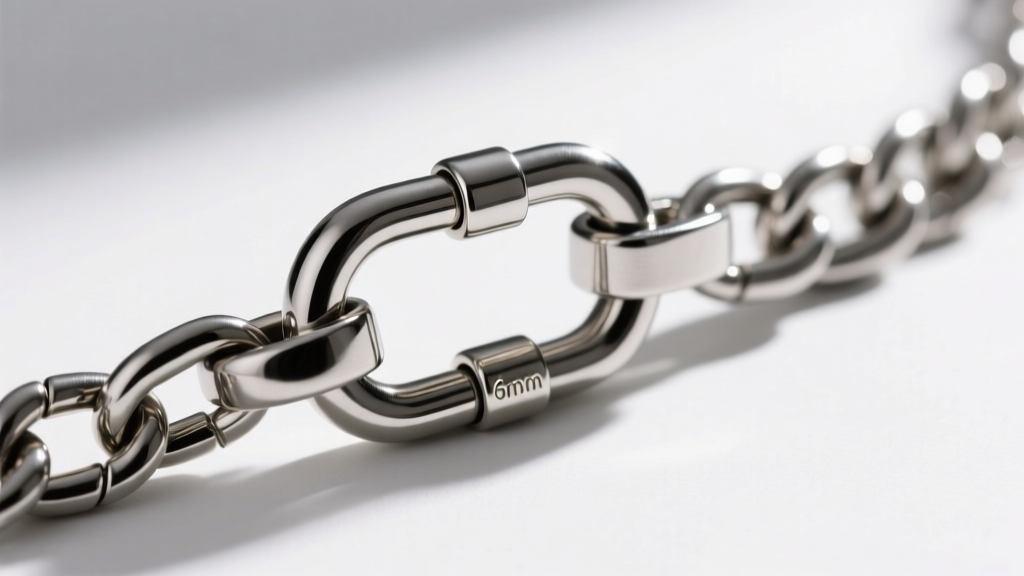
The most common failure point in heavy necklace stacks is the hardware. A standard 50-gram Cuban link chain will easily overpower a traditional spring ring clasp, causing the internal tension wire to deform and the clasp to snap open. When building a stack inspired by heavyweight celebrity trends, hardware engineering is non-negotiable.
Upgrading to Locking Lobster and Box Clasps
For chains exceeding 4mm in width or 40 grams in total weight, a locking lobster clasp or a box clasp with a figure-eight safety latch is mandatory. Locking lobster clasps feature a secondary gate that prevents the lever from accidentally depressing against the neck or clothing. Furthermore, the jump rings connecting the clasp to the chain must be soldered closed or constructed from heavy-gauge wire (minimum 14-gauge). Unsoldered jump rings will inevitably pull apart when the heavy chain catches on a sweater or seatbelt, resulting in the loss of the piece.
Eco-Conscious Metals and Lab-Grown Stones
Aligning with her vocal stance on environmentalism and sustainable fashion, the modern interpretation of the Billie Eilish necklace aesthetic heavily incorporates eco-conscious materials. Urban mining—recycling existing gold from electronic waste and old jewelry—has become a standard practice among boutique jewelers crafting custom hip-hop and grunge-inspired chains. Recycled 14k gold possesses the exact same metallurgical properties and durability as newly mined gold, but with a fraction of the carbon footprint.
Similarly, the diamond pavé often seen in custom celebrity pendants is increasingly being set with lab-grown diamonds. Because pavé settings require dozens of tiny melee stones (typically 1mm to 1.5mm in diameter), lab-grown diamonds offer identical optical and physical properties (a perfect 10 on the Mohs scale) at a significantly lower cost and without the ethical concerns of traditional mining. According to the Gemological Institute of America (GIA), lab-grown diamonds require the same ultrasonic and steam cleaning protocols as natural diamonds, making them a practical choice for intricate, hard-to-clean pendant crevices.
Sizing and Layering Framework
Achieving the effortless, oversized layered look requires precise mathematical spacing to prevent the heavy chains from tangling or flipping over one another. A proper three-layer stack should follow a strict gauge and length progression:
- Base Layer (18 inches): A 3mm to 4mm rope or curb chain (approx. 15-20 grams). This sits at the collarbone and anchors the stack.
- Mid Layer (20 to 22 inches): A 5mm to 6mm Cuban link chain (approx. 35-50 grams). This provides the visual 'meat' of the stack and rests on the upper chest.
- Statement Layer (24 to 26 inches): An 8mm Figaro or paperclip chain featuring an oversized custom pendant (approx. 80+ grams). The extra length ensures the pendant hangs freely without colliding with the mid-layer links.
By maintaining a minimum 2-inch gap between lengths and varying the link styles, the chains will lay flat against the sternum, distributing the cumulative weight (which can easily exceed 150 grams) evenly across the cervical spine.
Maintenance Protocols for Oversized Stacks
Heavy, layered necklaces trap sweat, dead skin cells, and lotions deep within the interlocking links. While solid gold and steel can be safely cleaned in an ultrasonic jewelry cleaner, chains featuring vitreous enamel or porous gemstones (like turquoise or opal) must never be subjected to high-frequency sound waves, as the vibrations can cause the enamel to fracture or the stones to crack. Instead, use a soft-bristled baby toothbrush with a mild, phosphate-free dish soap and warm water, gently agitating the links before patting dry with a microfiber cloth. Proper maintenance ensures the structural integrity and visual impact of the stack for years to come.


